
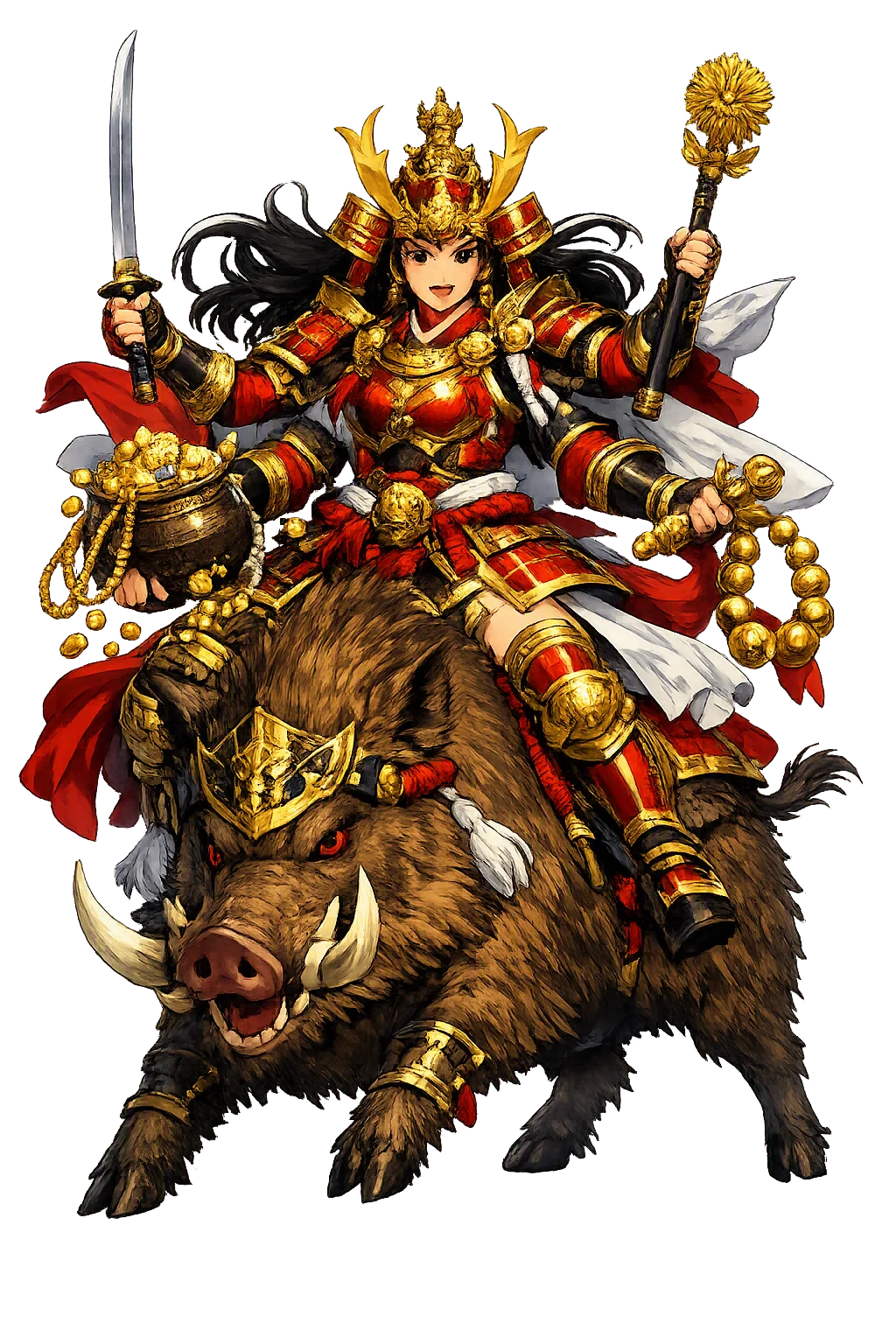
Stress-testing Marishiten: do the industry seats hold?
The stress test for Marishiten. Every seat in the atlas was attacked with the same question — is the match real, or is it poetry? — and the survivors are recorded with their evidence.
At a Glance
- Temple: Marishiten
- Pantheon: Japanese
- Domain of influence: War, Invisibility, Sun
- Pattern seats: 3
- Sectors touched: Technology & Innovation · Commerce & Governance · Energy & Natural World
- Strongest seat: Cybersecurity & Digital Protection
- Series: The Resonance Files, No. 302 of 548
The Test
Seat 1: Cybersecurity & Digital Protection
Claim: Goddess of invisibility and concealment; the stealth that hides a network is her modern art. Exhibit: Mārīcī, the Ray Before the Sun — In Indian Buddhism, Mārīcī is the ray of light that runs ahead of the sunrise — her name is simply the Sanskrit mārīcī, 'ray, beam' — a goddess of the liminal hour when the world is still blind.
Verdict: stands. Strip both to their function and the functions match.
Seat 2: Defense, Military & Security
Claim: Buddhist goddess of war and invisibility, patron of archers and warriors who confounds the enemy. Exhibit: Mólìzhītiān of the Seven-Pig Chariot — Chinese Buddhists received Mārīcī as Mólìzhītiān and gave her the iconography that still defines her: a serene, multi-armed goddess bearing wheel, bow, arrow, sword, and vajra, seated in a chariot drawn by seven pigs — or astride a single great boar — the dawn sun translated into esoteric symbols.
Verdict: stands. Strip both to their function and the functions match.
Seat 3: Solar & Renewable Energy
Claim: The Buddhist goddess of war and invisibility is also a solar deity whose chariot mirrors the dawn. Exhibit: The Spell That Hides — The Mārīcī dhāraṇī's central promise is concealment.
Verdict: stands. Strip both to their function and the functions match.
The Control Group
Against the seats that survived, one control: the temple's own summary of its figure — Marishiten's mythology is liturgical rather than epic: no sutra tells her life-story, but the Mārīcī texts of the Chinese canon (Taishō nos. The seats do not drift far from it. That is the audit's cleanest result.
The Method, Stated Plainly
The atlas is not a horoscope. Seats are earned from the sources — argued, weighted, published — and every one of them can be challenged at the methodology page. A match that cannot survive an argument does not survive review. That is the whole trick: the patterns are claims, and claims can be tested.
For the Ones Who Work There
For a sponsor in cybersecurity & digital protection, the fit here is not adjacency — it is inheritance. Your trade already tells this story every working day; the temple simply holds the original. The patron tier and the advertising terms carry the mechanics; the myths above carry the reason.
The File Continues
This is one of 548 Resonance Files — the third dispatch from every flagship temple, where the myths meet the markets. The temple's founding dispatch tells the name's story; its Restoration File tells the spelling's; the blog index holds the whole archive.
Continue the series — previous: Marduk (read it) · next: Mārs (read it).
The Resonance Files are argued from the same canonical record as the pattern atlas itself: the lexicon, the lore catalog, and the cited sources. Every seat can be challenged at the methodology page — and the challenge is the point.