
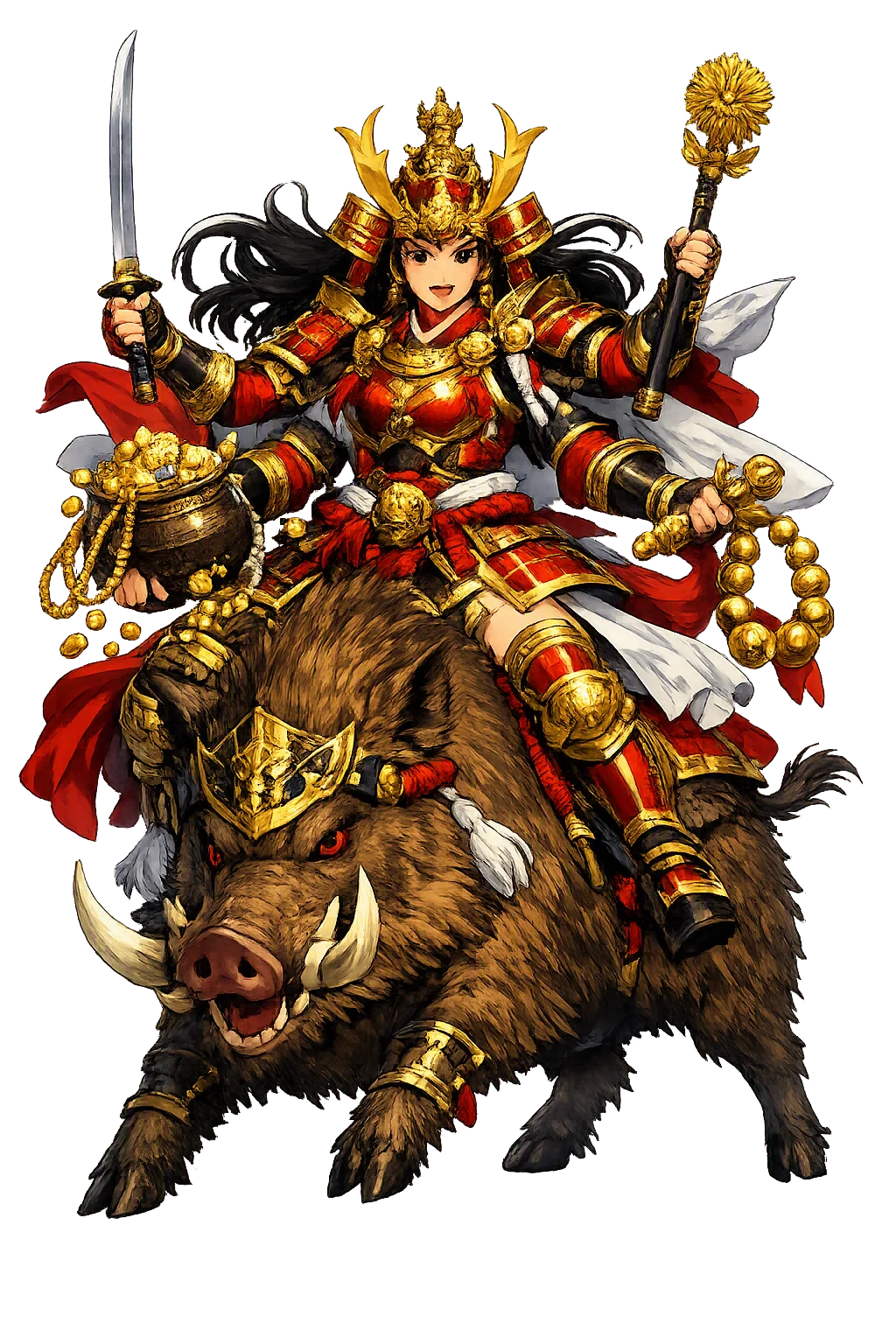
Marishiten: canonical, contested, and the false forms on record
A letter to a colleague, 31 July 2026 — on the name Marishiten, and on the forms that keep failing it.
Your note said, roughly: surely the marks are a nicety. Permit me to use Marishiten to show they are not.
First, the attestation. The name is attested as 摩利支天, on the evidence Taishō Shinshū Daizōkyō nos. 1254–1257 — the Mārīcī sūtras and dhāraṇī translations and Besson zakki (12th c. iconographic compendium) — the multi-armed, boar-riding form set down. On the evidence, it means "Marici in Japanese". The canonical transliteration is Marishiten.
Say it aloud as the sources heard it: 'MAH-ree-shee-ten' — the 'r' is a light tap, and the final 'n' is soft. The marks are what carry that sound to a reader who has never heard it spoken.
On the plain form — and I want to be precise, because you pushed on this. The plain form marishiten differs from the canonical Marishiten only by convention of display — case, not content. It is acceptable everywhere: in legacy systems, in plain-text citation, in the DNS itself. What is not acceptable is what follows in the register: respellings that change the letters, not just their case.
One more thing, because it always surprises: the name did not stay home. Marishiten is a Buddhist figure assembled from several older identities. Her name and dawn office are Sanskrit, kin to the Vedic dawn goddess Uṣas; her chariot and solar imagery carry Taoist and Chinese star-lore, for the esoteric texts link her to the circumpolar stars that never set — the only lights that share her gift of never being caught.
And it never stopped working. Marishiten's cult is quieter than her reputation but it has never vanished. Esoteric temples of the Tendai and Shingon schools still keep her images among the tenbu protectors, and traditional martial arts — kyūdō above all, and some lines of swordsmanship — preserve her name in their ritual vocabulary and founding legends.
The Convention's Own History
Every tradition in this register has its own scholarly transliteration standard, built by its own specialists over decades or centuries, and the register follows each on its own terms: Hepburn with macrons — ō and ū marked, never collapsed to o/u or rewritten ou. The principle that unifies them is the one the whole project stands on: a name is evidence, and evidence is not negotiable — not for keyboards, not for convenience, not for anyone.
Where Protocol Meets Practice
The technical answer is simple: the canonical marks are legal IDNA 2008 characters, encoded as punycode under `xn--`. The practical answer is messier: legal does not mean stocked (registrar inventory is partial), and stocked does not mean typeable (stacked diacritics defeat mobile keyboards).
So the register's rule is a hierarchy of attested forms — full restoration, circumflex, macron-only, attested variant, and finally plain ASCII for the systems that cannot carry marks. Every rung is defensible because every rung is attested. The forms this register rules against are not rungs; they are errors, and errors do not get rungs.
Write back when you have checked the sources; they are better company than I am.
— The Register
The Verdict
Marishiten is the canonical form: attested, checkable, and enforced across the temple, the lexicon, the cards, the APIs, and this register. The plain form marishiten shares that standing — the two are the same name in every system. The false forms above are documented so that no reader has to take the temple's word on faith — the violations are stated, the sources are named, and the register stands open to challenge on every line.
The temple of Marishiten stands at /marishiten/.
The docket for this ruling: no false forms on the docket; no contested forms attested; the attestation rests on 6 cited sources — Taishō Shinshū Daizōkyō nos. 1254–1257 — the Mārīcī sūtras and dhāraṇī translations, Besson zakki (12th c. iconographic compendium) — the multi-armed, boar-riding form, de Visser, Ancient Buddhism in Japan, 2 vols (Brill, 1935) — early Japanese Marishiten images and cult.
The Register Continues
The register holds 548 entries like this one — each temple with its own ruling. Read the temple's founding dispatch for the story, its Restoration File for the philology, its Resonance File for the industries, or the whole archive end to end.
Continue the register — previous entry: Marduk (read it) · next entry: Mārs (read it).
The Canonical Register is written from the same canonical record as the lexicon itself. If a false form is missing from this page, it is because the evidence does not support calling it false — or because we have not seen it yet. Show us, with a citation, and the register will answer.