
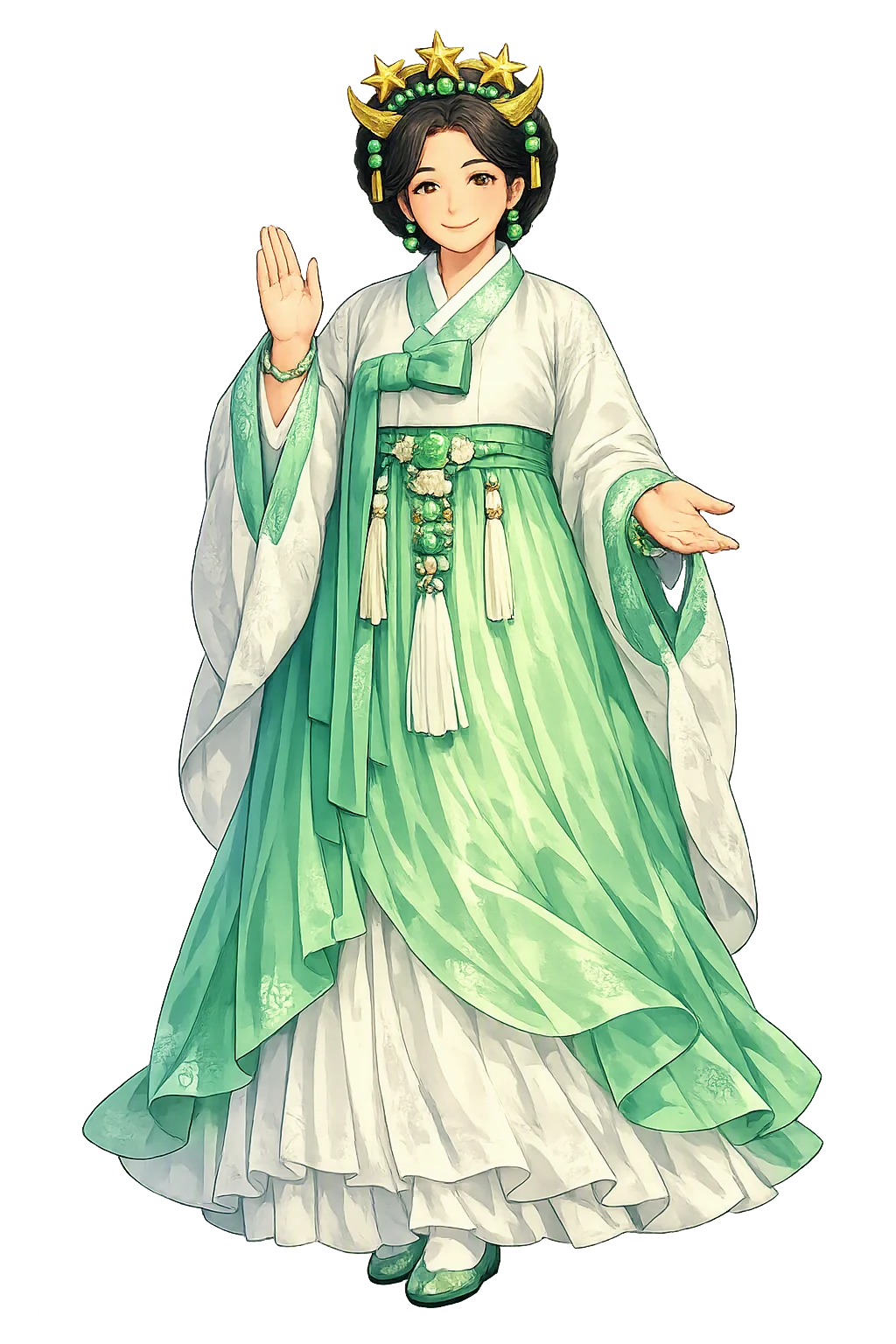
Samshin at work: education, research & knowledge, mythic name restoration, and the myths that got there first
The myths did not retire. They moved offices. This is the file on where Samshin works now.
The mythology of Samshin lives in Korean shamanic song, household custom, and the records of twentieth-century ethnographers. It is liturgy before it is narrative: each mudang's chant is a performance, not a scripture, and the versions disagree with one another in instructive ways.
The pattern atlas — which maps every flagship temple to the industries its archetype demonstrably resonates with, each match argued and open to challenge — seats this temple in 3 industries. This file reads those seats the way they were earned: through the myths.
At a Glance
- Temple: Samshin
- Pantheon: Korean
- Domain of influence: Birth, Triple Spirits
- Pattern seats: 3
- Sectors touched: Society & Spirit · Culture & Entertainment
- Strongest seat: Education, Research & Knowledge
- Series: The Resonance Files, No. 424 of 548
The Myth at Work
The Girl Who Became the Three Grandmothers. Korean shamanic song preserves the origin, and the versions disagree with one another in instructive ways. In the widely recorded southern tradition — documented in the twentieth century by ethnographers of Korean shamanism and by folklorists such as Kim T'ae-gon; see Walraven, Songs of the Shaman — the three birth spirits were once a single girl: a poor, devout child, in some versions a Buddhist nun, who is tested, wronged, or exiled, and who in the end gives birth to three sons. — that is not just a story. It is a business model, four thousand years early.
One Grants Pregnancy, One Gives Bones, One Gives the Soul. The ritual tradition divides Samshin's labor into three offices. The first spirit grants conception and watches the months of pregnancy; the second 'gives the bones,' building the child's body through the weeks of gestation; the third attends the delivery itself and fixes the soul in the newborn's first breath. — hold that image; the industries below are where it goes to work.
The Seats
Each of these is argued in the atlas with a weight and a why-line. What the atlas cannot fit in one line is the whole myth — so here is each seat with its story restored.
Education, Research & Knowledge
Schools, universities, and research institutions. (Sector: Society & Spirit)
The why-line says it in one breath: Primary seat: Samshin embodies birth, triple spirits — the core of education. That is not a resemblance; it is the same act, performed in a newer building.
Mythic Name Restoration
Scholarly Unicode restorations of mythic names for modern identity. (Sector: Culture & Entertainment)
Resonant seat: Samshin shares symbolic territory with mythic restoration. Swap the costume and the sentence is indistinguishable from the myth. That is what a resonance seat means.
Writing, Publishing & Media
Books, journalism, and content platforms. (Sector: Culture & Entertainment)
Resonant seat: Samshin shares symbolic territory with publishing media. — the atlas stops there, out of discipline. The myth keeps going: the function Samshin performs in the stories is precisely the function this industry sells.
The Long Employment
Samshin remains one of the most emotionally resonant figures in Korean folk religion. New parents still encounter rituals and taboos associated with the birth spirits, and the image of Samshin Halmoni appears in folk paintings, shamanic altars, and contemporary media about Korean shamanism. The age changed. The work did not.
The Method, Stated Plainly
Skeptical? Good — the system is built for you. Every seat in this file carries its why-line and its weight, the full derivation is public at the methodology page, and the challenge process is part of the design. Falsifiable is not a posture here; it is the mechanism.
For the Ones Who Work There
If you work in education, research & knowledge, mythic name restoration, or any trade this temple holds a seat in, this is the honest version of what a placement means: your industry beside the story it has been re-telling all along — on the temple floor itself, before an audience that came specifically to read it. The patron tier and the advertising terms describe the mechanics; the resonance above describes the fit.
The File Continues
One of 548 Resonance Files — the series where the pantheon goes to work. Read the founding dispatch for the name, the Restoration File for the spelling, or the whole archive end to end.
Continue the series — previous: Samantabhadra (read it) · next: Śani (read it).
The Resonance Files are argued from the same canonical record as the pattern atlas itself: the lexicon, the lore catalog, and the cited sources. Every seat can be challenged at the methodology page — and the challenge is the point.