
Dumuzid in 2026: why scholars still care
In 2026, names are treated as data points. Dumuzid is a reminder that they are also cultural artifacts — and that the difference matters for search engines, AI training corpora, and anyone who types the name of a Mesopotamian figure into a browser. Scholars never stopped caring about the difference between dumuzid and Dumuzid; the web simply made that care actionable. What follows is the full scholarly picture — name, script, sound, myth, cult, and legacy — followed by the engineering compromise that lets a restored spelling live at a real address. The question is not whether the name is old. It is whether the digital world is old enough to hold it.
At a Glance
- Restored name: Dumuzid
- ASCII form: dumuzid
- Meaning: "Faithful son"
- Domain of influence: Shepherds, Vegetation
- Pantheon: Mesopotamian
- Classification: Tier 2
- Original script: 𒀭𒌉𒍣 (Cuneiform)
Overview
Dumuzid (dumuzid) — Shepherds, Vegetation · Faithful son — belongs to the Mesopotamian tradition, where it is catalogued under the domain "Shepherds, Vegetation". The name means "Faithful son".
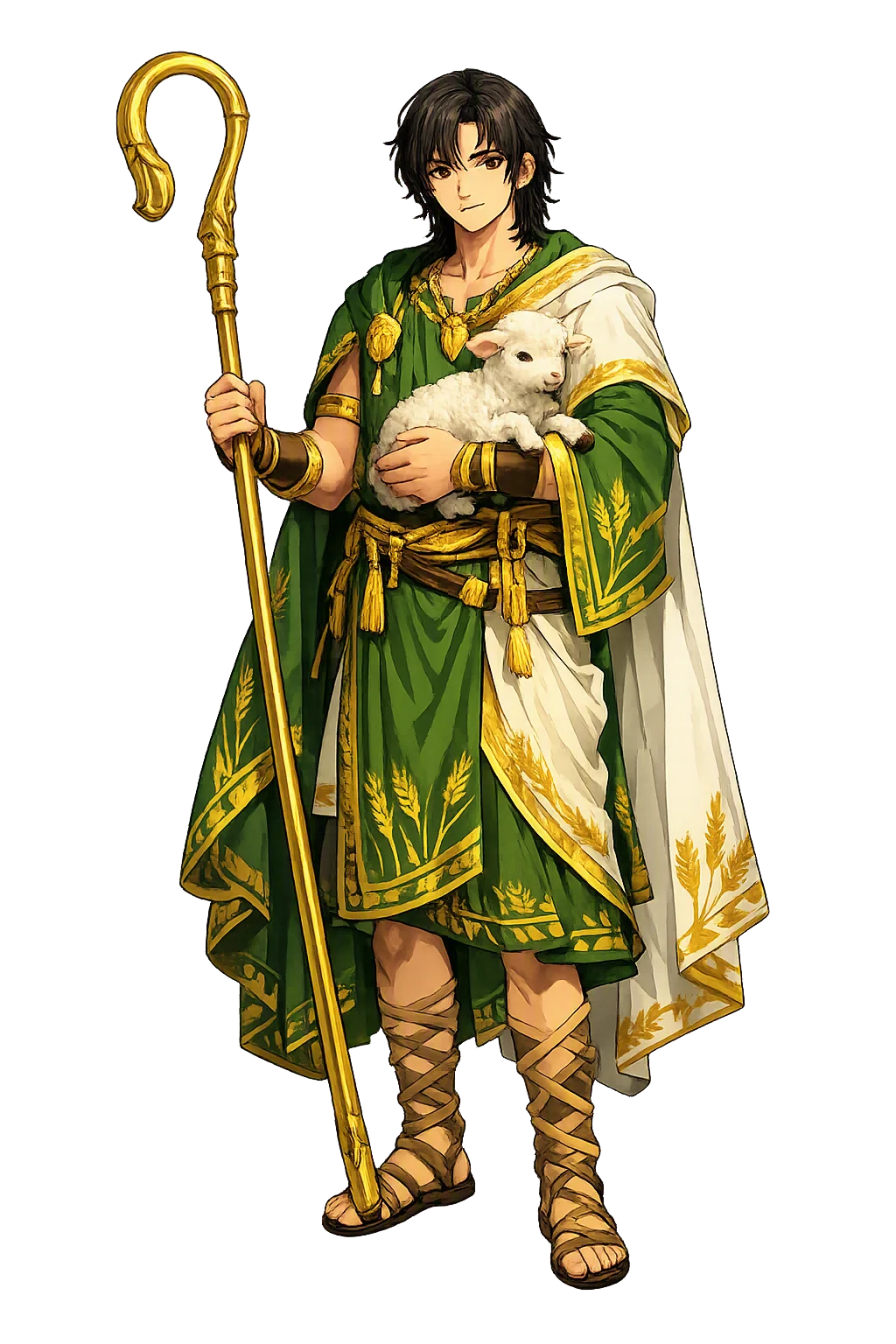
Dumuzid is the Sumerian shepherd made divine — the 'faithful son' whose name joins dumu ('son') and zid ('true, faithful, right'). He is the lord of the sheepfold, the provider of milk and wool, and the bridegroom of Inanna in the sacred marriage that guarantees the land's fertility. Unlike the storm-gods who rule by force, Dumuzid reigns through the gentle goods of the pasture: grass, water, flock, and the cyclic return of vegetation.
His myth is also the myth of seasonal loss. In the Descent of Inanna he is chosen to take the goddess's place in the underworld for half the year, so that life and death may alternate on earth. Dumuzid is therefore not only the patron of shepherds but the archetype of the dying-and-rising vegetation god, mourned as Tammuz across the ancient Near East.
PuniCodex restores the name as Dumuzid and serves its temple at its temple. The restoration needs no distinctive letters or diacritics its ASCII form would lose, which places the name in Tier 2. The plain ASCII form dumuzid survives as a modern convenience imposed by the early domain-name system; the restoration, not the fallback, is the form the project defends as philologically complete.
The Name
The name is attested in Cuneiform as 𒀭𒌉𒍣. Etymologically it means "Faithful son".
The ASCII form dumuzid survives only because the early domain-name system could not carry diacritics; it is a technological compromise, not an ancient spelling. The Unicode restoration Dumuzid recovers the full diacritic detail of the scholarly transliteration directly in the address bar. The restoration needs no distinctive letters or diacritics its ASCII form would lose, which places the name in Tier 2.
The letter-by-letter transformation runs:
- d → D — Same, capitalized
- u → u — Same
- m → m — Same
- u → u — Same
- z → z — Same
- i → i — Same
- d → d — Same
The Original Script
The name is preserved in Cuneiform as 𒀭𒌉𒍣.
The scholarly transliteration is Dumuzid.
The rendering proceeds step by step:
- The divine determinative 𒀭 (dingir) marks Dumuzi as a deity
- 𒌉 (DUMU) means 'son, child'
- 𒍣 (ZI) means 'faithful, true, life'
- DUMU.ZI is read Dumuzid, 'faithful son', attested from Early Dynastic texts and the Sumerian King List
The name is written in Sumerian cuneiform as 𒌉𒍣 (dumu-zid), often preceded by the divine determinative 𒀭. The first sign means 'son,' the second 'true, faithful, right.' Standard Assyriology transliterates the name as Dumuzi(d), with the final -d sometimes omitted in older spellings. Because the Latin form preserves no distinctive diacritic or non-ASCII letter, it is classified as Tier 2: the restoration is the plain scholarly transliteration, readable but stripped of the visual density of the original signs.
Pronunciation
The reconstructed pronunciation of the name is /duˈmu.zid/ — Sumerian/Akkadian Reconstruction.
Phoneme by phoneme:
- Du- — Voiced alveolar stop [d] plus close back rounded vowel [u]; the Sumerian word dumu means 'son'.
- -mu- — Bilabial nasal [m] plus close back rounded vowel [u]; the second syllable carries the reconstructed stress.
- -zid — Voiced alveolar fricative [z] plus voiceless dental stop [d]; zid means 'true, faithful, right' — the ethical core of the name.
For the modern speaker, the closest approximation is: 'doo-MOO-zid' — the first two syllables are soft and round, the last closes crisply like 'zid'.
Kindred and historical forms of the name:
- Sumerian — 𒌉𒍣 (dumu-zid), 'faithful son', often written with the divine determinative 𒀭
- Akkadian — Tammūzu, the East Semitic form attested from the Old Akkadian period onward
- Hebrew/Biblical — Tammuz (תַּמּוּז), mourned at the Jerusalem temple gate in Ezekiel 8:14
Dumuzid is Tier 2: the canonical restoration uses plain Latin letters with no distinctive diacritic or non-ASCII letter. The Sumerian cuneiform signs carry meanings — dumu 'son' and zid 'faithful' — that the Latin form cannot display; it is therefore a readable scholarly transliteration rather than a phonological reconstruction.
Mythology
Dumuzid's myths are woven through the great Sumerian literary corpus: courtship songs, sacred-marriage hymns, the Descent of Inanna, and the laments for his death. They turn on the tension between abundance and loss, intimacy and exile, the green world and the dark earth.
The Shepherd and the Farmer (Courtship)
In the Sumerian poem Dumuzi and Enkimdu (ETCSL 4.08.33), Inanna must choose between Dumuzid, the shepherd, and Enkimdu, the farmer. The shepherd boasts of milk, cheese, and wool; the farmer counters with grain, bread, and beer. Inanna prefers Dumuzid, and the poem dramatizes the prestige of the pastoral economy alongside agriculture in early Mesopotamia.
The Bridal of Heaven and Earth (Sacred Marriage)
The sacred-marriage songs (ETCSL 4.08.01–04) celebrate Dumuzid as the bridegroom of Inanna. The king of Uruk embodies Dumuzid, while the goddess embodies the city and the land. Their union is not merely symbolic: it guarantees the me of fertility, the sprouting of grain, the filling of folds, and the legitimacy of the reigning king.
Dumuzid in the Underworld (Descent)
In the Descent of Inanna (ETCSL 1.4.1), Inanna is killed in the underworld and resurrected only on condition that she send a substitute. She chooses Dumuzid, her beloved husband, because he did not mourn her. The galla demons drag him down, but his sister Geshtinanna offers to share his fate: Dumuzid will spend half the year in the underworld, Geshtinanna the other half. This is the Sumerian explanation of summer's parch and winter's return.
The Weeping for Tammuz (Lament)
Sumerian city laments (e.g., The Death of Dumuzid, ETCSL 4.08.32) and later Akkadian tradition mourn the shepherd's death. The biblical prophet Ezekiel witnesses women 'weeping for Tammuz' at the Jerusalem temple gate (Ezekiel 8:14), a rite that travelled from Mesopotamia to the Levant. The tears are not only grief; they are a petition for the god's return and the restoration of vegetation.
Symbols & Iconography
The iconography associated with Dumuzid concentrates in a small set of recurring attributes, each a compressed statement about the name:
- Shepherd's crook — The emblem of his pastoral rule and the surrogate kingship enacted in the sacred marriage
- Milk pail and churn — The dairy abundance of the flock; the goods that win Inanna's hand over the farmer's grain
- Date palm — The sacred tree of Inanna's garden and the vegetative power that flourishes in Dumuzid's season
- Wool and fleece — The textile wealth of the sheepfold and the warm garment of the bridegroom
- Wedding ring — The sacred marriage that binds heaven and earth, goddess and king, fertility and legitimacy
Archaeology & Evidence
Cuneiform tablets from Nippur, Ur, and Uruk preserve Dumuzid's sacred-marriage songs and death laments. Neo-Assyrian and Late Babylonian copies of the Descent of Inanna and the Tammuz liturgies attest his continued cult into the first millennium BCE. The biblical witness in Ezekiel 8:14 confirms the rite's spread to Jerusalem, while the month-name Tammuz in the Jewish calendar preserves his memory into the present.
Realm & Domain
Dumuzid is the Sumerian shepherd made divine — the 'faithful son' whose name joins dumu ('son') and zid ('true, faithful, right'). He is the lord of the sheepfold, the provider of milk and wool, and the bridegroom of Inanna in the sacred marriage that guarantees the land's fertility. Unlike the storm-gods who rule by force, Dumuzid reigns through the gentle goods of the pasture: grass, water, flock, and the cyclic return of vegetation.
His myth is also the myth of seasonal loss. In the Descent of Inanna he is chosen to take the goddess's place in the underworld for half the year, so that life and death may alternate on earth. Dumuzid is therefore not only the patron of shepherds but the archetype of the dying-and-rising vegetation god, mourned as Tammuz across the ancient Near East.
Lord of the Sheepfold
Patron of shepherds, milk, cheese, and wool; the pastoral economy of Sumer consecrated in one figure.
Date Palm and Garden
His wedding songs praise the date palm, the garden, and the sprouting reed — the green world as bridal gift.
Sacred Marriage
The union of Dumuzid and Inanna legitimates kingship and assures fertility; every New Year reenacts their cosmic wedding.
Descent and Return
Half the year in the underworld, half on earth with his sister Geshtinanna — the seasonal cycle made myth.
Across Cultures
Dumuzid is the Sumerian original behind the Akkadian Tammūzu and the later West Semitic Tammuz. The Greeks knew a comparable dying-and-rising vegetation figure in Adonis; while Adonis has separate Northwest Semitic roots, the two share the same seasonal logic and were sometimes identified in later antiquity. In the Hebrew Bible, Tammuz appears as a foreign deity mourned in Jerusalem (Ezekiel 8:14), and the month Tammuz still bears his name in the Jewish calendar. Some Sumerian god-lists distinguish Dumuzid the Shepherd from Dumuzid-abzu, a chthonic or freshwater form; the traditions converged over time.
Within the Mesopotamian tradition, closely related names in the corpus include Adad, Anû, Apsû, Aššur, Ēa, and Enkidu.
Cultural Legacy
The name Tammuz outlived Mesopotamian cult by millennia. The fourth month of the Jewish calendar, Tammuz, preserves his memory, and the fast of the Seventeenth of Tammuz commemorates national calamity. In Arabic and Syriac folklore, Tammuz remained a byword for the death of vegetation and the summer drought. Modern scholarship treats Dumuzid as a classic example of the 'dying god' type alongside Osiris, Attis, and Adonis — though each figure has distinct local roots. His myth still shapes how we imagine the cycle of seasons, the return of spring, and the intimate link between divine love and agricultural fertility.
The Scholarly Record
The account of Dumuzid given in this edition rests on the witnesses and reference works listed below. Lexica and etymological dictionaries secure the form and meaning of the name; the literary and religious texts supply the narrative evidence.
- ETCSL (Electronic Text Corpus of Sumerian Literature).
- Black & Green, Gods, Demons and Symbols of Ancient Mesopotamia.
- Jacobsen, The Treasures of Darkness.
- Kramer, The Sumerians.
- Foster, Before the Muses.
- Epic of Gilgamesh, Tablet VI (Dumuzi/Tammuz listed among Ishtar's doomed lovers).
- Descent of Inanna (ETCSL 1.4.1: Inanna chooses Dumuzid as her underworld substitute).
- Dumuzi and Enkimdu (ETCSL 4.08.33: the shepherd wins the goddess from the farmer).
- The Death of Dumuzid (ETCSL 4.08.32: Sumerian lament for the dying shepherd).
- Hebrew Bible, Ezekiel 8:14 (women weeping for Tammuz at the Jerusalem temple).
A Meditation
Dumuzid is the god who must be lost so that the world can turn. His death is not punishment for a moral fault but the structural price of Inanna's return from the underworld. In choosing him, the goddess does not act out of cruelty; she acts out of the logic that life and death must alternate, that the green world must descend into darkness in order to rise again.
To meditate on Dumuzid is to meditate on the beloved thing that disappears. The pasture dries, the flock is penned, the bridegroom is taken underground — and yet the cycle guarantees return. His sister's compassion, splitting the sentence, reminds us that exile is bearable when it is shared. Dumuzid asks: what in your life must die for half a year so that the rest may live?
The Unicode Restoration
Dumuzid is classified as Tier 2: the restoration needs no distinctive letters or diacritics its ASCII form would lose. The ASCII fallback dumuzid still resolves everywhere, but it is the restored form that carries the name's full information. That is the whole thesis of this temple: the marks are the message.
Character by Character
The journey from dumuzid to Dumuzid, one character at a time:
- d → D — Same, capitalized
- u → u — Same
- m → m — Same
- u → u — Same
- z → z — Same
- i → i — Same
- d → d — Same
The Mesopotamian Pantheon
Dumuzid is one of 30 entries the PuniCodex lexicon catalogues under the Mesopotamian pantheon. The Pantheon page gathers the tradition's major figures in one place, and the Lexicon lets you filter all 980 restorations by tradition, tier, or script — the fastest way to see where this name sits among its kin.
Frequently Asked Questions
What does Dumuzid mean? The traditional gloss is "Faithful son."
Which tradition does Dumuzid belong to? Dumuzid is catalogued in the Mesopotamian pantheon of the PuniCodex lexicon.
Why is Dumuzid classified as Tier 2? Because the restoration needs no distinctive letters or diacritics its ASCII form would lose — and the marks in the restored spelling preserve exactly that evidence.
Can I use Dumuzid in a normal browser? Yes. The DNS resolves the punycode form automatically, and the type tool on this site converts dumuzid to Dumuzid for copying and pasting.
Where does the scholarly information come from? The entry is built from lexica, inscriptional evidence, and reviewed scholarly sources listed in the Scholarly Edition. Every claim is traceable to a canonical source.
Typing Dumuzid
You do not need a special keyboard to use this restoration. The PuniCodex Type Tool converts the ASCII form dumuzid into Dumuzid as you type, and the browser extension offers the same conversion inside any text field. Copy the restored form, paste it into the address bar, and the DNS does the rest.
Sister Temples
Other temples in the Mesopotamian pantheon include Apsû, Gilgameš, and Kišar — each with its own restoration story, its own scholarly record, and its own place in the lexicon.
Why This Restoration Matters
In 2026 the stakes are practical. Search indexes, language models, and localization pipelines all inherit whatever spelling the web normalizes — which means every Unicode domain is also a training signal. Dumuzid teaches the machinery that the restored form exists, that it is used, and that it points to a real place. That is why a project built on philology ends up caring about DNS: the infrastructure decides which names the future sees. This restoration makes sure the future sees the whole name.
Explore Further
This post is one doorway into the temple. The home page carries the full character breakdown and the ambient canvas; the lore page tells the myths in long form; the Scholarly Edition preserves the sources, pronunciation data, and revision history; and the patron wall supports the restoration directly. For the wider map, browse the Lexicon, explore the Pantheon, or return to the PuniCodex blog.
A Closer Look at the Marks
A restored name is a small map. In the case of Dumuzid, the map does not lead through diacritics or special letters, because the source tradition wrote the name in Cuneiform rather than in the Latin alphabet. The ASCII form dumuzid and the restored form share the same letters; the restoration is a decision about which conventional spelling should serve as the public reference.
That decision is not cosmetic. The original script attestation carries semantic and phonetic information that no romanization can fully reproduce. By fixing one conventional spelling as the canonical domain form, the project prevents the drift that happens when a name is romanized differently in every article, map, and database. The breakdown still lists each character — d, u, m, u, z, i, d — so visitors can see exactly what is being carried forward and what is not. What looks like "no change" is, in fact, a deliberate choice to keep the name stable, searchable, and addressable.
Related Names
Sources
The full scholarly apparatus — every citation, revision, and review — lives in the Scholarly Edition. Key references for this post:
- Electronic Text Corpus of Sumerian Literature, Oxford Oriental Institute, 1998.
- Samuel Noah Kramer, The Sumerians: Their History, Culture, and Character, University of Chicago Press, 1963.
- ETCSL (Electronic Text Corpus of Sumerian Literature).
- Black & Green, Gods, Demons and Symbols of Ancient Mesopotamia.
- Jacobsen, The Treasures of Darkness.
- Thorkild Jacobsen, The Treasures of Darkness: A History of Mesopotamian Religion, Yale University Press, 1976.
- Lexicon authorities for this entry: ETCSL, Black-Green.