
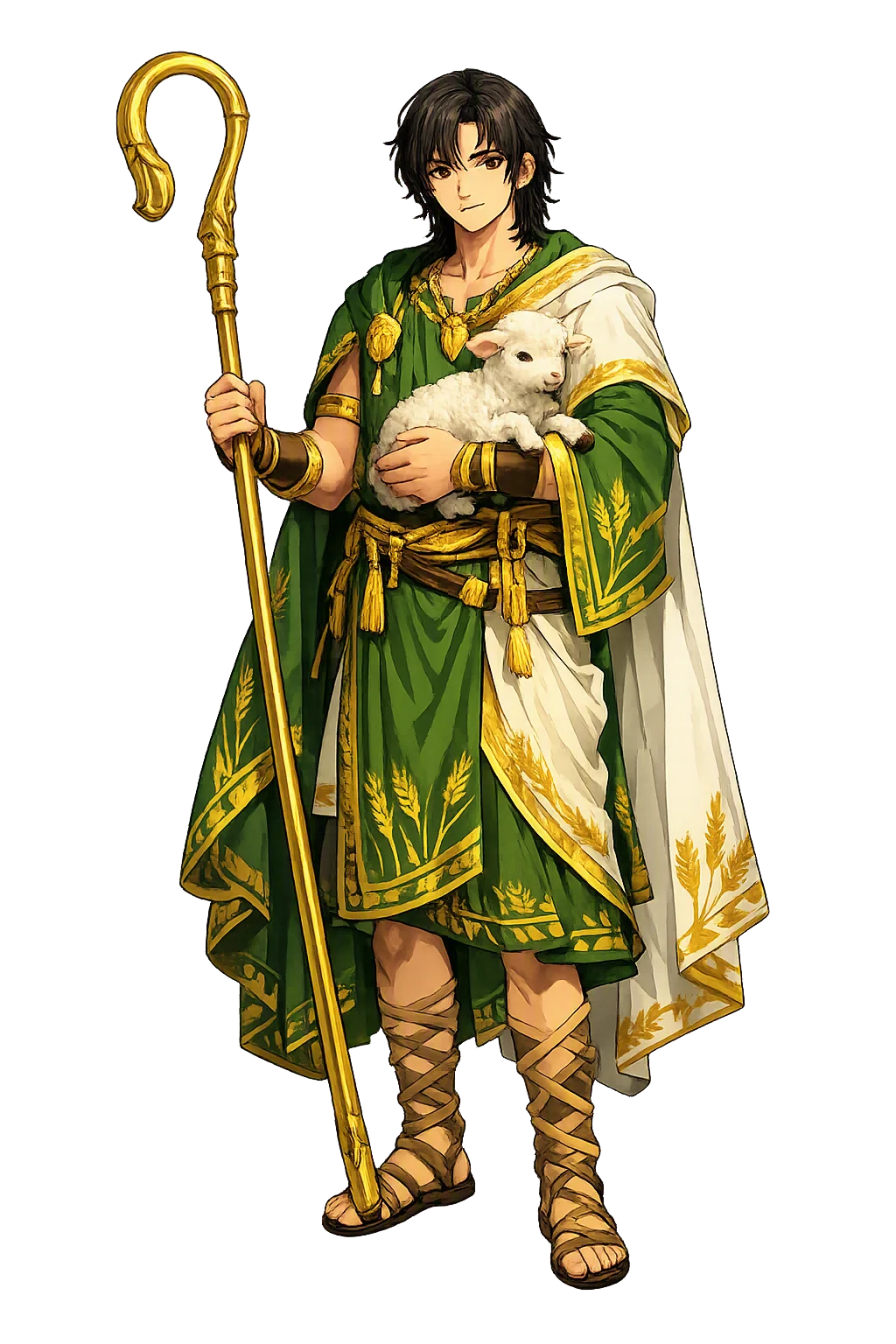
Stress-testing Dumuzid: do the industry seats hold?
Audit: Dumuzid, seat by seat. The atlas makes claims; the myths decide which ones stand. This is the record of what held.
At a Glance
- Temple: Dumuzid
- Pantheon: Mesopotamian
- Domain of influence: Shepherds, Vegetation
- Pattern seats: 4
- Sectors touched: Energy & Natural World · Home & Lifestyle · Society & Spirit · Culture & Entertainment
- Strongest seat: Agriculture, Food & Harvest
- Series: The Resonance Files, No. 132 of 548
The Test
Seat 1: Agriculture, Food & Harvest
Claim: Dumuzid is the Sumerian shepherd-god of vegetation and the sheepfold; milk, wool, date palms, and seasonal fertility are his canonical domain, making agriculture the primary industry fit. Exhibit: The Shepherd and the Farmer — In the Sumerian poem Dumuzi and Enkimdu (ETCSL 4.
Verdict: survives scrutiny. The myth and the trade do the same work.
Seat 2: Food & Hospitality
Claim: The pastoral economy supplies milk, cheese, and meat; Dumuzid's sacred-marriage feast turns the products of the flock into the institutional table. Exhibit: The Bridal of Heaven and Earth — The sacred-marriage songs (ETCSL 4.
Verdict: holds under load. The correspondence is functional, not decorative.
Seat 3: Funerary & Memorial Services
Claim: His half-year sojourn in the underworld and the ancient laments for Tammuz map directly onto mourning, memorial rites, and the seasonal remembrance of loss. Exhibit: Dumuzid in the Underworld — In the Descent of Inanna (ETCSL 1.
Verdict: survives scrutiny. The myth and the trade do the same work.
Seat 4: Wine, Brewing & Hospitality
Claim: Mesopotamian wedding and New Year liturgy involved beer and date-palm wine; Dumuzid's bridal songs belong to the feast and hospitality tradition. Exhibit: The Shepherd and the Farmer — In the Sumerian poem Dumuzi and Enkimdu (ETCSL 4.
Verdict: holds under load. The correspondence is functional, not decorative.
The Control Group
Against the seats that survived, one control: the temple's own summary of its figure — Dumuzid's myths are woven through the great Sumerian literary corpus: courtship songs, sacred-marriage hymns, the Descent of Inanna, and the laments for his death. The seats do not drift far from it. That is the audit's cleanest result.
The Method, Stated Plainly
Skeptical? Good — the system is built for you. Every seat in this file carries its why-line and its weight, the full derivation is public at the methodology page, and the challenge process is part of the design. Falsifiable is not a posture here; it is the mechanism.
For the Ones Who Work There
For a sponsor in agriculture, food & harvest, the fit here is not adjacency — it is inheritance. Your trade already tells this story every working day; the temple simply holds the original. The patron tier and the advertising terms carry the mechanics; the myths above carry the reason.
The File Continues
This is one of 548 Resonance Files — the third dispatch from every flagship temple, where the myths meet the markets. The temple's founding dispatch tells the name's story; its Restoration File tells the spelling's; the blog index holds the whole archive.
Continue the series — previous: Draupnir (read it) · next: Durgā (read it).
The Resonance Files are argued from the same canonical record as the pattern atlas itself: the lexicon, the lore catalog, and the cited sources. Every seat can be challenged at the methodology page — and the challenge is the point.