
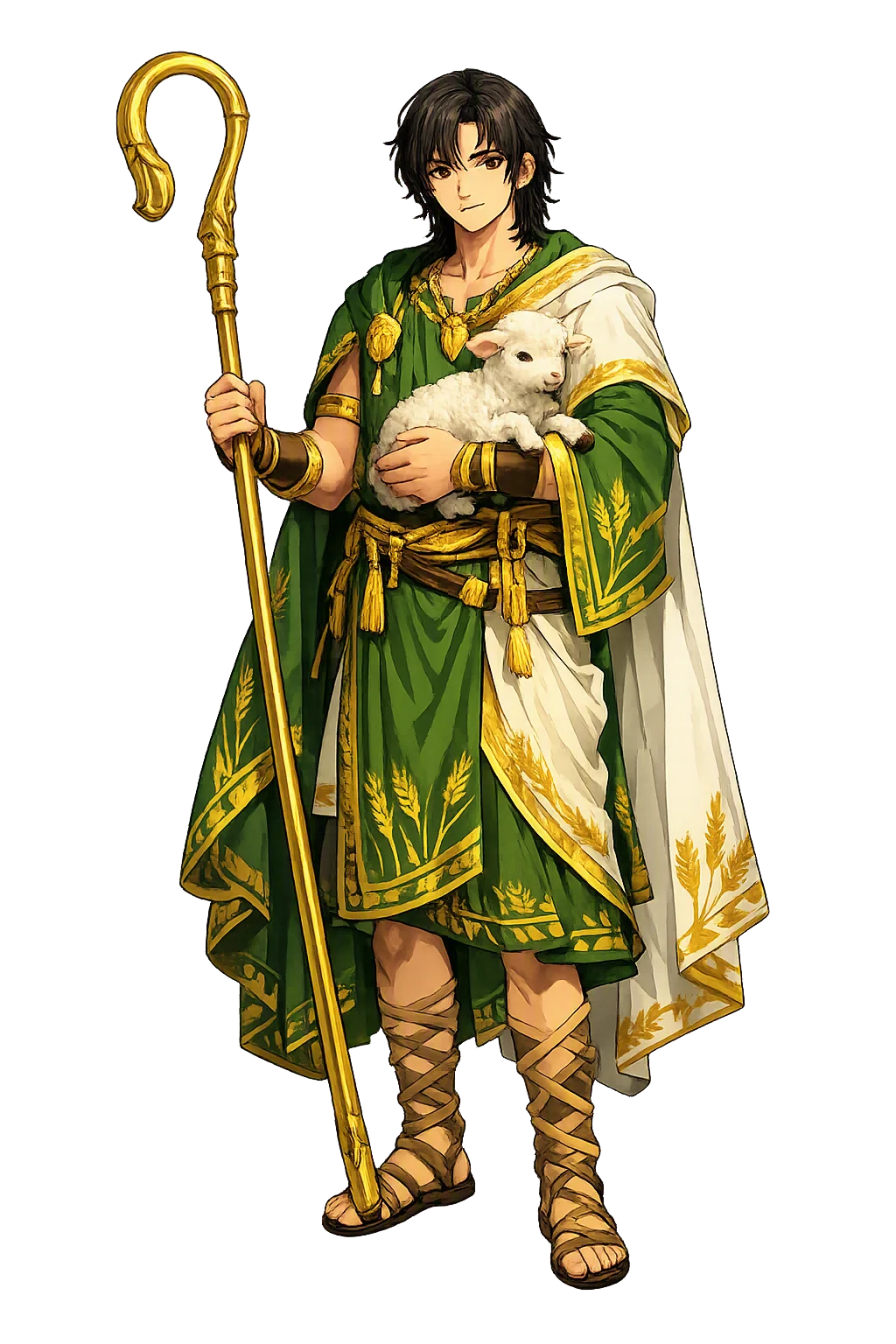
The canonical register: Dumuzid
A letter to a colleague, 31 July 2026 — on the name Dumuzid, and on the forms that keep failing it.
Your note said, roughly: surely the marks are a nicety. Permit me to use Dumuzid to show they are not.
First, the attestation. The attested form is 𒀭𒌉𒍣, from the tradition's own record. The canonical transliteration is Dumuzid.
Say it aloud as the sources heard it: 'doo-MOO-zid' — the first two syllables are soft and round, the last closes crisply like 'zid'. The marks are what carry that sound to a reader who has never heard it spoken.
On the plain form — and I want to be precise, because you pushed on this. The plain form dumuzid differs from the canonical Dumuzid only by convention of display — case, not content. It is acceptable everywhere: in legacy systems, in plain-text citation, in the DNS itself. What is not acceptable is what follows in the register: respellings that change the letters, not just their case.
One more thing, because it always surprises: the name did not stay home. Dumuzid is the Sumerian original behind the Akkadian Tammūzu and the later West Semitic Tammuz. The Greeks knew a comparable dying-and-rising vegetation figure in Adonis; while Adonis has separate Northwest Semitic roots, the two share the same seasonal logic and were sometimes identified in later antiquity.
And it never stopped working. The name Tammuz outlived Mesopotamian cult by millennia. The fourth month of the Jewish calendar, Tammuz, preserves his memory, and the fast of the Seventeenth of Tammuz commemorates national calamity.
The Convention's Own History
Cuneiform writes a consonant inventory English does not have: š, ṣ, ṭ, ḫ mark sibilants and stops that Akkadian and Sumerian distinguished and meaning depends on — the difference between 'sun' and 'son' is exactly one ṣ. Assyriological transliteration (the sign lists of Borger and the Chicago Assyrian Dictionary) settled those marks over the last century and a half, and the register keeps them because dropping them merges gods, cities, and concepts that the tablets keep apart.
Where Protocol Meets Practice
The technical answer is simple: the canonical marks are legal IDNA 2008 characters, encoded as punycode under `xn--`. The practical answer is messier: legal does not mean stocked (registrar inventory is partial), and stocked does not mean typeable (stacked diacritics defeat mobile keyboards).
So the register's rule is a hierarchy of attested forms — full restoration, circumflex, macron-only, attested variant, and finally plain ASCII for the systems that cannot carry marks. Every rung is defensible because every rung is attested. The forms this register rules against are not rungs; they are errors, and errors do not get rungs.
Write back when you have checked the sources; they are better company than I am.
— The Register
The Verdict
Dumuzid is the canonical form: attested, checkable, and enforced across the temple, the lexicon, the cards, the APIs, and this register. The plain form dumuzid shares that standing — the two are the same name in every system. The false forms above are documented so that no reader has to take the temple's word on faith — the violations are stated, the sources are named, and the register stands open to challenge on every line.
The temple of Dumuzid stands at /dumuzid/.
The docket for this ruling: no false forms on the docket; no contested forms attested; the attestation rests on 6 cited sources — ETCSL (Electronic Text Corpus of Sumerian Literature): Inanna's Descent 1.4.1; Dumuzi and Enkimdu 4.08.33; The Death of Dumuzid 4.08.32; Dumuzid's Dream, Black & Green, Gods, Demons and Symbols of Ancient Mesopotamia (British Museum Press, 1992), Jacobsen, Thorkild, The Treasures of Darkness (Yale University Press, 1976).
The Register Continues
This is one of 548 entries in the Canonical Register — the authoritative reference for every flagship temple. The temple's founding dispatch tells the name's story; its Restoration File details the marks; its Resonance File reads the archetype into the industries. The blog index holds the whole archive, and the Rulebook states the convention this register enforces.
Continue the register — previous entry: Draupnir (read it) · next entry: Durgā (read it).
The Canonical Register is written from the same canonical record as the lexicon itself. If a false form is missing from this page, it is because the evidence does not support calling it false — or because we have not seen it yet. Show us, with a citation, and the register will answer.