
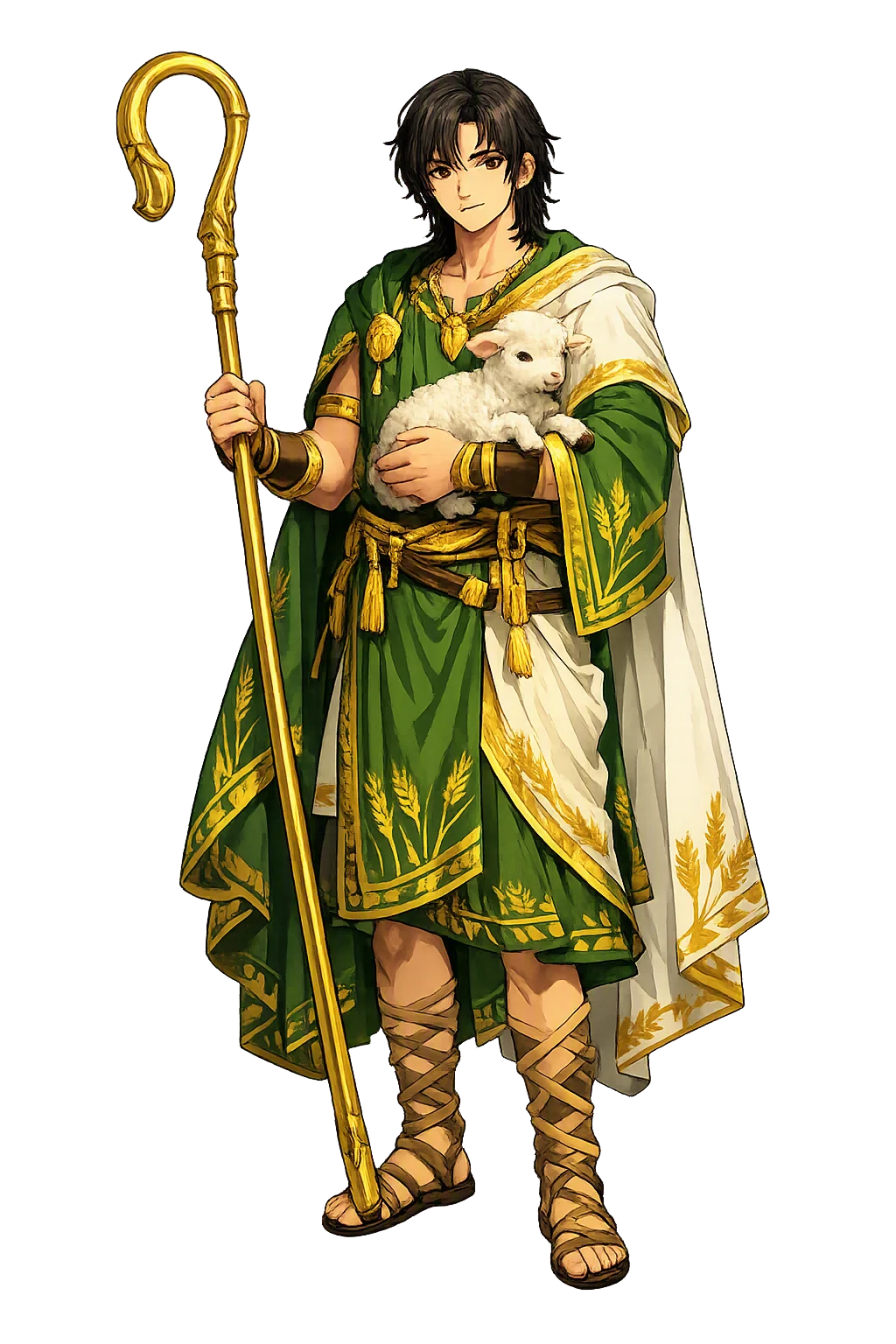
The provenance file on Dumuzid
The provenance file for Dumuzid. Nothing here is unsourced; that is what the file is for.
Provenance
1. The attestation. 𒀭𒌉𒍣, from the tradition's own record. On record: ETCSL (Electronic Text Corpus of Sumerian Literature): Inanna's Descent 1.4.1; Dumuzi and Enkimdu 4.08.33; The Death of Dumuzid 4.08.32; Dumuzid's Dream, Black & Green, Gods, Demons and Symbols of Ancient Mesopotamia (British Museum Press, 1992), Jacobsen, Thorkild, The Treasures of Darkness (Yale University Press, 1976), Kramer, Samuel Noah, The Sumerians (University of Chicago Press, 1963).
2. The narrative record. The Shepherd and the Farmer — In the Sumerian poem Dumuzi and Enkimdu (ETCSL 4. 08. The Bridal of Heaven and Earth — The sacred-marriage songs (ETCSL 4. 08.
3. The physical record. Cuneiform tablets from Nippur, Ur, and Uruk preserve Dumuzid's sacred-marriage songs and death laments. Neo-Assyrian and Late Babylonian copies of the Descent of Inanna and the Tammuz liturgies attest his continued cult into the first millennium BCE. The biblical witness in Ezekiel 8:14 confirms the rite's spread to Jerusalem, while the month-name Tammuz in the Jewish calendar preserves his memory into the present.
4. The current holding. The temple at /dumuzid/, classified Tier 2. One decisive feature survives — a single, honest mark — which places the restoration in Tier-2: exact, and exactly labeled.
5. The documented resonances. Agriculture, Food & Harvest, Food & Hospitality, Funerary & Memorial Services — seats argued and weighted in the pattern atlas, read through the myths in this temple's Resonance File.
6. The primary sources. Enūma Eliš, The Epic of Gilgamesh — the library this file answers to, open at the Sacred Texts collection.
7. The continuing record. The name Tammuz outlived Mesopotamian cult by millennia. The fourth month of the Jewish calendar, Tammuz, preserves his memory, and the fast of the Seventeenth of Tammuz commemorates national calamity.
At a Glance
- Restored name: Dumuzid
- ASCII form: dumuzid
- Meaning: "Faithful son"
- Domain of influence: Shepherds, Vegetation
- Pantheon: Mesopotamian
- Classification: Tier 2
- Original script: 𒀭𒌉𒍣
- Series: The Restoration Files, No. 132 of 548
The Emblems
The name does not travel alone. Shepherd's crook — The emblem of his pastoral rule and the surrogate kingship enacted in the sacred marriage; Milk pail and churn — The dairy abundance of the flock; the goods that win Inanna's hand over the farmer's grain; Date palm — The sacred tree of Inanna's garden and the vegetative power that flourishes in Dumuzid's season. Each emblem is filed in the temple's record with its own provenance, the same discipline the spelling gets.
For the Voice
'doo-MOO-zid' — the first two syllables are soft and round, the last closes crisply like 'zid'. The reconstructed line runs `/duˈmu.zid/` — the temple's pronunciation atlas carries the phonemes one by one.
The Discipline It Answers To
This restoration belongs to Mesopotamian, the tradition that invented writing and immediately used it for the gods. The rules that govern it are not house style; they are the tradition's own scholarship, applied with the same care here as in any edition — and published, with the sources, so the file can be checked the way an edition can be checked. One decisive feature survives — a single, honest mark — which places the restoration in Tier-2: exact, and exactly labeled.
The File Continues
Read the founding dispatch for the name's full story, the Resonance File for the archetype at work — or the whole archive in one sitting.
Continue the series — previous file: Draupnir (read it here) · next file: Durgā (read it here).
The Restoration Files are written from the same canonical record as the temples themselves: the lexicon, the lore catalog, the pattern atlas, and the cited scholarly sources. If a file ever disagrees with its temple, the temple is right — tell us, and the file will be corrected.