
The appointments Auðhumla made — and who is keeping them
One myth is a story. A cycle of myths is a specification. Read Auðhumla's cycle in order and the industries fall out of it one by one.
At a Glance
- Temple: Auðhumla
- Pantheon: Norse
- Domain of influence: Primeval Cow, Nourisher of Creation
- Pattern seats: 5
- Sectors touched: Energy & Natural World · Culture & Entertainment · Home & Lifestyle · Commerce & Governance · Society & Spirit
- Strongest seat: Agriculture, Food & Harvest
- Series: The Resonance Files, No. 69 of 548
The Cycle, Read Forward
Agriculture, Food & Harvest — through The Cow in the Void
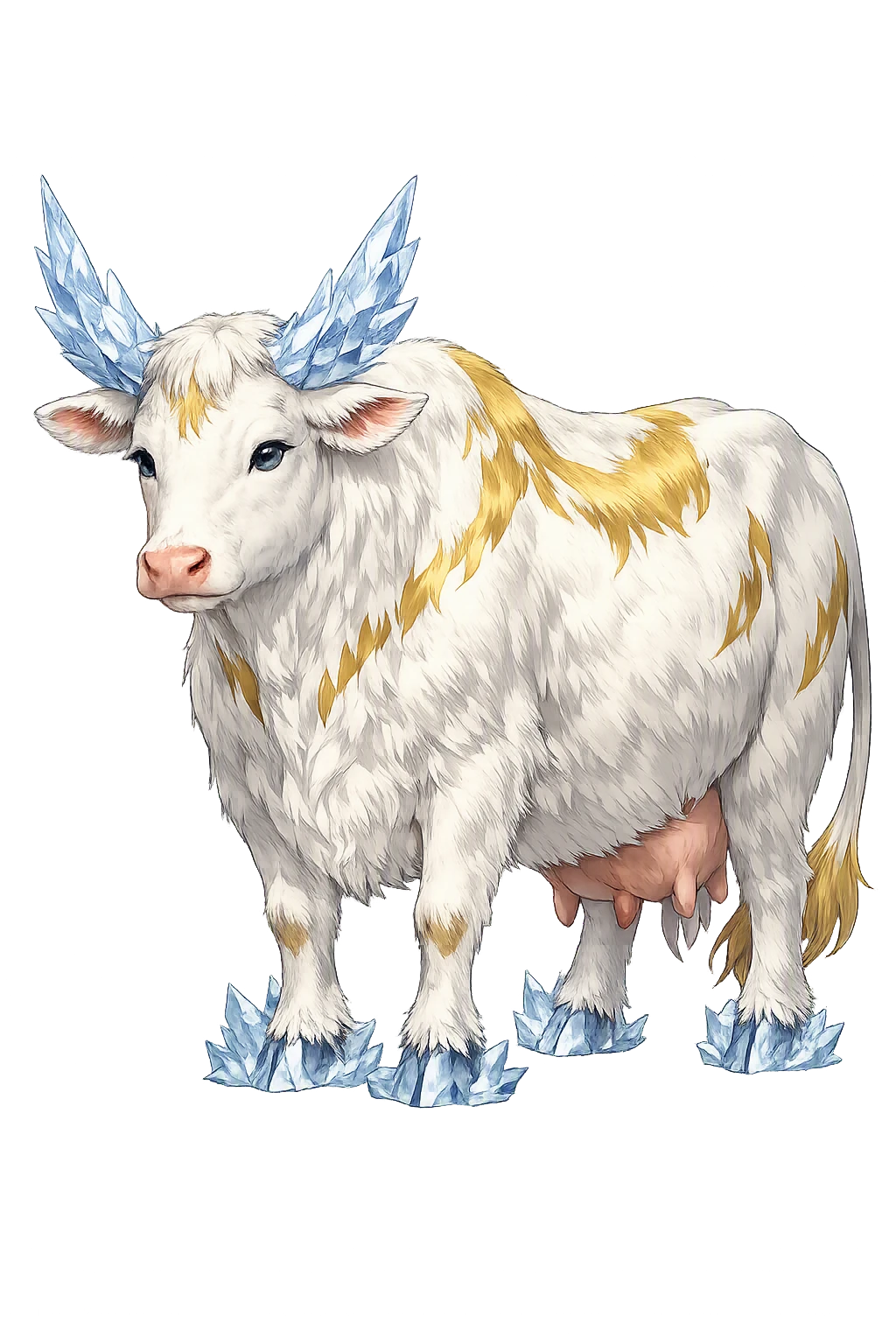
Snorri Sturluson tells how the rivers of Élivágar, flowing out of Niflheim, hardened into ice in the void of Ginnungagap, while sparks and molten blasts blew over it from Múspell to the south. Where the heat met the ice it melted and dripped; from the living drips in the north came Ymir, the first frost giant, and he was not alone: a second dripping formed the cow Auðhumla, her udders flowing with four rivers of milk.
The atlas states the seat in one line: The primeval cow whose milk fed the first giant; dairy and nourishment at the dawn of the world. The story above is the long version of the same sentence. The trade thinks it is optimizing a process. It is re-enacting a charter.
Mythic Name Restoration — through Búri Emerges
On the first day that Auðhumla licked the rime-stones, hair came forth from the stone by evening; on the second day, a head; on the third day, the whole man stood free. His name was Búri — 'the producer' — and he was tall and beautiful.
The atlas states the seat in one line: The primeval cow of Norse cosmogony, licking the first god from the ice; the restored Auðhumla keeps the eth and length. The story above is the long version of the same sentence. That is the cycle working: story becomes duty, duty becomes trade.
Food & Hospitality — through Two Lines from One Source
Auðhumla stands at the branching point of the Norse cosmos — a nurse shared by the two enemies of the world's last day. Ymir, fed on her milk, slept and sweated out the race of frost giants, male and female, who will ride against the gods at Ragnarǫk; Búri, freed by her licking, begins the line that runs through Borr and Bestla to Óðinn, Vili, and Vé — the three who will dismember Ymir and build the world from him.
The atlas states the seat in one line: The primeval cow whose milk nourished creation; dairy and abundance at the first table. The story above is the long version of the same sentence. That is the cycle working: story becomes duty, duty becomes trade.
Ancestry & Heritage Services — through A Single Chapter, and Silence
Honesty about the sources deepens rather than diminishes her. Auðhumla is known from a single chapter — Gylfaginning 5 — of a single work, Snorri Sturluson's Prose Edda (c.
The atlas states the seat in one line: The primeval nourisher; from her milk the first giant grew and the gods were licked from the ice. The story above is the long version of the same sentence. The trade thinks it is optimizing a process. It is re-enacting a charter.
The Theme That Runs the Cycle
Auðhumla has only one extended scene in Norse mythology, preserved in a single chapter of Snorri's Prose Edda — but it is the scene from which everything else follows: the void's first feast, and the patient tongue that frees the first god.
The Method, Stated Plainly
The atlas is not a horoscope. Seats are earned from the sources — argued, weighted, published — and every one of them can be challenged at the methodology page. A match that cannot survive an argument does not survive review. That is the whole trick: the patterns are claims, and claims can be tested.
For the Ones Who Work There
If you work in agriculture, food & harvest, mythic name restoration, or any trade this temple holds a seat in, this is the honest version of what a placement means: your industry beside the story it has been re-telling all along — on the temple floor itself, before an audience that came specifically to read it. The patron tier and the advertising terms describe the mechanics; the resonance above describes the fit.
The File Continues
One of 548 Resonance Files — the series where the pantheon goes to work. Read the founding dispatch for the name, the Restoration File for the spelling, or the whole archive end to end.
Continue the series — previous: Átropos (read it) · next: Avalokiteśvara (read it).
The Resonance Files are argued from the same canonical record as the pattern atlas itself: the lexicon, the lore catalog, and the cited sources. Every seat can be challenged at the methodology page — and the challenge is the point.