
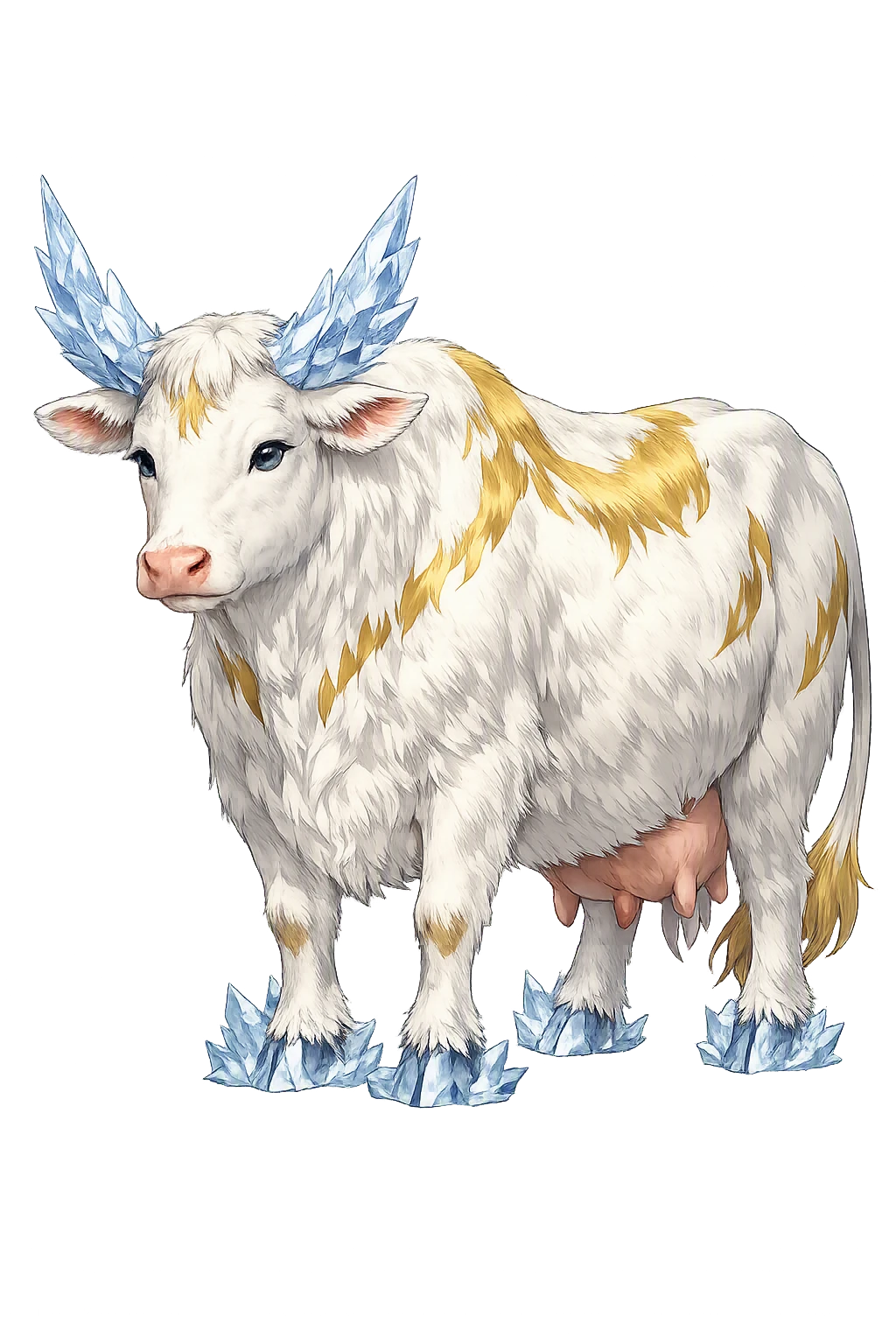
From Younger Futhark to Unicode: the journey of Auðhumla
Long before it was a domain, this name traveled through scripts. Auðhumla begins in Younger Futhark, passes through scholarly transliteration, and ends — for now — inside the punycode machinery of the global DNS. Each stage of that journey preserves some information and loses some, and the craft of restoration is knowing exactly which marks matter. This post follows the name stage by stage: the original script, the reconstructed pronunciation, the mythological record, the material evidence, and finally the Unicode form that carries all of it into the address bar. Think of it as a biography of a name, told through its spelling.
At a Glance
- Restored name: Auðhumla
- ASCII form: audhumla
- Meaning: "Wealth-humla (primeval cow)"
- Domain of influence: Primeval Cow, Nourisher of Creation
- Pantheon: Norse
- Classification: Tier 1
- Original script: ᛅᚢᚦᚢᛘᛚᛅ (Younger Futhark)
- Live domain: auðhumla.com
Overview
Auðhumla (audhumla) — Primeval Cow, Nourisher of Creation · the Cow of the Void — belongs to the Norse tradition, where she is catalogued under the domain "Primeval Cow, Nourisher of Creation". The name means "Wealth-humla (primeval cow)".
Auðhumla is one of the earliest beings in Norse cosmogony. She emerges from the melting rime of Ginnungagap at the dawn of time and nourishes the primordial giant Ymir with her milk. While Ymir sleeps, she licks the salty rime-stones for three days and reveals a man: Búri, the first of the gods and grandfather of Óðinn. Without Auðhumla there is no Búri, no Borr, no Óðinn, and no world shaped from Ymir's body. She is therefore the silent generative power behind the whole mythology of the Æsir.
PuniCodex restores the name as Auðhumla and serves its temple at auðhumla.com. The restoration preserves the eth (ð) and the distinctive vowel quality that the ASCII form loses, and exactly one historically valid Unicode restoration exists, which places the name in Tier 1. The plain ASCII form audhumla survives as a modern convenience imposed by the early domain-name system; the restoration, not the fallback, is the form the project defends as philologically complete.
The Name
The name is attested in Old Norse as Auðhumla. Etymologically it means "Wealth-humla (primeval cow)". The first element, auð-, can mean 'wealth, prosperity' or 'desolate, empty' depending on context; in the name of the primeval cow it is usually interpreted as 'wealth' or as the void from which she emerges. The second element, -humla, is obscure and possibly a by-form related to words for cattle or humming sound. Cleasby–Vigfússon and Zoëga record the name without a settled etymology.
The ASCII form audhumla survives only because the early domain-name system could not carry diacritics; it is a technological compromise, not an ancient spelling. The Unicode restoration Auðhumla recovers the voiced dental fricative eth (ð) directly in the address bar. The original carries a distinctive letter, and exactly one historically valid Unicode restoration exists, which places the name in Tier 1.
The letter-by-letter transformation runs:
- a → A — Same, capitalized
- u → u — Same
- d → ð — Eth: voiced dental fricative
- h → h — Same
- u → u — Same
- m → m — Same
- l → l — Same
- a → a — Same
The project holds the domain auðhumla.com as the canonical home of this name.
Etymology & Roots
The recorded derivation reads: Old Norse Auðhumla, the primeval cow that licked the salt blocks and revealed Búri, ancestor of the gods.
The root gloss is "primeval cow."
The reconstruction is classed as attested.
The Original Script
The name is preserved in medieval Icelandic manuscripts in the Latin alphabet as Auðhumla — Old Norse (North Germanic), attested 13th–14th c. CE in the codices of Snorri's Edda (Gylfaginning 5), recording material centuries older. Before the Latin bookhand, Old Norse names were carved in the Younger Futhark; no runic attestation of this name survives, so the manuscript form is the primary witness.
The scholarly rendering proceeds step by step:
- The name is a weak feminine in -la.
- The normalized Old Norse spelling uses the letter eth (ð) for the voiced dental fricative.
- In the Younger Futhark it would have been carved approximately ᚢᚢᚦᚼᚢᛘᛚᛅ, although the exact runic spelling is hypothetical.
- The Unicode form Auðhumla is therefore a scholarly normalization: the eth distinguishes the Norse pronunciation from the plain ASCII form.
Because the name is transmitted only in medieval manuscripts, its form is a normalized scholarly spelling rather than an attested runic carving.
Pronunciation
The reconstructed pronunciation of the name is /ˈauðˌhum.la/ — Old Norse Reconstruction.
Phoneme by phoneme:
- Auð- — Diphthong [au] followed by voiced dental fricative [ð]; the first syllable carries stress
- -hum- — Short [u], voiced bilabial nasal [m], and voiceless glottal fricative [h]
- -la — Lateral [l] plus short open back [a], the weak feminine ending
For the modern speaker, the closest approximation is: 'OWTH-hoom-la' — the 'ð' is the sound of English 'this' or Icelandic 'auður'.
Kindred and historical forms of the name:
- Old Norse — Auðhumla, the primeval cow of Gylfaginning
- Modern Icelandic — Auðhumla, unchanged in spelling and still recognizable
Auðhumla is Tier 1 because the Norse form preserves the distinctive eth (ð) that ASCII loses. The restoration keeps that letter visible in the domain name.
Mythology
Auðhumla's mythology is told almost entirely in a single chapter of Snorri's Gylfaginning, but that chapter is foundational for the whole Norse cosmos.
Birth from the Rime (Gylfaginning 5)
Snorri describes the primordial landscape: to the north was Niflheimr, cold and misty, and to the south Múspell, hot and fiery. Between them lay Ginnungagap, the yawning void. The heat from Múspell met the ice from Niflheimr, and the melting rime dripped into the void, gradually taking the shape of a living creature: Ymir, the first giant. As the rime continued to melt, a cow emerged, greater than any cow on earth, and her name was Auðhumla.
Nourishment of Ymir
Auðhumla fed Ymir with her milk, and from his sweat — while he slept — sprang the race of male and female giants who populated the pre-cosmic world. She herself fed by licking the salty rime-stones. In this economy of bodies and substances, the cow is the pivot: she transforms inorganic rime into organic milk, and the giant transforms milk into the beings from whom the gods will later differentiate themselves.
The Licking-forth of Búri
On the first day Auðhumla licked the stones, a man's hair appeared; on the second day, his head; on the third, the whole man stood free. His name was Búri, 'produced', and he was fair, mighty, and the father of Borr. Borr in turn married Bestla, daughter of the giant Bǫlþorn, and their sons were Óðinn, Vili, and Vé. The cow's patient licking thus produces the godly line that will eventually kill Ymir and build the world from his corpse.
Absence from the Poetic Edda
Auðhumla does not appear in the surviving Poetic Edda. Her story is Snorri's learned reconstruction, possibly drawing on lost eddic poems or on his own synthesis of cosmogonic traditions. This has led scholars to debate whether she is an old Indo-European figure — parallel to the Vedic cow of plenty and the primeval bovine of other creation myths — or a Snorronic invention.
The Cow in the Void (Gylfaginning 5)
Snorri tells how the rivers of Élivágar, flowing out of Niflheim, hardened into ice in Ginnungagap. When the heat of Múspell met that ice, it melted and dripped; from the drips came Ymir, the first frost giant. A second dripping formed the cow Auðhumla. She fed Ymir with her milk, and she herself fed by licking the salty, hoar-frost-covered stones.
Búri Emerges (Gylfaginning 5)
On the first day that Auðhumla licked the stones, a man's hair came forth by evening; on the second day, a head; on the third day, the whole man stood free. He was called Búri. He was tall and beautiful, and his son Borr married Bestla, daughter of the giant Bǫlþorn, and fathered Óðinn, Vili, and Vé. Every god of the Æsir descends, through Búri, from the cow's patient tongue.
Two Lines from One Source (Creation genealogy)
Auðhumla stands at the branching point of the Norse cosmos. Ymir, fed by her milk, begets the race of frost giants; Búri, freed by her licking, begins the race of gods. The two enemies of Ragnarǫk share a common nurse — an image of cosmic kinship that the mythology never tries to resolve.
Symbols & Iconography
The iconography associated with Auðhumla is sparse but potent, concentrating on the act of creation through nourishment:
- The licked stone — the rime-covered rock from which Búri is revealed
- The udder — source of the milk that nourishes Ymir and the pre-cosmic giant race
- The icy void — Ginnungagap, the yawning gap from whose melting rime she emerges
- The four rivers of milk — the streams that flow from her udder to feed the primordial giant
- The first god emerging — Búri, freed from the stone by her tongue
- The primeval cow — The first animal, whose milk is the original nourishment of the cosmos
- Salt rime-stones — The ice she licks for three days until Búri is freed
- Four milk-streams — The rivers from her udders that sustain Ymir
- The tongue that shapes — Her licking is the first creative act after the melting of ice — not speech, but patient touch
Archaeology & Evidence
No cult site, votive deposit, or named image of Auðhumla is known. Her attestation is entirely literary, confined to Snorri's Gylfaginning and the mythographic tradition that depends on it. The relevant manuscripts are the principal codices of Snorri's Edda — the Codex Regius (GKS 2367 4to, early 14th c.), the Codex Wormianus, and the Uppsala Edda — which preserve the cosmogonic narrative. The visual record is modern and derivative: illustrations of the primeval cow are almost always based on Snorri's prose rather than on an ancient iconographic type.
Realm & Domain
Auðhumla belongs to the Norse tradition as the primeval cow, the first nourisher and the agent of revelation. Her domain is the border between non-existence and existence: she feeds the giant from whom the world will be made and licks the first god from the ice.
Nourishment
Her milk sustains Ymir through the timeless ages before the creation of the world.
Cosmogony
By licking the rime-stones she uncovers Búri, setting in motion the genealogy that produces Óðinn and his brothers.
The Primeval Animal
She is not a domestic beast but a cosmic one, belonging to the same pre-creation order as Ymir and the rime of Ginnungagap.
Generation from the Void
Her emergence from the melting rime embodies the Norse idea that life arises from the meeting of fire and ice.
Four Streams of Milk
From her udders flow four rivers of milk that nourish the primeval giant Ymir through the long winter of Ginnungagap.
Licking Búri Free
On the first day she licks the rime, a man's hair appears; by the third day, Búri stands whole, tall, and beautiful.
The Void of Ginnungagap
She exists in the gap between Niflheim's ice and Múspell's fire, where the first life takes shape from melting rime.
Mother of Abundance
Her name means "wealth-humla"; she is the cow whose body is the first feast, feeding giant-kind while releasing god-kind.
Across Cultures
Auðhumla has no direct Roman or Christian counterpart, but she belongs to a widespread comparative type: the primeval bovine of creation mythology. The Vedic Dhenu, the cow of plenty, and the Iranian gōšūrvan, the primal bull slain by Ahriman, share the motif of a foundational animal whose body or products generate life. Within the Norse tradition she is inseparable from Ymir and Búri: the three form the pre-cosmic triad of giant, cow, and first god. Her kin in the PuniCodex corpus include Ymir, Bestla, and Óðinn.
Cultural Legacy
Auðhumla remains one of the most visually memorable figures of Norse cosmogony. She appears in modern retellings, illustrated editions of the Eddas, and popular media whenever the creation of the Norse world is depicted. Her image — a vast cow licking a god from the ice — encapsulates the Norse sense that life arises from strange, unromantic processes: licking, sweating, melting, and violence. In contemporary Heathen and Ásatrú practice she is honored as the first nourisher and the ancestor of the divine line. The name Auðhumla is rare as a personal name but instantly recognizable to anyone familiar with the sources.
The Scholarly Record
The account of Auðhumla given in this edition rests on the witnesses and reference works listed below. The Prose Edda supplies the only extended narrative; the handbooks and dictionaries secure the form and meaning of the name; comparative scholarship places her within the wider Indo-European cosmogonic pattern.
- Snorri Sturluson, Prose Edda, Gylfaginning 5 (the primeval cow; the licking-forth of Búri), trans. Anthony Faulkes (Everyman, 1987). Full text
- Poetic Edda (Eddukvæði), ed. Neckel-Kuhn; trans. Carolyn Larrington, Oxford World's Classics (2014). Full text
- Cleasby, Richard, and Guðbrandur Vigfússon, An Icelandic-English Dictionary, 2nd ed. (Oxford: Clarendon Press, 1957), s.v. Auðhumla.
- Zoëga, Geir T., A Concise Dictionary of Old Icelandic (Oxford: Clarendon Press, 1910).
- Simek, Rudolf, Dictionary of Northern Mythology, trans. Angela Hall (Cambridge: D. S. Brewer, 1993), s.v. Auðhumla.
- Lindow, John, Norse Mythology: A Guide to the Gods, Heroes, Rituals, and Beliefs (Oxford University Press, 2001), s.v. Auðhumla.
- Lincoln, Bruce, Myth, Cosmos, and Society.
- Gordon, E. V., An Introduction to Old Norse, 2nd ed. rev. A. R. Taylor (Oxford: Clarendon Press, 1957).
A Meditation
Auðhumla is the goddess of patience and transformation. She does not speak and does not fight; she licks, she nourishes, and she waits. From her milk comes the giant race, and from her licking comes the first god. She asks us to notice how life emerges from small, repeated acts — the tongue against stone, the udder against hunger — and how the largest consequences can have the humblest beginnings. The restoration of her name in Unicode honors the silent labor on which every creation depends.
The Unicode Restoration
Auðhumla is classified as Tier 1: the restoration preserves at least one distinctive feature — a diacritic or a distinctive letter — that the ASCII form loses. The ASCII fallback audhumla still resolves everywhere, but it is the restored form that carries the name's full information. Across the 8 characters of the name, the restoration adjusts 1: 1 further adjustment (ð). That is the whole thesis of this temple: the marks are the message.
Character by Character
The journey from audhumla to Auðhumla, one character at a time:
- a → A — Same, capitalized
- u → u — Same
- d → ð — Eth: voiced dental fricative
- h → h — Same
- u → u — Same
- m → m — Same
- l → l — Same
- a → a — Same
The Domain Name
The restored name is live as a working domain: auðhumla.com, which the DNS carries in punycode form as xn--auhumla-xza.com — an ASCII-compatible encoding that lets a non-ASCII name travel the global network without breaking older infrastructure. The visitor sees Auðhumla; the machines see the encoding. That duality is the engineering compromise on which the entire restoration rests, and it is why a name written the way its own tradition wrote it in Younger Futhark can now be typed into any browser on earth.
Why This Restoration Matters
Every stage of the journey from Younger Futhark to Unicode was an act of care: the scribe who first wrote the name, the lexicographer who glossed it, the engineer who taught the DNS to carry it. The PuniCodex restoration is the latest stage, not the last word — the Scholarly Edition is revised as the evidence improves. What does not change is the principle: a name deserves to be written the way its own tradition wrote it. Auðhumla in the address bar is that principle, made routable.
Explore Further
This post is one doorway into the temple. The home page carries the full character breakdown and the ambient canvas; the lore page tells the myths in long form; the Scholarly Edition preserves the sources, pronunciation data, and revision history; and the patron wall supports the restoration directly. For the wider map, browse the Lexicon, explore the Pantheon, or return to the PuniCodex blog.
Related Names
Sources
The full scholarly apparatus — every citation, revision, and review — lives in the Scholarly Edition. Key references for this post:
- Snorri Sturluson, Prose Edda, Gylfaginning 5, trans. Anthony Faulkes, Everyman / Viking Society for Northern Research, 1220.
- Poetic Edda (Eddukvæði), ed. Neckel-Kuhn; trans. Carolyn Larrington, Oxford World's Classics (2014), 1270.
- Cleasby, Richard, and Guðbrandur Vigfússon, An Icelandic-English Dictionary, 2nd ed. (Oxford: Clarendon Press, 1957), s.v. Auðhumla.
- Snorri Sturluson, Prose Edda, Gylfaginning 5, trans. Faulkes.
- Cleasby & Vigfússon, An Icelandic-English Dictionary, 2nd ed., s.v. Auðhumla.
- Gordon, E. V., An Introduction to Old Norse, 2nd ed. rev. A. R. Taylor (Oxford: Clarendon Press, 1957), phonology and grammar.
- Lexicon authorities for this entry: Prose Edda, Cleasby-Vigfusson, Zoëga.