
Why Ymir is spelled that way — and what it costs to get it right
There is no broken version of this name to repair. There is a record to preserve: Ymir, exactly as the scholarly convention supports it.
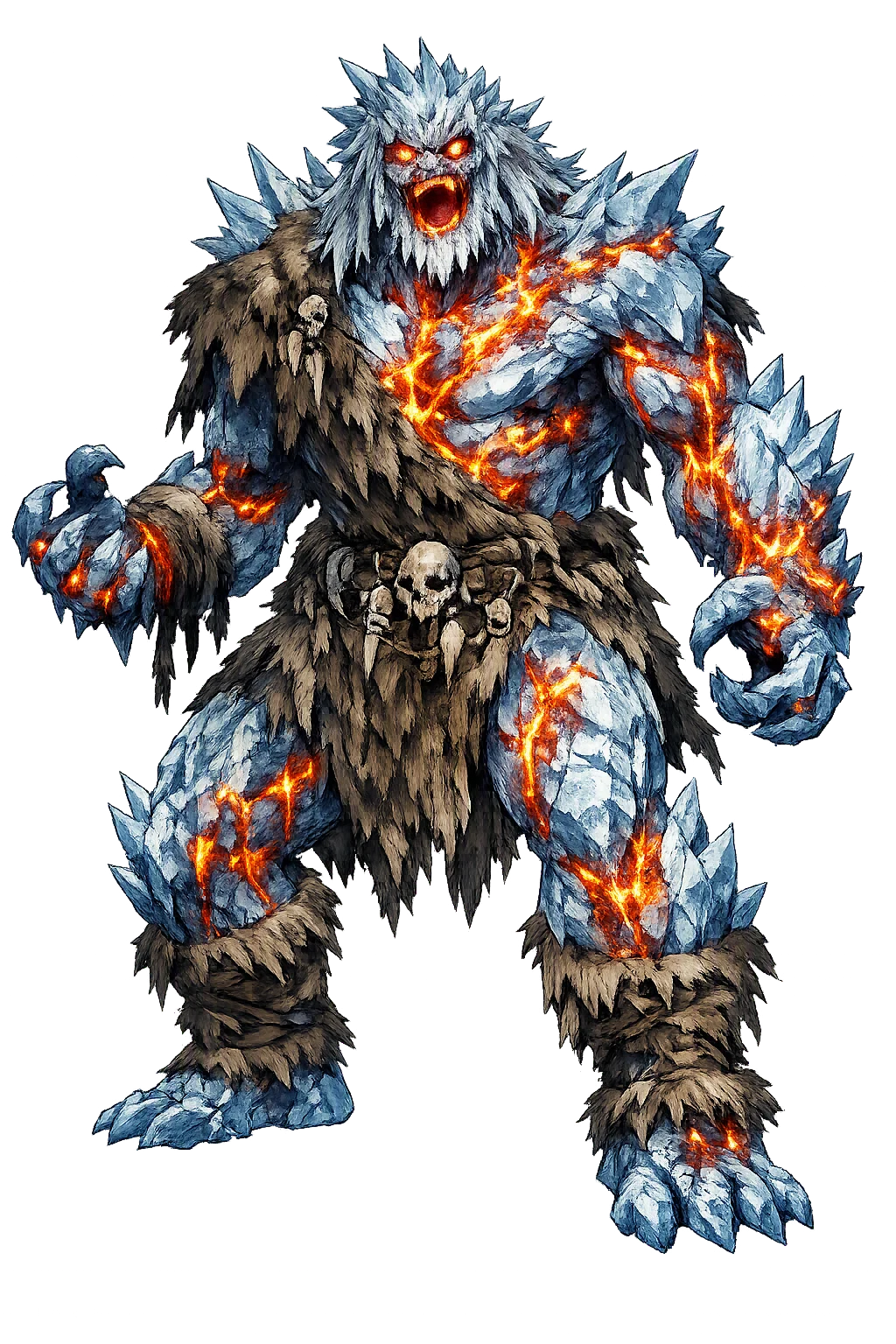
Ymir has no adventures and no cult: his mythology is cosmogony entire. He exists to be first — first life, first giant, first death — and the corpus treats him less as a character than as a fact of physics: the being out of whom everything had to be made, because before him there was nothing to make it from.
At a Glance
- Canonical name: Ymir
- ASCII form: ymir
- Meaning: "Twin, screamer (from *ymijaz)"
- Domain of influence: Primordial Giant, Chaos
- Pantheon: Norse
- Restoration: ASCII-equivalent form
- Reconstructed form: ᚢᛘᛁᛦ (a normalized scholarly specimen)
- Series: The Restoration Files, No. 589 of 597
The Name, Plain and Exact
Spoken, the name runs `/ˈy.mir/` — 'EE-meer' with rounded lips — say 'ee' while pursing the mouth as for 'oo' (the Old Norse y is German ü), then a short 'i' and a fully trilled final r.
The Temple That Stands Now
The canonical name is not a plaque; it is an address. The temple of Ymir lives at /ymir/, with its mythology in the lore halls, its peer-reviewed record in the Scholarly Edition, and its place in the pattern atlas on the patterns floor.
The displayed form is ASCII-equivalent.
Where the Name Stood First
Ymir is an entirely textual being: no runestone invokes him, no votive deposit names him, and no image can be securely identified with him — a silence that fits a cosmogonic abstraction rather than a cult figure. His attestation is the manuscript record. Vafþrúðnismál and Grímnismál survive in the thirteenth-century Codex Regius of the Poetic Edda (GKS 2365 4to); Völuspá is preserved both there and in the fourteenth-century Hauksbók; Snorri's creation account rests on the Codex Regius of the Prose Edda and related codices. Skaldic verse keeps the giant alive in kennings — the þulur catalogued in Skáldskaparmál list Aurgelmir, Brimir, and Bláinn among the giant-names — proving the cosmogony's currency in the working vocabulary of pre-Christian and early Christian poets. The comparative witnesses are themselves texts: Rigveda 10.90 and Tacitus' Germania, copied and recopied in Sanskrit and Latin manuscript traditions far from the North. The temple on the web is the newest of these addresses — the first one that fits in a pocket.
The Archetype at Work
The pattern atlas seats this temple in 3 industries, each match argued and weighted: History, Archives & Records (the first being — the corpus opens its memory with him; cosmogony made flesh.); Environmental & Climate Services (frost and rime personified — the primordial ice of Ginnungagap from which every lineage descends.); Mining & Natural Resources (his flesh the earth, his bones the mountains, his blood the sea — the world quarried from a giant’s body.). The Resonance File reads those seats through the myths themselves.
In the Sacred Texts
The Norse tradition is not a vibe; it is a library. The Sacred Texts collection holds Poetic Edda and Prose Edda — the primary sources the temple's scholarship is built on. The temple is the argument; the texts are the evidence.
The File Continues
The temple's founding dispatch tells the name's story; its Resonance File reads the myths into the industries; the blog index holds the whole archive.
Continue the series — previous file: Yīnyáng (read it here) · next file: Yoga (read it here).
The Restoration Files are written from the same canonical record as the temples themselves: the lexicon, the lore catalog, the pattern atlas, and the cited scholarly sources. If a file ever disagrees with its temple, the temple is right — tell us, and the file will be corrected.