
How Ymir found its canonical form
The ASCII form ymir is not missing anything that this name requires. Ymir is the canonical spelling supported by the scholarly record and the tradition's scholarly conventions. This post explains what that form preserves, how it is pronounced, which narratives surround it, and why consistency matters. There are no recovered accents to celebrate; there is something more useful — a spelling whose history can actually be checked.
At a Glance
- Canonical name: Ymir
- ASCII form: ymir
- Meaning: "Twin, screamer (from *ymijaz)"
- Domain of influence: Primordial Giant, Chaos
- Pantheon: Norse
- Restoration: ASCII-equivalent form
- Reconstructed form: ᚢᛘᛁᛦ (Younger Futhark)
Overview
Ymir (ymir) — Primordial Giant, Chaos · Twin, screamer (from ymijaz) — belongs to the Norse tradition, where it is catalogued under the domain "Primordial Giant, Chaos". The name means "Twin, screamer (from ymijaz)".
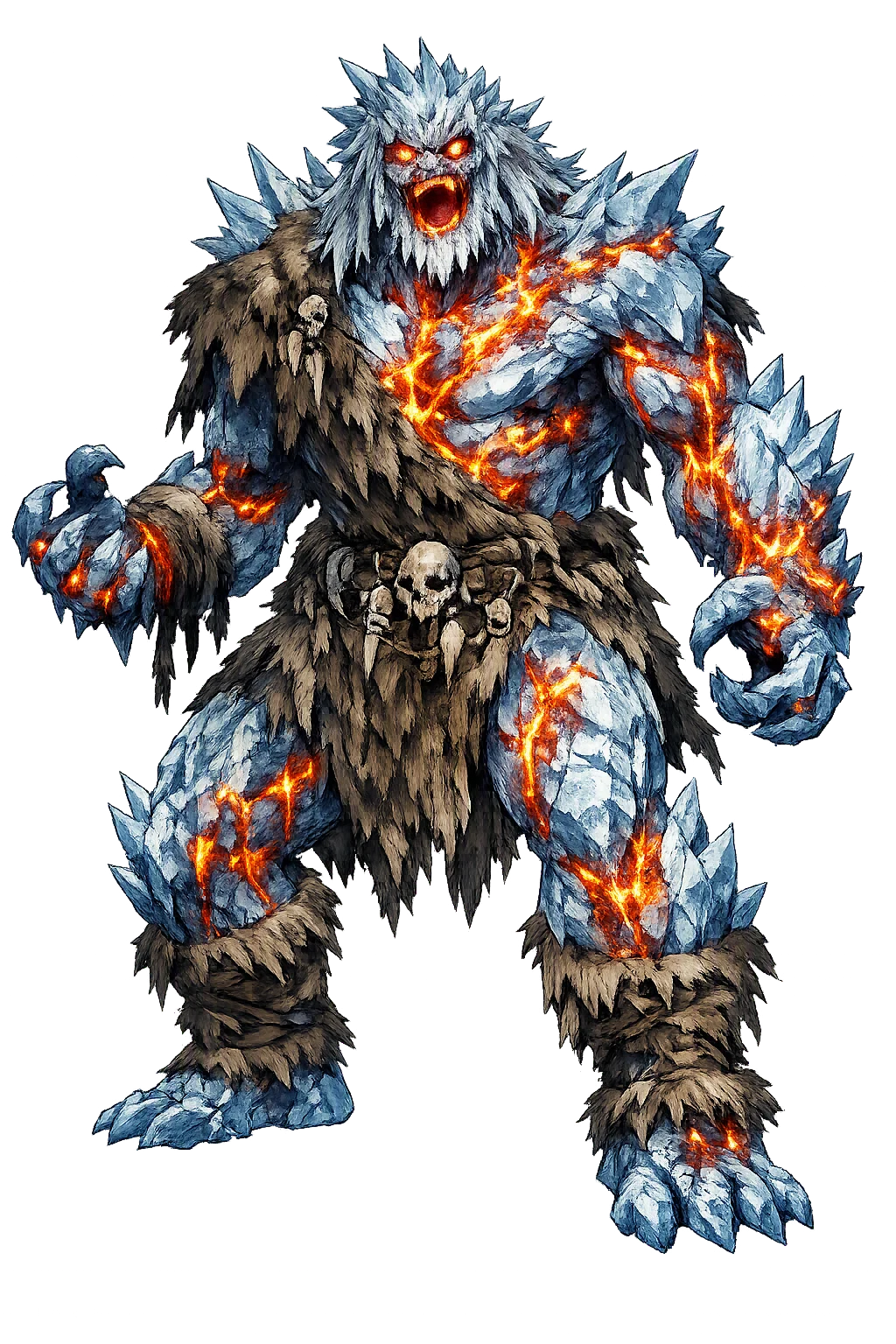
Ymir is the first living thing in the Norse cosmos — the frost-giant who condensed out of the dripping rime where the heat of Múspell met the ice of Niflheimr in the yawning void of Ginnungagap. He is the ancestor of every jotunn, the cow Auðhumla's nursling, and finally the raw material of creation itself: Óðinn, Vili, and Vé kill him, and from his body build the world — flesh to earth, blood to sea, bones to mountains, skull to sky.
PuniCodex records the canonical scholarly spelling Ymir and serves its temple at its temple. The displayed form is ASCII-equivalent — a description computed from the displayed form itself. The plain ASCII form ymir contains the same letters: no recovered diacritics or special encoding is claimed. The work here is consistent citation, capitalization, provenance, and cultural context.
The Name
The name is attested in Younger Futhark as ᚢᛘᛁᛦ. Etymologically it means "Twin, screamer (from *ymijaz)".
The reconstructed proto-form is ymijaz (proto-indo-european, "Twin, screamer"). Twin, screamer (from *ymijaz)
The canonical spelling Ymir matches the conventional scholarly romanization. The plain ASCII form ymir contains the same letters, so no lost diacritics or encoding transition is claimed. The editorial work is to fix one reviewed reference spelling, preserve capitalization and provenance, and keep the original evidence visible. The displayed form is ASCII-equivalent — a description computed from the displayed form itself.
The letter-by-letter transformation runs:
- y → Y — Same
- m → m — Same
- i → i — Same
- r → r — Same
Etymology & Roots
The recorded derivation reads: Twin, screamer (from *ymijaz)
The reconstructed proto-form is *ymijaz (proto-indo-european), glossed as "Twin, screamer".
The reconstruction is classed as attested.
The Original Script
The name is preserved in Younger Futhark as ᚢᛘᛁᛦ.
The scholarly transliteration is umir.
The rendering proceeds step by step:
- ᚢ (úr) writes the rounded back vowels /u, o, ø, ǫ, y/ and /w/
- ᛘ (maðr) writes /m/
- ᛁ (ís) writes both /i/ and /e/
- The spelling umir is a normalized phonetic reconstruction; Younger Futhark does not distinguish voiced/voiceless stops or separate short and long vowels
The normalized Old Norse form is Ymir — already plain ASCII, with no diacritic or distinctive letter for the restoration to recover; in the Younger Futhark the name would have been carved ᚢᛘᛁᛦ (úr ᚢ writing y as it writes u, then m, i, and ᛦ the final nominative -r). Because the name is pure ASCII, its domain was registered long ago in the ordinary way: ymir.com is held by a third party outside the PuniCodex collection and is watched for release — no form of the name is currently owned, and this temple claims none.
Pronunciation
The reconstructed pronunciation of the name is /ˈy.mir/ — Old Norse Reconstruction.
Phoneme by phoneme:
- Y — Close front rounded vowel [y], the sound of German ü or French u — lips rounded as for 'oo' while the tongue says 'ee'
- -m- — Voiced bilabial nasal [m], single and short, as in English 'mound'
- -i — Short close front [i], unrounded, the vowel of English 'bit'
- -r — Trilled alveolar [r] of the nominative ending, sounded fully as in modern Icelandic
For the modern speaker, the closest approximation is: 'EE-meer' with rounded lips — say 'ee' while pursing the mouth as for 'oo' (the Old Norse y is German ü), then a short 'i' and a fully trilled final r.
Kindred and historical forms of the name:
- Old Norse — Ymir, the primordial giant; the þulur also know him as Aurgelmir, 'mud-bellow', Brimir, and Bláinn.
- Old Norse (verb) — ymja, 'to scream, roar, resound' — the verbal root behind the strongest etymology of the name.
- Sanskrit — Yama, the first mortal and king of the dead, whose name means 'twin' — the comparandum of the alternative, debated 'twin' etymology.
- Modern Icelandic — Ymir, the name's unbroken living form.
Ymir is a plain restoration by the mechanical rule: the normalized Old Norse form is already plain ASCII — there is no diacritic and no distinctive letter for the ASCII alphabet to lose. The giant's cosmic scale vastly outruns his name's orthography; only the capital distinguishes the restored form from the input.
Mythology
Ymir has no adventures and no cult: his mythology is cosmogony entire. He exists to be first — first life, first giant, first death — and the corpus treats him less as a character than as a fact of physics: the being out of whom everything had to be made, because before him there was nothing to make it from.
Out of the Rime (Gylfaginning 5–6 · Vafþrúðnismál 20–21)
Before the world there was Ginnungagap, the yawning void, with the frozen rivers of Niflheimr to the north and the sparks of Múspell to the south. Where the heat met the rime, Snorri says, the hoar-frost melted and dripped, and the drops quickened into the shape of a man: Ymir, whom the frost-giants call Aurgelmir. Vafþrúðnismál gives the older verse version — from Élivágar's waves shot poison-drops that froze and grew, until a jotunn arose from them.
He was no god and no friend to gods: Snorri calls him and all his line evil. Yet everything that follows in the cosmos presupposes him — the first living being is the first material, and creation in the Norse telling is not ex nihilo but a reworking of what already is.
The Self-Begetting Giant (Vafþrúðnismál 29, 32–33)
The scene is the wisdom contest of Vafþrúðnismál: Óðinn, disguised as Gagnráðr, stakes his head on questions the giant Vafþrúðnir cannot answer, and one of them is this — how did Ymir beget children when he knew no giantess? The giant answers with the strangest genealogy in the corpus: from under the primeval giant's arm grew a man and a woman together, and one of his legs begot a six-headed son on the other. The jotnar multiply from the giant's own body — parthenogenesis in sweat and limb, male and female folded into one hermaphroditic mass. Snorri repeats the detail in Gylfaginning 6, and the two versions agree on the essentials.
This is why Ymir is the ancestor of all giants: not through a wife but through himself. Hyndluljóð states the doctrine flatly — all the giants descend from Ymir. The jotnar are not a rival tribe to the gods; they are the older generation of the same world-substance, and the self-begetting giant who needs no partner is the myth's image of a cosmos that has not yet learned to divide.
Auðhumla and Búri (Gylfaginning 6)
Ymir did not starve. From the same dripping rime came the cow Auðhumla, and four rivers of milk ran from her udder to feed him. She herself licked the salty rime-stones, and as she licked, a man's shape emerged from the ice — hair the first day, head the second, the whole man the third: Búri, strong and fair, who begot Borr, and Borr married Bestla the giant's daughter, and their sons were Óðinn, Vili, and Vé.
The detail is the myth's quiet hinge: gods and giants rise from the same frost within days of one another, and the gods' grandmother is herself a giantess. Snorri's genealogy makes the coming killing not a war on strangers but the oldest kind of violence — the young order turning on the body of the old.
The Making of the World (Grímnismál 40–41 · Gylfaginning 8)
Óðinn, Vili, and Vé kill Ymir, and from his body they make the world. Grímnismál gives the catalogue in verse: from Ymir's flesh the earth was shaped, from his blood the sea, from his bones the mountains, from his hair the trees, and from his skull the sky; from his eyelashes the gods made Miðgarðr as a defence against the giants, and from his brains the heavy, wind-driven clouds. Snorri adds the maggots in the flesh, made rational by the gods' decree as the dwarfs, and the four dwarfs — Norðri, Suðri, Austri, Vestri — set to hold up the skull-vault of heaven at its corners.
So much blood ran from the wound that it became a deluge, and the whole race of frost-giants drowned in it — all but one. Bergelmir, Ymir's heir in the verse line, rode out the flood with his wife on his lúðr, and from them the jotnar were born again. Creation's first act is a killing, and its first catastrophe follows immediately: the world is made, and nearly unmade of giants, in a single stroke.
'In Early Days, When Ymir Dwelled' (Völuspá 3–5)
The völva of Völuspá opens her memory with him: 'It was in early days, when Ymir dwelled; there was no sand nor sea nor cool waves, no earth existed, nor heaven above, a yawning void there was, and grass nowhere.' The giant is the poem's first named being — the datum from which the seeress's whole vision of time unfolds.
Then Burr's sons lift up the earth, and the ordering begins. Völuspá never stages the killing; it simply places Ymir on the far side of a before and an after. That placement is his function everywhere in the corpus: he is the name Norse tradition gives to the raw, unworked world — and the proof that even the raw world had a body.
Symbols & Iconography
The iconography associated with Ymir concentrates in a small set of recurring attributes, each a compressed statement about the name:
- Ginnungagap — The yawning void at the world's beginning — the unmade space where fire and ice first traded breath
- Auðhumla — The cow who feeds the giant and frees the gods — plenty and creation flowing from the same rime
- The dismembered body — The map of the world written in one corpse: every landscape a part of Ymir, the cosmos as anatomy
- The blood-flood — The deluge from Ymir's wound that drowns the frost-giants — destruction and sea-making in a single act
- The four sky-dwarfs — Norðri, Suðri, Austri, and Vestri, set by the gods to hold Ymir's skull up at the four corners of heaven
Archaeology & Evidence
Ymir is an entirely textual being: no runestone invokes him, no votive deposit names him, and no image can be securely identified with him — a silence that fits a cosmogonic abstraction rather than a cult figure. His attestation is the manuscript record. Vafþrúðnismál and Grímnismál survive in the thirteenth-century Codex Regius of the Poetic Edda (GKS 2365 4to); Völuspá is preserved both there and in the fourteenth-century Hauksbók; Snorri's creation account rests on the Codex Regius of the Prose Edda and related codices. Skaldic verse keeps the giant alive in kennings — the þulur catalogued in Skáldskaparmál list Aurgelmir, Brimir, and Bláinn among the giant-names — proving the cosmogony's currency in the working vocabulary of pre-Christian and early Christian poets. The comparative witnesses are themselves texts: Rigveda 10.90 and Tacitus' Germania, copied and recopied in Sanskrit and Latin manuscript traditions far from the North.
Realm & Domain
Ymir is the first living thing in the Norse cosmos — the frost-giant who condensed out of the dripping rime where the heat of Múspell met the ice of Niflheimr in the yawning void of Ginnungagap. He is the ancestor of every jotunn, the cow Auðhumla's nursling, and finally the raw material of creation itself: Óðinn, Vili, and Vé kill him, and from his body build the world — flesh to earth, blood to sea, bones to mountains, skull to sky.
Ginnungagap
The yawning void before creation — the charged emptiness between the ice-world of Niflheimr and the fire-world of Múspell where Ymir first took shape.
Auðhumla
The primeval cow whose four rivers of milk fed Ymir, and who licked the salty rime-stones until Búri, grandfather of the gods, emerged from the ice.
The Dismemberment
Slain by Óðinn, Vili, and Vé, Ymir becomes the world: flesh earth, blood sea, bones mountains, hair trees, skull sky, brains the clouds.
Bergelmir's Flood
So much blood poured from Ymir's wound that the whole race of frost-giants drowned — all but Bergelmir and his wife, who rode out the deluge on their lúðr.
Across Cultures
Ymir stands at the centre of the best-known comparative debate in Germanic mythology: the Indo-European dismemberment cosmogony. The Sanskrit parallel is exact in structure — Rigveda 10.90, the Puruṣasūkta, makes the world from the sacrifice of the primeval man Puruṣa, whose breath became wind, head sky, feet earth — and scholars from the nineteenth century onward have read Ymir as the Norse reflex of the same inherited pattern, most fully in Bruce Lincoln's studies of Indo-European creation myth. The name itself is contested: the strong philological line derives Ymir from the Old Norse verb ymja, 'to scream, roar, resound' — the Roarer — while the alternative connects it to Indo-European *yemo-, 'twin' (Sanskrit Yama, Latin geminus), which would make the hermaphroditic, self-begetting giant the 'Twin'. Simek, de Vries, and Lindow all register the dispute without settling it; this temple records both. Tacitus supplies the Germanic corroboration — Germania chapter 2 has the peoples of Germania sing of Tuisto, 'a god born of the earth', whose name is regularly read as 'twin, two-fold' — as the ancestor of Mannus and all the tribes.
Kindred figures in the PuniCodex cross-tradition index include Auðhumla (primeval nourisher and frost giant), Angrboða (chaos / primordial / world serpent), ꜥꜣpp (chaos / primordial / world serpent), Cháos (chaos / primordial / world serpent), Hati (chaos / primordial / world serpent), and Jǫrmungandr (chaos / primordial / world serpent).
Cultural Legacy
Ymir's afterlife runs wherever Norse myth is retold at scale. Richard Wagner's ring cycle built its world-music on the same dismembered-primordial logic, and the giant survives under his own name across modern popular culture: Robert E. Howard's 'The Frost-Giant's Daughter' (1934) makes its heroine the daughter of Ymir, Marvel Comics has kept Ymir the frost giant in print since 1962 as an antagonist of Thor, and the name recurs across fantasy games from Dungeons & Dragons onward wherever frost-giants are wanted. In scholarship the figure anchors the comparative project — Lincoln's Myth, Cosmos, and Society built its account of Indo-European creation ideology around the Ymir material. Modern Heathenry reads him as the necessary first matter of the cosmos: not a villain to be erased but the body the world is still made of.
The Scholarly Record
The account of Ymir given in this edition rests on the witnesses and reference works listed below. Lexica and etymological dictionaries secure the form and meaning of the name; the literary and religious texts supply the narrative evidence.
- Poetic Edda: Völuspá 3–5 ('when Ymir dwelled'), Vafþrúðnismál 20–21, 29–35 (Ymir's origin, offspring, and Bergelmir's flood), Grímnismál 40–41 (the world from Ymir's body), Hyndluljóð 33 (all giants descend from Ymir).
- Snorri Sturluson, Prose Edda: Gylfaginning 5–8 (Ginnungagap, Élivágar, Auðhumla and Búri, the killing and the making of the world); Skáldskaparmál (kennings and the þulur naming Aurgelmir, Brimir, Bláinn).
- Rigveda 10.90, the Puruṣasūkta (the world from the dismembered primeval man) — the Sanskrit structural parallel.
- Tacitus, Germania, chapter 2 (Tuisto, the earth-born god celebrated in the Germanic peoples' ancestral songs).
- Cleasby–Vigfusson, An Icelandic-English Dictionary, s.v. Ymir, ymja.
- Zoëga, A Concise Dictionary of Old Icelandic, s.v. Ymir, ymja.
- Simek, Dictionary of Northern Mythology; Orchard, Dictionary of Norse Myth and Legend; Lindow, Norse Mythology: A Guide — s.v. Ymir (the 'roarer' versus 'twin' etymology debate and the dismemberment cosmogony).
A Meditation
Every cosmogony answers the question of what the world is made from; the Norse answer is a body. Before there was matter there was already a being — and so creation is never innocent. The ground is flesh, the weather is a giant's breath, the mountains are bones that once walked. The myth refuses the comfort of an empty beginning: someone had to die for there to be anywhere at all. Yet the Edda does not linger on the killing's guilt; it lingers on the fitting. Flesh to earth, blood to sea, skull to sky — the world is a translation, part for part, of the first body into the lasting one. To live in Miðgarðr, in this telling, is to live inside Ymir: behind a wall of his eyelashes, under a vault of his skull, walking his flesh. The old name for that intimacy is one the modern world is relearning — that the environment is not around us but is what we are made of.
The Canonical Spelling
Ymir is the canonical spelling used by this temple. The plain ASCII form ymir contains the same letters, so there are no lost diacritics to recover and no special encoding transition to explain. What the temple preserves is the reviewed reference form: capitalization, conventional romanization, original evidence, and a stable place to inspect them. The value here is not added decoration; it is fidelity to the attested record.
Why This Record Matters
The letters in Ymir were never lost, and no replacement marks are needed to make them whole. The burden is instead one of fidelity: every use should carry the same attested spelling and the history attached to it. The PuniCodex temple keeps that form in circulation — as a digital address, a dataset entry, and a scholarly argument — so consistency becomes the easy choice rather than an accident of citation.
Explore Further
This post is one doorway into the temple. The home page carries the full character breakdown and the ambient canvas; the lore page tells the myths in long form; the Scholarly Edition preserves the sources, pronunciation data, and revision history; and the patron wall supports the restoration directly. For the wider map, browse the Lexicon, explore the Pantheon, or return to the PuniCodex blog.
Related Names
Sources
The full scholarly apparatus — every citation, revision, and review — lives in the Scholarly Edition. Key references for this post:
- An Icelandic-English Dictionary, 2nd ed. with supplement, 1874.
- Poetic Edda (Eddukvæði), ed. Neckel-Kuhn; trans. Carolyn Larrington, Oxford World's Classics (2014), 1270.
- Snorri Sturluson, Prose Edda, trans. Anthony Faulkes, Everyman / Viking Society for Northern Research, 1220.
- Poetic Edda: Völuspá 3–5 ('when Ymir dwelled'), Vafþrúðnismál 20–21, 29–35 (Ymir's origin, offspring, and Bergelmir's flood), Grímnismál 40–41 (the world from Ymir's body), Hyndluljóð 33 (all giants descend from Ymir).
- Snorri Sturluson, Prose Edda: Gylfaginning 5–8 (Ginnungagap, Élivágar, Auðhumla and Búri, the killing and the making of the world); Skáldskaparmál (kennings and the þulur naming Aurgelmir, Brimir, Bláinn).
- Rigveda 10.90, the Puruṣasūkta (the world from the dismembered primeval man) — the Sanskrit structural parallel.
- Tacitus, Germania, chapter 2 (Tuisto, the earth-born god celebrated in the Germanic peoples' ancestral songs).
- Lexicon authorities for this entry: Cleasby-Vigfusson, Zoëga.