
Why Ymir is spelled that way — and what it costs to get it right
There is a version of this name the early internet had to settle for: ymir. This is the file on how Ymir replaced it.
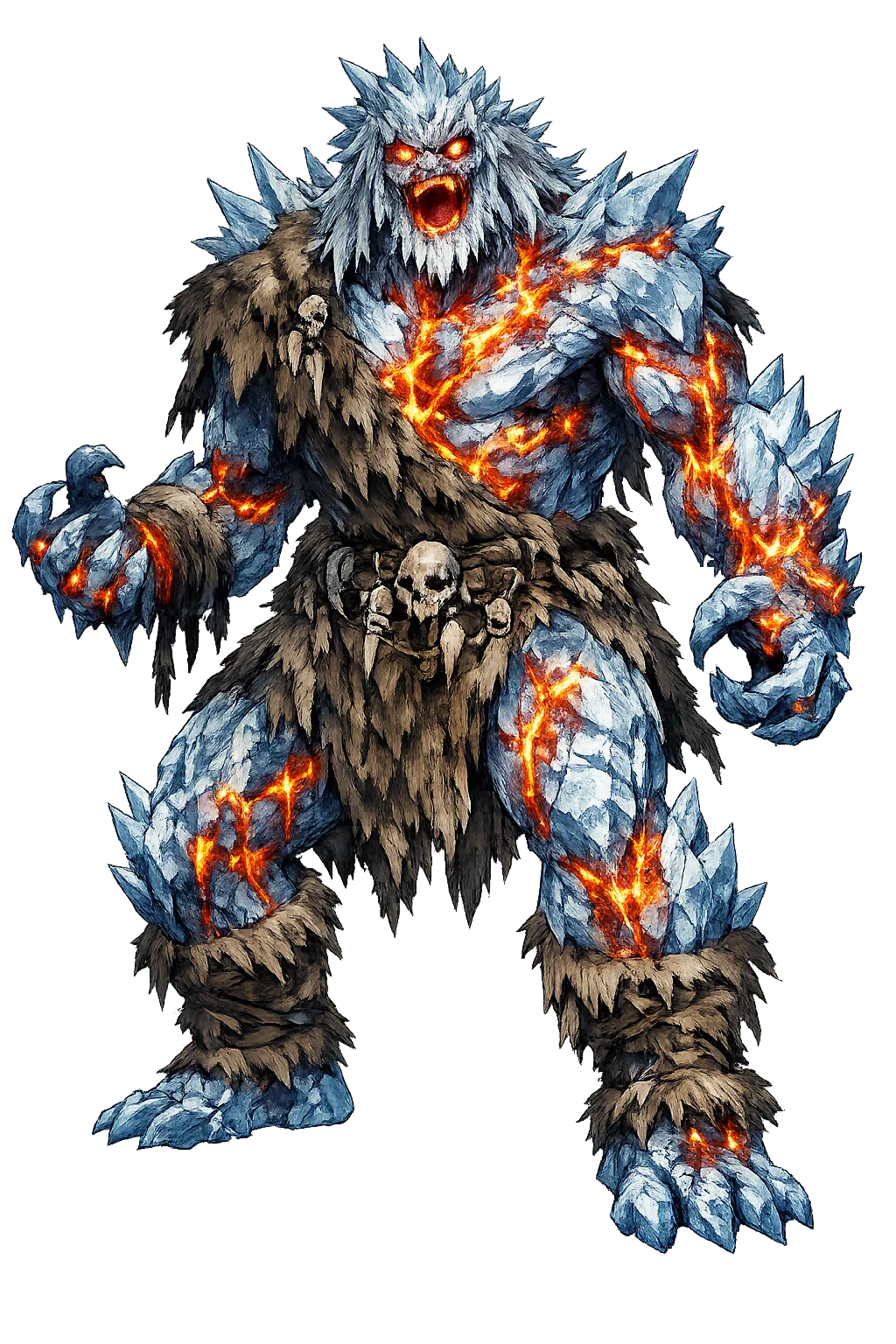
Ymir has no adventures and no cult: his mythology is cosmogony entire. He exists to be first — first life, first giant, first death — and the corpus treats him less as a character than as a fact of physics: the being out of whom everything had to be made, because before him there was nothing to make it from.
At a Glance
- Restored name: Ymir
- ASCII form: ymir
- Meaning: "Twin, screamer (from *ymijaz)"
- Domain of influence: Primordial Giant, Chaos
- Pantheon: Norse
- Classification: Tier 2
- Original script: ᚢᛘᛁᚱ
- Series: The Restoration Files, No. 542 of 548
The Name Before the Marks
Spoken, the name runs `/ˈy.mir/` — 'EE-meer' with rounded lips — say 'ee' while pursing the mouth as for 'oo' (the Old Norse y is German ü), then a short 'i' and a fully trilled final r.
The Temple That Stands Now
The restored name is not a plaque; it is an address. The temple of Ymir lives at /ymir/, with its mythology in the lore halls, its peer-reviewed record in the Scholarly Edition, and its place in the pattern atlas on the patterns floor.
The restoration keeps one feature the ASCII form drops. One is enough to matter, and the label says so plainly: Tier-2.
Where the Name Stood First
Ymir is an entirely textual being: no runestone invokes him, no votive deposit names him, and no image can be securely identified with him — a silence that fits a cosmogonic abstraction rather than a cult figure. His attestation is the manuscript record. Vafþrúðnismál and Grímnismál survive in the thirteenth-century Codex Regius of the Poetic Edda (GKS 2365 4to); Völuspá is preserved both there and in the fourteenth-century Hauksbók; Snorri's creation account rests on the Codex Regius of the Prose Edda and related codices. Skaldic verse keeps the giant alive in kennings — the þulur catalogued in Skáldskaparmál list Aurgelmir, Brimir, and Bláinn among the giant-names — proving the cosmogony's currency in the working vocabulary of pre-Christian and early Christian poets. The comparative witnesses are themselves texts: Rigveda 10.90 and Tacitus' Germania, copied and recopied in Sanskrit and Latin manuscript traditions far from the North. The temple on the web is the newest of these addresses — the first one that fits in a pocket.
The Archetype at Work
The pattern atlas seats this temple in 3 industries, each match argued and weighted: History, Archives & Records (the first being — the corpus opens its memory with him; cosmogony made flesh.); Environmental & Climate Services (frost and rime personified — the primordial ice of Ginnungagap from which every lineage descends.); Mining & Natural Resources (his flesh the earth, his bones the mountains, his blood the sea — the world quarried from a giant’s body.). The Resonance File reads those seats through the myths themselves.
In the Sacred Texts
The Norse tradition is not a vibe; it is a library. The Sacred Texts collection holds Poetic Edda and Prose Edda — the primary sources the temple's scholarship is built on. The temple is the argument; the texts are the evidence.
The File Continues
The temple's founding dispatch tells the name's story; its Resonance File reads the myths into the industries; the blog index holds the whole archive.
Continue the series — previous file: Yīnyáng (read it here) · next file: Yongwang (read it here).
The Restoration Files are written from the same canonical record as the temples themselves: the lexicon, the lore catalog, the pattern atlas, and the cited scholarly sources. If a file ever disagrees with its temple, the temple is right — tell us, and the file will be corrected.