
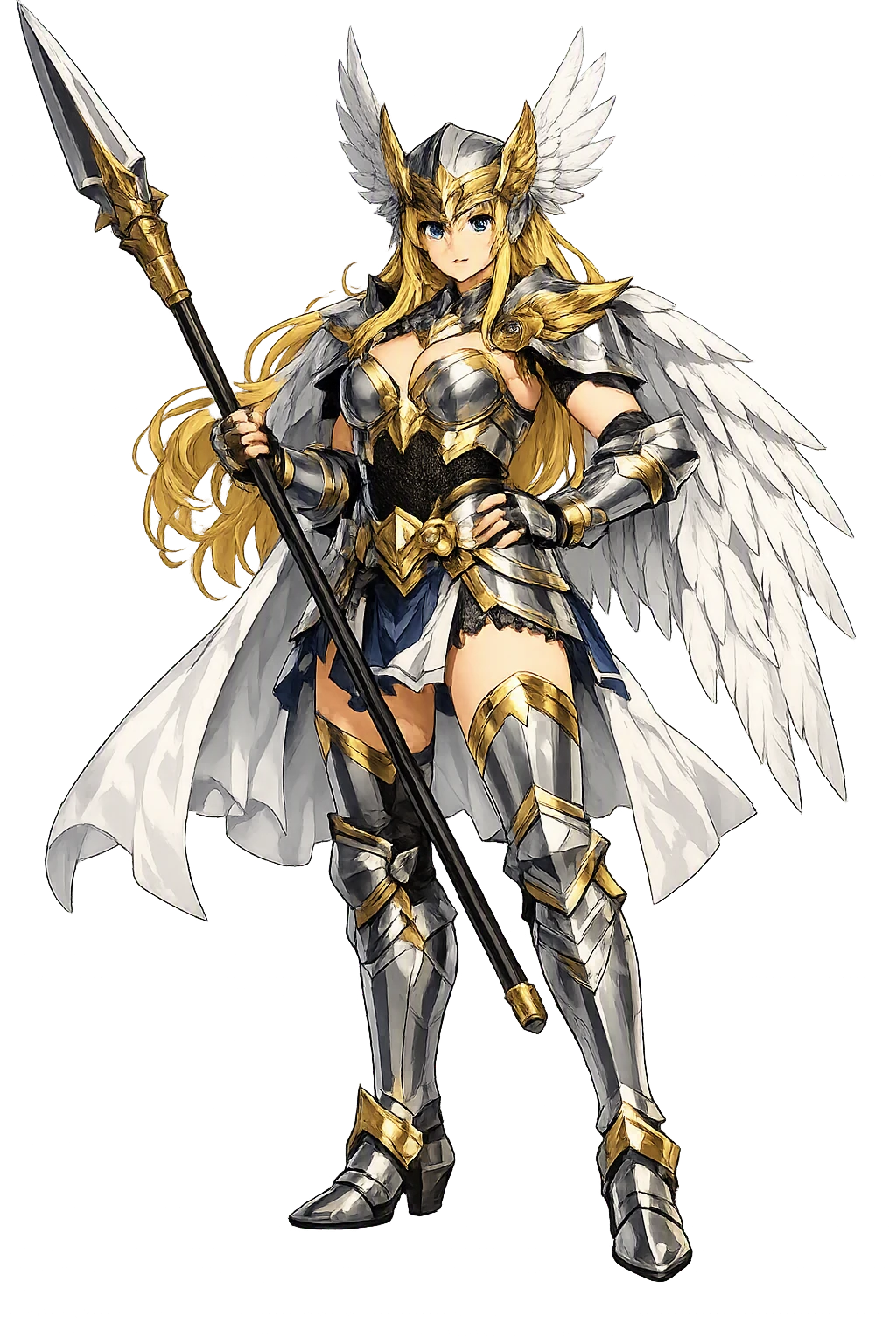
Pronouncing Þrúðr: a guide for the curious
Saying Þrúðr aloud is harder than reading it on a screen, and more rewarding. The restored spelling is a compressed pronunciation guide: every accent and macron is an instruction. This post unpacks those instructions — the reconstructed sound, the phoneme-by-phoneme record, the kindred forms in neighboring languages — and then zooms out to the full record around the name: its Younger Futhark writing, its mythology, its cult, and its modern life as a Unicode domain. Whether you arrive as a linguist, a reader of myth, or a domainer, you will leave able to say the name the way the evidence suggests it was said — and able to type it the way it was written.
At a Glance
- Restored name: Þrúðr
- ASCII form: thrudr
- Meaning: "Strength, power"
- Domain of influence: Strength, Daughter of Thor
- Pantheon: Norse
- Restoration: Preserves stress & distinctive letters
- Reconstructed form: ᚦᚱᚢᚦᛦ (Younger Futhark)
- Live domain: þrúðr.com
Overview
Þrúðr (thrudr) — Strength, Daughter of Thor · the Valkyrie of Power — belongs to the Norse tradition, where she is catalogued under the domain "Strength, Daughter of Thor". The name means "Strength, power".
Þrúðr is the daughter of Þórr and the giantess Jǫrð (or Fjǫrgyn), and her name is the ordinary Old Norse word for strength and violence. She appears in the Poetic Edda as one of the Valkyries and in the Prose Edda as a member of the divine household. Because her name is also a common noun, skalds could use it in kennings for battle and force; to be called 'Þrúðr' was to be identified with raw power.
PuniCodex restores the name as Þrúðr and serves its temple at þrúðr.com. The restoration preserves the thorn (þ) and the acute accent that the ASCII form loses, and exactly one historically valid Unicode restoration exists. The plain ASCII form thrudr survives as a modern convenience imposed by the early domain-name system; the restoration, not the fallback, is the form the project defends as philologically complete.
The Name
The name is attested in Old Norse as Þrúðr. Etymologically it means "Strength, power". The word is the common noun for force, violence, and bodily strength; as a name it is an apt descriptor for the daughter of the thunder-god. The same root appears in the name of the Valkyrie Þrúðr and in poetic compounds for warriors and weapons.
The ASCII form thrudr survives only because the early domain-name system could not carry diacritics or thorn; it is a technological compromise, not an ancient spelling. The Unicode restoration Þrúðr recovers both the thorn (þ) and the acute accent directly in the address bar. The original carries a distinctive letter and stress, and exactly one historically valid Unicode restoration exists.
The letter-by-letter transformation runs:
- t → Þ — Thorn: voiceless dental fricative
- h → r — Combined th → þ; r follows
- r → r — Same
- u → ú — U with acute: long stressed u
- d → ð — Eth: voiced dental fricative
- r → r — Same
The project holds the domain þrúðr.com as the canonical home of this name.
Etymology & Roots
The recorded derivation reads: Old Norse Þrúðr, daughter of Thor and Sif, whose name means "strength, power"; cognate with Old English þrýð.
The reconstructed proto-form is *þrūþiz (proto-germanic), glossed as "strength".
The reconstruction is classed as attested.
The Original Script
The name is preserved in medieval Icelandic manuscripts in the Latin alphabet as Þrúðr — Old Norse (North Germanic), attested 13th–14th c. CE in the Codex Regius of the Poetic Edda and the codices of Snorri's Edda, recording material centuries older. Before the Latin bookhand, Old Norse names were carved in the Younger Futhark; no runic attestation of this specific name survives, though the word for strength appears in memorial formulas.
The scholarly rendering proceeds step by step:
- The normalized Old Norse spelling uses þ (thorn) for the voiceless dental fricative and ð (eth) for the voiced dental fricative.
- The acute accent on ú marks a long stressed vowel.
- In the Younger Futhark the name would have been carved approximately ᚦᚱᚢᚦᛦ, although the exact runic spelling is hypothetical.
- The Unicode form Þrúðr is a scholarly normalization that distinguishes both dental fricatives and the long stressed vowel from the plain ASCII form.
Pronunciation
The reconstructed pronunciation of the name is /ˈθruːðr/ — Old Norse Reconstruction.
Phoneme by phoneme:
- Þr- — Voiceless dental fricative [θ] followed by alveolar trill [r]; the cluster begins the stressed syllable
- -ú- — Long close back rounded [uː] with acute stress
- -ðr — Voiced dental fricative [ð] followed by alveolar trill [r], the final cluster
For the modern speaker, the closest approximation is: 'THROODTH-r' — the first consonant is the 'th' of 'thin', the vowel is long, and the final sequence is a voiced 'th' plus r.
Kindred and historical forms of the name:
- Old Norse — Þrúðr, the common noun for strength and the name of Þórr's daughter
- Modern Icelandic — Þrúður, in modernized orthography
Þrúðr preserves both features because the Norse form preserves both the thorn (þ) and the acute stress that ASCII loses. The restoration keeps both features visible in the domain name.
Mythology
Þrúðr's mythology is sparse but consistent: she is the daughter of Þórr, a Valkyrie, and a name for strength itself.
In the Poetic Edda
In Grímnismál and the lists of Valkyries, Þrúðr appears among the powerful maidens who serve Óðinn and choose those who die in battle. Her inclusion in this company makes her more than a mere genealogical figure: she participates in the destiny of warriors. The name's association with force means that her presence among the choosers of the slain is thematically apt.
In the Prose Edda
Snorri records her as the daughter of Þórr and Jǫrð (or Fjǫrgyn) and notes that she is one of the goddesses after whom a woman may be called. The þulur — the great name-lists of the Prose Edda — include her among the ásynjur, the female powers of the Norse pantheon. Her name's status as a common noun made it a useful element in kennings: a warrior could be called 'Þrúðr's tree' or a weapon 'Þrúðr's fire'.
The Strength of the Thunder Line
As Þórr's daughter, Þrúðr extends the thunder-god's lineage into the next generation. The figure has attracted modern interest because she represents a female inheritor of Þórr's martial domain, a rare emphasis in a mythology that usually assigns battle to male gods and Valkyries.
The Daughter in the Catalogue (Skáldskaparmál 4)
In the Prose Edda, Snorri's chapter on kennings tells the skalds how to name Þórr: son of Óðinn and Jǫrð, husband of Sif — and, in a single catalogue line, faðir Magni ok Móða ok Þrúðar, “father of Magni and Móði and Þrúðr” (Skáldskaparmál 4). That line is her whole dossier in the family mythology: no story tells of her childhood, no poem gives her a deed among the gods. Later tradition names Sif as her mother, and the pairing is natural — Sif's hair of gold is the most famous description of female beauty in the Eddas — but the sources themselves are silent on the point. What they insist on is the name: Þrúðr, “strength,” is the only one of Þórr's children whose name is the abstraction of his own domain, as if the thunder-god's defining quality had been given a daughter and sent into the world wearing it.
The Suitor Who Talked Till Dawn (Alvíssmál)
The one full story the Eddas give her is a comedy of delay. While Þórr was away in the east, the dwarf Alvíss — “All-Wise” — came to Ásgarðr to claim the bride who had been promised him: Þórr's daughter. The prose headnote of Alvíssmál says the gods had pledged her, and Þórr, discovering the betrothal, chose not brute force but interrogation. He received the dwarf courteously and questioned him through the night: what is the earth, the sky, the moon, the sea called among gods, giants, elves, dwarfs, and men? Alvíss knew every synonym — a catalogue of the world's names in six tongues fills the poem — but the knowledge was the trap. When dawn broke and sunlight struck the threshold, the dwarf turned to stone where he stood. Þrúðr never appears and never speaks; her rescue is performed entirely by her father's patience and the sunrise — the myth's quiet joke that the strongest of the gods saves his daughter by simply out-talking a specialist.
A Thane of Strength (Karlevi Öl 1)
On the Swedish island of Öland stands the Karlevi runestone — raised about 1000 CE for a dead chieftain, its carved dróttkvætt stanza among the finest poetry set in stone in Scandinavia — and the stanza closes with a kenning that names her: the buried man is Þrúðar þegn, “a thane of Þrúðr,” a warrior in the sworn service of Strength (Öl 1). The stone is the one material witness the goddess has: no image, no temple, but her word cut in runes at the head of an aristocrat's grave, where a Christian cross stands beside the old name. The kenning was available to any Viking-Age poet — to be Þrúðr's thane was a ready-made boast — but its choice here shows the name doing live work: to die well was to be enrolled in her household, and the inscription enrolls its chieftain forever, the servant of strength outlasting the flesh that served it.
Symbols & Iconography
The iconography associated with Þrúðr draws on her father Þórr and on the concept of strength itself:
- The hammer — Mjǫllnir, the weapon of her father, passed on in spirit to his daughter
- The gauntlet — the iron glove Járngreipr, associated with Þórr's handling of Mjǫllnir
- The storm cloud — the darkness that gathers when Þórr rides and his daughter's power is abroad
- The shield and spear — the arms of the Valkyrie who chooses the slain
- The red hair or armor — conventional markers of the war-goddess in Norse and Germanic art
- Thunderbolt or lightning — The inheritance of her father Þórr
- The runic name Þrúðr — The word for strength carved as a token of power
- Long golden hair — Her mother Sif's most famous attribute, passed to the daughter
Archaeology & Evidence
No cult site, votive deposit, or named image of Þrúðr is known. Her attestation is entirely literary, preserved in the Poetic Edda and in Snorri's Prose Edda. The relevant manuscripts are the Codex Regius of the Poetic Edda (GKS 2365 4to, c. 1270) and the principal codices of Snorri's Edda — the Codex Regius (GKS 2367 4to, early 14th c.), the Codex Wormianus, and the Uppsala Edda. The visual record is indirect: any image of a Valkyrie or of Þórr's family might evoke Þrúðr, but no ancient image is labeled with her name.
Realm & Domain
Þrúðr belongs to the Norse tradition as the personification of strength and as a daughter of the thunder-god. Her domain is power — both the physical force of the warrior and the raw energy of the storm.
Strength
Her name is the Old Norse word for force, might, and violence.
Daughter of Thor
As Þórr's child she inherits his association with thunder, battle, and the defense of the cosmic order.
Valkyrie
The Poetic Edda names her among the Valkyries who choose the slain, linking strength to the warrior's death.
Battle and Weapons
Skalds use Þrúðr in kennings for warriors and weapons, making her name a poetic synonym for martial power.
Strength Itself
Her name is a common noun for might; she is the abstraction of force raised to divine personhood.
The Karlevi Stone
A runestone on Öland calls a dead chieftain a "thane of Þrúðr" — her name carved on a Viking-Age grave.
Across Cultures
Þrúðr has no direct foreign counterpart, but the personification of strength as a female warrior has parallels in the Greek Athena, the Irish Morrígan, and the Hindu Durgā. Within the Norse tradition she belongs to the thunder-god's family and to the company of Valkyries.
Kindred figures in the PuniCodex cross-tradition index include Þórr, Jǫrð, and Fjǫrgyn, linked through divine lineage, battle, and power.
Cultural Legacy
Þrúðr has gained prominence in modern retellings of Norse myth, particularly in works that emphasize the daughters and attendants of the gods. Her name, meaning 'strength', makes her a natural symbol of feminine power, and she appears in comics, games, and novels as a warrior in the mold of her father. In contemporary Heathen and Ásatrú practice she is sometimes invoked as a goddess of fortitude and martial virtue. The name is rare but recognized in modern Scandinavia, and the character embodies the Norse conviction that strength is not only a male prerogative.
The Scholarly Record
The account of Þrúðr given in this edition rests on the witnesses and reference works listed below. The Poetic Edda and Prose Edda supply the attestations; the dictionaries and handbooks secure the form, meaning, and usage of the name.
- Poetic Edda (Eddukvæði), ed. Neckel-Kuhn; trans. Carolyn Larrington, Oxford World's Classics (2014), 1270. Full text
- Snorri Sturluson, Prose Edda, Gylfaginning / Skáldskaparmál, trans. Anthony Faulkes, Everyman / Viking Society for Northern Research, 1220. Full text
- Cleasby, Richard, and Guðbrandur Vigfússon, An Icelandic-English Dictionary, 2nd ed. (Oxford: Clarendon Press, 1957), s.v. Þrúðr.
- Zoëga, Geir T., A Concise Dictionary of Old Icelandic (Oxford: Clarendon Press, 1910).
- Simek, Rudolf, Dictionary of Northern Mythology, trans. Angela Hall (Cambridge: D. S. Brewer, 1993), s.v. Þrúðr.
- Lindow, John, Norse Mythology: A Guide to the Gods, Heroes, Rituals, and Beliefs (Oxford University Press, 2001), s.v. Þrúðr.
- Gordon, E. V., An Introduction to Old Norse, 2nd ed. rev. A. R. Taylor (Oxford: Clarendon Press, 1957).
A Meditation
Þrúðr is strength made personal. She is the force that does not apologize, the daughter of the thunder-god who inherits his power without his temper. In a mythology crowded with warriors who solve problems by striking them, Þrúðr reminds us that strength can also be a quality of lineage, of name, and of quiet inheritance. The restoration of her name in Unicode honors the women of the Norse pantheon who carry the storm in their blood.
The Unicode Restoration
Þrúðr preserves stress & distinctive letters. The ASCII fallback thrudr still resolves everywhere, but it is the restored form that carries the name's full information. Across the 6 characters of the name, the restoration adjusts 4: 1 mark of stress (ú); 3 further adjustments (Þ, h, ð). That is the whole thesis of this temple: the marks are the message.
Character by Character
The journey from thrudr to Þrúðr, one character at a time:
- t → Þ — Thorn: voiceless dental fricative
- h → h — Dropped: merged with t into thorn
- r → r — Same
- u → ú — Acute on u
- d → ð — Eth: voiced dental fricative
- r → r — Same
The Domain Name
The restored name is live as a working domain: þrúðr.com, which the DNS carries in punycode form as xn--rr-wja3bs.com — an ASCII-compatible encoding that lets a non-ASCII name travel the global network without breaking older infrastructure. The visitor sees Þrúðr; the machines see the encoding. That duality is the engineering compromise on which the entire restoration rests, and it is why a name written the way its own tradition wrote it in Younger Futhark can now be typed into any browser on earth.
Why This Restoration Matters
Pronunciation turns out to be the heart of the matter. The marks in Þrúðr are instructions for the voice, and a web that strips them is a web that mispronounces the past at scale. The restoration hands the instructions back: say it as the evidence suggests, type it as the tradition wrote it, and let the punycode machinery do the quiet translation in between. That is all the PuniCodex project asks of the infrastructure — and everything it asks of you, the reader, is to use the whole name.
Explore Further
This post is one doorway into the temple. The home page carries the full character breakdown and the ambient canvas; the lore page tells the myths in long form; the Scholarly Edition preserves the sources, pronunciation data, and revision history; and the patron wall supports the restoration directly. For the wider map, browse the Lexicon, explore the Pantheon, or return to the PuniCodex blog.
Related Names
Sources
The full scholarly apparatus — every citation, revision, and review — lives in the Scholarly Edition. Key references for this post:
- Poetic Edda (Eddukvæði), ed. Neckel-Kuhn; trans. Carolyn Larrington, Oxford World's Classics (2014), 1270.
- Snorri Sturluson, Prose Edda, Gylfaginning / Skáldskaparmál, trans. Anthony Faulkes, Everyman / Viking Society for Northern Research, 1220.
- Cleasby, Richard, and Guðbrandur Vigfússon, An Icelandic-English Dictionary, 2nd ed. (Oxford: Clarendon Press, 1957), s.v. Þrúðr.
- Poetic Edda (Eddukvæði), ed. Neckel-Kuhn; trans. Carolyn Larrington, Oxford World's Classics (2014).
- Cleasby & Vigfússon, An Icelandic-English Dictionary, 2nd ed., s.v. Þrúðr.
- Gordon, E. V., An Introduction to Old Norse, 2nd ed. rev. A. R. Taylor (Oxford: Clarendon Press, 1957), phonology and grammar.
- Lexicon authorities for this entry: Poetic Edda, Prose Edda, Cleasby-Vigfusson.