
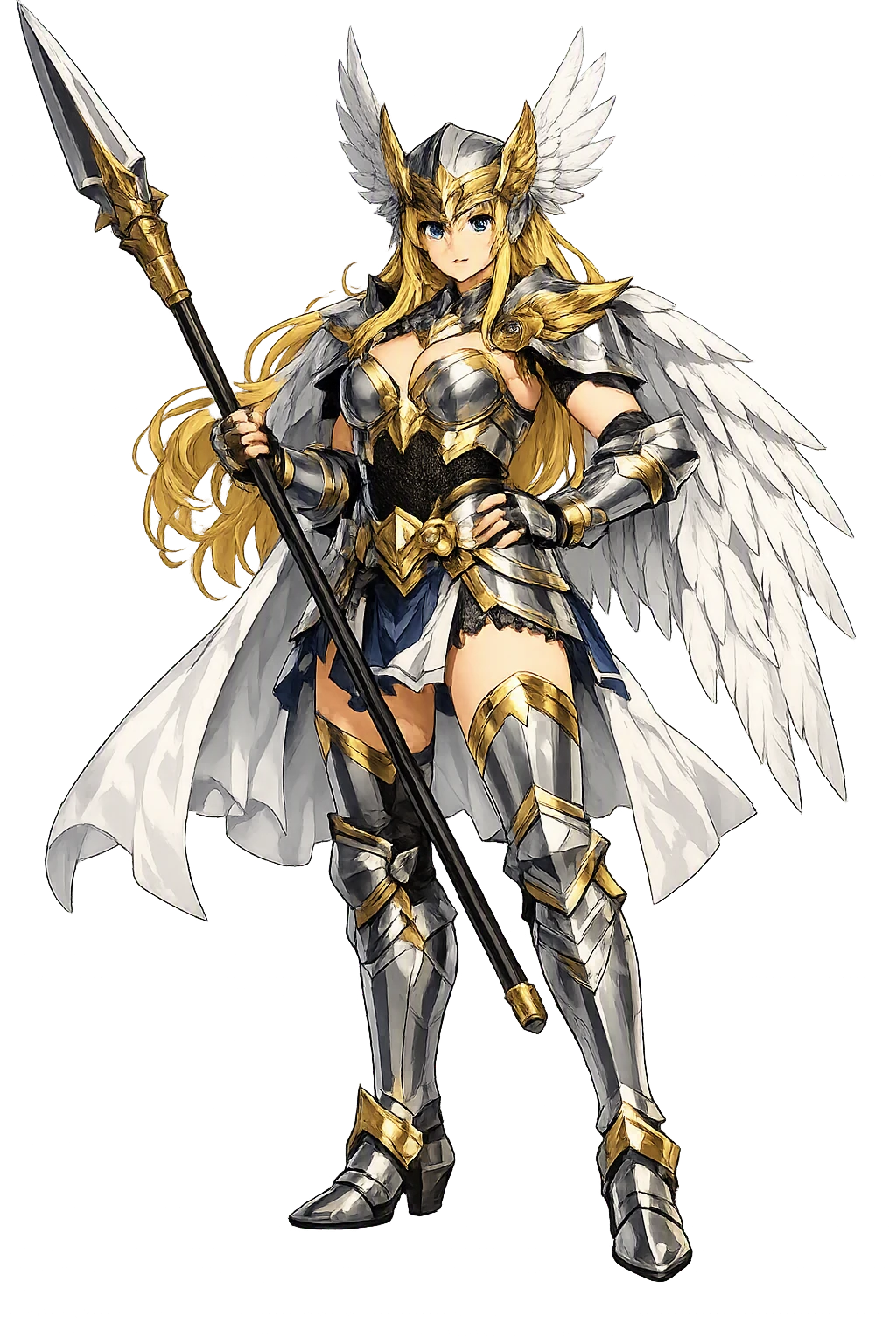
Þrúðr — the one true spelling, and the forms that fail it
Court is in session. In the matter of Þrúðr, the register hears the evidence — the attestation, the marks, and the forms that stand accused.
At a Glance
- Canonical form: Þrúðr
- Reconstructed form: ᚦᚱᚢᚦᛦ (a normalized scholarly specimen)
- Pantheon: Norse
- Convention: normalized Old Norse spelling — þ, ð, ǫ, æ and length marks preserved as the editions print them
- False forms on record: 3
- Contested forms: none attested
- Series: The Canonical Register, No. 532 of 597
The Charge
That the name Þrúðr is routinely written in forms that move, drop, or invent its marks — and that each such form teaches the reader a different, lesser name. The register's task is to separate the honest fallback from the outright false.
The Defense of the Canonical Form
The reconstructed form is ᚦᚱᚢᚦᛦ — a normalized scholarly specimen, not an attested inscription. The canonical transliteration is Þrúðr.
Every mark is evidence, and every piece of evidence is checkable:
- u → ú — Acute on u: the stress position, as the sources give it.
The Character Witness
The plain form thrudr is not false — it is a fallback, and the register is exact about what that means. In systems that cannot carry diacritics (legacy databases, older tooling, parts of the address-bar pipeline) the flattened form is the accepted vehicle, and the rulebook names it explicitly as the final rung of the fallback hierarchy: full restoration first, circumflex where attested, macron-only by the academic standard, an attested variant, and only then plain ASCII.
What the fallback status forbids is promotion: thrudr may carry the name where marks are impossible, but it may not represent the name where marks are possible. Every mark it drops — u → ú — is a fact the sources recorded. A fallback is a vehicle, never the primary.
Cross-Examination
The witness Þrúdr
Where it comes from: the publisher compromise — older books and hurried websites that print the "English equivalent" as if it were the name itself. Why it cannot stand: every substitution here (ð→d) is a romanization of convenience, not an attested spelling — it teaches the reader to guess, not to read.
The witness Þrúþr
Where it comes from: the near-miss — a form that looks right at a glance and circulates on wikis and forums. Why it cannot stand: eth and thorn are not interchangeable: one is voiced, one is not.
The witness trudr
Where it comes from: the anglicized respelling — the name written the way English guesses it sounds. Why it cannot stand: rewrites attested consonant clusters to fit English spelling habits; every cluster simplified this way erases a letter the sources write.
Mitigating Circumstances
No alternate form of this name carries documented scholarly support in the lexicon's record. The convention here — normalized Old Norse spelling — þ, ð, ǫ, æ and length marks preserved as the editions print them — produces exactly one defensible transliteration: Þrúðr. Forms that differ from it are not contested; they are simply wrong.
The Convention's Own History
Old Norse orthography is a primary source in itself: þ (thorn) and ð (eth) are letters the language used natively, not transliteration marks — English once had them too, and lost them. ǫ (o with ogonek) is a nasal vowel with its own saga-era history, and normalized Old Norse spelling preserves it because the Eddas' editors do. To write th for þ or o for ǫ is not modernization; it is a different spelling of a different word. The Eddic poems survive in one manuscript tradition each — the register spells the names the way those manuscripts do.
Registration, Honestly
Three facts govern every domain this project registers. One: IDNA 2008 welcomes the marks — punycode encodes them legally and browsers show them faithfully. Two: welcome is not availability — registrars hold partial inventory, so the ideal form of a name may exist in the protocol yet not in the shop window today. Three: typeability is a separate virtue — a form no one can type on a phone is a form no one will visit, however canonical.
Hence the hierarchy the rulebook enforces: take the most complete form that is both attested and actually registrable, and never accept a wrong mark for the sake of availability. The wrong accent is not a rung on that ladder; it is off the ladder entirely.
The Verdict
So the register finds: Þrúðr, canonical; thrudr, a sanctioned fallback; the contested forms, recorded with their support; the false forms, ruled against with their violations named. Every line of that finding cites its evidence, and the evidence is open to any reader — the register asks to be checked, not trusted. The temple keeps the canonical form at /thrudr/.
The docket for this ruling: 3 false forms ruled against, Þrúdr first on the docket; 1 preserved mark verified: u → ú; no contested forms attested; the attestation rests on 5 cited sources — Prose Edda: Skáldskaparmál 4 (Þórr as "father of Magni and Móði and Þrúðr"), Poetic Edda: Grímnismál 36 (Þrúðr in the valkyrie roster); Alvíssmál (the dwarf suitor), Karlevi runestone, Öl 1 (Þrúðar þegn — the thane of Þrúðr).
The Register Continues
This is one of 597 entries in the Canonical Register — the authoritative reference for every flagship temple. The temple's founding dispatch tells the name's story; its Restoration File details the marks; its Resonance File reads the archetype into the industries. The blog index holds the whole archive, and the Rulebook states the convention this register enforces.
Continue the register — previous entry: Ḏḥwtj (read it) · next entry: Tiāmat (read it).
The Canonical Register is written from the same canonical record as the lexicon itself. If a false form is missing from this page, it is because the evidence does not support calling it false — or because we have not seen it yet. Show us, with a citation, and the register will answer.