
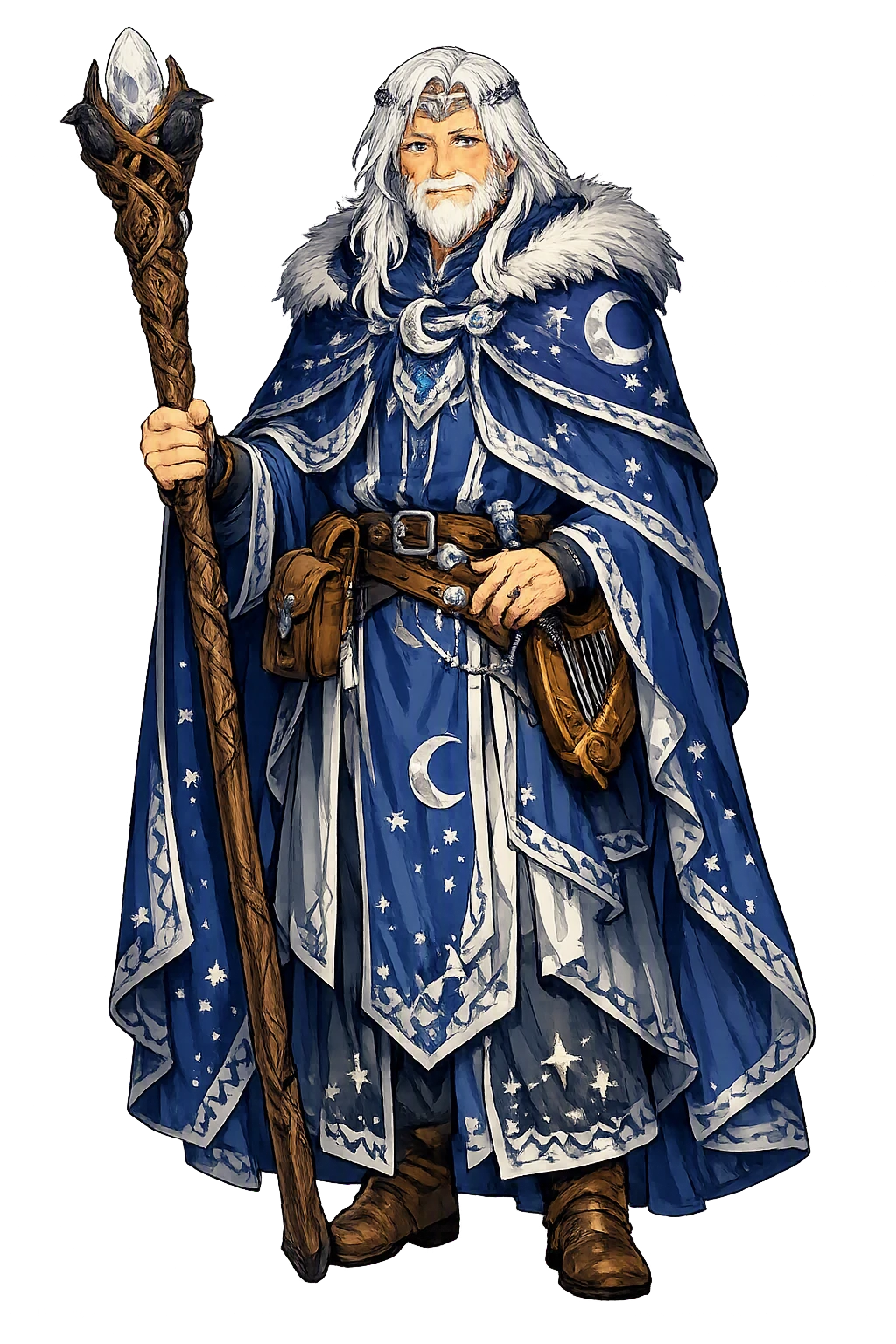
How Taliesin was rebuilt, mark by mark
From the restoration bench — the working notes on Taliesin, kept because the process is the proof.
What We Found
The attestation is the tradition's own record, preserved in romanized scholarly form — no older script securely attests the name. Meaning: "Welsh bard".
The figure behind the name: Taliesin's dossier divides into two figures the Welsh tradition never quite separated: the historical poet of sixth-century Rheged, and the wonder-child of the cauldron whose story is medieval but survives whole only in sixteenth-century manuscripts.
What the Name Carried In
The Poet of Urien. The Historia Brittonum (c. 829) names five poets famed in the days of Ida of Bernicia, in the mid-sixth century: Talhaearn Tad Awen, Aneirin, Cian, Blwchfardd — 'and Taliesin, who is renowned in British poetry'.
The Cauldron and the Chase. Ceridwen, dwelling by Lake Tegid in the land of Gwynedd, had two children: Creirwy the fairest of maidens and Afagddu, called Morfran, the most ill-favored of men. To compensate her dark son she set a cauldron of inspiration and science to boil for a year and a day, put blind Morda to tend the fire, and set the boy Gwion Bach to stir.
A spelling that has to carry stories like these is not a label. It is equipment.
Where It Stood Before Us
Taliesin is a wholly textual figure: no inscription names him, no ogham stone or cross-slab invokes him, and the Welsh epigraphic record — Romano-British memorial stones and the ogham stones of the Irish settlers in Dyfed — belongs to other names entirely. His witnesses are manuscripts of unusually late but exact pedigree. The Book of Taliesin (NLW Peniarth MS 2, early fourteenth century) preserves both the sixth-century praise-poems to Urien of Rheged and the legendary cycle in a single hand. The Black Book of Carmarthen (mid-thirteenth century) holds the Ymddiddan Myrddin a Thaliesin. The Historia Brittonum's notice travels in its ninth-century recensions, Harley MS 3859 chief among them. And the full legendary biography, the Hanes Taliesin, survives entire only in the sixteenth-century chronicle of Elis Gruffydd — a late witness to a story whose own materials (the Triads, the Book's persona-poems) prove medieval. Between Peniarth and Gruffydd stands the whole transmission: a poet who is historical, legendary, and manuscript all at once. The bench inherits all of it — the web temple is the newest site, not the first.
What We Rejected
Any romanization that contradicts the attested convention. The plain form taliesin shares the same letters and is not being rejected.
What We Set Down
Taliesin — The displayed form is ASCII-equivalent.
For the voice: 'tal-YES-in' — three syllables, the weight squarely on the middle one, the first a soft tap; exactly the living Welsh name.
The temple stands at /taliesin/ — the notes above are public in its Scholarly Edition, sources and all.
At a Glance
- Canonical name: Taliesin
- ASCII form: taliesin
- Meaning: "Welsh bard"
- Domain of influence: Poet, Shapeshifter
- Pantheon: Celtic
- Restoration: ASCII-equivalent form
- Scholarly Transliteration: no original script securely attested — the romanized form is the primary record
- Series: The Restoration Files, No. 516 of 597
The File Continues
The temple's founding dispatch tells the name's story; its Resonance File reads the myths into the industries; the blog index holds the whole archive.
Continue the series — previous file: Takachiho (read it here) · next file: Tāne (read it here).
The Restoration Files are written from the same canonical record as the temples themselves: the lexicon, the lore catalog, the pattern atlas, and the cited scholarly sources. If a file ever disagrees with its temple, the temple is right — tell us, and the file will be corrected.