PuniCodex

Extended Lore

Taliesin

Etymology · Phonology · Orthography · Cultural Legacy · Primary Sources

Tier 2 Taliesin
Taliesin — Poet, Shapeshifter
01

Quick Facts

Essential information about Taliesin, Poet, Shapeshifter

Scholarly TransliterationTaliesin
Unicode RestorationTaliesin
Reconstructed Pronunciation/talˈjɛsɪn/
PantheonCeltic
DomainPoet, Shapeshifter
MeaningWelsh bard
ClassificationTier 2
Primary DomainTaliesin
Sacred SymbolsThe cauldron of inspiration, The three drops, The black hen, The coracle in the weir, The silenced bards
02

Etymology & Word Family

From original script to Unicode restoration

Scholarly Transliteration Taliesin Taliesin — "Welsh bard"
Unicode Restoration Taliesin Restored stress, length, and script
Modern ASCII taliesin Plain-ASCII fallback

Taliesin is Tier 2 by the mechanical rule: medieval Welsh writes the name in plain Latin letters — no diacritic, no distinctive letter for the ASCII alphabet to lose. The name's fame vastly outruns its orthography; only the capital distinguishes the restored form from the input.

03

Unicode Character Breakdown

Character-by-character philological analysis

CharacterUnicodeNameBlockPhonetic Role
TU+0054Latin Capital Letter TBasic LatinSame, capitalized
aU+0061Latin Small Letter ABasic LatinSame
lU+006CLatin Small Letter LBasic LatinSame
iU+0069Latin Small Letter IBasic LatinSame
eU+0065Latin Small Letter EBasic LatinSame
sU+0073Latin Small Letter SBasic LatinSame
iU+0069Latin Small Letter IBasic LatinSame
nU+006ELatin Small Letter NBasic LatinSame

The Tier 2 classification reflects how much of the original phonology this restoration preserves — stress and vowel length for Greek names, distinctive letters and diacritics for every other tradition.

04

Cultural Significance

From ancient cult to modern Unicode

Ancient Domain

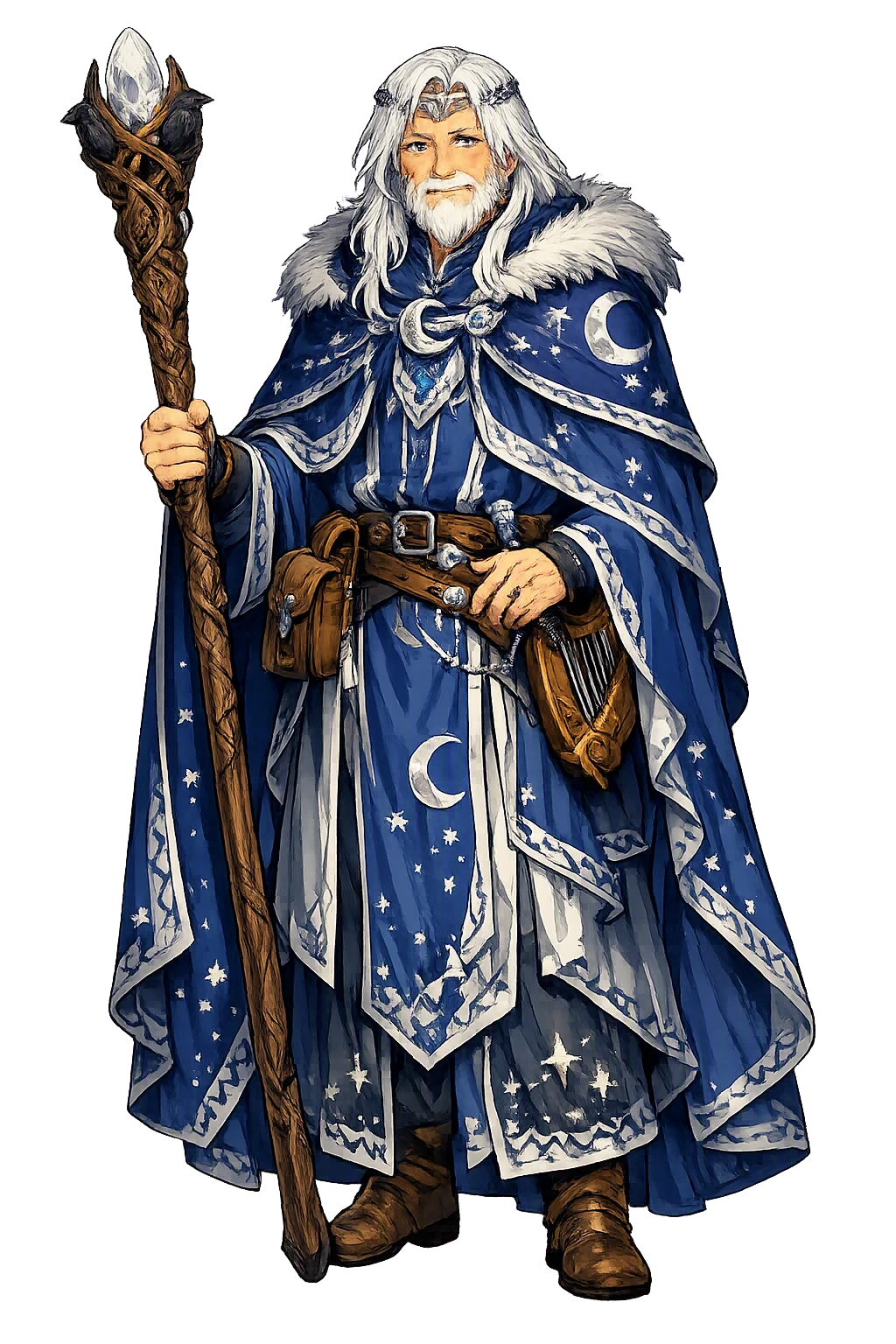
Taliesin is the supreme bard of Welsh tradition — twice-born master of the awen, the flowing spirit of poetic inspiration. As Gwion Bach he stirred Ceridwen's cauldron and caught the three drops meant for her son; as the grain the black hen swallowed he was reborn from the water with a brow so radiant that Elffin ap Gwyddno named him for it. Before Maelgwn Gwynedd's court he silenced the assembled bards with a puff of breath and freed his foster-father from thirteen locks; and behind the legend stands a historical poet of sixth-century Rheged, whose praise-songs to Urien the Historia Brittonum already knew. Poet and shapeshifter, child of the cauldron and voice of all he has ever been, Taliesin is the Welsh tradition's own answer to what a name is: a brow made radiant by what has passed through it.

Taliesin in Later Traditions

Taliesin's closest kin is Irish. The Song of Amairgen — 'I am the wind on the sea, I am the wave of the sea, I am the stag of seven tines' — speaks in the same grammar of self-predication as Cad Goddeu, and Sjoestedt set the two side by side as the Celtic poet's native form: the boast that is a cosmology, the claim that the inspired singer has been all things and so may speak of all. The awen itself has its Irish counterpart in imbas, the 'great knowledge' of the filid, and the transformation chase of the Hanes belongs to the international tale-type of the flight in shifting shapes. Within Wales, Taliesin was paired from early on with Myrddin: the Black Book of Carmarthen's Ymddiddan Myrddin a Thaliesin stages the two prophets in dialogue over the battle of Arfderydd — the two great names of Welsh poetry reading each other's grief. The Christian scribes needed no euhemerism for him: a poet, however marvelous, was safe to keep, and they kept him whole.

Modern Legacy

Taliesin entered the modern world with Lady Charlotte Guest's Mabinogion (1838–49), which first printed the Hanes Taliesin from Elis Gruffydd's sixteenth-century chronicle and made the cauldron story a classic far beyond Wales. Twentieth-century scholarship restored the historical poet: Ifor Williams's Canu Taliesin (1960) separated the Urien corpus from the legendary Book and set the standard for all later work. Robert Graves's The White Goddess (1948) built a famous and much-contested mythology on Cad Goddeu — scholars reject his tree-alphabet, but he carried the poem to a vast new readership. Modern Druidry took the awen for its own: the three rays are its emblem and the word its name for inspiration. The name itself passed into architecture — Frank Lloyd Wright named his Wisconsin home and school Taliesin — and in Wales it never needed reviving: Taliesin remains a living given name, and Swansea's arts centre bears it. Few figures in the lexicon bridge a sixth-century court and a modern concert hall so completely.

Unicode Restoration as Cultural Act

Restoring Taliesin in a domain name is more than orthographic accuracy. It is a statement that the internet should recognize the full range of human writing — not only the ASCII keyboard.

05

Frequently Asked Questions

Common questions about Taliesin, Poet, Shapeshifter, and Unicode restoration

01How do you pronounce Taliesin?

In reconstructed pronunciation, Taliesin is /talˈjɛsɪn/ — approximately 'tal-YES-in' — three syllables, the weight squarely on the middle one, the first a soft tap; exactly the living Welsh name..

02What does Taliesin mean?

Taliesin means Welsh bard in the celtic tradition.

03What are the symbols of Taliesin?

Taliesin is associated with The cauldron of inspiration (The vessel Ceridwen set to boil for a year and a day — the awen made material, the source from which all poetry in the legend flows), The three drops (The sum of the cauldron's virtue, caught on a boy's thumb — inspiration as a finite, transferable grace), The black hen (Ceridwen's final shape in the chase — the goddess as the mother who must swallow to give birth), The coracle in the weir (The skin boat Elffin found among the salmon — the poet's second arrival, from the water like every gift of Annwn), The silenced bards (Maelgwn's court poets reduced to droning 'blerwm blerwm' by a child's breath — the power of true song over mere office).

04Why restore Taliesin in Unicode?

Plain ASCII taliesin strips the stress, length, and script that make the name specific. Unicode restoration returns the name to its original written dignity.

05What is the most important myth about Taliesin?

The Historia Brittonum (c. 829) names five poets famed in the days of Ida of Bernicia, in the mid-sixth century: Talhaearn Tad Awen, Aneirin, Cian, Blwchfardd — 'and Taliesin, who is renowned in British poetry'. The Book of Taliesin preserves the substance behind the notice: a core of praise-poems to Urien of Rheged and his son Owain, court verse of the Old North, singing the wars of Rheged against the Bernician Angles. Ifor Williams's scholarship established the canon: a dozen poems of the Book stand as plausibly the work of a real Taliesin, court bard of Urien in the generation before Rheged fell.This is the oldest Taliesin the record offers — not a wonder-child but a professional of the northern courts, remembered three centuries later as the very type of the famed poet. The legend did not invent him; it annexed him, and gave the court bard of Rheged a second birth out of a goddess's cauldron.

06

Scholarly Sources

The philological foundations of this restoration

Every claim on this page is grounded in established scholarship. The orthographic restorations follow disciplinary convention. The etymological chain follows the best available reference works. This is not invention — it is resurrection through scholarship.

Lexicography & Philology

  • Mabinogion
  • MacKillop

Primary Texts

  • The Immram Brain (Voyage of Bran); Tochmarc Étaíne; Cóir Anmann; medieval Irish saga literature.

Archaeology & Art History

  • Material evidence — iconography, inscriptions, and temple archaeology — for Taliesin and related cults.
  • Taliesin is a wholly textual figure: no inscription names him, no ogham stone or cross-slab invokes him, and the Welsh epigraphic record — Romano-British memorial stones and the ogham stones of the Irish settlers in Dyfed — belongs to other names entirely. His witnesses are manuscripts of unusually late but exact pedigree. The Book of Taliesin (NLW Peniarth MS 2, early fourteenth century) preserves both the sixth-century praise-poems to Urien of Rheged and the legendary cycle in a single hand. The Black Book of Carmarthen (mid-thirteenth century) holds the Ymddiddan Myrddin a Thaliesin. The Historia Brittonum's notice travels in its ninth-century recensions, Harley MS 3859 chief among them. And the full legendary biography, the Hanes Taliesin, survives entire only in the sixteenth-century chronicle of Elis Gruffydd — a late witness to a story whose own materials (the Triads, the Book's persona-poems) prove medieval. Between Peniarth and Gruffydd stands the whole transmission: a poet who is historical, legendary, and manuscript all at once.

Religious Studies

  • Hanes Taliesin — the legendary biography (the cauldron, the transformation chase, the weir of Elffin, the court of Maelgwn); earliest full text in the sixteenth-century chronicle of Elis Gruffydd, first printed by Lady Charlotte Guest, The Mabinogion, vol. 3 (1849); ed. Patrick K. Ford, Ystoria Taliesin (1992)
  • Llyfr Taliesin / The Book of Taliesin, NLW Peniarth MS 2: the Urien praise-poems; Cad Goddeu; Preiddeu Annwfn — facsimile ed. J. Gwenogvryn Evans (1910); Ifor Williams, Canu Taliesin (1960), trans. J. E. Caerwyn Williams as The Poems of Taliesin (1968)
  • Historia Brittonum §62 (Taliesin among the five poets famed in the time of Ida of Bernicia) — ed. and trans. John Morris, Nennius: British History and the Welsh Annals (1980)
  • Rachel Bromwich, ed. and trans., Trioedd Ynys Prydein: The Triads of the Island of Britain (Taliesin Ben Beirdd among the Primary Chief Bards of the Isle of Britain)
  • Ymddiddan Myrddin a Thaliesin (the Dialogue of Myrddin and Taliesin), from the Black Book of Carmarthen — ed. A. O. H. Jarman (1951)
  • MacKillop, A Dictionary of Celtic Mythology, s.v. Taliesin; Koch, ed., Celtic Culture: A Historical Encyclopedia, s.v. Taliesin; Sjoestedt, Gods and Heroes of the Celts, trans. Dillon (the Amairgen comparison)
Return

The Surface Awaits

You have traced the name from its earliest attestation to its Unicode restoration. Now return to the myth. The story is where the name lives.

Back to Lore
Taliesin mascot