
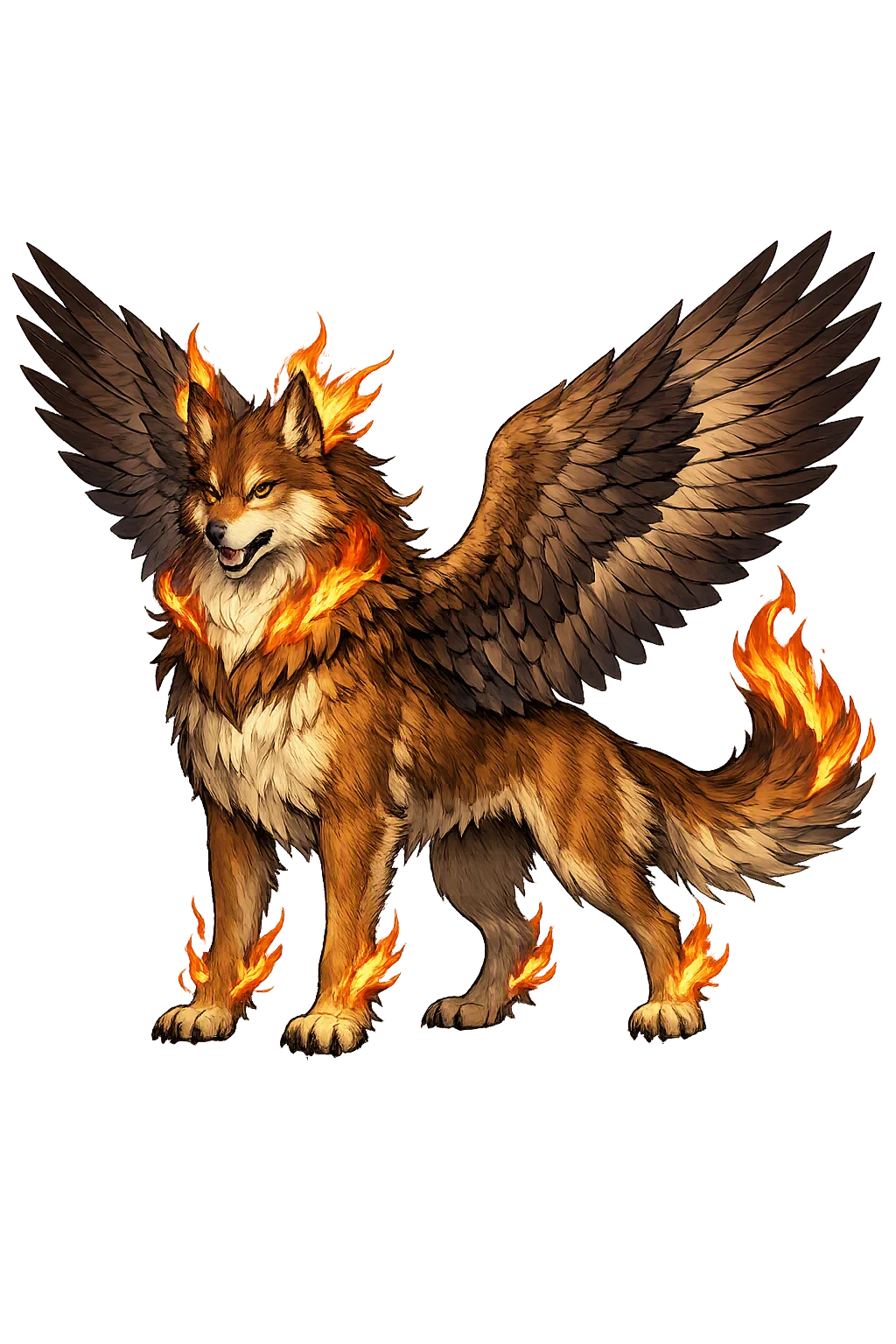
Why Simargl is spelled that way — and what it costs to get it right
There is a version of this name the early internet had to settle for: simargl. This is the file on how Simargl replaced it.
Simargl has no mythology in the ordinary sense — no tale was ever told about him. He exists as a single line in a chronicle, a name of Iranian ancestry, and a century of scholarly argument about what a winged guardian was doing in a Slavic pantheon.
At a Glance
- Restored name: Simargl
- ASCII form: simargl
- Meaning: "From Simurgh (Iranian)"
- Domain of influence: Winged Guardian, Plant Life
- Pantheon: Slavic
- Classification: Tier 2
- Original script: —
- Series: The Restoration Files, No. 449 of 548
The Name Before the Marks
Spoken, the name runs `/simargl/` — 'SEE-mar-gl' — three quick syllables; a Slavic tongue shaped the foreign name until it could be declined.
The Temple That Stands Now
The restored name is not a plaque; it is an address. The temple of Simargl lives at /simargl/, with its mythology in the lore halls, its peer-reviewed record in the Scholarly Edition, and its place in the pattern atlas on the patterns floor.
Tier-2 here means one preserved truth — not less important, just singular. The temple shows it and names it.
Where the Name Stood First
No material evidence names or securely depicts Simargl. Candidates have been proposed — winged figures on medieval pendants, Tree-of-Life motifs on jewelry, the enigmatic four-sided Zbruch idol, more often assigned to Svetovit — but none carries an inscription, and the Iranian visual language he would have borrowed is precisely what Christian-era Rus' did not carve. The Kyiv hill of 988 has yielded no shrine deposit attributable to him. His 'archaeology' is therefore the archaeology of the steppe itself: Sarmatian and Alanic grave goods of the north Pontic region, with their Iranian animal-style art, supply the cultural bridge his name implies. The absence is itself informative — a vegetation-guardian's cult may have been domestic and unmonumental, kept in fields and storehouses rather than on hills, and such gods leave whorls, not walls. The temple on the web is the newest of these addresses — the first one that fits in a pocket.
The Archetype at Work
The pattern atlas seats this temple in 4 industries, each match argued and weighted: Agriculture, Food & Harvest (primary seat: Simargl embodies winged guardian, plant life — the core of agriculture food.); Environmental & Climate Services (resonant seat: Simargl shares symbolic territory with environment climate.); Forestry, Conservation & Outdoor Industries (resonant seat: Simargl shares symbolic territory with forestry conservation.). The Resonance File reads those seats through the myths themselves.
The File Continues
The temple's founding dispatch tells the name's story; its Resonance File reads the myths into the industries; the blog index holds the whole archive.
Continue the series — previous file: Sigyn (read it here) · next file: Sindri (read it here).
The Restoration Files are written from the same canonical record as the temples themselves: the lexicon, the lore catalog, the pattern atlas, and the cited scholarly sources. If a file ever disagrees with its temple, the temple is right — tell us, and the file will be corrected.