PuniCodex

Extended Lore

Simargl

Etymology · Orthography · Cult · Iconography · Reception · Sources

Tier 2 Simargl
Simargl — Winged Guardian, Plant Life
01

Quick Facts

Essential information about Simargl, Winged Guardian, Plant Life

Scholarly TransliterationSimargl
Unicode RestorationSimargl
Reconstructed Pronunciation/simargl/
PantheonSlavic
DomainWinged Guardian, Plant Life
MeaningFrom Simurgh (Iranian)
ClassificationTier 2
Primary DomainSimargl
Sacred SymbolsWings, Grain and seed, Lion's paws, dog's head, Fire on the hill
02

Etymology & Word Family

From original script to Unicode restoration

Scholarly Transliteration Simargl Simargl — "From Simurgh (Iranian)"
Unicode Restoration Simargl Canonical scholarly spelling — ASCII-identical
Modern ASCII simargl Plain-ASCII fallback

The name Simargl reaches the modern world through scholarly transliteration of the slavic tradition. Because the conventional spelling uses only Latin letters, its Unicode and ASCII forms coincide — the tradition it carries is in the name itself, not in diacritics.

03

Unicode Character Breakdown

Character-by-character philological analysis

CharacterUnicodeNameBlockPhonetic Role
SU+0053Latin Capital Letter SBasic LatinSame, capitalized
iU+0069Latin Small Letter IBasic LatinSame
mU+006DLatin Small Letter MBasic LatinSame
aU+0061Latin Small Letter ABasic LatinSame
rU+0072Latin Small Letter RBasic LatinSame
gU+0067Latin Small Letter GBasic LatinSame
lU+006CLatin Small Letter LBasic LatinSame

The Tier 2 classification here reflects fidelity to the attested tradition, not recovered diacritics: every character of Simargl already survives in ASCII. What the restoration preserves is the canonical spelling itself — the form scholarship standardised.

04

Cult & Worship

How the sacred was kept — rites, sanctuaries, remains

The Cult

The evidence for Simargl's cult is exactly one event: the great sacrifice of 980, when Vladimir fed the Kyiv idols — Simargl among them — from the hill above the Dnieper, four years before baptism drowned the pantheon in the river. No festival, priesthood, oath, or votive object ever names him, and no sanctuary attributable to him has been excavated on the Kyiv hill or anywhere else. The only 'cult' he has ever possessed is modern — Rodnover gardens and fantasy bestiaries built on Rybakov's hypothesis. Ancient attestation begins and ends with the chronicle line, and the temple says so.

In the Earth

No material evidence names or securely depicts Simargl. Candidates have been proposed — winged figures on medieval pendants, Tree-of-Life motifs on jewelry, the enigmatic four-sided Zbruch idol, more often assigned to Svetovit — but none carries an inscription, and the Iranian visual language he would have borrowed is precisely what Christian-era Rus' did not carve. The Kyiv hill of 988 has yielded no shrine deposit attributable to him. His 'archaeology' is therefore the archaeology of the steppe itself: Sarmatian and Alanic grave goods of the north Pontic region, with their Iranian animal-style art, supply the cultural bridge his name implies. The absence is itself informative — a vegetation-guardian's cult may have been domestic and unmonumental, kept in fields and storehouses rather than on hills, and such gods leave whorls, not walls.

05

Iconography

How Simargl was imaged across the ages

The Image

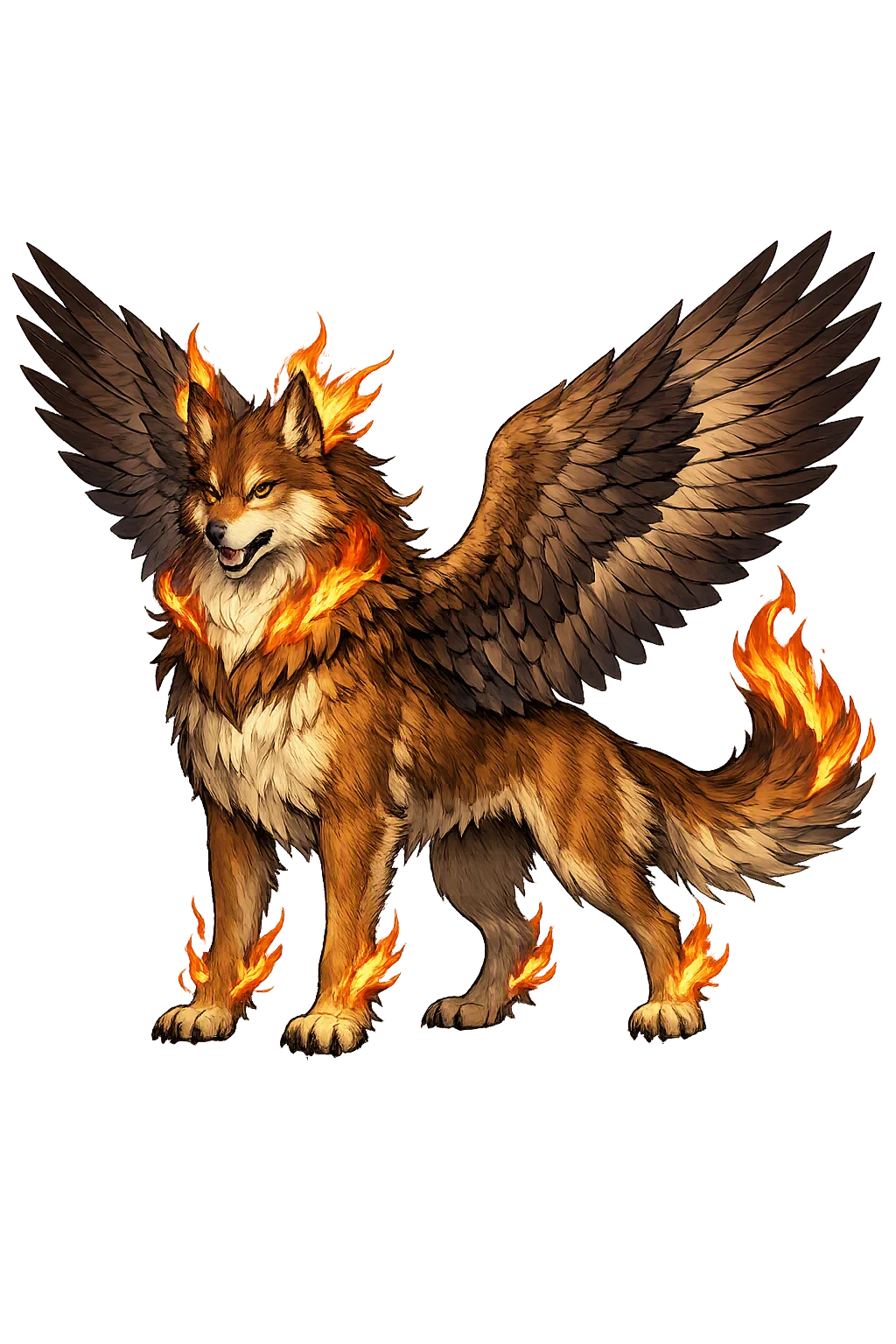
No image of Simargl survives, and probably none was ever made. The Iranian Simurgh whose name he carries is among the best-imaged beings of the ancient world — spread-winged over the Tree of Life on Sogdian silver, worked into Sasanian stucco roundels, crawling up the metalwork of the Caucasus — but those are Persian images of a Persian bird, not Kyiv idols of a Kyiv god. Christian-era Rus' carved saints, not composite guardians, and no medieval depiction of a winged Slavic figure can be tied to him. The modern winged Simargl, feathered and garden-perched, is a re-import from the Simurgh tradition: a reconstruction wearing borrowed iconography as costume.

06

Reception & Transformation

The name after its own age — transmission, translation, survival

Afterlives

Simargl's transmission is the story of a name outliving its meaning. The Primary Chronicle's notice, written in the early twelfth century, was copied through the Laurentian and Hypatian codices, so his name rode every monastery that copied the chronicle — while the cult it recorded vanished unwept. The Simurgh, meanwhile, travelled the opposite road: through Ferdowsi's Shahnameh it became the most beloved bird of Persian literature, and its image crossed into Byzantine, Islamic, and medieval European art. The two halves of the name were formally rejoined by comparative philology — the Simurgh–Simargl comparison runs back to Afanasyev's Poeticheskie vozzreniya slavyan (1865–69) and was anchored by Abaev's Ossetic etymological school — and the 'guardian of seeds' Simargl is essentially Boris Rybakov's mid-twentieth-century construction, exported wholesale into the compendia. His genuine medieval afterlife is nil: no saint, no folk charm, no place-name. He survives as a lesson in how scholarship and fantasy can jointly re-populate an empty dossier.

Identifications Across Traditions

Simargl is syncretism made flesh — or rather, made loanword. His entire existence in Rus' is the product of an intercultural translation: the Simurgh, grandmother-figure of Persian epic and guardian of the sacred tree, re-emerging on the Dnieper as a minor idol with a clipped name. Iranian studies have tracked his relatives across Sogdian silver, Sasanian stucco, and the Shahnameh; Slavic studies have tracked the reception — a name absorbed, declinable, and finally drowned. The Christian centuries had no use for him and no saint took his place, which is why no folk-fossil survives to compare with Dajbog or Sveti Vlaho. In the modern era the borrowing has run in reverse: fantasy fiction and Slavic Native Faith re-export Simargl toward his Iranian cousins, sometimes literally reuniting him with the Simurgh in games and novels — a reminder that gods, like names, travel, and the border between borrowing and genealogy is where most pantheons actually live.

Modern Legacy

Simargl's legacy divides in two. Among Iranists he is a footnote in the biography of the Simurgh — evidence of how far the great bird's name flew, from Avestan hymns to a chronicle on the Dnieper. Among Slavists and the wider public he is the patron of gardens and sown fields, a role created almost entirely by Rybakov's twentieth-century reconstruction and embraced with enthusiasm by Rodnover communities, children's encyclopedias, and fantasy games, where winged guardians named Simargl recur from Minsk to the app stores. The historical god is a lesson in how reception manufactures memory: two lines of real evidence, a century of confident elaboration, and a deity who now feels as anciently Slavic as Perun — though his wings were grown on the Iranian plateau and only molted into Slavic on the way north.

07

The Meditation

What Simargl means — beyond the dictionary

Simargl is a parable about what survives. Nothing of him survives — no story, no prayer, no image — except a name, and the name is a survivor twice over: the Simurgh outlived Zoroastrian empires to be sung by Ferdowsi, and then outlived the journey north to be drowned, once, in a river, by a chronicle that did not understand what it was erasing. We know him only as a translation — a word carried across languages and centuries until it meant less and stood for more. Moderns have given him back his wings, his seeds, his gardens; perhaps that is what translation always is, the endless human work of deciding what a worn-down name should guard. The Simurgh reared heroes; Simargl guards furrows; both are the same old impulse — to post a winged thing at the boundary between what we plant and what we fear. A god made entirely of borrowing teaches that no tradition is pure, and none the poorer for it.

08

Frequently Asked Questions

Common questions about Simargl, Winged Guardian, Plant Life, and Unicode restoration

01How do you pronounce Simargl?

In reconstructed pronunciation, Simargl is /simargl/ — approximately 'SEE-mar-gl' — three quick syllables; a Slavic tongue shaped the foreign name until it could be declined.

02What does Simargl mean?

Simargl means From Simurgh (Iranian) in the slavic tradition.

03What are the symbols of Simargl?

Simargl is associated with Wings (From the Simurgh lineage: the composite winged guardian of Iranian iconography, adapted to Slavic soil), Grain and seed (Under Rybakov's hypothesis, the sprouting seed he guards against the chthonic adversary), Lion's paws, dog's head (The Simurgh's composite body — part dog, part lion, part bird — carried inside the loanword's meaning), Fire on the hill (The 980 sacrifices on Kyiv's hill included him; whatever received the offering, flame was its medium).

04Why restore Simargl in Unicode?

Simargl is written entirely in ASCII letters, so its restoration is about canonical fidelity rather than recovered diacritics: the temple fixes the name in its scholarly standard spelling, attested in the source tradition, instead of leaving it to drift.

05What is the most important myth about Simargl?

“The Idols in the Dnieper” — the Kyiv, 988 story that anchors the mythology of Simargl, told in full on the lore page.

09

Scholarly Sources

The philological foundations of this restoration

Every claim on this page is grounded in established scholarship. The orthographic restorations follow disciplinary convention. The etymological chain follows the best available reference works. This is not invention — it is resurrection through scholarship.

◈

Lexicography & Philology

  • Primary Chronicle
  • Ivanov-Toporov
◎

Primary Texts

  • Avesta (Sīmurγ passages)
◉

Archaeology & Art History

  • Material evidence — iconography, inscriptions, and temple archaeology — for Simargl and related cults.
✦

Religious Studies

  • Primary Chronicle / Povest' vremennykh let, s.a. 988
  • Ferdowsi, Shahnameh
  • Rybakov, B. A., Ancient Rus' (1987)
  • Abaev, V. I., Istoriko-etimologicheskii slovar' ossetinskogo yazyka
  • Gieysztor, Aleksander, Mitologia Słowian (1982)
Return

The Surface Awaits

You have traced the name from its earliest attestation to its Unicode restoration. Now return to the myth. The story is where the name lives.

Back to Lore
Simargl mascot