
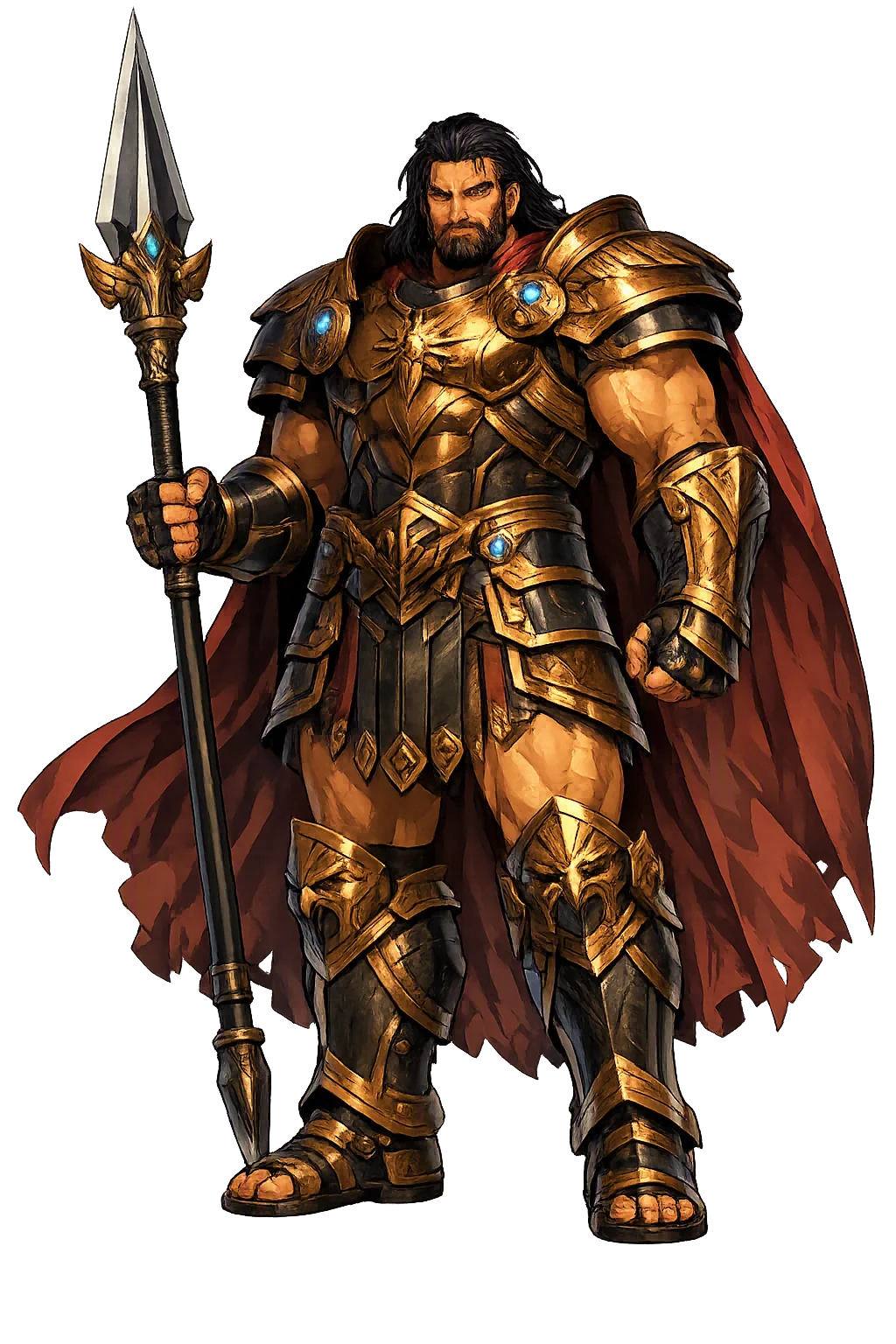
The appointments Pállas made — and who is keeping them
The mistake is reading myths as entertainment. Pállas's cycle reads more like a charter — each story assigning a duty the modern world still pays for.
At a Glance
- Temple: Pállas
- Pantheon: Greek
- Domain of influence: Warcraft, Strategy, Celestial Bronze
- Pattern seats: 5
- Sectors touched: Commerce & Governance · Culture & Entertainment · Technology & Innovation
- Strongest seat: Defense, Military & Security
- Series: The Resonance Files, No. 378 of 548
The Cycle, Read Forward
Defense, Military & Security — through The Ram of Heaven and the Sea's Daughter
Hesiod, Theogony 375–378, gives Pállas his only firm ground: he is the middle son of the Titan Kreios — 'the Ram', the star-name Aries behind the Greek — and Eurybia, daughter of Pontos, whose very name is 'wide force of the sea'. His brothers are Astraios, father of the stars and winds, and Persēs, father of Hekátē.
The atlas states the seat in one line: Titan of warcraft and father of Nike/Kratos/Bia/Zelos; the genealogy of strategic force itself. The story above is the long version of the same sentence. Industries do not invent their archetypes; they inherit them and call them best practice.
Sports, Fitness & Competition — through The Oath-River's Four
Hesiod, Theogony 383–403, records the one great event of Pállas's life: his union with Styx, daughter of Okeanos and 'the eldest and most honoured' of the river-gods' daughters. From her he fathers four children — Zelos (Rivalry), Nike (Victory), Kratos (Strength), and Bia (Force) — and Styx, foreseeing the coming war of the gods, leads them to Zeus while her father counsels neutrality.
The atlas states the seat in one line: Titan of warcraft whose children Nike, Kratos, and Bia are victory, strength, and force — the competitive ideal in one household. The story above is the long version of the same sentence. The trade thinks it is optimizing a process. It is re-enacting a charter.
Gaming, Fantasy & Entertainment IP — through The Giant Who Was Flayed
The name Pállas became famous for deeds the Titan never performed. Apollodorus (Bibliotheca 1.
The atlas states the seat in one line: Titan of warcraft and father of the personifications of victory, strength, force, and rivalry — a ready-made pantheon for strategy and fantasy IP. The story above is the long version of the same sentence. Industries do not invent their archetypes; they inherit them and call them best practice.
Leadership, Governance & Public Administration — through The War He Does Not Fight
Hesiod's Theogony narrates the ten-year war of Zeus against the Titans at length, but Pállas is never named among the fighters. His father Kreios is imprisoned with the rest in Tartaros, while Pallas's own children fight on the winning side — a pattern unique in the Titan catalogue, where loyalty normally runs in the father's line.
The atlas states the seat in one line: Titan of warcraft whose very name suggests the brandished spear; strategy and command before the clash. The story above is the long version of the same sentence. Industries do not invent their archetypes; they inherit them and call them best practice.
The Theme That Runs the Cycle
Pállas is a god without stories. No hymn celebrates him, no battle names him. What survives is a genealogy from Hesiod's Theogony — and, attached to his name, two later giants whom Athēnâ killed, whose deeds were quietly reassigned to the obscure Titan. His 'mythology' is the record of how little mythology a god can carry and still be a god.
The Method, Stated Plainly
Skeptical? Good — the system is built for you. Every seat in this file carries its why-line and its weight, the full derivation is public at the methodology page, and the challenge process is part of the design. Falsifiable is not a posture here; it is the mechanism.
For the Ones Who Work There
If you work in defense, military & security, sports, fitness & competition, or any trade this temple holds a seat in, this is the honest version of what a placement means: your industry beside the story it has been re-telling all along — on the temple floor itself, before an audience that came specifically to read it. The patron tier and the advertising terms describe the mechanics; the resonance above describes the fit.
The File Continues
One of 548 Resonance Files — the series where the pantheon goes to work. Read the founding dispatch for the name, the Restoration File for the spelling, or the whole archive end to end.
Continue the series — previous: Padmasambhava (read it) · next: Pān (read it).
The Resonance Files are argued from the same canonical record as the pattern atlas itself: the lexicon, the lore catalog, and the cited sources. Every seat can be challenged at the methodology page — and the challenge is the point.