
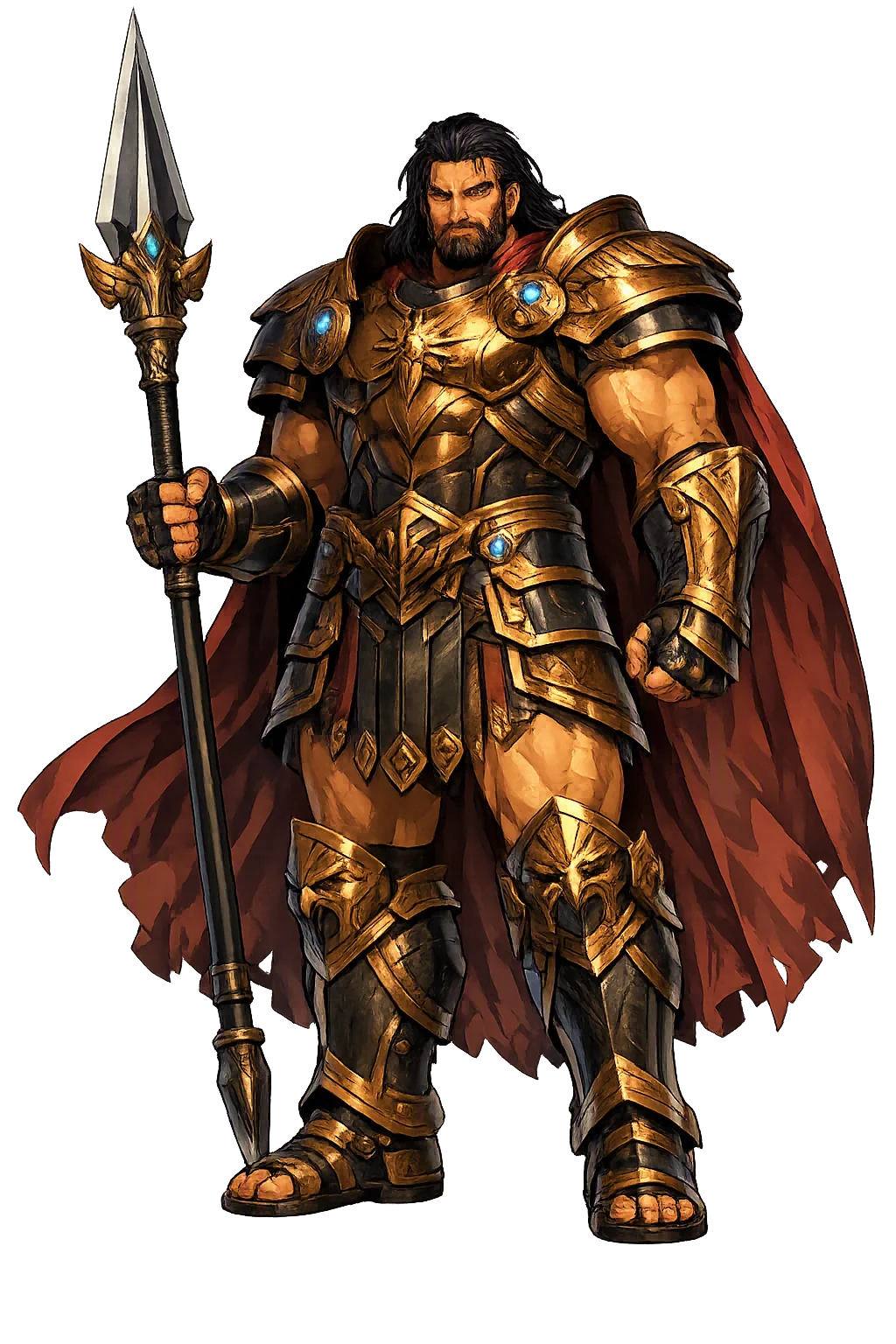
How Pállas was rebuilt, mark by mark
Bench notes, Pállas: what we found, what we rejected, and what we finally set down. Kept in the open, because a restoration you cannot audit is just a spelling with confidence.
What We Found
The attestation, as Hesiod, Theogony 375–378, 383–403 and Apollodorus, Bibliotheca 1.2.2, 1.6.2, 3.12.3 record: Πάλλας. Meaning: "Titan of warcraft; father of Nike, Kratos, Bia, and Zelos".
The figure behind the name: Pállas is a god without stories.
What the Name Carried In
The Ram of Heaven and the Sea's Daughter. Hesiod, Theogony 375–378, gives Pállas his only firm ground: he is the middle son of the Titan Kreios — 'the Ram', the star-name Aries behind the Greek — and Eurybia, daughter of Pontos, whose very name is 'wide force of the sea'. His brothers are Astraios, father of the stars and winds, and Persēs, father of Hekátē.
The Oath-River's Four. Hesiod, Theogony 383–403, records the one great event of Pállas's life: his union with Styx, daughter of Okeanos and 'the eldest and most honoured' of the river-gods' daughters. From her he fathers four children — Zelos (Rivalry), Nike (Victory), Kratos (Strength), and Bia (Force) — and Styx, foreseeing the coming war of the gods, leads them to Zeus while her father counsels neutrality.
A spelling that has to carry stories like these is not a label. It is equipment.
Where It Stood Before Us
No sanctuary, votive deposit, or inscription of the Titan Pállas is known anywhere in the Greek world — his existence is purely textual, confined to the genealogical catalogue of the Theogony. The material record belongs to his namesakes and borrowers. The Palladium, the archaic xoanon said to have fallen from heaven at Troy and later kept in Rome, is described by Apollodorus and Pausanias and appears on Roman imperial coinage; Gigantomachy scenes on Attic black- and red-figure vases from the sixth century BCE onward show Athēnâ wielding the flayed skin of the giant Pallas on her aegis; and the epithet itself is carved in scores of dedications to 'Pallas Athena' across the Greek world. The Titan's archaeology, like his mythology, is an absence that stronger figures fill. The bench inherits all of it — the web temple is the newest site, not the first.
What We Kept
The evidence, mark by mark — 1 feature the keyboard form pallas cannot hold:
- a → á — Acute on alpha. Kept.
What We Rejected
Any form invented for availability. The rule on the bench: if the evidence does not carry it, the domain does not get it — whatever the registrar has in stock.
What We Set Down
Pállas — Tier-1 is not a compliment; it is a measurement. This restoration keeps something the ASCII form provably loses, and the measurement is repeatable.
For the voice: 'PAHL-lahs' — the first syllable carries the ancient Greek pitch accent.
The temple stands at /pallas/ — the notes above are public in its Scholarly Edition, sources and all.
At a Glance
- Restored name: Pállas
- ASCII form: pallas
- Meaning: "Titan of warcraft; father of Nike, Kratos, Bia, and Zelos"
- Domain of influence: Warcraft, Strategy, Celestial Bronze
- Pantheon: Greek
- Classification: Tier 1
- Original script: Πάλλας
- Series: The Restoration Files, No. 378 of 548
The File Continues
The temple's founding dispatch tells the name's story; its Resonance File reads the myths into the industries; the blog index holds the whole archive.
Continue the series — previous file: Padmasambhava (read it here) · next file: Pān (read it here).
The Restoration Files are written from the same canonical record as the temples themselves: the lexicon, the lore catalog, the pattern atlas, and the cited scholarly sources. If a file ever disagrees with its temple, the temple is right — tell us, and the file will be corrected.