PuniCodex

Extended Lore

Πάλλας Pállas

Etymology · Orthography · Cult · Iconography · Reception · Sources

Tier 1 Pállas.com
Pállas — Warcraft, Strategy, Celestial Bronze
01

Quick Facts

Essential information about Pállas, Warcraft, Strategy, Celestial Bronze

Original ScriptΠάλλας
Unicode RestorationPállas
Reconstructed Pronunciation/ˈpal.las/
PantheonGreek
DomainWarcraft, Strategy, Celestial Bronze
MeaningTitan of warcraft; father of Nike, Kratos, Bia, and Zelos
ClassificationTier 1
Primary DomainPállas.com
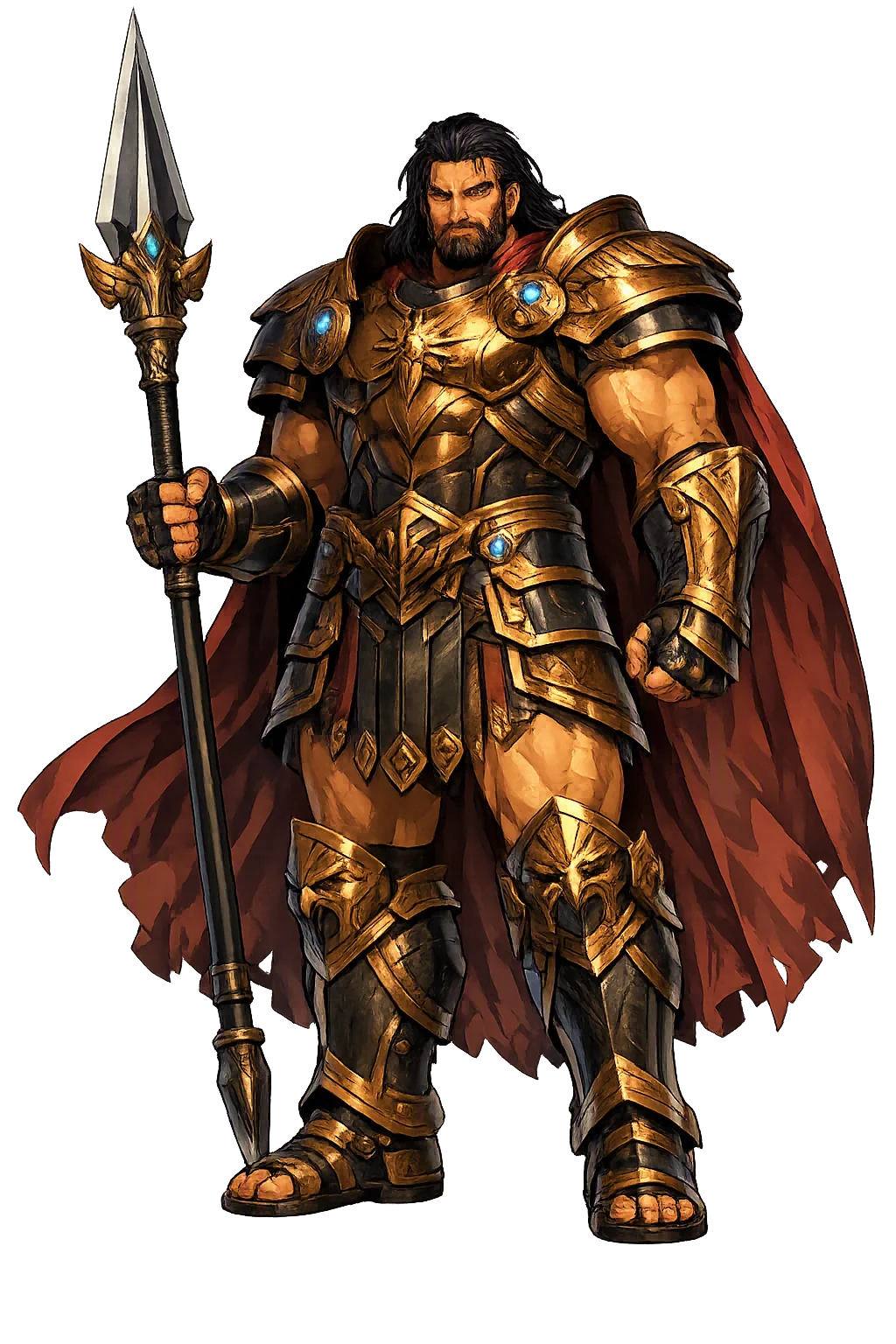
Sacred SymbolsSpear, Shield, Celestial bronze, Helmet and armor
02

Etymology & Word Family

From original script to Unicode restoration

Original Script Πάλλας Pállas — "Titan of warcraft; father of Nike, Kratos, Bia, and Zelos"
Unicode Restoration Pállas Restored stress, length, and script
Modern ASCII pallas Plain-ASCII fallback

The name Pállas carries the orthographic signature of the greek tradition: Πάλλας. Unicode restoration recovers what ASCII flattens.

03

Unicode Character Breakdown

Character-by-character philological analysis

CharacterUnicodeNameBlockPhonetic Role
PU+0050Latin Capital Letter PBasic LatinPi, capitalized
áU+00E1Latin Small Letter A with AcuteLatin-1 SupplementAcute on alpha
lU+006CLatin Small Letter LBasic LatinLambda
aU+0061Latin Small Letter ABasic LatinAlpha
sU+0073Latin Small Letter SBasic LatinSigma

The Tier 1 classification reflects how much of the original phonology this restoration preserves — stress and vowel length for Greek names, distinctive letters and diacritics for every other tradition.

04

Cult & Worship

How the sacred was kept — rites, sanctuaries, remains

The Cult

No one ever built a shrine to Pállas, and the honesty of the record is the story. No sanctuary, votive deposit, or inscription of the Titan is known anywhere in the Greek world; his entire existence is a few lines of genealogical verse in Hesiod's Theogony, and those lines gave his worshippers — if he ever had any — no rituals to keep. What the name got instead was adoption: Pállas became Athēnâ's standing epithet, carved across the Greek world in dedications to 'Pallas Athena,' and the Roman Palladium cult in Vesta's temple attached the name, through the myth of a flayed giant, to a xoanon older than the city. His cult history is the biography of a byname.

In the Earth

No sanctuary, votive deposit, or inscription of the Titan Pállas is known anywhere in the Greek world — his existence is purely textual, confined to the genealogical catalogue of the Theogony. The material record belongs to his namesakes and borrowers. The Palladium, the archaic xoanon said to have fallen from heaven at Troy and later kept in Rome, is described by Apollodorus and Pausanias and appears on Roman imperial coinage; Gigantomachy scenes on Attic black- and red-figure vases from the sixth century BCE onward show Athēnâ wielding the flayed skin of the giant Pallas on her aegis; and the epithet itself is carved in scores of dedications to 'Pallas Athena' across the Greek world. The Titan's archaeology, like his mythology, is an absence that stronger figures fill.

05

Iconography

How Pállas was imaged across the ages

The Image

The Titan Pállas has no face, and art never gave him one: no statue or secure portrait of the Hesiodic father of Nike exists, and the silence is itself the strongest proof of how thin the tradition is. His only body in Greek art belongs to a namesake — the giant Pállas of the Gigantomachy, whom sixth- and fifth-century vase painters show falling under Athena's hands, his hide destined for the goddess's aegis. The other carrier of his name, the Palladium, is the opposite of a portrait: a stiff, archaic little xoanon, feet together, spear and shield at rest, copied endlessly on Roman imperial coins and in 'Troy' souvenirs. The grammarians meanwhile derived 'Pallas' from pallein, 'to brandish' — and her statues obeyed: every armed Athena with a raised spear is, iconographically, the Titan's name in action. He is imaged only as what his name does.

06

Reception & Transformation

The name after its own age — transmission, translation, survival

Afterlives

Pállas traveled through the centuries the way he lived in myth: inside other people's equipment. Homer's formula Pallas Athēnē — some 150 times through the Iliad and Odyssey — carried the name across the whole manuscript tradition of Greek, into the grammarians' etymologies and into every schoolroom that ever parsed Homer. Renaissance mythography gave him a learned afterlife: Boccaccio's Genealogia deorum gentilium and Conti's Mythologiae (1567) file the Titan dutifully beside his more famous daughter, while the age's countless 'Pallas' canvases — Athena in armor — spread the byname across Europe and kept the giant invisible. English adopted his most famous relic as a common noun: palladium, a safeguard. By the eighteenth century 'the palladium of liberty' was a stock phrase of Anglo-American political writing — the Trojan image reborn as shorthand for everything a constitution exists to protect.

Identifications Across Traditions

For Roman poets 'Pallas' ceased to be a Titan at all and became simply the standing cognomen of Minerva — Virgil's and Ovid's invocations travel with the goddess into Latin literature, where the Palladium, the archaic image said to have fallen from heaven at Troy and later carried to Rome, anchors the name in imperial destiny. The Titan's own identity was forgotten entirely; even the mythographers who preserve his genealogy give him no role to play. Meanwhile the epithet escaped mythology altogether: the minor planet 2 Pallas, discovered by Heinrich Olbers in 1802, took the goddess's byname into the asteroid belt, and the naturalist Peter Simon Pallas — a different namesake, though ultimately the same name — left it on Pallas's cat and Pallas's sandgrouse. The Titan survives only where the name survives: attached to others.

Modern Legacy

Pállas's afterlife is entirely second-hand, and impressive for it. Through his daughter Nike his name underlies one of the most visible brands on earth; through Kratos it titles a whole modern genre of mythic video games; and 'Pallas Athena' — the Homeric formula Pallas Athēnē that rings through the Iliad and the Odyssey — made his name the poet's standard way of summoning the armed virgin, so that the obscure Titan is spoken every time the goddess is. His is the strangest legacy in the catalogue: a god whose entire mythological function was to be outlived by his children and borrowed by his betters.

07

The Meditation

What Pállas means — beyond the dictionary

Pállas is the patron of a sobering thought: that a thing can be essential and anonymous at once. Warcraft — the drilling, the forging, the mathematics of the shield-wall — has no face in Hesiod, yet without it no Ilium falls and no Olympian order stands. His children, not he, are painted on vases; his wife, not he, is invoked when the gods swear their mightiest oath. He is the infrastructure of myth: present everywhere, visible nowhere.

To meditate on Pállas is to ask what in our own world works the same way — the disciplines and crafts on which everything depends and whose names nobody knows. The spear is brandished; the brandisher is forgotten. Perhaps that is the truest thing the Titans teach: the old order does not always die fighting. Sometimes it is quietly outlived, married into the new one, and remembered only in its children's names.

08

Frequently Asked Questions

Common questions about Pállas, Warcraft, Strategy, Celestial Bronze, and Unicode restoration

01How do you pronounce Pállas?

In reconstructed pronunciation, Pállas is /ˈpal.las/ — approximately 'PAHL-lahs' — the first syllable carries the ancient Greek pitch accent.

02What does Pállas mean?

Pállas means Titan of warcraft; father of Nike, Kratos, Bia, and Zelos in the greek tradition.

03What are the symbols of Pállas?

Pállas is associated with Spear (The brandishing motion his name implies; the instrument of the war-craft he personifies), Shield (The defensive half of the art of battle — craft answering force with cover), Celestial bronze (The immortal metal of divine armament, wrought for beings who cannot die), Helmet and armor (The full panoply of the disciplined warrior-craftsman).

04Why restore Pállas in Unicode?

Plain ASCII pallas strips the stress, length, and script that make the name specific. Unicode restoration returns the name to its original written dignity.

05What is the most important myth about Pállas?

“The Ram of Heaven and the Sea's Daughter” — the Genealogy story that anchors the mythology of Pállas, told in full on the lore page.

09

Scholarly Sources

The philological foundations of this restoration

Every claim on this page is grounded in established scholarship. The orthographic restorations follow disciplinary convention. The etymological chain follows the best available reference works. This is not invention — it is resurrection through scholarship.

◈

Lexicography & Philology

  • Liddell, H. G., Scott, R., & Jones, H. S. A Greek-English Lexicon. Oxford: Clarendon Press, 9th ed. 1996.
  • Pape, W., & Benseler, G. E. Wörterbuch der griechischen Eigennamen. Braunschweig: Vieweg, 1884.
◎

Primary Texts

  • Hesiod
  • Apollodorus
  • Hesiod, Theogony 375–378, 383–403
  • Apollodorus, Bibliotheca 1.2.2, 1.6.2, 3.12.3
  • Homer, Iliad (Pallas as epithet of Athena)
◉

Archaeology & Art History

  • Material evidence — iconography, inscriptions, and temple archaeology — for Pállas and related cults.
✦

Religious Studies

  • Grimal, The Dictionary of Classical Mythology, s.v. Pallas
Return

The Surface Awaits

You have traced the name from its earliest attestation to its Unicode restoration. Now return to the myth. The story is where the name lives.

Back to Lore
Pállas mascot