
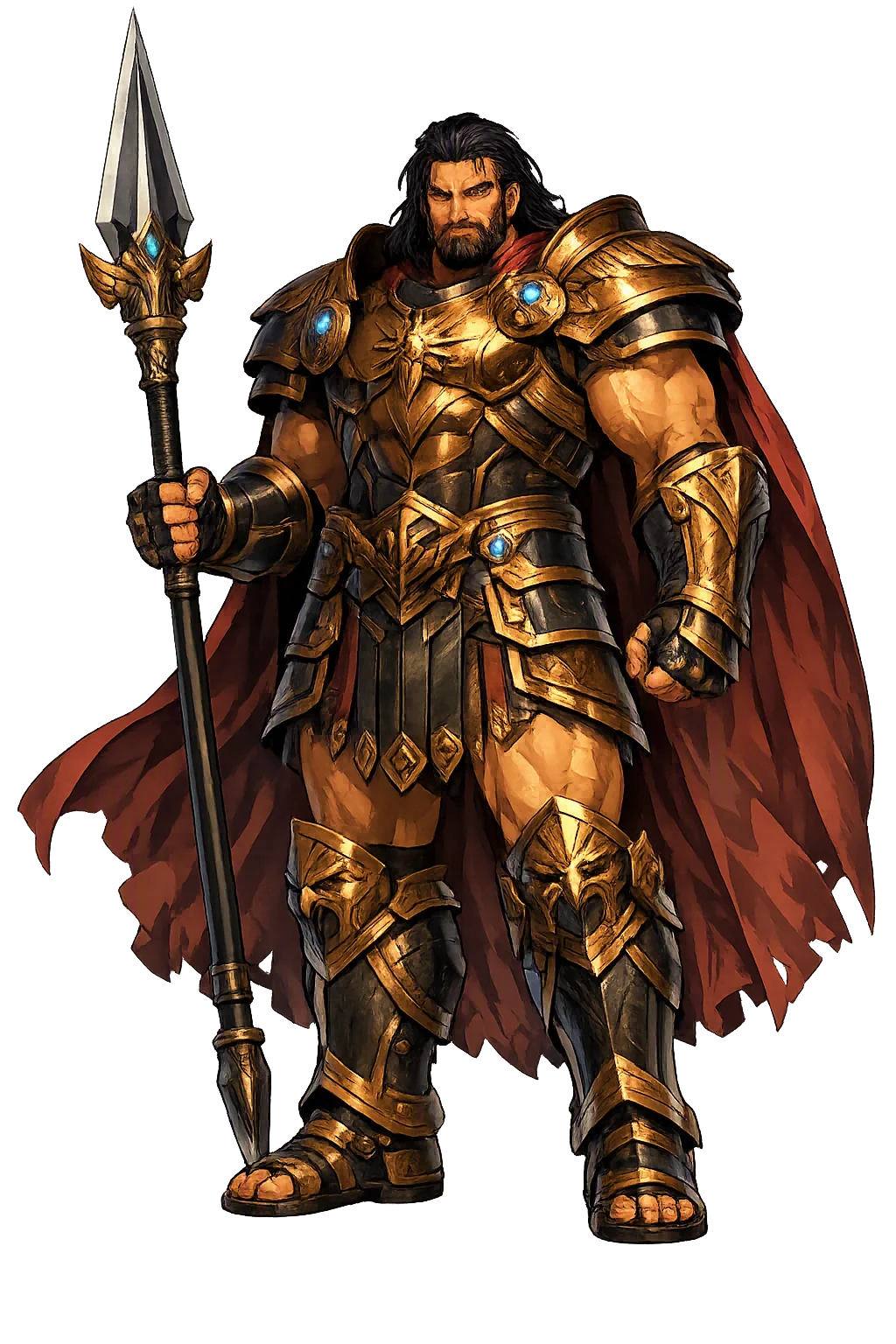
Pronouncing Pállas: a guide for the curious
Saying Pállas aloud is harder than reading it on a screen, and more rewarding. The restored spelling is a compressed pronunciation guide: every accent and macron is an instruction. This post unpacks those instructions — the reconstructed sound, the phoneme-by-phoneme record, the kindred forms in neighboring languages — and then zooms out to the full record around the name: its Greek writing, its mythology, its cult, and its modern life as a Unicode domain. Whether you arrive as a linguist, a reader of myth, or a domainer, you will leave able to say the name the way the evidence suggests it was said — and able to type it the way it was written.
At a Glance
- Restored name: Pállas
- ASCII form: pallas
- Meaning: "Titan of warcraft; father of Nike, Kratos, Bia, and Zelos"
- Domain of influence: Warcraft, Strategy, Celestial Bronze
- Pantheon: Greek
- Classification: Tier 1
- Original script: Πάλλας (Greek)
- Live domain: pállas.com
Overview
Pállas (pallas) — Titan of warcraft · celestial bronze spear · father of Nike/Kratos/Bia/Zelos — belongs to the Greek tradition, where it is catalogued under the domain "Warcraft, Strategy, Celestial Bronze". The name means "Titan of warcraft; father of Nike, Kratos, Bia, and Zelos".
Pállas is the Titan who embodies the craft of war itself — not mere berserk rage but the disciplined art of spear, shield, and strategy. He is the father of Nike (Victory), Kratos (Strength), Bia (Force), and Zelos (Rivalry): war produces its own children, and they never leave his household.
PuniCodex restores the name as Pállas and serves its temple at pállas.com. The original carries both stress and vowel length, and exactly one historically valid Unicode restoration exists, which places the name in Tier 1. The plain ASCII form pallas survives as a modern convenience imposed by the early domain-name system; the restoration, not the fallback, is the form the project defends as philologically complete.
The Name
The name is attested in Greek as Πάλλας. Etymologically it means "Titan of warcraft; father of Nike, Kratos, Bia, and Zelos".
The ASCII form pallas survives only because the early domain-name system could not carry diacritics; it is a technological compromise, not an ancient spelling. The Unicode restoration Pállas recovers the stress accent of the original directly in the address bar. The original carries both stress and vowel length, and exactly one historically valid Unicode restoration exists, which places the name in Tier 1.
The letter-by-letter transformation runs:
- p → P — Pi, capitalized
- a → á — Acute on alpha
- l → l — Lambda
- l → l — Lambda
- a → a — Alpha
- s → s — Sigma
The canonical temple for this name is served at pállas.com.
The Original Script
The name is written in Greek as Πάλλας. This original script is the form against which the ASCII fallback pallas and the PuniCodex restoration Pállas are measured: the restoration preserves its pitch accent of the written form, so that a reader typing the modern address still speaks the ancient name.
The name is attested in Greek as Πάλλας. The acute accent falls on the first alpha. PUNICODEX restores this as Pállas; the ASCII form 'pallas' flattens the pitch accent that ancient Greek speakers would have heard.
Pronunciation
The reconstructed pronunciation of the name is /ˈpal.las/ — Attic Greek Reconstruction.
Phoneme by phoneme:
- Pál- — Voiceless labial stop plus alpha with acute: the stressed syllable rises in pitch.
- -las — Lambda-alpha-sigma, a clear, martial close.
For the modern speaker, the closest approximation is: 'PAHL-lahs' — the first syllable carries the ancient Greek pitch accent.
Kindred and historical forms of the name:
- Greek — Πάλλας (Pállas), the Titan of warcraft
Pállas is a short, sharp name whose acute on the first syllable gives it a commander's ring. The meaning is uncertain; ancient sources connect it with 'brandish' (πάλλω) or 'spear'.
Mythology
Pállas belongs to the older generation of gods, the Titans. His myth is less narrative than genealogical and thematic: he is the source from which the personifications of war's consequences descend.
Son of Kreios and Eurybia (Genealogy)
Hesiod names Pállas as the son of the Titan Kreios (Crius) and the sea-power Eurybia. From this union of sky-lineage and maritime force comes a deity whose domain is the practical mastery of conflict.
The Children of Pállas (Children)
By the Oceanid Styx, Pállas fathers Nike (Victory), Kratos (Strength), Bia (Force), and Zelos (Rivalry). These are not companions chosen at random; they are the necessary entourage of any war. Where Pállas is, they follow.
War in Heaven (Titanomachy)
As a Titan, Pállas belongs to the older order overthrown by Zeus and the Olympians. His children, however, side with Zeus — a sign that the forces of warcraft can be transferred from one regime to the next.
Symbols & Iconography
The iconography associated with Pállas concentrates in a small set of recurring attributes, each a compressed statement about the name:
- Spear — The primary instrument of warcraft and the brandishing motion suggested by his name
- Shield — Defense as part of the art of battle
- Celestial bronze — The divine metal that distinguishes Olympian and Titan warfare from mortal bronze
- Helmet and armor — The full panoply of the warrior craftsman
Vase painting, sculpture, and votive reliefs disseminate the visual identity of Pállas. Artists returned to attributes such as Spear, Shield, Celestial bronze, creating a recognizable iconographic shorthand.
The restored spelling Pállas reproduces in text the same precision that painters sought in image. Each attribute encodes a claim about power, identity, or function.
Epithets & Cult Titles
Greek gods and heroes accumulate epithets — cultic titles that specify place, function, or quality. For Pállas, the tradition preserves epithets that stress warcraft.
Epicleses connected with Spear, Shield, Celestial bronze sharpen the name for local worship and literary invocation. The restored form Pállas carries the same vowel quantities that these epithets inherited in oral performance.
The Homeric Hymns
The Homeric Hymns, a collection of ancient Greek hexameter poems, include invocations and narratives that shape the reception of Pállas. While Pállas does not always receive a separate, surviving hymn, the figure appears in the broader epic and hymnic environment that celebrates the Olympian order.
The hymns map divine genealogy, power, and cultic honor, and Pállas's role as warcraft places the name within that hexameter world. The PuniCodex restoration Pállas preserves the prosodic features that rhapsodes would have articulated.
Oracle Sites & Sanctuaries
Sanctuaries and oracular centers anchored the cult of Pállas in the Greek landscape. Major sites include locations where the domain of warcraft was ritually honored.
Pilgrims, offerings, and festival calendars tied the name to specific topography. The restoration Pállas gives the figure a stable address in the digital landscape analogous to those ancient centers.
Archaeology & Evidence
No monument, inscription, or artifact in the current PuniCodex corpus is yet assigned to Pállas with certainty. That absence should be read honestly: for a Greek name of this type the material record is expected to be thin, and the primary evidence remains the textual testimony gathered in the Scholarly Sources section.
Were such evidence to surface, it would take recognizable forms: votive or dedicatory inscriptions naming Πάλλας, sanctuary or cult remains tied to warcraft and iconography matching its traditional attributes (spear and shield). Each candidate would be weighed against the reconstructed form of the name before entering the scholarly record.
Realm & Domain
Pállas is the Titan who embodies the craft of war itself — not mere berserk rage but the disciplined art of spear, shield, and strategy. He is the father of Nike (Victory), Kratos (Strength), Bia (Force), and Zelos (Rivalry): war produces its own children, and they never leave his household.
The Spear
His signature weapon, cast in celestial bronze, the metal of the gods.
Strategy
War as calculation: the arrangement of forces before the clash.
### Father of Personifications
Nike, Kratos, Bia, and Zelos are born from his lineage.
Celestial Bronze
The divine alloy that marks the armament of gods and Titans.
Across Cultures
Pállas is often conflated in the modern imagination with Pallas Athena, whose cult title 'Pallas' may originally have been separate. Some ancient sources suggest Athena slew a giant or Titan named Pallas and took his name as a trophy. The overlap has made 'Pallas' ambiguous: it can mean the Titan of warcraft, or it can be an epithet of Athena. PUNICODEX treats them as distinct entries, each with its own temple and domain.
Within the Greek tradition, closely related names in the corpus include Achérōn, Achilleús, Adámas, Ádōnis, Aḗr, and Aígyptos.
Cultural Legacy
The name Pállas survives most famously in 'Pallas Athena', but the Titan himself represents the older, pre-Olympian concept of war as a craft and lineage. In modern military, strategy, and sportswear branding, his name signals disciplined force and competitive edge. As father of Nike, Kratos, Bia, and Zelos, he is the genealogical root of several personifications still active in English vocabulary.
The Scholarly Record
The account of Pállas given in this edition rests on the witnesses and reference works listed below. Lexica and etymological dictionaries secure the form and meaning of the name; the literary and religious texts supply the narrative evidence.
- Hesiod, Theogony, Loeb Classical Library No. 57, 700 BCE. Full text
- Apollodorus, Bibliotheca.
- Liddell-Scott-Jones Greek-English Lexicon, 9th ed. with 1996 supplement, 1940. Full text
- Wörterbuch der griechischen Eigennamen, 3rd ed., 1863. Full text
A Meditation
Pállas is war as a technology. He is not the bloodlust of Árēs nor the strategic wisdom of Athēnâ; he is the craft itself — the forging of weapons, the drilling of formations, the transmission of technique from one generation of fighters to the next. His children are not emotions but outcomes: victory, strength, force, rivalry.
To think about Pállas is to ask whether war can ever be pure craft, divorced from the reasons for which it is fought. The Greeks suspected not; even a craftsman of battle must eventually choose a side. His children followed Zeus, and so, in the end, did the craft.
The Unicode Restoration
Pállas is classified as Tier 1: the original carries both stress and length, and only one valid Unicode restoration exists. The ASCII fallback pallas still resolves everywhere, but it is the restored form that carries the name's full information. Across the 6 characters of the name, the restoration adjusts 1: 1 mark of stress (á). That is the whole thesis of this temple: the marks are the message.
Character by Character
The journey from pallas to Pállas, one character at a time:
- p → P — Pi, capitalized
- a → á — Acute on alpha
- l → l — Lambda
- l → l — Lambda
- a → a — Alpha
- s → s — Sigma
The Domain Name
The restored name is live as a working domain: pállas.com, which the DNS carries in punycode form as xn--pllas-xqa.com — an ASCII-compatible encoding that lets a non-ASCII name travel the global network without breaking older infrastructure. The visitor sees Pállas; the machines see the encoding. That duality is the engineering compromise on which the entire restoration rests, and it is why a name written the way its own tradition wrote it in Greek can now be typed into any browser on earth.
The Greek Pantheon
Pállas is one of 279 entries the PuniCodex lexicon catalogues under the Greek pantheon. The Pantheon page gathers the tradition's major figures in one place, and the Lexicon lets you filter all 983 restorations by tradition, tier, or script — the fastest way to see where this name sits among its kin.
Frequently Asked Questions
What does Pállas mean? The traditional gloss is "Titan of warcraft; father of Nike, Kratos, Bia, and Zelos."
Which tradition does Pállas belong to? Pállas is catalogued in the Greek pantheon of the PuniCodex lexicon.
Why is Pállas classified as Tier 1? Because the original carries both stress and length, and only one valid Unicode restoration exists — and the marks in the restored spelling preserve exactly that evidence.
Is Pállas a working domain? Yes — pállas.com resolves today and routes to this temple.
What is the punycode for pállas.com? The DNS encoding is xn--pllas-xqa.com; browsers perform the translation automatically, so visitors only ever see the restored name.
Can I use Pállas in a normal browser? Yes. The DNS resolves the punycode form automatically, and the type tool on this site converts pallas to Pállas for copying and pasting.
Where does the scholarly information come from? The entry is built from lexica, inscriptional evidence, and reviewed scholarly sources listed in the Scholarly Edition. Every claim is traceable to a canonical source.
Typing Pállas
You do not need a special keyboard to use this restoration. The PuniCodex Type Tool converts the ASCII form pallas into Pállas as you type, and the browser extension offers the same conversion inside any text field. Copy the restored form, paste it into the address bar, and the DNS does the rest.
Sister Temples
Other temples in the Greek pantheon include Persephonē, Phlégethōn, and Pietās — each with its own restoration story, its own scholarly record, and its own place in the lexicon.
Why This Restoration Matters
Pronunciation turns out to be the heart of the matter. The marks in Pállas are instructions for the voice, and a web that strips them is a web that mispronounces the past at scale. The restoration hands the instructions back: say it as the evidence suggests, type it as the tradition wrote it, and let the punycode machinery do the quiet translation in between. That is all the PuniCodex project asks of the infrastructure — and everything it asks of you, the reader, is to use the whole name.
Explore Further
This post is one doorway into the temple. The home page carries the full character breakdown and the ambient canvas; the lore page tells the myths in long form; the Scholarly Edition preserves the sources, pronunciation data, and revision history; and the patron wall supports the restoration directly. For the wider map, browse the Lexicon, explore the Pantheon, or return to the PuniCodex blog.
A Closer Look at the Marks
A restored name is a small map. In Pállas, the journey from the ASCII fallback pallas to the Unicode form can be read letter by letter, and each letter tells a story. Of the 6 characters, 5 remain unchanged; they anchor the name to its modern shape. The remaining adjustments recover marks the source tradition used to distinguish this name from every other word built from the same letters.
The p stays as it is — Pi, capitalized.
The a becomes á — Acute on alpha.
The l stays as it is — Lambda.
The l stays as it is — Lambda.
The a stays as it is — Alpha.
The s stays as it is — Sigma.
Together these changes are not decoration. They are the minimum set of marks needed to keep the name legible in its own tradition. Remove them and you still have a string of letters; you no longer have the name as it was written.
Pállas in Its Tradition
Pállas does not stand alone. It belongs to the Greek tradition, where it is counted among 279 names in the PuniCodex lexicon. Its sphere — Warcraft, Strategy, Celestial Bronze — places it beside other figures who govern similar aspects of experience. The restored spelling is therefore not only a philological decision; it is a way of keeping the name in the company of its kin. When the address bar shows Pállas, it marks the boundary between a generic search term and a named entry in a living catalog of myth. That catalog is the point of the project. Every restored name is a vote for specificity: the web should know the difference between a figure and a keyword, between a tradition and a trend. Pállas is one such vote.
What You Will Find in the Temple
The temple page for Pállas is more than a landing page. The home tab presents the character breakdown, the pronunciation guide, and the live domain status in a single view. The lore tab gathers the myths and narratives that give the name its depth. The Scholarly Edition tab publishes the sources, variant forms, and review history that justify the restoration. Industry patterns show where the name appears in modern commerce and culture, while the gallery and creatives tabs collect visual and sponsor material. The patron wall lets visitors support the restoration directly. Each tab is generated from the same canonical sources, so the domain, the blog, the scholars page, and the search index all agree. The result is a single source of truth about a name, delivered through several doors.
Related Names
Sources
The full scholarly apparatus — every citation, revision, and review — lives in the Scholarly Edition. Key references for this post:
- Hesiod, Theogony, Loeb Classical Library No. 57, 700 BCE.
- Liddell-Scott-Jones Greek-English Lexicon, 9th ed. with 1996 supplement, 1940.
- Wörterbuch der griechischen Eigennamen, 3rd ed., 1863.
- Apollodorus, Bibliotheca.
- Lexicon authorities for this entry: Hesiod, Apollodorus, LSJ, Pape-Benseler.