
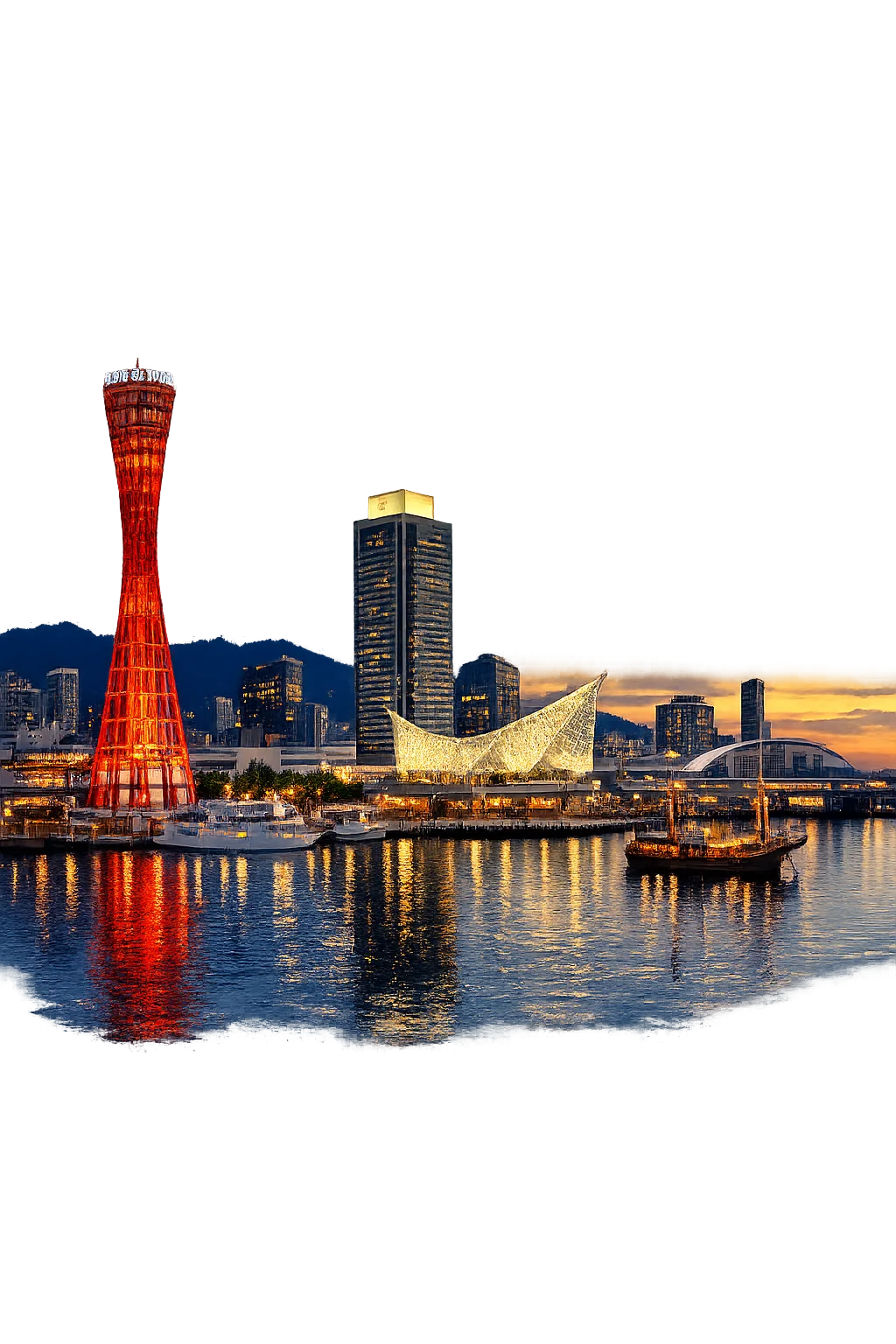
The appointments Kōbe made — and who is keeping them
One myth is a story. A cycle of myths is a specification. Read Kōbe's cycle in order and the industries fall out of it one by one.
At a Glance
- Temple: Kōbe
- Pantheon: Japanese
- Domain of influence: Port City, Hyōgo
- Pattern seats: 3
- Sectors touched: Culture & Entertainment · Energy & Natural World
- Strongest seat: Travel, Tourism & Place Branding
- Series: The Resonance Files, No. 262 of 546
The Cycle, Read Forward
Travel, Tourism & Place Branding — through The Shrine at the God-Door
The foundation tradition recorded in the Nihon Shoki makes Empress Jingū the foundress of Ikuta Shrine in AD 201, on her return from the Korean campaign; the shrine enshrines Wakahirume, the heavenly weaving maiden. Its sacred grove, Ikuta-no-mori, stood at the only flat ground between the Rokkō mountains and the sea, and for sailors crossing the Inland Sea it was the landmark of shelter.
The atlas states the seat in one line: Port city and beef; a global culinary destination. The story above is the long version of the same sentence. That is the cycle working: story becomes duty, duty becomes trade.
Agriculture, Food & Harvest — through Owada Anchorage and the Capital That Failed
By the Heian period the harbour below Ikuta appears in court records as Owada-no-tomari, the anchorage where ships bound between the capital and western Japan rode out the weather; it grew rich on Inland Sea tolls and, under the Taira, on trade with Song China. In 1180 Taira no Kiyomori — now the realm's chief minister — moved the imperial capital itself to his own estate at Fukuhara, in modern Kōbe, hoping to hold court and commerce in one hand (Heike monogatari; Azuma Kagami).
The atlas states the seat in one line: Kobe beef made the city a global food brand. The story above is the long version of the same sentence. The trade thinks it is optimizing a process. It is re-enacting a charter.
Maritime, Shipping & Ocean Industries — through The Port Opens to the World
The Ansei Treaties of 1858 designated Hyōgo as one of Japan's open ports; political turmoil delayed the opening until 1 January 1868 — the very months in which the shogunate itself fell. Foreign merchants moved into the designated settlement and then onto the Yamate hills, building the ijinkan, the 'foreign mansions' whose verandas, clapboard and chimneys still climb the Kitano slopes.
The atlas states the seat in one line: A working port city; maritime trade is its founding economy. The story above is the long version of the same sentence. That is the cycle working: story becomes duty, duty becomes trade.
The Theme That Runs the Cycle
Kōbe has no myth in the divine sense — its lore is the documentary record of a port that became a threshold: a shrine estate whose serving families gave the city its name, a medieval harbour where a warlord briefly planted a capital, and a modern port-city rebuilt from earthquake ruins.
The Method, Stated Plainly
The atlas is not a horoscope. Seats are earned from the sources — argued, weighted, published — and every one of them can be challenged at the methodology page. A match that cannot survive an argument does not survive review. That is the whole trick: the patterns are claims, and claims can be tested.
For the Ones Who Work There
If you work in travel, tourism & place branding, agriculture, food & harvest, or any trade this temple holds a seat in, this is the honest version of what a placement means: your industry beside the story it has been re-telling all along — on the temple floor itself, before an audience that came specifically to read it. The patron tier and the advertising terms describe the mechanics; the resonance above describes the fit.
The File Continues
One of 546 Resonance Files — the series where the pantheon goes to work. Read the founding dispatch for the name, the Restoration File for the spelling, or the whole archive end to end.
Continue the series — previous: Kleiṓ (read it) · next: Kǒngzǐ (read it).
The Resonance Files are argued from the same canonical record as the pattern atlas itself: the lexicon, the lore catalog, and the cited sources. Every seat can be challenged at the methodology page — and the challenge is the point.