
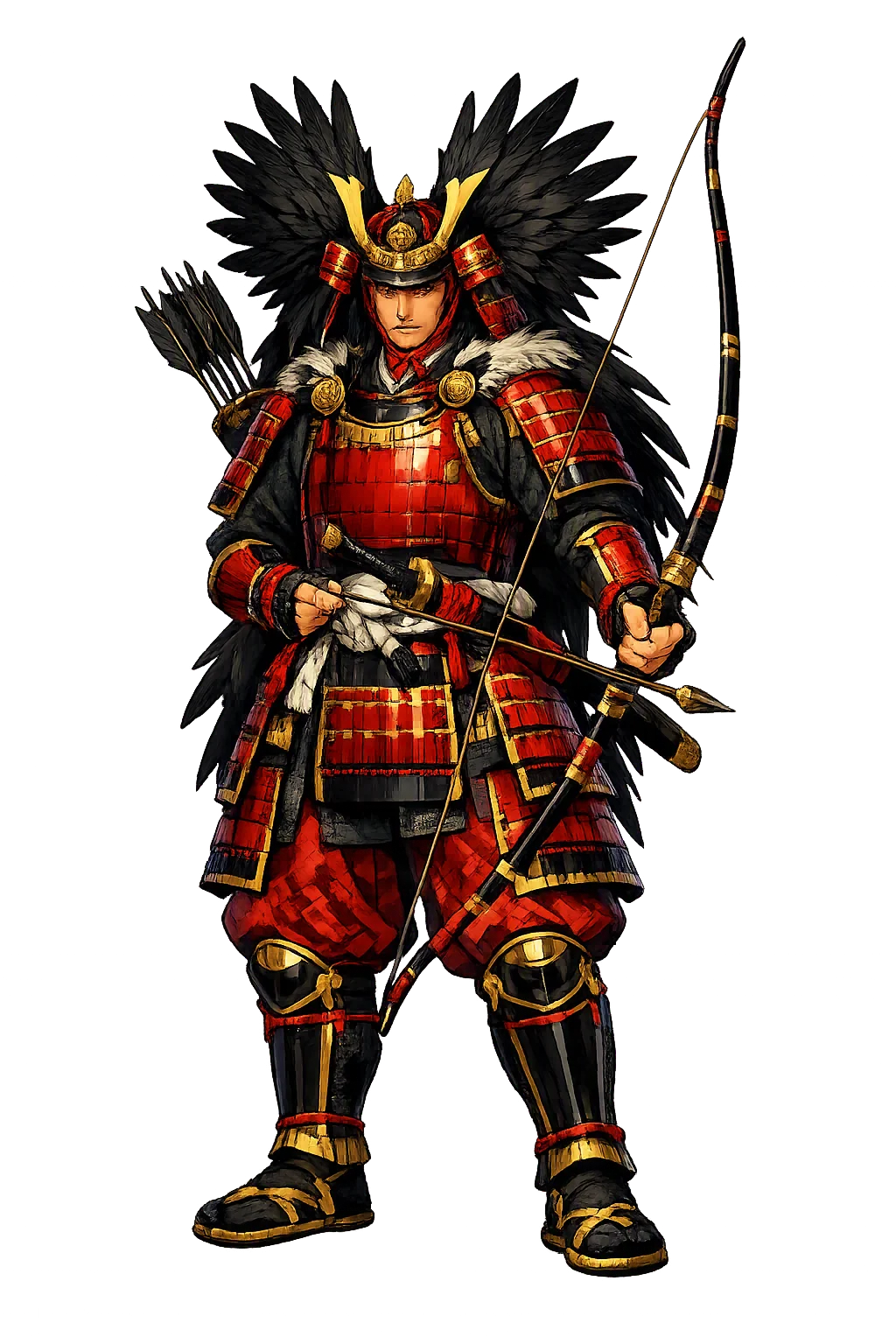
The working life of Hachiman: from the myths to the modern trades
The myths did not retire. They moved offices. This is the file on where Hachiman works now.
Hachiman's mythology is entangled with imperial history: he is most commonly identified as the deified Emperor Ōjin, making him a kami who was once a man — the only great war god of Japan who had served as a soldier. The chronicles give us the emperor; the shrine oracles, the god; and the medieval centuries fused the two into the nation's shield.
The pattern atlas — which maps every flagship temple to the industries its archetype demonstrably resonates with, each match argued and open to challenge — seats this temple in 4 industries. This file reads those seats the way they were earned: through the myths.
At a Glance
- Temple: Hachiman
- Pantheon: Japanese
- Domain of influence: War, Archery, Protection
- Pattern seats: 4
- Sectors touched: Commerce & Governance · Culture & Entertainment
- Strongest seat: Defense, Military & Security
- Series: The Resonance Files, No. 185 of 548
The Myth at Work
The Divine Child of the Campaign. Emperor Ōjin, the fifteenth emperor, was born, the Nihon Shoki says, while his mother the empress Jingū carried him through the Korean campaign, the child holding back his own birth until the war was won — the chronicle's way of making the unborn prince a participant in victory. He grew into a ruler remembered for welcoming scholars, artisans and new technologies from the Korean kingdoms, and when he died, tradition holds, he was enshrined at Usa in Kyūshū and became Hachiman, the kami of the eight banners. — remember the shape of that act. You will see it again, wearing a logo.
The Oracle of the North. The great shrine at Usa in northern Kyūshū became Hachiman's head shrine, and in the eighth century its oracle began to speak into the politics of the capital. In 749 the Shoku Nihongi records, the god was invited from Usa to Nara to lend divine authority to the casting of the Great Buddha at Tōdai-ji; in 764 his oracle denounced the rebel Fujiwara no Nakamaro and threw the prestige of heaven behind the embattled court; by the later eighth century the chronicles were styling him Hachiman Daibosatsu, the Great Bodhisattva Hachiman. — hold that image; the industries below are where it goes to work.
The Seats
Each of these is argued in the atlas with a weight and a why-line. What the atlas cannot fit in one line is the whole myth — so here is each seat with its story restored.
Defense, Military & Security
Defense contracting, security services, and strategic studies. (Sector: Commerce & Governance)
The war kami and divine protector of Japan; archery, warriors, and the state fall under his bow. Swap the costume and the sentence is indistinguishable from the myth. That is what a resonance seat means.
Insurance & Protection Services
Insurance, assurance, and risk protection. (Sector: Commerce & Governance)
The protective war kami; safeguarding the state and the home. Swap the costume and the sentence is indistinguishable from the myth. That is what a resonance seat means.
Leadership, Governance & Public Administration
Government, executive leadership, and statecraft. (Sector: Commerce & Governance)
The why-line says it in one breath: Deified emperor and guardian of the state; leadership by divine protection. That is not a resemblance; it is the same act, performed in a newer building.
Sports, Fitness & Competition
Athletics, fitness brands, and competitive leagues. (Sector: Culture & Entertainment)
The why-line says it in one breath: Archery, war, and competition; the bow is his attribute and the contest his rite. That is not a resemblance; it is the same act, performed in a newer building.
The Long Employment
Hachiman shrines are found throughout Japan, from the head shrine Usa Jingū in Ōita and Iwashimizu Hachimangū south of Kyōto to the great Tsurugaoka Hachimangū at Kamakura — founded by Minamoto no Yoriyoshi in 1063 and moved to its present site by Yoritomo in 1191 as the shrine of the shogunate's own city. He remains the tutelary kami of the Minamoto line and of countless warrior houses, and his September festival at Kamakura is among the grandest shrine rites in the country. The age changed. The work did not.
The Method, Stated Plainly
Skeptical? Good — the system is built for you. Every seat in this file carries its why-line and its weight, the full derivation is public at the methodology page, and the challenge process is part of the design. Falsifiable is not a posture here; it is the mechanism.
For the Ones Who Work There
If you work in defense, military & security, insurance & protection services, or any trade this temple holds a seat in, this is the honest version of what a placement means: your industry beside the story it has been re-telling all along — on the temple floor itself, before an audience that came specifically to read it. The patron tier and the advertising terms describe the mechanics; the resonance above describes the fit.
The File Continues
One of 548 Resonance Files — the series where the pantheon goes to work. Read the founding dispatch for the name, the Restoration File for the spelling, or the whole archive end to end.
Continue the series — previous: Gwydion (read it) · next: Hádēs (read it).
The Resonance Files are argued from the same canonical record as the pattern atlas itself: the lexicon, the lore catalog, and the cited sources. Every seat can be challenged at the methodology page — and the challenge is the point.