
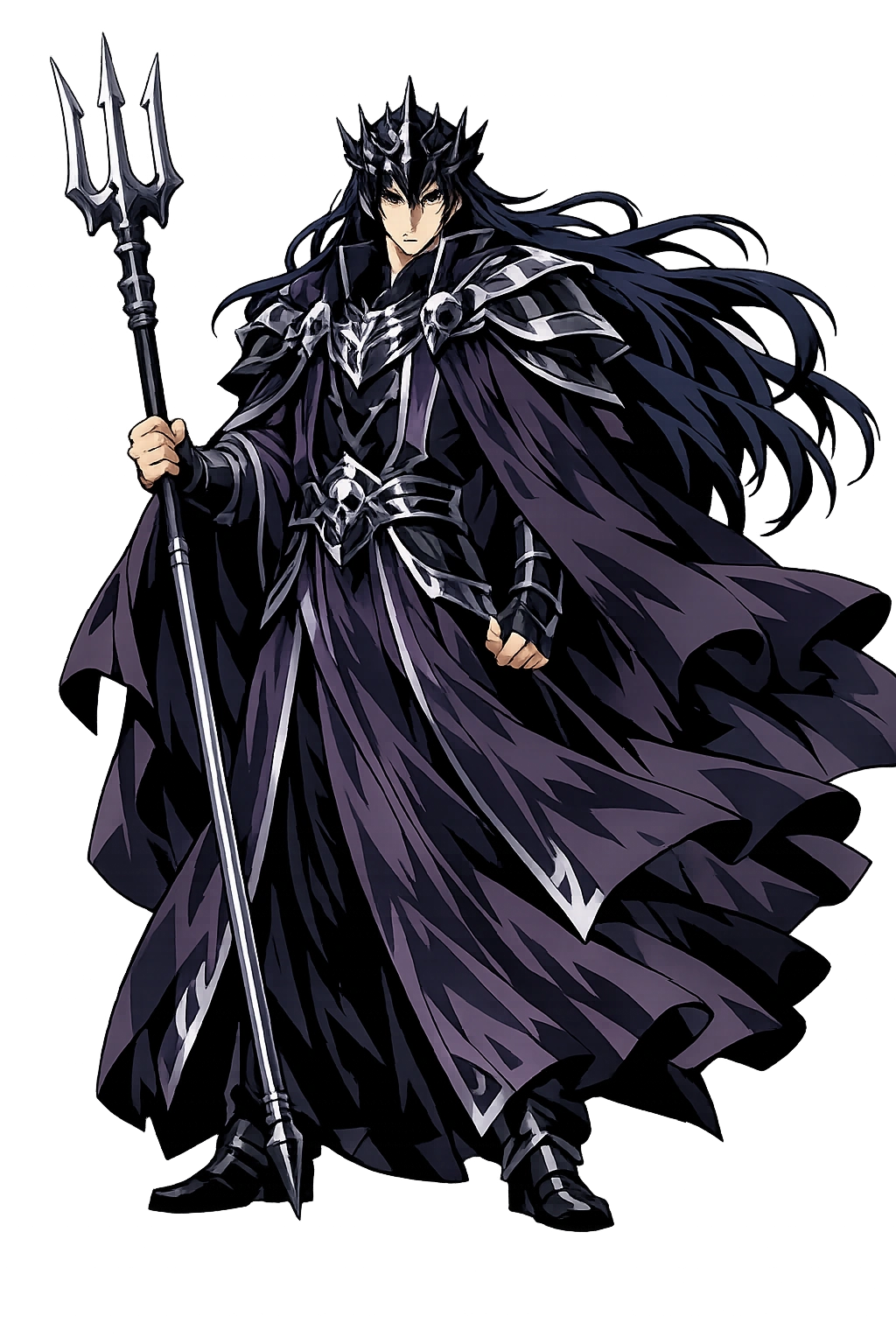
The appointments Hádēs made — and who is keeping them
Take Hádēs's stories in sequence. They are not episodes; they are appointments — and the modern trades are keeping them.
At a Glance
- Temple: Hádēs
- Pantheon: Greek
- Domain of influence: Underworld, Wealth
- Pattern seats: 3
- Sectors touched: Society & Spirit · Energy & Natural World · Commerce & Governance
- Strongest seat: Funerary & Memorial Services
- Series: The Resonance Files, No. 186 of 546
The Cycle, Read Forward
Funerary & Memorial Services — through The Seizure of Persephonē
The Homeric Hymn to Demeter gives the underworld its founding story. Persephonē, daughter of Demeter, was gathering flowers — roses, crocus, violets, and 'the wondrous narcissus, a trap planted by Zeus to please Hades' (5–15) — when the earth gaped and Hádēs burst up in his golden chariot 'with the consent of Zeus' and carried her down, 'weeping and crying aloud' (30–32).
The atlas states the seat in one line: Lord of the underworld; the destination administered. The story above is the long version of the same sentence. Industries do not invent their archetypes; they inherit them and call them best practice.
Mining & Natural Resources — through The Judges of the Dead
What happens after the ferryman? The developed tradition — later than Homer, who knows only the dreary meadow of Asphodel — gives the dead three judges: Minos, whom Homer already sees 'holding a golden scepter, dealing judgments among the dead' (Odyssey 11.
The atlas states the seat in one line: Lord of the unseen wealth beneath the earth; mines are his treasury. The story above is the long version of the same sentence. The trade thinks it is optimizing a process. It is re-enacting a charter.
Finance, Wealth & Commerce — through Orpheus and Eurydikē
The musician Orpheus descended to bring back Eurydikē, bitten by a snake on her wedding day. Vergil (Georgics 4.
The atlas states the seat in one line: Plouton, the hidden wealth; underground value made divine. The story above is the long version of the same sentence. That is the cycle working: story becomes duty, duty becomes trade.
The Theme That Runs the Cycle
Hádēs appears rarely in Greek myth because his realm is separate from the world of the living — and the Greeks preferred it that way. His stories all concern the boundary: how Persephonē crossed it, how Orpheus almost crossed back, and why the door only opens inward.
The Method, Stated Plainly
None of this is numerology. A seat exists only where the match can be argued from the deity’s documented domains and deeds — weighted, published, and falsifiable. The derivation, the weights, and the challenge process are public on the methodology page. If a seat in this file reads wrong, the atlas itself tells you how to prove it — and the correction becomes part of the record.
For the Ones Who Work There
If you work in funerary & memorial services, mining & natural resources, or any trade this temple holds a seat in, this is the honest version of what a placement means: your industry beside the story it has been re-telling all along — on the temple floor itself, before an audience that came specifically to read it. The patron tier and the advertising terms describe the mechanics; the resonance above describes the fit.
The File Continues
One of 546 Resonance Files — the series where the pantheon goes to work. Read the founding dispatch for the name, the Restoration File for the spelling, or the whole archive end to end.
Continue the series — previous: Hachiman (read it) · next: Halmoni (read it).
The Resonance Files are argued from the same canonical record as the pattern atlas itself: the lexicon, the lore catalog, and the cited sources. Every seat can be challenged at the methodology page — and the challenge is the point.