
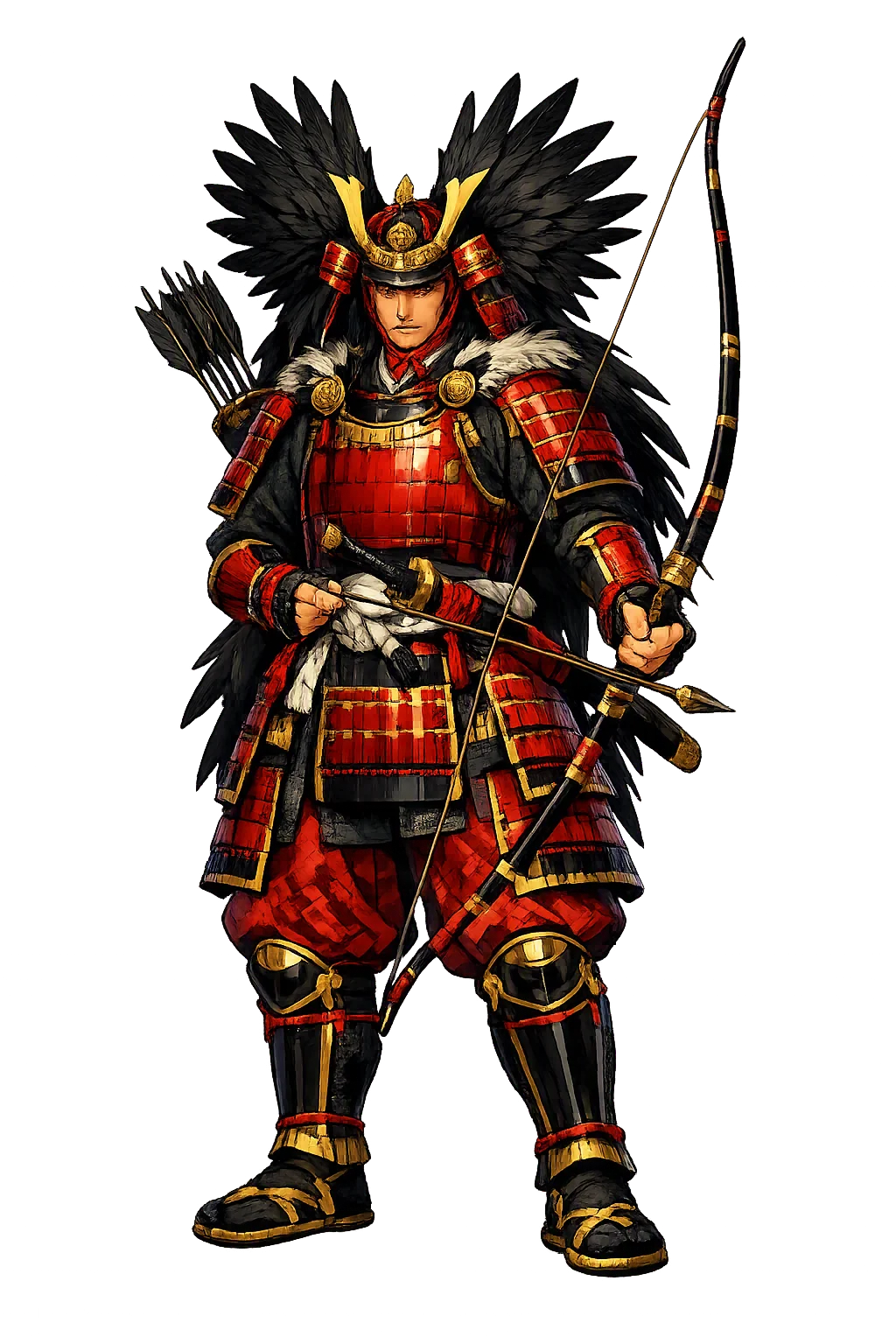
Why Hachiman is spelled that way — and what it costs to get it right
There is a version of this name the early internet had to settle for: hachiman. This is the file on how Hachiman replaced it.
Hachiman's mythology is entangled with imperial history: he is most commonly identified as the deified Emperor Ōjin, making him a kami who was once a man — the only great war god of Japan who had served as a soldier. The chronicles give us the emperor; the shrine oracles, the god; and the medieval centuries fused the two into the nation's shield.
At a Glance
- Restored name: Hachiman
- ASCII form: hachiman
- Meaning: "Eight banners"
- Domain of influence: War, Archery, Protection
- Pantheon: Japanese
- Classification: Tier 2
- Original script: 八幡
- Series: The Restoration Files, No. 185 of 548
The Name Before the Marks
The name is attested as 八幡, as Kojiki and Nihon Shoki (Emperor Ōjin and Empress Jingū narratives) and Shoku Nihongi — entries for 749 (casting of the Great Buddha) and 764 (Fujiwara no Nakamaro revolt) preserve it. On the evidence, it means "Eight banners".
Spoken, the name runs `/ha.tɕi.ma.ɴ/` — 'HAH-chee-mahn' — the 'ch' is crisp, and the final 'n' is a soft closed nasal.
The Temple That Stands Now
The restored name is not a plaque; it is an address. The temple of Hachiman lives at /hachiman/, with its mythology in the lore halls, its peer-reviewed record in the Scholarly Edition, and its place in the pattern atlas on the patterns floor.
One decisive feature survives — a single, honest mark — which places the restoration in Tier-2: exact, and exactly labeled.
Where the Name Stood First
Usa Jingū in Ōita is Hachiman's head shrine, with a documented history running from the eighth century in shrine records and excavation. Iwashimizu Hachimangū near Kyōto was founded in 860 as the capital's guardian shrine, and its mountain site preserves the medieval pilgrimage routes. Tōdai-ji's Hachiman shrine preserves the Buddhist-Shinto synthesis of the Nara period in situ, and Tsurugaoka Hachimangū at Kamakura — established 1063, relocated 1191 — is the great medieval monument of his cult, its long approach lined to this day with the banners of his name. The temple on the web is the newest of these addresses — the first one that fits in a pocket.
The Archetype at Work
The pattern atlas seats this temple in 4 industries, each match argued and weighted: Defense, Military & Security (the war kami and divine protector of Japan; archery, warriors, and the state fall under his bow.); Insurance & Protection Services (the protective war kami; safeguarding the state and the home.); Leadership, Governance & Public Administration (deified emperor and guardian of the state; leadership by divine protection.). The Resonance File reads those seats through the myths themselves.
In the Sacred Texts
The Japanese tradition is not a vibe; it is a library. The Sacred Texts collection holds Kojiki and Nihon Shoki — the primary sources the temple's scholarship is built on. The temple is the argument; the texts are the evidence.
The File Continues
The temple's founding dispatch tells the name's story; its Resonance File reads the myths into the industries; the blog index holds the whole archive.
Continue the series — previous file: Gwydion (read it here) · next file: Hádēs (read it here).
The Restoration Files are written from the same canonical record as the temples themselves: the lexicon, the lore catalog, the pattern atlas, and the cited scholarly sources. If a file ever disagrees with its temple, the temple is right — tell us, and the file will be corrected.