
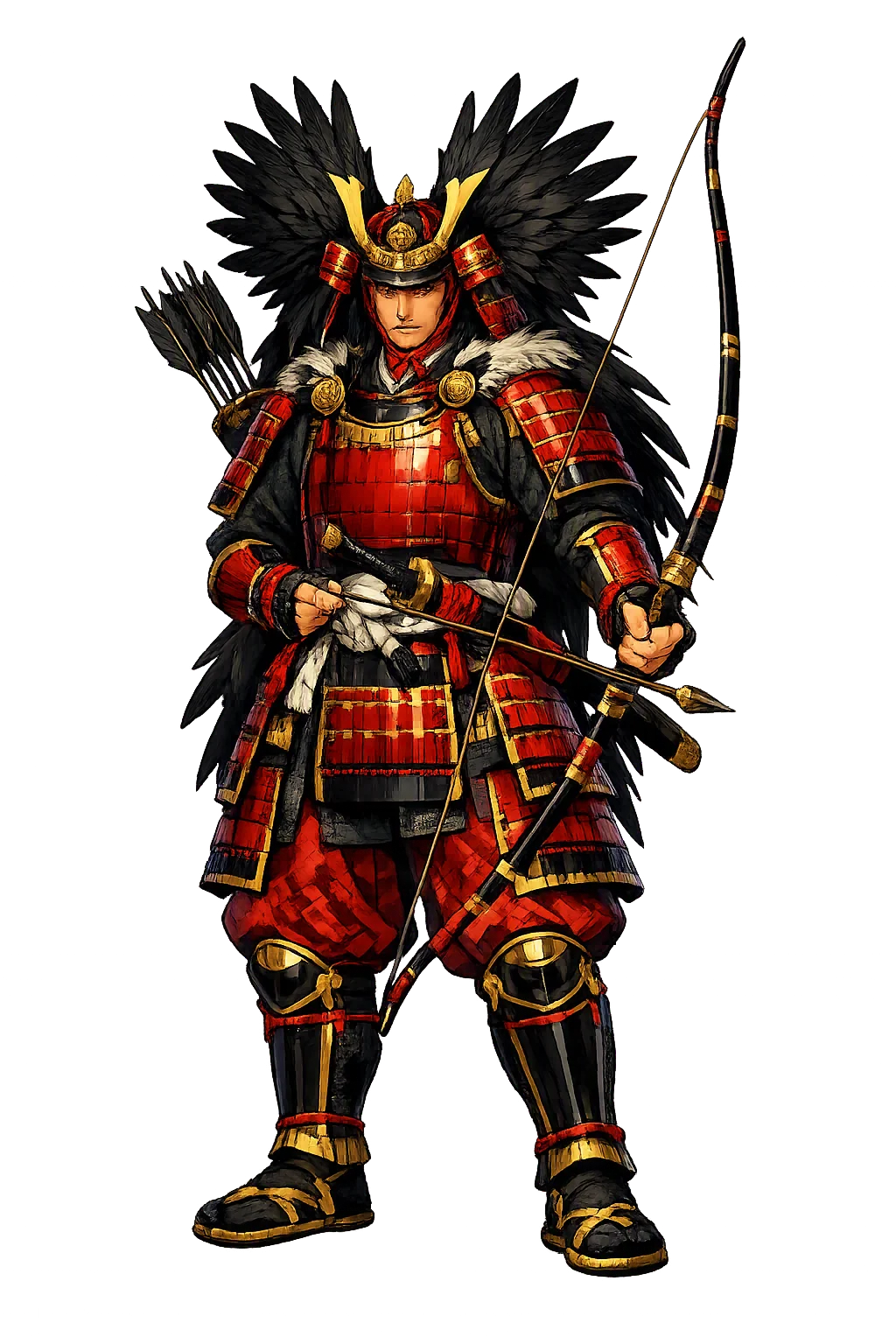
How Hachiman found its canonical form
The ASCII form hachiman is not missing anything that this name requires. Hachiman is the canonical spelling supported by the Japanese characters evidence and the tradition's scholarly conventions. This post explains what that form preserves, how it is pronounced, which narratives surround it, and why consistency matters. There are no recovered accents to celebrate; there is something more useful — a spelling whose history can actually be checked.
At a Glance
- Canonical name: Hachiman
- ASCII form: hachiman
- Meaning: "Eight banners"
- Domain of influence: War, Archery, Protection
- Pantheon: Japanese
- Restoration: ASCII-equivalent form
- Original script: 八幡 (Japanese characters)
Overview
Hachiman (hachiman) — War, Archery, Protection · Eight banners — belongs to the Japanese tradition, where it is catalogued under the domain "War, Archery, Protection". The name means "Eight banners".
Hachiman is the kami of war, archery, and protection, worshipped by samurai, peasants, and emperors alike. His symbol — eight banners (hachi-man) — recalls the standards under which the divine child grew to become a warrior patron. He is one of the most widely enshrined kami in Japan, and his cult blurred the boundary between Shinto and Buddhism for over a millennium.
PuniCodex records the canonical scholarly spelling Hachiman and serves its temple at its temple. The displayed form is ASCII-equivalent — a description computed from the displayed form itself. The plain ASCII form hachiman contains the same letters: no recovered diacritics or special encoding is claimed. The work here is consistent citation, capitalization, provenance, and cultural context.
The Name
The name is attested in Japanese characters as 八幡. Etymologically it means "Eight banners".
The canonical spelling Hachiman matches the conventional scholarly romanization. The plain ASCII form hachiman contains the same letters, so no lost diacritics or encoding transition is claimed. The editorial work is to fix one reviewed reference spelling, preserve capitalization and provenance, and keep the original evidence visible. The displayed form is ASCII-equivalent — a description computed from the displayed form itself.
The letter-by-letter transformation runs:
- h → H — Same
- a → a — Same
- c → c — Same
- h → h — Same
- i → i — Same
- m → m — Same
- a → a — Same
- n → n — Same
The Original Script
The name is written in Japanese characters as 八幡. That attested script remains the primary evidence for the conventional romanization Hachiman. The canonical Latin spelling does not pretend to recover marks it never contained: it fixes one reviewed reference form while leaving the original script visible for comparison.
八幡 means 'eight banners'. The name first appears in the Nihon Shoki (720), in the Usa-ward narrative of Empress Jingū's conquest, where the god of Usa pledges his banners to the expedition; the Usa shrine's own tradition carries the cult back to the sixth century or earlier. The medieval identification with the deified Emperor Ōjin made the emperor into the god, but the written sequence runs the other way: Hachiman began as the name on the banners of Usa, and the imperial identity accreted around him centuries later.
Pronunciation
The reconstructed pronunciation of the name is /ha.tɕi.ma.ɴ/ — Modern Standard Japanese (Hepburn).
Phoneme by phoneme:
- Ha- — Voiceless glottal [h] plus open central [a]
- -chi- — Voiceless alveolo-palatal affricate [tɕ] plus close front [i]; from 八 'eight'
- -man — Bilabial [m], open central [a], moraic nasal [ɴ]; from 幡 'banner'
For the modern speaker, the closest approximation is: 'HAH-chee-mahn' — the 'ch' is crisp, and the final 'n' is a soft closed nasal.
Kindred and historical forms of the name:
- Japanese — 八幡 (Hachiman), 'Eight Banners,' a major kami of war and archery
- Full name — Hachiman-daijin or Yawata no kami
- Identification — Often identified with the deified Emperor Ōjin, and syncretized with the Buddhist guardian Hachiman Daibosatsu
Hachiman keeps its restoration plain: the name is plain Hepburn. His importance is institutional and martial, not orthographic.
Mythology
Hachiman's mythology is entangled with imperial history: he is most commonly identified as the deified Emperor Ōjin, making him a kami who was once a man — the only great war god of Japan who had served as a soldier. The chronicles give us the emperor; the shrine oracles, the god; and the medieval centuries fused the two into the nation's shield.
The Divine Child of the Campaign (The Deified Emperor)
Emperor Ōjin, the fifteenth emperor, was born, the Nihon Shoki says, while his mother the empress Jingū carried him through the Korean campaign, the child holding back his own birth until the war was won — the chronicle's way of making the unborn prince a participant in victory. He grew into a ruler remembered for welcoming scholars, artisans and new technologies from the Korean kingdoms, and when he died, tradition holds, he was enshrined at Usa in Kyūshū and became Hachiman, the kami of the eight banners. The identification between the deified emperor and the war god formed gradually across the eighth century; the chronicles give us the man, and the shrine tradition gives us the god (Kojiki, Nihon Shoki, Ōjin and Jingū narratives).
A man-made kami was a new kind of divinity for Japan: not a nature power but an ancestor — which meant that the warrior's death could have a shrine, and the state's wars could have a patron who had once been a soldier himself.
The Oracle of the North (Usa)
The great shrine at Usa in northern Kyūshū became Hachiman's head shrine, and in the eighth century its oracle began to speak into the politics of the capital. In 749 the Shoku Nihongi records, the god was invited from Usa to Nara to lend divine authority to the casting of the Great Buddha at Tōdai-ji; in 764 his oracle denounced the rebel Fujiwara no Nakamaro and threw the prestige of heaven behind the embattled court; by the later eighth century the chronicles were styling him Hachiman Daibosatsu, the Great Bodhisattva Hachiman. A regional war god of Kyūshū had become a constitutional power — consulted, invoked and quoted in the state's own records.
The oracle's career is the quiet history of Japanese religion: kami authority deployed at the exact moments the court needed legitimacy, until protection of the throne became the god's defining office.
Guardian of the Great Buddha (Nara)
When the Great Buddha of Tōdai-ji was cast in 749 and opened its eyes in 752, Hachiman came from Usa as its appointed guardian, and a shrine to him was raised within the temple precincts. The temple tradition preserves the god volunteering for the office — declaring in a dream that he would protect the Buddha's hall: a kami stepping forward as a bodhisattva's gatekeeper, and a Buddhist monastery accepting a warrior god as its own. For centuries the great temples and the great Hachiman shrines traded processions, oracles and honors, and the figure of the armored archer came to stand inside Buddhist temple grounds as naturally as buddhas stood in the shrine's mandalas.
This was the deepest layer of the medieval synthesis — not a treaty between two religions but a single ritual world, in which the war god could be a bodhisattva and a bodhisattva could wear a sword.
The Divine Wind (Kamakura)
In 1274 and again in 1281 the Mongol fleets of Kublai Khan came against Japan, and the court and the bakufu prayed to Iwashimizu Hachimangū — the shrine south of Kyōto founded in 860 to guard the capital — as to the nation's shield. The second fleet was destroyed by the typhoon of 1281, recorded in the Azuma Kagami, and the wind that sank it was named kamikaze, the divine wind: read then as the answer of the gods, and read ever after as Hachiman's own breath guarding the islands. Whether or not the storm was ever attributed to him alone, the association stuck — the god of the eight banners became the god of the storm that saved the country.
Here the mythology turns from cult history to national myth: Hachiman now protects not a shrine or a clan but the archipelago itself, and his banners fly at the scale of the sea.
Symbols & Iconography
The iconography associated with Hachiman concentrates in a small set of recurring attributes, each a compressed statement about the name:
- Eight banners — The ritual standards from which his name derives — the eight flags of the divine birth
- Bow and arrow — Attributes of his role as patron of archery and of the disciplined warrior
- White dove — His messenger, said to descend where his protection rests; the dove still marks his shrine emblems
- Helmet and armor — The martial regalia of the deified emperor — a god who fights as a soldier, not a force of nature
Archaeology & Evidence
Usa Jingū in Ōita is Hachiman's head shrine, with a documented history running from the eighth century in shrine records and excavation. Iwashimizu Hachimangū near Kyōto was founded in 860 as the capital's guardian shrine, and its mountain site preserves the medieval pilgrimage routes. Tōdai-ji's Hachiman shrine preserves the Buddhist-Shinto synthesis of the Nara period in situ, and Tsurugaoka Hachimangū at Kamakura — established 1063, relocated 1191 — is the great medieval monument of his cult, its long approach lined to this day with the banners of his name.
Realm & Domain
Hachiman is the kami of war, archery, and protection, worshipped by samurai, peasants, and emperors alike. His symbol — eight banners (hachi-man) — recalls the standards under which the divine child grew to become a warrior patron. He is one of the most widely enshrined kami in Japan, and his cult blurred the boundary between Shinto and Buddhism for over a millennium.
War God
Patron of warriors and archers — but of defense, not conquest: the god who protects the realm and those who fight in its name.
Eight Banners
His name refers to the eight ritual banners that accompanied the divine birth of the child who became Emperor Ōjin.
Divine Protector
Guardian of the nation — invoked from Usa and Iwashimizu as the shield of the throne, and credited with the storm that sank the Mongol fleets.
Shinbutsu Synthesis
Worshipped both as a kami and as the Buddhist bodhisattva Hachiman Daibosatsu — the first kami the national chronicles style a bosatsu.
Across Cultures
Hachiman is the archetype of shinbutsu shūgō, the medieval blending of kami and Buddhist cult. As Emperor Ōjin he is human, ancestral and imperial; as Hachiman Daibosatsu he is a bodhisattva — the first kami the national chronicles style a bosatsu — compassionate, universal and warlike at once. This double identity made him indispensable to the samurai state: the Minamoto claimed him as clan ancestor (ujigami) and patron, and the great medieval temples housed his shrines as their guardian chapels. The Meiji separation of Shinto and Buddhism in 1868 forcibly divided what had been one ritual body for a millennium — the bodhisattva title shelved, the shrines reclassified — yet the union survives in popular practice, where a visit to Tsurugaoka Hachimangū is at once a shrine rite and a memory of the Daibosatsu.
Kindred figures in the PuniCodex cross-tradition index include Marishiten (warrior-protector deities of Japan), Sḫmt (war / protection), ꜥAnat (war / battle), Árēs (war / battle), Aššur (war / battle), and Athēnâ (war / battle).
Cultural Legacy
Hachiman shrines are found throughout Japan, from the head shrine Usa Jingū in Ōita and Iwashimizu Hachimangū south of Kyōto to the great Tsurugaoka Hachimangū at Kamakura — founded by Minamoto no Yoriyoshi in 1063 and moved to its present site by Yoritomo in 1191 as the shrine of the shogunate's own city. He remains the tutelary kami of the Minamoto line and of countless warrior houses, and his September festival at Kamakura is among the grandest shrine rites in the country. Archers invoke him, sumo honors him, and his dove still serves as his messenger on shrine crests, festival floats and military insignia. In the twentieth century his name was borrowed for battleships and war bonds; in the twenty-first he has quietly resumed his older role — the god who protects a nation rather than a war.
The Scholarly Record
The account of Hachiman given in this edition rests on the witnesses and reference works listed below. Lexica and etymological dictionaries secure the form and meaning of the name; the literary and religious texts supply the narrative evidence.
- Kojiki and Nihon Shoki (Emperor Ōjin and Empress Jingū narratives).
- Shoku Nihongi — entries for 749 (casting of the Great Buddha) and 764 (Fujiwara no Nakamaro revolt).
- Azuma Kagami — Kōan era, the Mongol invasions of 1274 and 1281.
- Grapard, The Protocol of the Gods: A Study of the Kasuga Cult in Japanese History (1988).
- Teeuwen and Bock, eds., Shinto in History: Ways of the Kami (2010).
A Meditation
Hachiman asks what it means to fight with divine sanction. He is not a god of aggression but of protection — the warrior who defends the realm. His eight banners remind us that war, when it comes, should be ordered, ritualized, and directed toward preservation rather than conquest.
The Canonical Spelling
Hachiman is the canonical spelling used by this temple. The plain ASCII form hachiman contains the same letters, so there are no lost diacritics to recover and no special encoding transition to explain. What the temple preserves is the reviewed reference form: capitalization, conventional romanization, original evidence, and a stable place to inspect them. The value here is not added decoration; it is fidelity to the attested record.
Character by Character
The canonical form Hachiman and the plain ASCII form hachiman share the same letters. The character list therefore documents continuity rather than recovery: every character is carried forward deliberately, with capitalization serving as the proper-noun convention. No additional mark is inserted merely to make the restoration appear more elaborate.
The Japanese Pantheon
Hachiman is one of 45 entries the PuniCodex lexicon catalogues under the Japanese pantheon. The Pantheon page gathers the tradition's major figures in one place, and the Lexicon lets you filter all 983 restorations by tradition or script — the fastest way to see where this name sits among its kin.
Frequently Asked Questions
What does Hachiman mean? The traditional gloss is "Eight banners."
Which tradition does Hachiman belong to? Hachiman is catalogued in the Japanese pantheon of the PuniCodex lexicon.
Does this name need recovered diacritics? No. Hachiman is already an ASCII-form canonical spelling. The scholarly work is to preserve the attested convention and its evidence, not to add marks.
Can I use Hachiman in a normal browser? Yes. The spelling works directly in an ordinary browser, and the type tool can confirm and copy the canonical form.
Where does the scholarly information come from? The entry is built from lexica, inscriptional evidence, and reviewed scholarly sources listed in the Scholarly Edition.
Typing Hachiman
You do not need a special keyboard to use this name. Hachiman already uses ordinary Latin letters. The PuniCodex Type Tool lets you confirm the canonical spelling and copy it cleanly, while the original-script notes in the temple show the evidence behind the romanization.
Sister Temples
Other temples in the Japanese pantheon include Nagoya, Raijin, and Takachiho — each with its own restoration story, its own scholarly record, and its own place in the lexicon.
Why This Record Matters
The letters in Hachiman were never lost, and no replacement marks are needed to make them whole. The burden is instead one of fidelity: every use should carry the same attested spelling and the history attached to it. The PuniCodex temple keeps that form in circulation — as a digital address, a dataset entry, and a scholarly argument — so consistency becomes the easy choice rather than an accident of citation.
Explore Further
This post is one doorway into the temple. The home page carries the full character breakdown and the ambient canvas; the lore page tells the myths in long form; the Scholarly Edition preserves the sources, pronunciation data, and revision history; and the patron wall supports the restoration directly. For the wider map, browse the Lexicon, explore the Pantheon, or return to the PuniCodex blog.
A Closer Look at the Spelling
A canonical name is a small map. In the case of Hachiman, the route does not lead through diacritics or special letters, because the conventional scholarly spelling already uses the Latin alphabet. The original evidence — 八幡 in Japanese characters — carries semantic and phonetic information that no romanization can fully reproduce.
By fixing one reviewed spelling as the public reference, the project prevents the drift that occurs when a name is romanized differently in every article, map, and database. The character list shows exactly what is carried forward. "No change" here means a deliberate choice to keep the name stable, searchable, and faithful to the record.
Related Names
Sources
The full scholarly apparatus — every citation, revision, and review — lives in the Scholarly Edition. Key references for this post:
- Kojiki and Nihon Shoki (Emperor Ōjin and Empress Jingū narratives).
- Shoku Nihongi — entries for 749 (casting of the Great Buddha) and 764 (Fujiwara no Nakamaro revolt).
- Azuma Kagami — Kōan era, the Mongol invasions of 1274 and 1281.
- Grapard, The Protocol of the Gods: A Study of the Kasuga Cult in Japanese History (1988).
- Lexicon authorities for this entry: Hepburn, Kojiki.