
The hidden history behind Fuji
Behind the modern ASCII form fuji hides a much longer story. Fuji reaches back through manuscripts, inscriptions, and oral tradition long before it ever touched a keyboard, and every mark in the restored spelling is a receipt from that journey. In what follows we trace the name from its Japanese characters attestations through its mythology, its cult, its symbols, and its afterlife in other cultures — and we show how the PuniCodex project turned that philological record into a Unicode domain that resolves today. The history was never lost. It was only waiting for the infrastructure to catch up.
At a Glance
- Restored name: Fuji
- ASCII form: fuji
- Meaning: "Wealthy warrior"
- Domain of influence: Sacred Mountain
- Pantheon: Japanese
- Classification: Tier 2
- Original script: 富士 (Japanese characters)
Overview
Fuji (fuji) — Sacred Mountain — belongs to the Japanese tradition. The name means "Wealthy warrior".
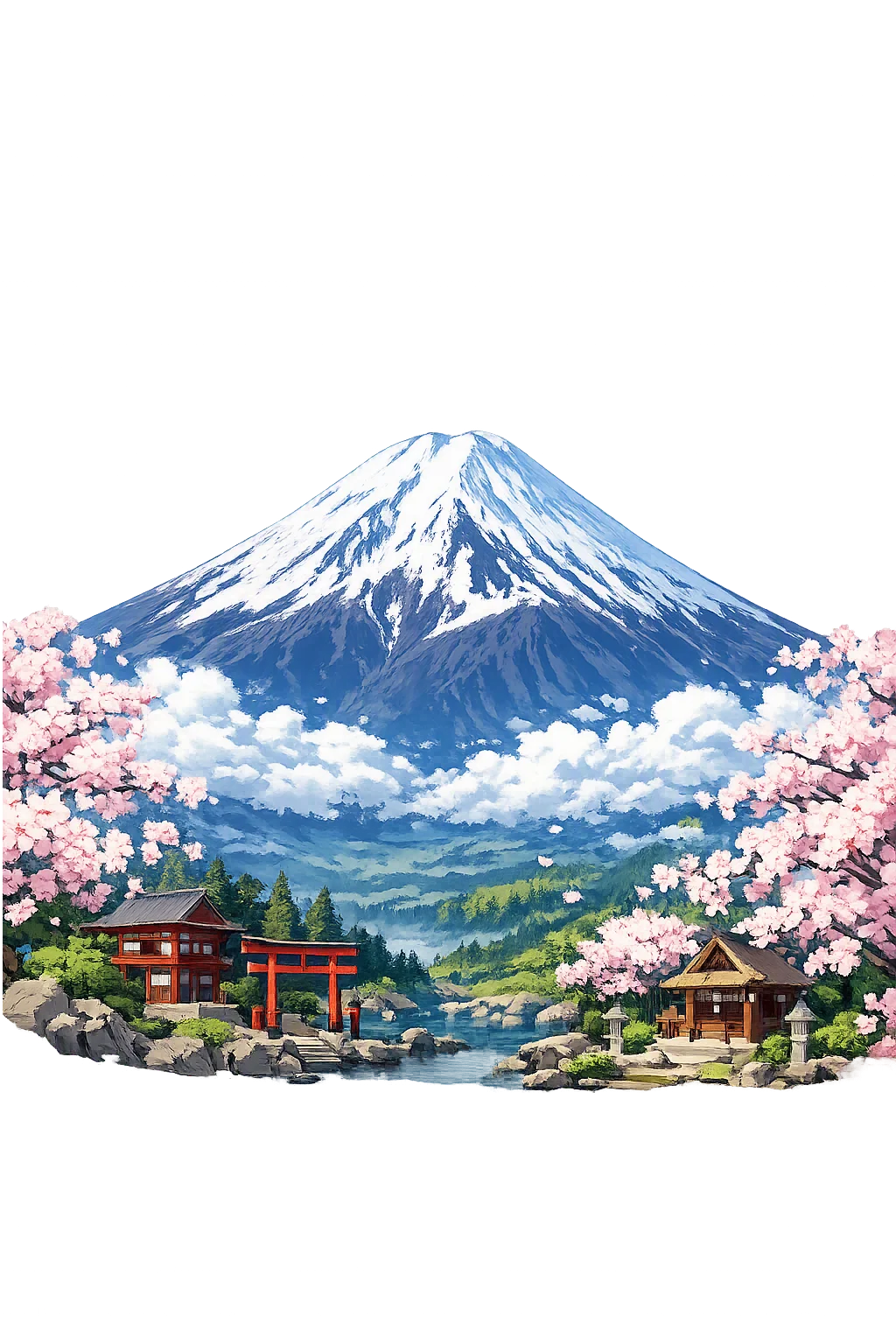
Mount Fuji is the sacred mountain of Japan, an object of worship since at least the Nara period and the most reproduced image of the country.
PuniCodex restores the name as Fuji. The plain ASCII form fuji is the modern Hepburn romanization; the restoration capitalizes the conventional spelling. Because the Japanese source script uses logographic characters whose distinctive visual form cannot be conveyed in the basic Latin alphabet, and because no diacritic or special letter is added in this restoration, the name is placed in Tier 2. The Unicode form remains the philologically complete reference, while the ASCII spelling is a practical convenience for the domain-name system.
The Name
The name is attested in Japanese characters as 富士. Etymologically it means "Wealthy warrior".
The name Fuji is of uncertain etymology. One influential theory derives it from the Ainu fuchi or huchi, meaning "fire" or "old woman," referring to the volcano's fire and the fire goddess. Another derives it from Old Japanese fushi or fuji, a wisteria-like plant, or from a phrase meaning "wealthy warrior." The mountain has been an object of worship since at least the Nara period.
The ASCII form fuji survives only because the early domain-name system could not carry Japanese characters or diacritics; it is a technological compromise, not an ancient spelling. The Unicode restoration Fuji gives the conventional Hepburn romanization with initial capitalization, the standard scholarly way to cite a proper name in romanized Japanese. The name is Tier 2 because the restoration does not add a distinctive diacritic or special letter absent from the ASCII form.
The letter-by-letter transformation runs:
- f → F — Same, capitalized
- u → u — Same
- j → j — Same
- i → i — Same
The Original Script
The name is written in Japanese characters as 富士 — Japanese logographic and syllabic script (kanji plus kana where attested), attested in the classical Japanese sources. The script is written top-to-bottom in traditional contexts and left-to-right in modern reproductions.
The scholarly transliteration is Fuji (Hepburn romanization with initial capitalization), giving the normalized reading //ɸɯ.ʑi//.
The characters 富士 are ateji, now read for their auspicious meanings: 富 (wealth) and 士 (warrior, gentleman). The mountain's name predates the writing system and was assigned these graphs because of their sound and favorable associations.
Pronunciation
The conventional reading of the name is /ɸɯ.ʑi/ — Modern Japanese (Standard Japanese).
For the modern speaker, the closest approximation is: 'FUJI' — pronounce each vowel clearly and avoid English diphthongs. Japanese is mora-timed, so each syllable receives roughly equal weight.
Fuji is Tier 2 because the ASCII form fuji already represents the same phonemic sequence; no stress mark, length mark, or distinctive letter is required to recover the spoken name.
Mythology
The Kojiki and Nihon Shoki connect the volcano to the fire deity Kagutsuchi: when Izanagi killed Kagutsuchi with his sword, the blood that fell on the rocks created other kami, and the fire god's body was said to be buried or transformed into mountains. Later tradition identifies the mountain itself as the abode of the kami Konohana-sakuya-hime and Ōyamatsumi, and the object of the Asama or Sengen cult. The Konjaku Monogatari and Fuji-kō literature describe ecstatic ascents and visions of paradise from the summit.
The Name and Its Power (Kojiki / Nihon Shoki)
The name Fuji is explained in folk etymology as 'without equal' (fushi) or 'inexhaustible' (fuji). The mountain was long identified with a female kami, the deity of the volcano, and with Sengen Daimyōjin, a syncretic Buddhist-Shinto figure who governed fire and fertility. Its eruptions were interpreted as the anger or fertility of the divine.
Fuji as Lotus Mandala (Buddhist cult)
Medieval Buddhism imagined Fuji as a lotus mandala. The Fuji-kō confraternities of the Edo period climbed the mountain in white robes, reciting sutras and performing ritual circumambulations. The summit was a boundary between the human world and a Buddhist paradise, and the crater itself was sometimes identified with the Pure Land.
The Floating World's Mountain (Art and nation)
Katsushika Hokusai's Thirty-Six Views of Mount Fuji and Utagawa Hiroshige's travel series fixed Fuji's image in global consciousness. It appears in calm seas, behind thunder, above villages, and through waves — always the same mountain, always changing with the viewer's place in the world.
Symbols & Iconography
- Snow-capped cone — the symmetrical volcanic form, icon of Japan par excellence.
- Sakura and wisteria — floral symbols associated with the Fuji cult and spring pilgrimage.
- Lava caves and springs — the mountain's fire and water are both sacred; the Oshino Hakkai springs are thought to be melted snow from Fuji.
- Red torii and sōmen — pilgrims wear white robes and conical hats, carrying a staff and bell.
- Torii and shrine markers — The network of shrines, especially Sengen shrines, that manage the mountain's cult
- Crater and rising sun — The summit caldera and the dawn viewed from it, central to pilgrimage experience
- Pilgrim's staff — The walking stick and stamped robe of those who climbed the sacred slopes
Archaeology & Evidence
The summit of Fuji preserves more than a hundred okunoin sacred sites, shrines, and the Konohana-sakuya-hime shrine rebuilt in the modern period. The Yoshida-guchi and Subashiri trail systems, the Ōmuro sect headquarters, and numerous Fujizuka mounds in the Kantō plain provide a dense archaeological and landscape record of the Fuji cult.
Realm & Domain
Mount Fuji is the sacred mountain of Japan, the highest peak in the country, and a shintai — a natural body in which a kami dwells. Its domain encompasses fire, water, fertility, and the boundary between this world and the other world. Pilgrimage (Fuji-kō) and the veneration of the mountain as a deity (Sengen) have shaped Japanese religion, art, and literature for more than a thousand years.
Volcano Deity
As a living volcano, Fuji has been feared and worshipped as a source of both destruction and fertility.
Pilgrimage Peak
For centuries pilgrims climbed to the summit, where shrines and lodges marked the path.
National Symbol
Its image identifies Japan in art, currency, passports, and global imagination.
Artistic Muse
Hokusai's Thirty-Six Views made Fuji an icon of world art.
Across Cultures
Fuji worship blends Shinto (Sengen or Asama shrines), Buddhism (Fuji-san cults and the founder Hasegawa Kakugyō), and folk asceticism. The Fuji-kō confraternities of the Edo period, founded by Kakugyō and later systematized by Jikigyō Miroku, organized mass pilgrimages and built miniature Fujis (Fujizuka) in towns across Japan. The mountain also attracted Shugendō practitioners, who saw it as an axis mundi.
Cultural Legacy
Mount Fuji is a UNESCO World Heritage site and the most reproduced image in Japanese art, from Hokusai's Thirty-Six Views to contemporary postcards and corporate logos. It continues to be climbed by hundreds of thousands of pilgrims and tourists each summer and remains the national symbol of Japan.
The Scholarly Record
The account of Fuji given in this edition rests on the witnesses and reference works listed below. The primary chronicles secure the form and meaning of the name; the secondary studies supply historical, archaeological, and ritual context.
- Kojiki (Records of Ancient Matters), 712. Full text
- Nihon Shoki (Chronicles of Japan), 720. Full text
- Hori, Ichiro, Folk Religion in Japan (University of Chicago Press, 1968).
- Fudoki (Records of Wind and Earth), 8th century. Full text
A Meditation
Fuji embodies sacred mountain in the Japanese imagination. The name's restoration is not merely cosmetic: it preserves the capitalized scholarly romanization by which the figure is cited in academic and ritual contexts. The ASCII form flattens the visual identity of the original characters into plain letters, but the spoken name and the mythic role remain intact.
The Unicode Restoration
Fuji is classified as Tier 2: the restoration needs no distinctive letters or diacritics its ASCII form would lose. The ASCII fallback fuji still resolves everywhere, but it is the restored form that carries the name's full information. That is the whole thesis of this temple: the marks are the message.
Character by Character
The journey from fuji to Fuji, one character at a time:
- f → F — Same, capitalized
- u → u — Same
- j → j — Same
- i → i — Same
The Japanese Pantheon
Fuji is one of 45 entries the PuniCodex lexicon catalogues under the Japanese pantheon. The Pantheon page gathers the tradition's major figures in one place, and the Lexicon lets you filter all 981 restorations by tradition, tier, or script — the fastest way to see where this name sits among its kin.
Frequently Asked Questions
What does Fuji mean? The traditional gloss is "Wealthy warrior."
Which tradition does Fuji belong to? Fuji is catalogued in the Japanese pantheon of the PuniCodex lexicon.
Why is Fuji classified as Tier 2? Because the restoration needs no distinctive letters or diacritics its ASCII form would lose — and the marks in the restored spelling preserve exactly that evidence.
Can I use Fuji in a normal browser? Yes. The DNS resolves the punycode form automatically, and the type tool on this site converts fuji to Fuji for copying and pasting.
Where does the scholarly information come from? The entry is built from lexica, inscriptional evidence, and reviewed scholarly sources listed in the Scholarly Edition. Every claim is traceable to a canonical source.
Typing Fuji
You do not need a special keyboard to use this restoration. The PuniCodex Type Tool converts the ASCII form fuji into Fuji as you type, and the browser extension offers the same conversion inside any text field. Copy the restored form, paste it into the address bar, and the DNS does the rest.
Sister Temples
Other temples in the Japanese pantheon include Amida, Benzaiten, and Ebisu — each with its own restoration story, its own scholarly record, and its own place in the lexicon.
Why This Restoration Matters
The story of Fuji did not end in antiquity; it changed medium. Names that survive for millennia do so because each generation finds a new carrier for them — clay, papyrus, print, and now DNS. The PuniCodex restoration simply makes the carrier honest: the spelling that resolves is the spelling the evidence supports. If this post showed anything, it is that fuji and Fuji are not the same name with different styling. They are a summary and the text it summarizes. The web can now serve the text.
Explore Further
This post is one doorway into the temple. The home page carries the full character breakdown and the ambient canvas; the lore page tells the myths in long form; the Scholarly Edition preserves the sources, pronunciation data, and revision history; and the patron wall supports the restoration directly. For the wider map, browse the Lexicon, explore the Pantheon, or return to the PuniCodex blog.
Fuji in Its Tradition
Fuji does not stand alone. It belongs to the Japanese tradition, where it is counted among 45 names in the PuniCodex lexicon. Its sphere — Sacred Mountain — places it beside other figures who govern similar aspects of experience. The restored spelling is therefore not only a philological decision; it is a way of keeping the name in the company of its kin. When the address bar shows Fuji, it marks the boundary between a generic search term and a named entry in a living catalog of myth. That catalog is the point of the project. Every restored name is a vote for specificity: the web should know the difference between a figure and a keyword, between a tradition and a trend. Fuji is one such vote.
What You Will Find in the Temple
The temple page for Fuji is more than a landing page. The home tab presents the character breakdown, the pronunciation guide, and the live domain status in a single view. The lore tab gathers the myths and narratives that give the name its depth. The Scholarly Edition tab publishes the sources, variant forms, and review history that justify the restoration. Industry patterns show where the name appears in modern commerce and culture, while the gallery and creatives tabs collect visual and sponsor material. The patron wall lets visitors support the restoration directly. Each tab is generated from the same canonical sources, so the domain, the blog, the scholars page, and the search index all agree. The result is a single source of truth about a name, delivered through several doors.
The Restoration on the Live Web
A domain name is a kind of publication. When Fuji resolves, it proves that the restored spelling is not a theoretical exercise; it is a working address on the public internet. Search engines can index it, language models can encounter it, and anyone who copies it from a manuscript can paste it into a browser. That practical reality changes the status of the restoration. Before Unicode domains, a scholar could write the name correctly in an article while the public web flattened it to fuji. Now the public web can carry the correct form end to end. The punycode translation happens silently, so the infrastructure remains compatible while the visible name keeps its marks. That compromise — human-readable restoration, machine-readable encoding — is the foundation of every PuniCodex temple.
Related Names
Sources
The full scholarly apparatus — every citation, revision, and review — lives in the Scholarly Edition. Key references for this post:
- Kojiki (Records of Ancient Matters), 712.
- Nihon Shoki (Chronicles of Japan), 720.
- Fudoki (Records of Wind and Earth), 8th century.
- Hepburn, James Curtis, A Japanese-English and English-Japanese Dictionary, 1867.
- Hori, Ichiro, Folk Religion in Japan (University of Chicago Press, 1968).
- Lexicon authorities for this entry: Kojiki, Nihon Shoki.