
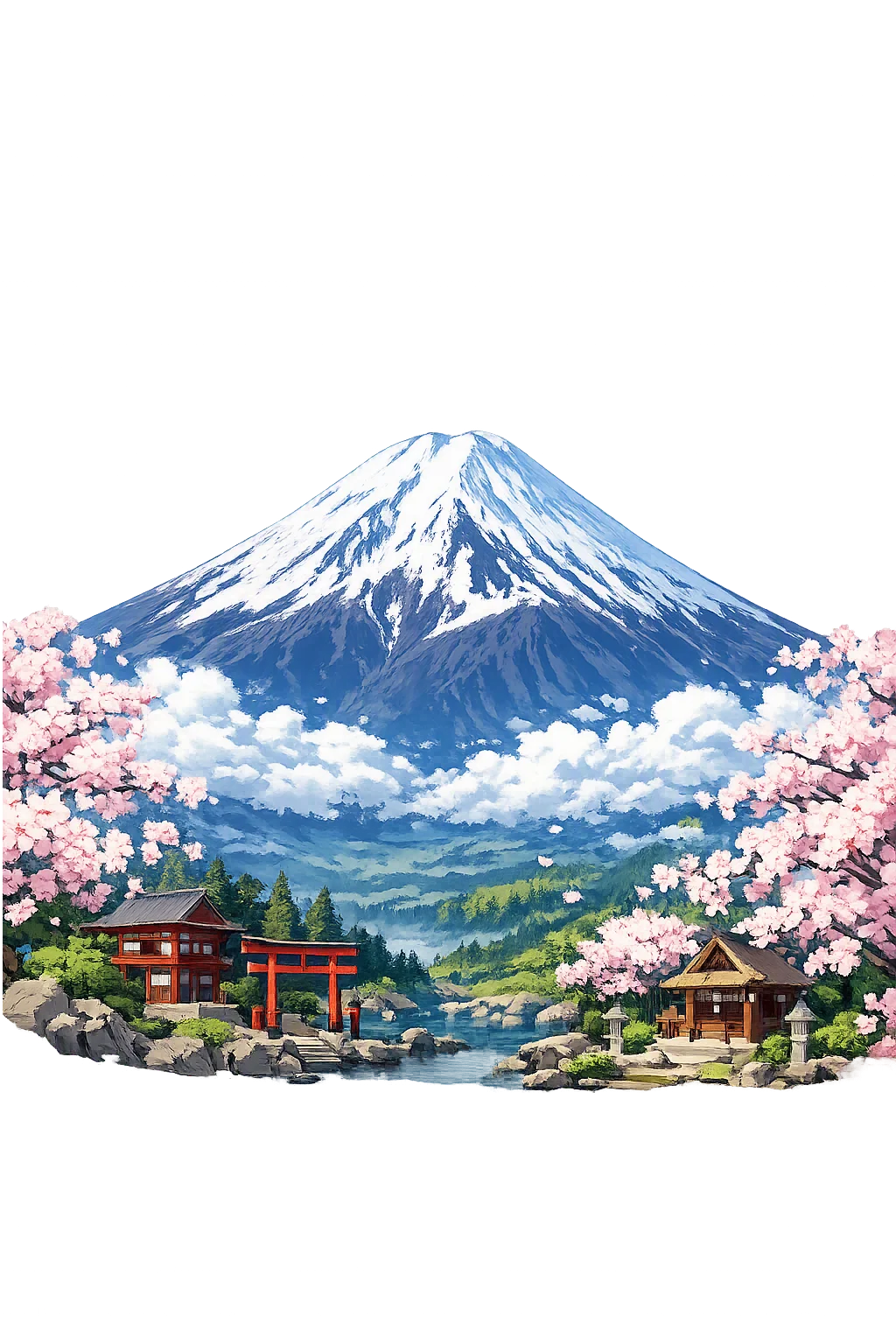
Fuji: canonical, contested, and the false forms on record
Evidence dossier 162 — Fuji. Every exhibit catalogued, every ruling stated with its grounds.
At a Glance
- Canonical form: Fuji
- Original script: 富士
- Pantheon: Japanese
- Convention: Hepburn with macrons — ō and ū marked, never collapsed to o/u or rewritten ou
- False forms on record: 0
- Contested forms: none attested
- Series: The Canonical Register, No. 162 of 548
The Evidence
Exhibit 1 — the attestation. The name is attested as 富士, as Kojiki and Nihon Shoki (references to the mountain's kami and the Konohanasakuya line) and H. Byron Earhart, Mount Fuji: Icon of Japan (2011) record. On the evidence, it means "Wealthy warrior". The canonical transliteration is Fuji.
Exhibit 2 — the flattened form. The plain form fuji differs from the canonical Fuji only by convention of display — case, not content. It is acceptable everywhere: in legacy systems, in plain-text citation, in the DNS itself. What is not acceptable is what follows in the register: respellings that change the letters, not just their case.
Exhibit 3 — the physical record. Fuji is ringed by Sengen shrines, of which Fujisan Hongū Sengen Taisha in Fujinomiya — its present main hall a 1604 Tokugawa rebuilding — is the head of the cult. The 2013 World Heritage listing protects twenty-five component sites: Yamamiya and Murayama Sengen shrines on the old pilgrim approaches, the Yoshida and Subashiri trailheads with their station lodges and boundary markers, the lava tree-molds of Aokigahara's Sea of Trees, and the summit crater with its own Sengen sanctuary. The Hōei eruption of 1707 left a cinder cone on the flank and tephra beds as far as Edo, recorded in contemporary paintings and official memoranda. Every summer's climbers walk, step for step, a route fixed by the Fuji-kō confraternities four centuries ago.
Exhibit 4 — the continuing record. Fuji was inscribed as a UNESCO World Heritage site in 2013 — 'Fujisan, sacred place and source of artistic inspiration' — and remains Japan's most photographed and climbed mountain, some three hundred thousand climbers each summer ascending through the night to greet the goraikō, the honored arrival of the sunrise. Its image sits on banknotes and passports and in a hundred million phone galleries; school songs still teach children that it is the noblest mountain in the world.
The Convention's Own History
Every tradition in this register has its own scholarly transliteration standard, built by its own specialists over decades or centuries, and the register follows each on its own terms: Hepburn with macrons — ō and ū marked, never collapsed to o/u or rewritten ou. The principle that unifies them is the one the whole project stands on: a name is evidence, and evidence is not negotiable — not for keyboards, not for convenience, not for anyone.
The Protocol's Position
Can the canonical form live in the address bar? Almost always, yes. IDNA 2008 admits every mark this register defends — the DNS stores them as `xn--` punycode and modern browsers render them natively. The real frictions are practical, not legal: some registrars stock only part of the IDN space, so a theoretically valid name can be temporarily unbuyable; and stacked combinations (an acute riding a macron) remain awkward to type on mobile keyboards even where the protocol accepts them.
The project's answer is a ranked ladder, not a compromise: the full restoration first, then attested fallbacks in descending order of completeness. The ladder's lowest rung, plain ASCII, is a vehicle for legacy systems — sanctioned, but never presented as the scholarly form.
The Verdict
Case closed on Fuji: canonical, cited, and defended. The keyboard form fuji is the same name in another register of display — always acceptable. The register's files remain open: if a source surfaces that changes any line of this entry, the entry changes. Until then, the temple at /fuji/ holds the canonical form.
The docket for this ruling: no false forms on the docket; no contested forms attested; the attestation rests on 4 cited sources — Kojiki and Nihon Shoki (references to the mountain's kami and the Konohanasakuya line), H. Byron Earhart, Mount Fuji: Icon of Japan (2011), Hokusai, Thirty-Six Views of Mount Fuji (c. 1830–32).
The Register Continues
This is one of 548 entries in the Canonical Register — the authoritative reference for every flagship temple. The temple's founding dispatch tells the name's story; its Restoration File details the marks; its Resonance File reads the archetype into the industries. The blog index holds the whole archive, and the Rulebook states the convention this register enforces.
Continue the register — previous entry: Frigg (read it) · next entry: Fūjin (read it).
The Canonical Register is written from the same canonical record as the lexicon itself. If a false form is missing from this page, it is because the evidence does not support calling it false — or because we have not seen it yet. Show us, with a citation, and the register will answer.