
The hidden history behind Fuji
Behind the plain ASCII spelling fuji stands a much longer record. Fuji reaches through manuscripts, inscriptions, oral transmission, and scholarly convention long before it reaches a keyboard. No lost marks are being invented here. Instead, this post traces why the tradition's sources support this exact form, how the name sounds, what its myths preserve, and how the digital temple keeps that evidence open for review.
At a Glance
- Canonical name: Fuji
- ASCII form: fuji
- Meaning: "Wealthy warrior"
- Domain of influence: Sacred Mountain
- Pantheon: Japanese
- Restoration: ASCII-equivalent form
- Original script: 富士 (Japanese characters)
Overview
Fuji (fuji) — Sacred Mountain · Wealthy warrior — belongs to the Japanese tradition, where it is catalogued under the domain "Sacred Mountain". The name means "Wealthy warrior".
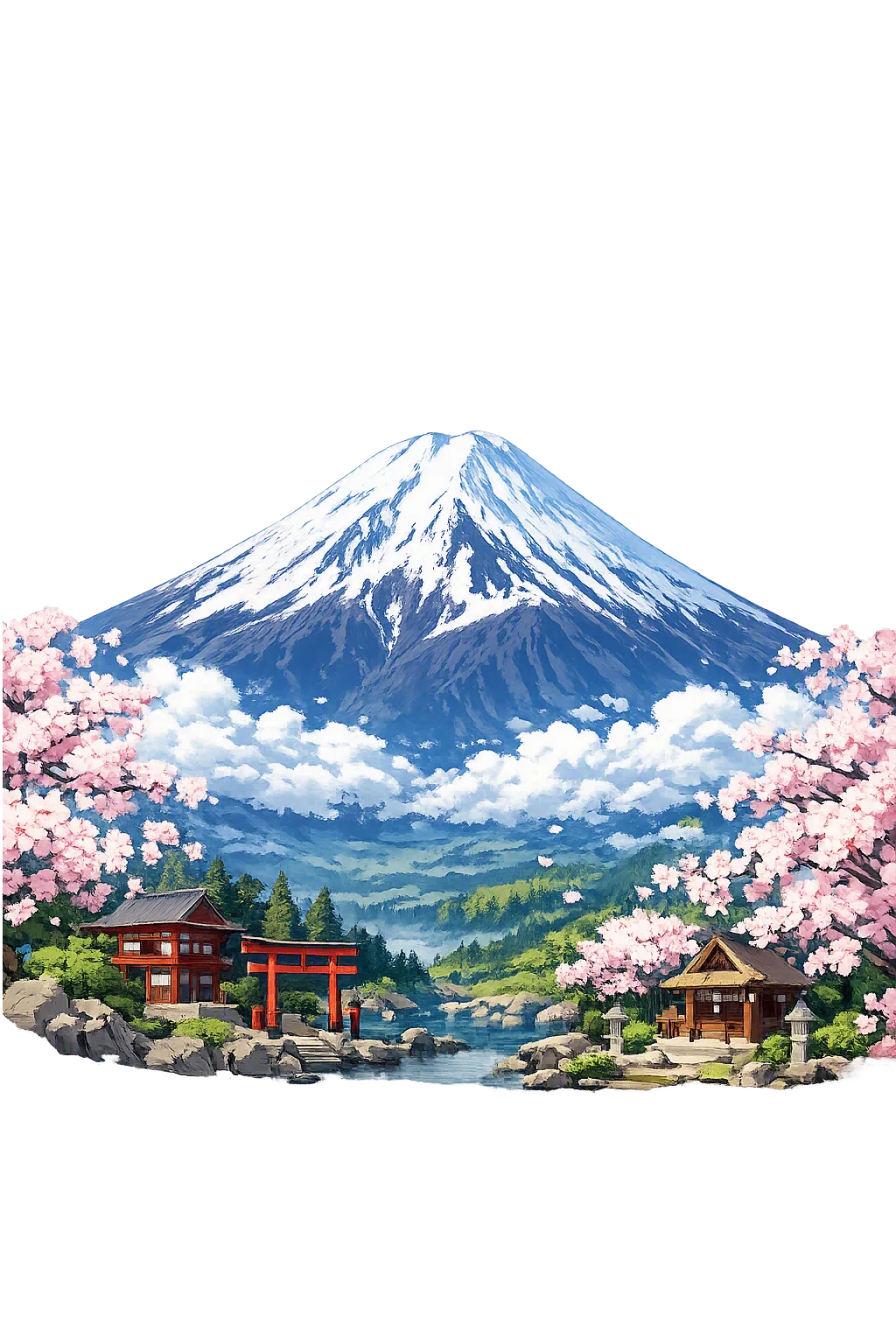
Fuji is more than a mountain. For over a thousand years it has been a volcano kami, a Buddhist mandala, and the defining image of Japan — a nearly perfect cone rising alone above the clouds, watched from every road. Pilgrims climb it, poets praise it, and artists have made its snow-capped form one of the most reproduced images on earth.
PuniCodex records the canonical scholarly spelling Fuji and serves its temple at its temple. The displayed form is ASCII-equivalent — a description computed from the displayed form itself. The plain ASCII form fuji contains the same letters: no recovered diacritics or special encoding is claimed. The work here is consistent citation, capitalization, provenance, and cultural context.
The Name
The name is attested in Japanese characters as 富士. Etymologically it means "Wealthy warrior".
The canonical spelling Fuji matches the conventional scholarly romanization. The plain ASCII form fuji contains the same letters, so no lost diacritics or encoding transition is claimed. The editorial work is to fix one reviewed reference spelling, preserve capitalization and provenance, and keep the original evidence visible. The displayed form is ASCII-equivalent — a description computed from the displayed form itself.
The letter-by-letter transformation runs:
- f → F — Same, capitalized
- u → u — Same
- j → j — Same
- i → i — Same
The Original Script
The name is written in Japanese characters as 富士. That attested script remains the primary evidence for the conventional romanization Fuji. The canonical Latin spelling does not pretend to recover marks it never contained: it fixes one reviewed reference form while leaving the original script visible for comparison.
富士 is a Sino-Japanese transcription whose basis is genuinely uncertain. Early records tried 不二 'unrivalled' and 不尽 'inexhaustible' — both ateji chosen for sound and good sense — before 富士 settled in; the eighth-century chronicles name the mountain only in passing. An Ainu derivation (from fuchi, the fire goddess of the hearth) has been proposed and remains unestablished. The familiar reading of 富士 as 'wealth' + 'samurai' is a felicitous folk interpretation with no etymological standing.
Pronunciation
The reconstructed pronunciation of the name is /ɸɯː.dʑi/ — Modern Standard Japanese (Hepburn).
Phoneme by phoneme:
- Fu- — Voiceless bilabial fricative [ɸ] plus close back unrounded [ɯ]; from 富 'wealth'
- -ji — Voiced alveolo-palatal affricate [dʑ] plus close front [i]; from 士 'warrior/gentleman'
For the modern speaker, the closest approximation is: 'FOO-jee' — the first syllable is breezy, with lips nearly touching; the second is quick.
Kindred and historical forms of the name:
- Japanese — 富士 (Fuji), 'wealthy warrior,' the mountain that names the nation
- Older names — Fuji-san, Fuyō, and poetic epithets such as 'Shining Peak'
- Sacred pairing — Sengen, the kami of the mountain's volcanic power
Fuji keeps its restoration plain: the name is plain Hepburn. Its sanctity derives from its visual dominance and long religious history, not from distinctive orthography.
Mythology
Fuji generates story because it cannot be ignored: a volcano that sleeps for centuries at a time, a goddess of fire hidden under snow, and an image so constant that a whole civilization has measured its seasons, its festivals, and its art against one unchanging silhouette.
The Name and Its Power (Name lore)
Folk etymology explains the name as fushi, 'without equal,' or fuji, 'inexhaustible' — both appropriate to a mountain with no rival on the horizon. In the early chronicles the peak's deity was treated as female, a kami of fire, and in the medieval period she was identified with Sengen (Asama-no-kami) and with Konohanasakuya-hime, the blossom princess of the Kojiki, whose marriage to the heavenly grandson Ninigi bound heaven's line to the earth. When Fuji smoked or rumbled, the interpretation was immediate: the goddess of the volcano was stirring, and the province looked to its Sengen shrines. The shrine cult kept the mountain's divinity local and specific — not an abstraction like 'nature,' but a named power with festivals, priests, and a genealogy reaching back to the age of the gods. The mountain's own name became the nation's shorthand for what is highest, purest, and most alone.
Fuji as Lotus Mandala (Fuji-kō)
In the medieval imagination Fuji was not climbed so much as entered. Buddhist exegetes mapped the mountain as a lotus mandala, its ridges the lotus petals, its crater the heart of the world; ascending it was circumambulation and pilgrimage at once. In the sixteenth century the ascetic Hasegawa Kakugyō is credited with founding the Fuji-kō confraternities, and by the Edo period tens of thousands of pilgrims climbed in white robes reciting sutras, carrying miniature shrines up the stations and building fujizuka — small replica Fujis — in the cities, so that those who could not travel could still 'climb' the mountain. Some confraternities worshipped the crater itself as the Pure Land. The practice reveals the mountain's genius as an image: Fuji is endlessly reproducible, and every reproduction is still Fuji — a mandala you can ascend with your feet, a paradise with a weather problem.
The Floating World's Mountain (Hokusai / Hiroshige)
Between about 1830 and 1850 the ukiyo-e masters fixed Fuji's image for the world. Hokusai's Thirty-Six Views of Mount Fuji placed the same snow-cap behind the Great Wave, a lumberyard, a tea-house balcony, a thunderstorm — proving the mountain was a measuring stick for every human activity. Hiroshige answered with travel series in which Fuji appears at a roadside halt, over a river, beyond a station bell. The prints used the newly imported Prussian blue so lavishly that the pigment itself became a fashion, and when Japan opened, these images were among the first things the West saw and imitated. The lesson of the series is visual relativism: Fuji never changes, but every viewpoint is a different picture. The mountain became the constant against which a whole floating world arranges and rearranges itself — and the proof that a sacred image, printed a hundred thousand times, loses none of its sanctity.
The Last Eruption (Hōei 1707)
On the twenty-third day of the eleventh month of 1707 — mid-December by the modern calendar — Fuji woke. The Hōei eruption blew ash downwind for weeks, darkening the sky over Edo itself, where official memoranda and ink paintings measured the fall in handspans and the city coughed through a winter of grey snow. The eruption opened vents on the southeastern flank and built the cinder cone still called Hōei-zan, but no lava flow reached the villages, and no death was recorded. Contemporaries read the smoke as the mountain kami's displeasure; modern seismologists read it as a warning clock — more than three centuries quiet, but the magma plumbing intact beneath a sacred cone. Either way the meaning is the same: Fuji is worshipped precisely because it is not safe — a goddess who sleeps with one eye open over forty million people, and whose last performance is remembered in ash that fell on the shogun's capital.
Symbols & Iconography
The iconography associated with Fuji concentrates in a small set of recurring attributes, each a compressed statement about the name:
- Snow-capped cone — The visual form that has made Fuji a universal symbol of Japan — perfect geometry over restless fire
- Torii and shrine markers — The network of Sengen shrines, of which Fujisan Hongū Sengen Taisha is the head, that manages the mountain's cult
- Crater and rising sun — The summit caldera and the dawn viewed from it — the goraikō, the honored arrival of the sun, central to pilgrimage
- Pilgrim's staff — The walking stick and stamped robe of those who climbed the sacred slopes, from Fuji-kō confraternities to today
Archaeology & Evidence
Fuji is ringed by Sengen shrines, of which Fujisan Hongū Sengen Taisha in Fujinomiya — its present main hall a 1604 Tokugawa rebuilding — is the head of the cult. The 2013 World Heritage listing protects twenty-five component sites: Yamamiya and Murayama Sengen shrines on the old pilgrim approaches, the Yoshida and Subashiri trailheads with their station lodges and boundary markers, the lava tree-molds of Aokigahara's Sea of Trees, and the summit crater with its own Sengen sanctuary. The Hōei eruption of 1707 left a cinder cone on the flank and tephra beds as far as Edo, recorded in contemporary paintings and official memoranda. Every summer's climbers walk, step for step, a route fixed by the Fuji-kō confraternities four centuries ago.
Realm & Domain
Fuji is more than a mountain. For over a thousand years it has been a volcano kami, a Buddhist mandala, and the defining image of Japan — a nearly perfect cone rising alone above the clouds, watched from every road. Pilgrims climb it, poets praise it, and artists have made its snow-capped form one of the most reproduced images on earth.
Volcano Deity
As a living volcano, Fuji has been feared and worshipped as a source of both destruction and fertility.
Pilgrimage Peak
For centuries pilgrims climbed to the summit, where shrines and lodges marked the path.
National Symbol
Its image identifies Japan in art, currency, passports, and global imagination.
Artistic Muse
Hokusai's Thirty-Six Views made Fuji an icon of world art.
Across Cultures
Fuji is a palimpsest of religious traditions. Shinto's Sengen shrines honor the mountain's volcanic kami — under the honji suijaku logic of the medieval centuries, a local kami read as the trace of a universal Buddha. Buddhist Fuji-kō confraternities climbed the mountain as a living mandala; Shugendō mountain ascetics used its slopes for training; and medieval exegetes mapped its ridges onto a lotus. The Meiji state, separating Shinto from Buddhism, promoted Fuji as a national emblem — the purest form of Japan itself — and the image followed the armies abroad and the recovery at home. After more than three centuries of dormancy, the 1707 Hōei eruption reminded the capital that the sacred mountain is still alive: the goddess under the snow has never signed a truce.
Kindred figures in the PuniCodex cross-tradition index include Delphoí, Ise, Kumano, Nagoya, Omphalós, and Shikoku, each linked through sacred center / world navel / axis mundi.
Cultural Legacy
Fuji was inscribed as a UNESCO World Heritage site in 2013 — 'Fujisan, sacred place and source of artistic inspiration' — and remains Japan's most photographed and climbed mountain, some three hundred thousand climbers each summer ascending through the night to greet the goraikō, the honored arrival of the sunrise. Its image sits on banknotes and passports and in a hundred million phone galleries; school songs still teach children that it is the noblest mountain in the world. The pilgrimage endures in secular costume — the white robes are rental gear now, the sutras are headlamps — but the shape of the act is unchanged: to reach the summit before dawn and watch the sun rise out of the Pacific, as pilgrims have done since the mountain was a goddess.
The Scholarly Record
The account of Fuji given in this edition rests on the witnesses and reference works listed below. Lexica and etymological dictionaries secure the form and meaning of the name; the literary and religious texts supply the narrative evidence.
- Kojiki and Nihon Shoki (references to the mountain's kami and the Konohanasakuya line).
- H. Byron Earhart, Mount Fuji: Icon of Japan (2011).
- Hokusai, Thirty-Six Views of Mount Fuji (c. 1830–32).
- UNESCO World Heritage listing, 'Fujisan, sacred place and source of artistic inspiration' (2013).
A Meditation
Fuji asks us to look at what endures. Cities rise and fall, governments change, but the mountain remains, altering only its cap of snow with the seasons. It is a natural fact that became a national dream.
Yet the dream works because the fact refuses to cooperate with it: Fuji is a volcano, not a monument, and its 1707 eruption fell ash on Edo like a reminder that the symbol can still act. That tension — perfect form over restless fire — is the mountain's real teaching. A culture that fixes its eye on one unchanging thing buys itself a measuring stick for everything that changes; and the thing it chooses had better be beautiful, because it will be looked at, in longing, for a thousand years. Fuji is.
The Canonical Spelling
Fuji is the canonical spelling used by this temple. The plain ASCII form fuji contains the same letters, so there are no lost diacritics to recover and no special encoding transition to explain. What the temple preserves is the reviewed reference form: capitalization, conventional romanization, original evidence, and a stable place to inspect them. The value here is not added decoration; it is fidelity to the attested record.
Character by Character
The canonical form Fuji and the plain ASCII form fuji share the same letters. The character list therefore documents continuity rather than recovery: every character is carried forward deliberately, with capitalization serving as the proper-noun convention. No additional mark is inserted merely to make the restoration appear more elaborate.
The Japanese Pantheon
Fuji is one of 45 entries the PuniCodex lexicon catalogues under the Japanese pantheon. The Pantheon page gathers the tradition's major figures in one place, and the Lexicon lets you filter all 983 restorations by tradition or script — the fastest way to see where this name sits among its kin.
Frequently Asked Questions
What does Fuji mean? The traditional gloss is "Wealthy warrior."
Which tradition does Fuji belong to? Fuji is catalogued in the Japanese pantheon of the PuniCodex lexicon.
Does this name need recovered diacritics? No. Fuji is already an ASCII-form canonical spelling. The scholarly work is to preserve the attested convention and its evidence, not to add marks.
Can I use Fuji in a normal browser? Yes. The spelling works directly in an ordinary browser, and the type tool can confirm and copy the canonical form.
Where does the scholarly information come from? The entry is built from lexica, inscriptional evidence, and reviewed scholarly sources listed in the Scholarly Edition.
Typing Fuji
You do not need a special keyboard to use this name. Fuji already uses ordinary Latin letters. The PuniCodex Type Tool lets you confirm the canonical spelling and copy it cleanly, while the original-script notes in the temple show the evidence behind the romanization.
Sister Temples
Other temples in the Japanese pantheon include Amida, Benzaiten, and Ebisu — each with its own restoration story, its own scholarly record, and its own place in the lexicon.
Why This Record Matters
The story of Fuji did not end in antiquity; it changed medium. Names survive because each generation finds a new carrier for them — clay, papyrus, print, and now the digital temple. The carrier is honest when the spelling that resolves is the spelling the evidence supports. Fuji and fuji contain the same letters; what the project adds is not ornament but provenance, review, and a permanent home for the record.
Explore Further
This post is one doorway into the temple. The home page carries the full character breakdown and the ambient canvas; the lore page tells the myths in long form; the Scholarly Edition preserves the sources, pronunciation data, and revision history; and the patron wall supports the restoration directly. For the wider map, browse the Lexicon, explore the Pantheon, or return to the PuniCodex blog.
A Closer Look at the Spelling
A canonical name is a small map. In the case of Fuji, the route does not lead through diacritics or special letters, because the conventional scholarly spelling already uses the Latin alphabet. The original evidence — 富士 in Japanese characters — carries semantic and phonetic information that no romanization can fully reproduce.
By fixing one reviewed spelling as the public reference, the project prevents the drift that occurs when a name is romanized differently in every article, map, and database. The character list shows exactly what is carried forward. "No change" here means a deliberate choice to keep the name stable, searchable, and faithful to the record.
Related Names
Sources
The full scholarly apparatus — every citation, revision, and review — lives in the Scholarly Edition. Key references for this post:
- Kojiki and Nihon Shoki (references to the mountain's kami and the Konohanasakuya line).
- H. Byron Earhart, Mount Fuji: Icon of Japan (2011).
- Hokusai, Thirty-Six Views of Mount Fuji (c. 1830–32).
- UNESCO World Heritage listing, 'Fujisan, sacred place and source of artistic inspiration' (2013).
- Lexicon authorities for this entry: Kojiki, Nihon Shoki.