
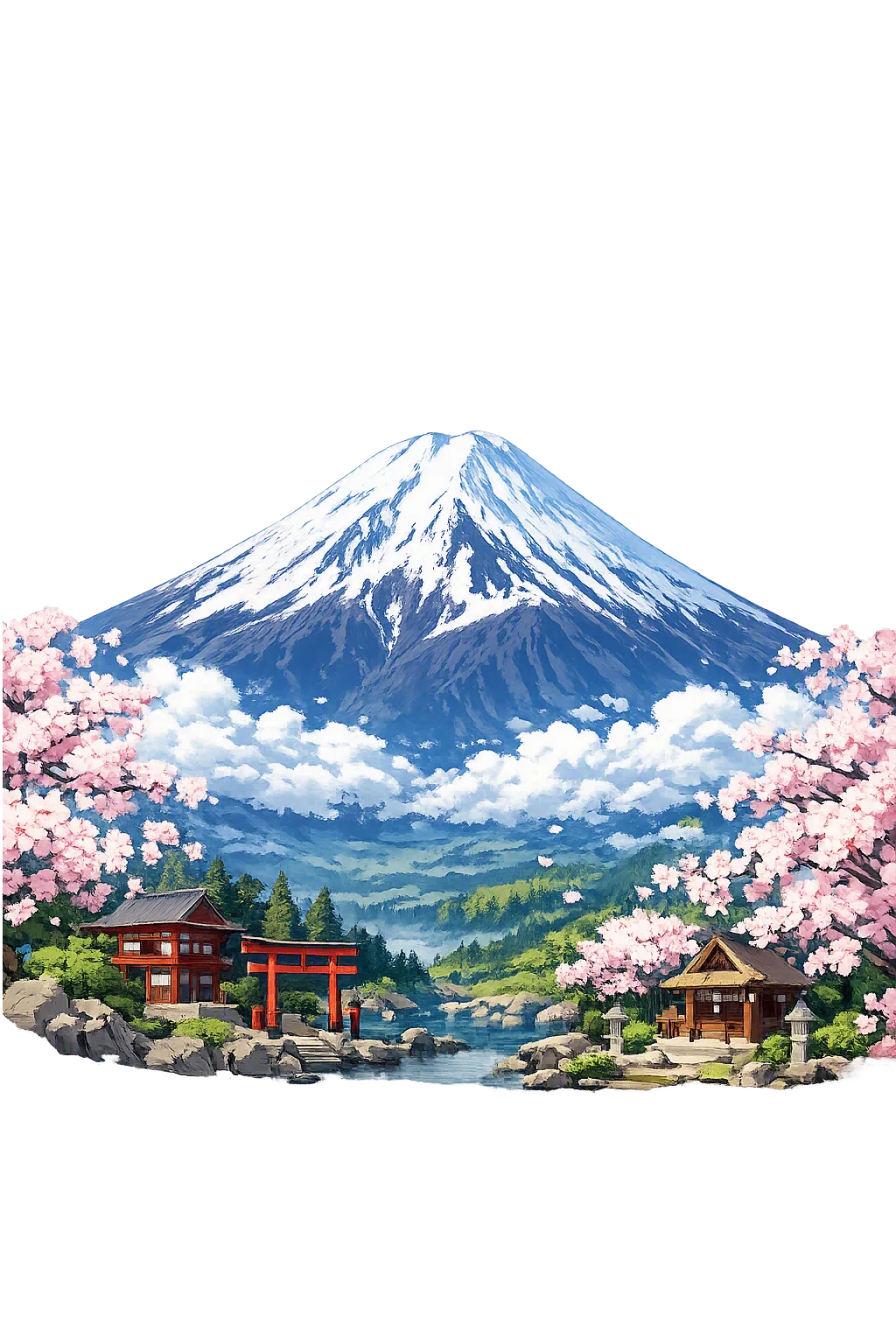
Fuji: canonical, contested, and the false forms on record
Evidence dossier 174 — Fuji. Every exhibit catalogued, every ruling stated with its grounds.
At a Glance
- Canonical form: Fuji
- Original script: 富士
- Pantheon: Japanese
- Convention: the tradition's scholarly romanization, kept exactly as recorded
- False forms on record: 0
- Contested forms: none attested
- Series: The Canonical Register, No. 174 of 597
The Evidence
Exhibit 1 — the attestation. The name is attested as 富士, as Kojiki and Nihon Shoki (references to the mountain's kami and the Konohanasakuya line) and H. Byron Earhart, Mount Fuji: Icon of Japan (2011) record. On the evidence, it means "Wealthy warrior". The canonical transliteration is Fuji.
Exhibit 2 — the flattened form. The plain form fuji differs from the canonical Fuji only by convention of display — case, not content. It is acceptable everywhere: in legacy systems, in plain-text citation, in the DNS itself. What is not acceptable is what follows in the register: respellings that change the letters, not just their case.
Exhibit 3 — the physical record. Fuji is ringed by Sengen shrines, of which Fujisan Hongū Sengen Taisha in Fujinomiya — its present main hall a 1604 Tokugawa rebuilding — is the head of the cult. The 2013 World Heritage listing protects twenty-five component sites: Yamamiya and Murayama Sengen shrines on the old pilgrim approaches, the Yoshida and Subashiri trailheads with their station lodges and boundary markers, the lava tree-molds of Aokigahara's Sea of Trees, and the summit crater with its own Sengen sanctuary. The Hōei eruption of 1707 left a cinder cone on the flank and tephra beds as far as Edo, recorded in contemporary paintings and official memoranda. Every summer's climbers walk, step for step, a route fixed by the Fuji-kō confraternities four centuries ago.
Exhibit 4 — the continuing record. Fuji was inscribed as a UNESCO World Heritage site in 2013 — 'Fujisan, sacred place and source of artistic inspiration' — and remains Japan's most photographed and climbed mountain, some three hundred thousand climbers each summer ascending through the night to greet the goraikō, the honored arrival of the sunrise. Its image sits on banknotes and passports and in a hundred million phone galleries; school songs still teach children that it is the noblest mountain in the world.
The Convention's Own History
The canonical spelling of Fuji rests on the tradition's own scholarly record, not on a marks convention: the name's forms are documented, compared, and one reference spelling is fixed so that citations agree across the temple, the lexicon, and this register. The principle that unifies every entry is the one the whole project stands on: a name is evidence, and evidence is not negotiable — not for keyboards, not for convenience, not for anyone.
The Address, Without an Encoding Detour
The canonical form Fuji already uses ordinary Latin letters, so the address bar needs no special encoding narrative. The digital temple can preserve the spelling exactly as the scholarly record presents it. That is the practical point here: consistency between the source, the citation, and the public address.
This does not make every romanization equally valid. A wrong letter remains wrong even when it is easy to type. Canonical status still depends on the attested convention, never on convenience or registrar inventory.
The Verdict
Case closed on Fuji: canonical, cited, and defended. The keyboard form fuji is the same name in another register of display — always acceptable. The register's files remain open: if a source surfaces that changes any line of this entry, the entry changes. Until then, the temple at /fuji/ holds the canonical form.
The docket for this ruling: no false forms on the docket; no contested forms attested; the attestation rests on 4 cited sources — Kojiki and Nihon Shoki (references to the mountain's kami and the Konohanasakuya line), H. Byron Earhart, Mount Fuji: Icon of Japan (2011), Hokusai, Thirty-Six Views of Mount Fuji (c. 1830–32).
The Register Continues
This is one of 597 entries in the Canonical Register — the authoritative reference for every flagship temple. The temple's founding dispatch tells the name's story; its Restoration File details the marks; its Resonance File reads the archetype into the industries. The blog index holds the whole archive, and the Rulebook states the convention this register enforces.
Continue the register — previous entry: Frigg (read it) · next entry: Fūjin (read it).
The Canonical Register is written from the same canonical record as the lexicon itself. If a false form is missing from this page, it is because the evidence does not support calling it false — or because we have not seen it yet. Show us, with a citation, and the register will answer.