
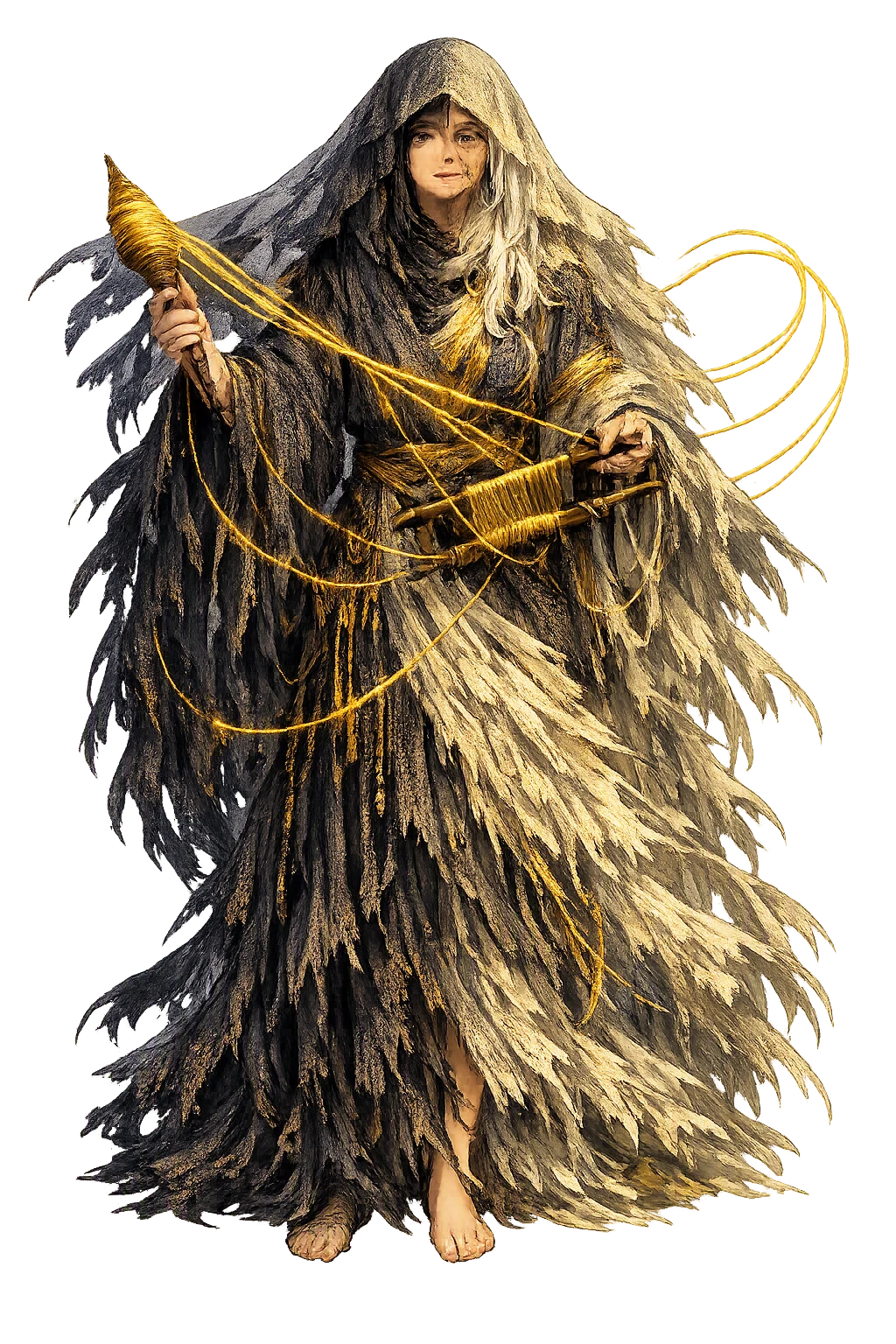
Wyrd: canonical, contested, and the false forms on record
A letter to a colleague, 31 July 2026 — on the name Wyrd, and on the forms that keep failing it.
Your note said, roughly: surely the marks are a nicety. Permit me to use Wyrd to show they are not.
First, the attestation. The attested form is ᚹᚣᚱᛞ, from the tradition's own record. The canonical transliteration is Wyrd.
Say it aloud as the sources heard it: 'WÜRD' — one syllable: begin as in 'we', round the lips tight for ü, roll into a sounded r, and stop on d; a German speaker can say it as the start of 'Würde'. The marks are what carry that sound to a reader who has never heard it spoken.
On the plain form — and I want to be precise, because you pushed on this. The plain form wyrd differs from the canonical Wyrd only by convention of display — case, not content. It is acceptable everywhere: in legacy systems, in plain-text citation, in the DNS itself. What is not acceptable is what follows in the register: respellings that change the letters, not just their case.
One more thing, because it always surprises: the name did not stay home. Wyrd's learned afterlife begins as translation. Bosworth–Toller record the word glossing Latin fatum, fortuna, and even the Parcae — the three spinning Fates — and Alfred's Boethius makes the equation systematic, putting the English word in Fortuna's place while denying her Fortune's independence.
And it never stopped working. The word's modern career is the strangest semantic journey in English. In medieval Scots and northern usage 'weird' stayed a noun of fate — to 'dree one's weird' is to endure one's destiny — and the prophetic women of Holinshed's chronicle were 'the weird sisters, that is (as ye would say) the goddesses of destinie'.
The Convention's Own History
The Poetic Edda survives essentially in one manuscript — the Codex Regius, c. 1270 — and normalized Old Norse spelling descends from what that manuscript and its siblings actually write. Þ and ð are not decorations: they are letters of the alphabet the skalds used (and English later abandoned), and ǫ is a nasal vowel the normalization preserves because the sources carry it. The register's rule is the manuscript's rule: spell the names the way the tradition that sang them wrote them down.
Where Protocol Meets Practice
The technical answer is simple: the canonical marks are legal IDNA 2008 characters, encoded as punycode under `xn--`. The practical answer is messier: legal does not mean stocked (registrar inventory is partial), and stocked does not mean typeable (stacked diacritics defeat mobile keyboards).
So the register's rule is a hierarchy of attested forms — full restoration, circumflex, macron-only, attested variant, and finally plain ASCII for the systems that cannot carry marks. Every rung is defensible because every rung is attested. The forms this register rules against are not rungs; they are errors, and errors do not get rungs.
Write back when you have checked the sources; they are better company than I am.
— The Register
The Verdict
Wyrd is the canonical form: attested, checkable, and enforced across the temple, the lexicon, the cards, the APIs, and this register. The plain form wyrd shares that standing — the two are the same name in every system. The false forms above are documented so that no reader has to take the temple's word on faith — the violations are stated, the sources are named, and the register stands open to challenge on every line.
The temple of Wyrd stands at /wyrd/.
The docket for this ruling: no false forms on the docket; no contested forms attested; the attestation rests on 6 cited sources — Beowulf, ll. 455 ('Gǣð ā wyrd swā hīo sceal') and 572–573 ('Wyrd oft nereð unfǣgne eorl, þonne his ellen dēah') — Klaeber's Beowulf, 4th ed., ed. Fulk, Bjork & Niles (Toronto, 2008), The Exeter Book (ASPR III): The Wanderer 5 ('Wyrd bið ful ārǣd') and 106–107 (wyrda gesceaft); Maxims II 5 ('Wyrd byð swīðost'); Solomon and Saturn (the proverb of fate hard to turn), Bosworth–Toller, An Anglo-Saxon Dictionary, s.v. wyrd — the senses 'event, fate, destiny', the personified uses, and the Latin glosses fatum, fortuna, Parcae.
The Register Continues
Entry 531 of 548 in the Canonical Register. Around it: the temple's founding dispatch, the Restoration File on the marks themselves, the Resonance File on the archetype at work, and the Rulebook behind all of it.
Continue the register — previous entry: Wǔxíng (read it) · next entry: Xiān (read it).
The Canonical Register is written from the same canonical record as the lexicon itself. If a false form is missing from this page, it is because the evidence does not support calling it false — or because we have not seen it yet. Show us, with a citation, and the register will answer.