PuniCodex

Extended Lore

ᚹᚣᚱᛞ Wyrd

Etymology · Phonology · Orthography · Cultural Legacy · Primary Sources

Tier 2 Wyrd
Wyrd — Fate, Destiny
01

Quick Facts

Essential information about Wyrd, Fate, Destiny

Original Scriptᚹᚣᚱᛞ
Unicode RestorationWyrd
Reconstructed Pronunciation/ˈwyrd/
PantheonNorse
DomainFate, Destiny
MeaningFate (cognate with Urðr)
ClassificationTier 2
Primary DomainWyrd
Sacred SymbolsThe decree (wyrda gesceaft), The fixed resolve (ful ārǣd), The spared undoomed man (unfǣgne eorl), The wheel declined, The well of Urðr
02

Etymology & Word Family

From original script to Unicode restoration

Original Script ᚹᚣᚱᛞ Wyrd — "Fate (cognate with Urðr)"
Unicode Restoration Wyrd Restored stress, length, and script
Modern ASCII wyrd Plain-ASCII fallback

Wyrd is Tier 2 by the mechanical rule: the normalized Old English form is already plain ASCII — no diacritic, no distinctive letter for the ASCII alphabet to lose. The word's thousand-year career vastly outruns its orthography; only the capital distinguishes the restored form from the input.

03

Unicode Character Breakdown

Character-by-character philological analysis

CharacterUnicodeNameBlockPhonetic Role
WU+0057Latin Capital Letter WBasic LatinSame, capitalized
yU+0079Latin Small Letter YBasic LatinSame
rU+0072Latin Small Letter RBasic LatinSame
dU+0064Latin Small Letter DBasic LatinSame

The Tier 2 classification reflects how much of the original phonology this restoration preserves — stress and vowel length for Greek names, distinctive letters and diacritics for every other tradition.

04

Cultural Significance

From ancient cult to modern Unicode

Ancient Domain

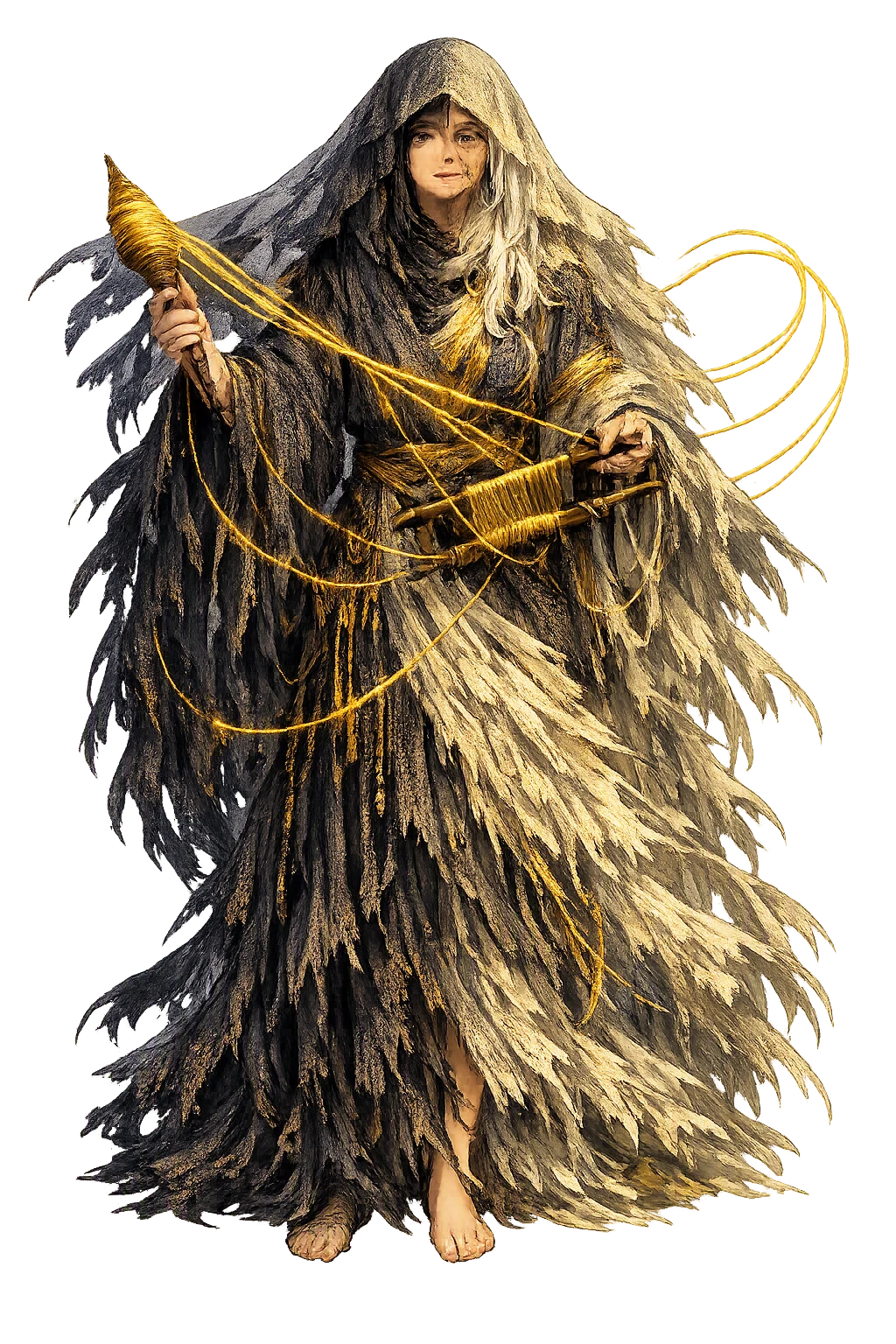
Wyrd is the Old English word for what happens — fate, destiny, the shape of events — built on the verb weorðan, 'to become'. It is not a goddess enthroned at a spindle but a noun the poets kept reaching for: 'Wyrd bið ful ārǣd', says the Wanderer — fate is wholly fixed. Beowulf goes to the dragon with 'Gǣð ā wyrd swā hīo sceal' on his lips — fate goes always as she must. Its exact Norse cognate is Urðr, eldest of the three Norns at the well beneath the world-tree; its modern descendant is the word 'weird', the fateful worn smooth into the strange.

Wyrd in Later Traditions

Wyrd's learned afterlife begins as translation. Bosworth–Toller record the word glossing Latin fatum, fortuna, and even the Parcae — the three spinning Fates — and Alfred's Boethius makes the equation systematic, putting the English word in Fortuna's place while denying her Fortune's independence. The comparison with the Greek Moirai is therefore as old as the word's manuscript life, but Timmer's classic study sounds the necessary caution: Old English wyrd is fundamentally the event-word, 'what happens', and its personification is grammatical and poetic, never cultic — no spindle, no altar, no priesthood is attested. The honest alignment is structural: with the Norns, who in Völuspá 'laid down laws and allotted life', and above all with [[urdr|Urðr]] herself, the exact cognate, the past tense of becoming enthroned beside Verðandi and Skuld. Within the corpus the related figures are the well's company: [[urdr|Urðr]], [[verdandi|Verðandi]], [[skuld|Skuld]], and the tree they tend, [[yggdrasill|Yggdrasill]].

Modern Legacy

The word's modern career is the strangest semantic journey in English. In medieval Scots and northern usage 'weird' stayed a noun of fate — to 'dree one's weird' is to endure one's destiny — and the prophetic women of Holinshed's chronicle were 'the weird sisters, that is (as ye would say) the goddesses of destinie'. Shakespeare took the phrase into Macbeth, the sisters' supernatural strangeness rubbed off on the word, and by the nineteenth century 'weird' meant simply uncanny, then merely odd: the noun of absolute fate worn down to an adjective of mild strangeness. Modern fantasy and gaming revived 'wyrd' as a deliberate archaism for deep fate; runic revivalism added the so-called 'wyrd rune', a blank stone invented in the 1980s with no medieval attestation — a modern ornament the inscriptions do not know. Through all of it the old word keeps its dignity in the Exeter Book and Beowulf, where it still means what it meant: what happens, wholly fixed, and faced with courage.

Unicode Restoration as Cultural Act

Restoring Wyrd in a domain name is more than orthographic accuracy. It is a statement that the internet should recognize the full range of human writing — not only the ASCII keyboard.

05

Frequently Asked Questions

Common questions about Wyrd, Fate, Destiny, and Unicode restoration

01How do you pronounce Wyrd?

In reconstructed pronunciation, Wyrd is /ˈwyrd/ — approximately 'WÜRD' — one syllable: begin as in 'we', round the lips tight for ü, roll into a sounded r, and stop on d; a German speaker can say it as the start of 'Würde'..

02What does Wyrd mean?

Wyrd means Fate (cognate with Urðr) in the norse tradition.

03What are the symbols of Wyrd?

Wyrd is associated with The decree (wyrda gesceaft) (The Wanderer's 'shaping of fates' that turns the world under heaven — fate as ordinance written into things, not accident), The fixed resolve (ful ārǣd) ('Fate is wholly determined' — the exile's hardest consolation, five words that close every appeal), The spared undoomed man (unfǣgne eorl) (Beowulf's exception — fate often preserves the man not doomed when his courage avails: the loophole that makes heroism rational), The wheel declined (Alfred's Boethius keeps the word wyrd but strips Fortune's wheel — fate re-founded as God's instrument, not a spinning goddess), The well of Urðr (The northern mirror — the norn at the spring beneath Yggdrasill where the Æsir hold their judgements).

04Why restore Wyrd in Unicode?

Plain ASCII wyrd strips the stress, length, and script that make the name specific. Unicode restoration returns the name to its original written dignity.

05What is the most important myth about Wyrd?

The Exeter Book's exile opens his elegy with the coldest sentence in Old English: 'Wyrd bið ful ārǣd' — fate is wholly fixed, fully resolved, past all appeal. He has buried his lord, crossed the winter seas, and found no hall that will take him in; the word wyrd is the name he gives the weight of all of it. Near the poem's end the word returns in its grandest frame: 'eall is earfoðlīc eorþan rīce, onwendeð wyrda gesceaft weoruld under heofonum' — all is full of hardship in the earthly kingdom; the decree of fates turns the world under heaven.Note what the poem does not do: it gives Wyrd no face, no spindle, no shrine. The word stays a noun of process — the way things go — and the poem's consolation is not that Wyrd can be moved but that God alone is the fastness that stands when her turning is done.

06

Scholarly Sources

The philological foundations of this restoration

Every claim on this page is grounded in established scholarship. The orthographic restorations follow disciplinary convention. The etymological chain follows the best available reference works. This is not invention — it is resurrection through scholarship.

Lexicography & Philology

  • Beowulf
  • Bosworth-Toller

Primary Texts

  • Beowulf, ll. 455 ('Gǣð ā wyrd swā hīo sceal') and 572–573 ('Wyrd oft nereð unfǣgne eorl, þonne his ellen dēah') — Klaeber's Beowulf, 4th ed., ed. Fulk, Bjork & Niles (Toronto, 2008)
  • King Alfred's Old English Version of Boethius, De consolatione philosophiae, ed. Sedgefield (1899); ed. Godden & Irvine (2009) — wyrd translating Fortuna, fate re-founded as God's instrument
  • Völuspá 19–20 (Poetic Edda) and Snorri Sturluson, Gylfaginning 15–16 — Urðr, Verðandi, and Skuld at the well beneath Yggdrasill, the Old Norse cognate personified

Archaeology & Art History

  • Material evidence — iconography, inscriptions, and temple archaeology — for Wyrd and related cults.
  • Wyrd is a word of manuscripts, not monuments: no runic inscription carves it, no amulet invokes it, and no material image can be identified with a personified Wyrd. Its witnesses are codices. The Exeter Book (Exeter Cathedral Library MS 3501, written c. 975) preserves The Wanderer and Maxims II; the Nowell Codex (British Library, Cotton Vitellius A.xv, c. 1000, scorched in the Ashburnham House fire of 1731) alone preserves Beowulf; the Vercelli Book and the Corpus and CCCC manuscripts carry the homiletic prose where wyrd is debated. The Anglo-Saxon futhorc is itself materially attested — the ninth-century Thames scramasax bears the full inscribed row — and in that row the word would run ᚹᚣᚱᛞ (w-ȳ-r-d), though no surviving carving spells it. The manuscript hand's wynn (ƿ), borrowed from the runes into the book alphabet, is the last material trace of the runic world inside the word's own spelling.

Religious Studies

  • The Exeter Book (ASPR III): The Wanderer 5 ('Wyrd bið ful ārǣd') and 106–107 (wyrda gesceaft); Maxims II 5 ('Wyrd byð swīðost'); Solomon and Saturn (the proverb of fate hard to turn)
  • Bosworth–Toller, An Anglo-Saxon Dictionary, s.v. wyrd — the senses 'event, fate, destiny', the personified uses, and the Latin glosses fatum, fortuna, Parcae
  • B. J. Timmer, 'Wyrd in Anglo-Saxon Prose and Poetry', Neophilologus 26 (1941) — the classic semantic study of the word between event, destiny, and half-personified power
  • Oxford English Dictionary, s.v. weird, n. and adj. — the afterlife from fate-noun to strangeness-adjective, via the weird sisters
Return

The Surface Awaits

You have traced the name from its earliest attestation to its Unicode restoration. Now return to the myth. The story is where the name lives.

Back to Lore
Wyrd mascot