
Why Vasubandhu is spelled that way — and what it costs to get it right
There is a version of this name the early internet had to settle for: vasubandhu. This is the file on how Vasubandhu replaced it.
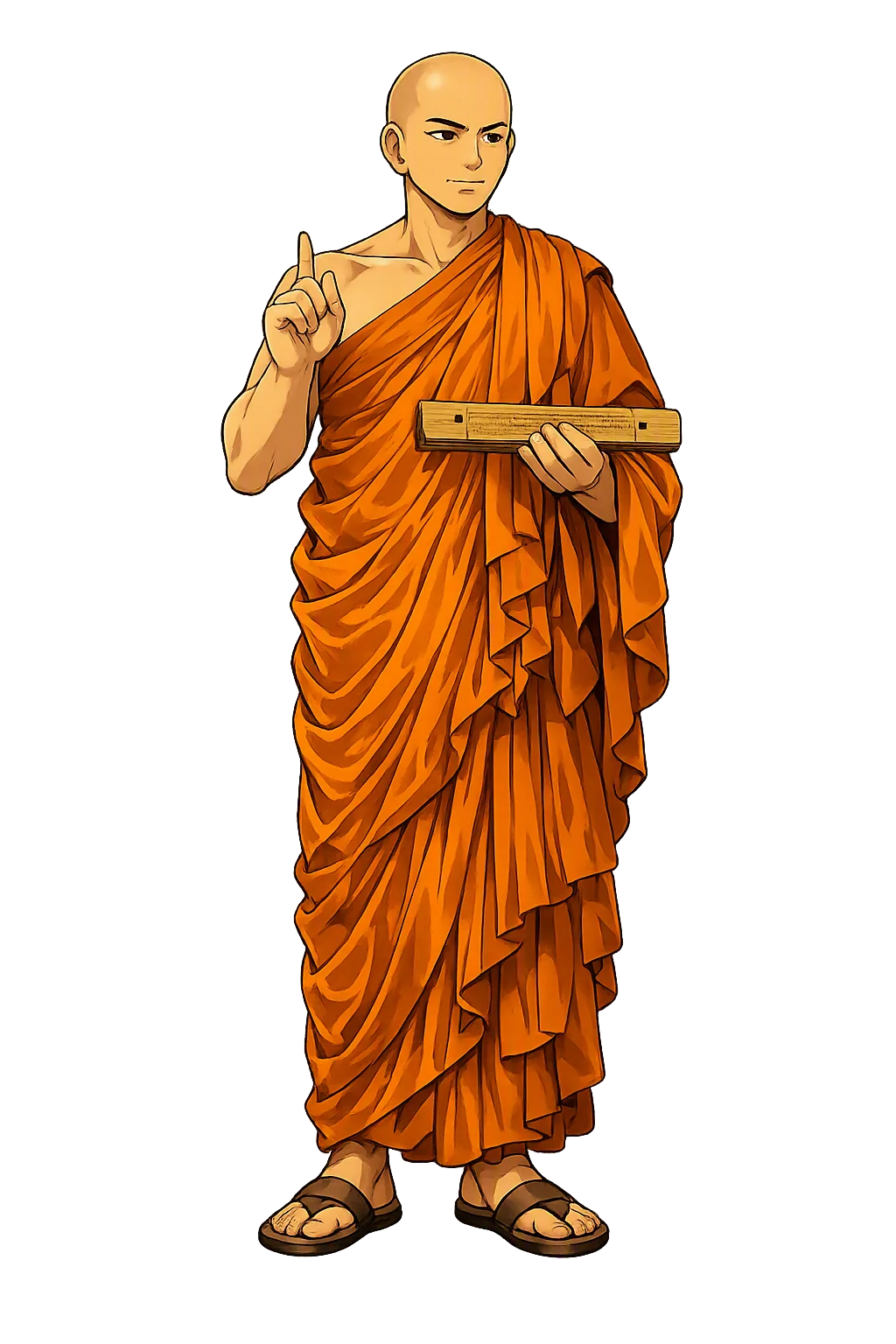
Vasubandhu was a historical philosopher, not a mythological figure — a monk of Puruṣapura (Peshawar) who, the early Tibetan biographies say, wrote the Abhidharmakośa as a Sarvāstivādin critic and then embraced the Yogācāra Mahāyāna of his half-brother Asaṅga. His 'myths' are the legends his tradition grew around a real life.
At a Glance
- Restored name: Vasubandhu
- ASCII form: vasubandhu
- Meaning: "The celebrated Buddhist scholar — author of the Abhidharmakośa, co-founder of the Yogācāra school"
- Domain of influence: Abhidharma, Yogacara
- Pantheon: Buddhist
- Classification: Tier 2
- Original script: वसुबन्धु
- Series: The Restoration Files, No. 517 of 548
The Name Before the Marks
Spoken, the name runs `/vasubandhu/` — say "vasubandhu" with the stress and length implied by the scholarly restoration "Vasubandhu".
The Temple That Stands Now
The restored name is not a plaque; it is an address. The temple of Vasubandhu lives at /vasubandhu/, with its mythology in the lore halls, its peer-reviewed record in the Scholarly Edition, and its place in the pattern atlas on the patterns floor.
One decisive feature survives — a single, honest mark — which places the restoration in Tier-2: exact, and exactly labeled.
Where the Name Stood First
Vasubandhu left no shrine — his witnesses are manuscripts. Fragments of the Abhidharmakośa survive in Central Asian Sanskrit finds, and the complete tradition rides on Xuanzang's Chinese translation (Taishō 1558) and the later Tibetan canon (Toh. 4089–90). Gandhāra, his homeland, is one of the richest archaeological regions of the Buddhist world: the monastery and stupa complexes around Peshawar — where the biographies place his birth — have yielded the oldest datable Buddha images (c. 1st–3rd c. CE). At Nālandā, the university whose ruins still stand in Bihar, his Kośa was a founding text; the debate-court culture his legend describes is the same institution archaeology reveals. The colophons of the Dunhuang and Gilgit manuscript finds carry his name as authority across the Silk Road. The temple on the web is the newest of these addresses — the first one that fits in a pocket.
The Archetype at Work
The pattern atlas seats this temple in 4 industries, each match argued and weighted: Faith & Spiritual Organizations (primary seat: Vasubandhu embodies abhidharma, yogacara — the core of faith.); Mental Health & Emotional Wellness (resonant seat: Vasubandhu shares symbolic territory with mental health.); Philosophy, Ethics & Standards (resonant seat: Vasubandhu shares symbolic territory with philosophy ethics.). The Resonance File reads those seats through the myths themselves.
In the Sacred Texts
The Buddhist tradition is not a vibe; it is a library. The Sacred Texts collection holds Lotus Sutra and Sukhāvatīvyūha Sūtras — the primary sources the temple's scholarship is built on. The temple is the argument; the texts are the evidence.
The File Continues
The temple's founding dispatch tells the name's story; its Resonance File reads the myths into the industries; the blog index holds the whole archive.
Continue the series — previous file: Varuṇa (read it here) · next file: Veles (read it here).
The Restoration Files are written from the same canonical record as the temples themselves: the lexicon, the lore catalog, the pattern atlas, and the cited scholarly sources. If a file ever disagrees with its temple, the temple is right — tell us, and the file will be corrected.