
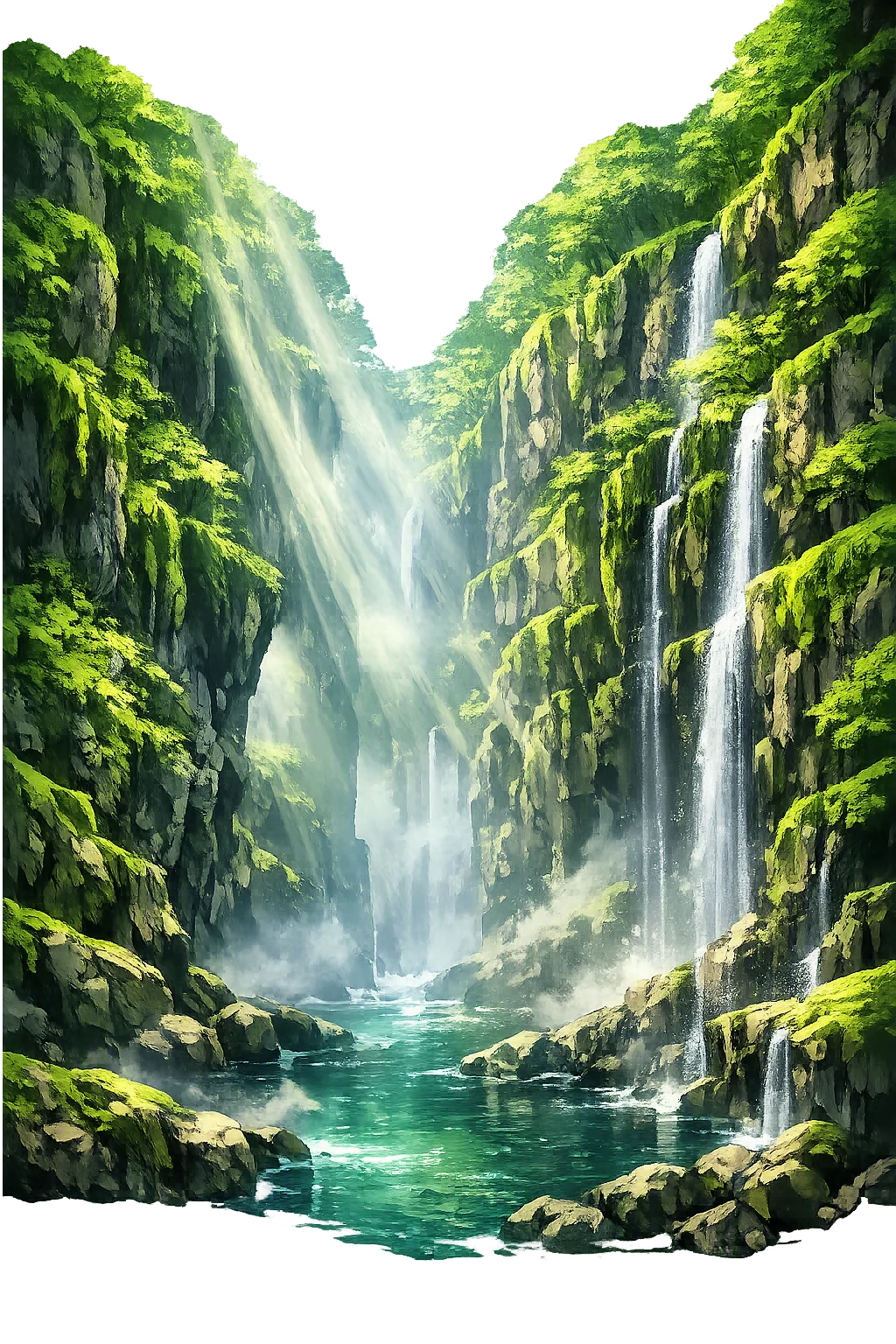
The name Takachiho and the world it opens
A name is a door. Takachiho opens onto the domain of sacred gorge, descent of gods, the Japanese tradition, and centuries of storytelling, worship, and scholarship. This post moves through that world room by room — the name and its roots, the original script, the sound of it, the myths, the symbols, the sites, and its afterlife — before arriving at the digital temple that makes the record addressable. The letters are plain; the evidence is not.
At a Glance
- Canonical name: Takachiho
- ASCII form: takachiho
- Meaning: "High thousand ears"
- Domain of influence: Sacred Gorge, Descent of Gods
- Pantheon: Japanese
- Restoration: ASCII-equivalent form
- Original script: 高千穂 (Japanese characters)
Overview
Takachiho (takachiho) — Sacred Gorge, Descent of Gods · High thousand ears — belongs to the Japanese tradition, where it is catalogued under the domain "Sacred Gorge, Descent of Gods". The name means "High thousand ears".
Takachiho is a town and gorge in the mountains of Kyūshū, famous as the place where Ninigi descended from heaven to begin the rule of the terrestrial world. Its name, 'High Thousand Ears of Grain,' evokes a landscape of tall rice and misty peaks where the divine once touched the earth.
PuniCodex records the canonical scholarly spelling Takachiho and serves its temple at its temple. The displayed form is ASCII-equivalent — a description computed from the displayed form itself. The plain ASCII form takachiho contains the same letters: no recovered diacritics or special encoding is claimed. The work here is consistent citation, capitalization, provenance, and cultural context.
The Name
The name is attested in Japanese characters as 高千穂. Etymologically it means "High thousand ears".
The canonical spelling Takachiho matches the conventional scholarly romanization. The plain ASCII form takachiho contains the same letters, so no lost diacritics or encoding transition is claimed. The editorial work is to fix one reviewed reference spelling, preserve capitalization and provenance, and keep the original evidence visible. The displayed form is ASCII-equivalent — a description computed from the displayed form itself.
The letter-by-letter transformation runs:
- t → T — Same, capitalized
- a → a — Same
- k → k — Same
- a → a — Same
- c → c — Same
- h → h — Same
- i → i — Same
- h → h — Same
- o → o — Same
The Original Script
The name is written in Japanese characters as 高千穂. That attested script remains the primary evidence for the conventional romanization Takachiho. The canonical Latin spelling does not pretend to recover marks it never contained: it fixes one reviewed reference form while leaving the original script visible for comparison.
高千穂 — 高 'high' + 千 'thousand' + 穂 'ear of grain' — 'the high place of a thousand rice-ears', an auspicious semantic spelling of the kind place names favor. The Kojiki and Nihon Shoki set Ninigi's descent at the peak of Takachiho in the land of Himuka (Hyūga), and the gorge, shrine, and town of Miyazaki Prefecture still carry the name. The characters preserve a geography that the chronicles deliberately loaded with meaning: here, they say, the grandson of the sun first set foot on earth.
Pronunciation
The reconstructed pronunciation of the name is /ta.ka.tɕi.ho/ — Modern Standard Japanese (Hepburn).
Phoneme by phoneme:
- Ta- — Voiceless alveolar stop [t] plus open central [a]
- -ka- — Voiceless velar stop [k] plus open central [a]; from 高 'high/tall'
- -chi- — Voiceless alveolo-palatal affricate [tɕ] plus close front [i]; from 千 'thousand'
- -ho — Voiceless glottal [h] plus open-mid [o]; from 穂 'ear of grain'
For the modern speaker, the closest approximation is: 'TAH-kah-chee-hoh' — the 'ch' is crisp, and all vowels are short.
Kindred and historical forms of the name:
- Japanese — 高千穂 (Takachiho), 'High Thousand Ears of Grain'
- Mythology — The place where Ninigi descended from heaven
- Geography — A town and gorge in Miyazaki Prefecture, Kyūshū
Takachiho keeps its restoration plain: plain Hepburn. Its significance is mythological and scenic rather than orthographic.
Mythology
Takachiho's 'mythology' is a convergence of scripture, landscape, and performance. The Kojiki and Nihon Shoki agree that Ninigi, grandson of Amaterasu, descended at the peak of Takachiho in the land of Hyūga; the town that bears the name claims the story as its own and keeps it alive each winter in the all-night kagura dances that reenact the cave of heaven.
The Descent at the Peak of Takachiho (Kojiki / Nihon Shoki)
The Kojiki and Nihon Shoki agree on the itinerary: when Amaterasu resolved that her grandson Ninigi should rule the visible world, she sent him down from the Plain of High Heaven at the head of a divine escort, bearing the mirror, sword, and curved jewel that became the Three Sacred Regalia. Both texts name the landing place Takachiho no mine — the peak of Takachiho — in the land of Himuka, present-day Miyazaki Prefecture (Kojiki; Nihon Shoki, Age of the Gods). Ninigi wed the blossom-princess Konohanasakuya-hime, and from the line of their son Hoori came the first emperor, Jimmu. The tradition is the charter of Japanese kingship, and it plants that charter on a real mountain in Kyūshū. What Takachiho means is therefore not merely 'where the gods came down' but where heaven first accepted a Japanese address — the point where the divine genealogy touches soil that can still be walked.
The Cave of Heaven (Kojiki / Local tradition)
The classical texts do not say where the Rock Cave of Heaven stood. The Kojiki tells how Amaterasu, frightened by her brother Susanoo's rampage, sealed herself inside Ama-no-Iwato and plunged the world into darkness, until the goddess Uzume's bawdy dance on an overturned tub drew the gods' laughter and lured the sun back out (Kojiki, Age of the Gods). Local tradition in Takachiho locates the cave on the Iwato River gorge, where Ama-no-Iwato Shrine keeps the memory — the sacred rope, the crowing rooster, the mirror hung on the sakaki tree. Scholars note that the identification is devotional rather than textual: many places in Japan claim the cave, and the sources are silent. But the gorge gives the story a theatrical setting, a narrow chasm where sunlight and shadow trade places across the water. The myth's engine is social: order is restored not by force but by laughter, performance, and a community coaxing its sun back into view.
The Dance That Reenacts the Dawn (Folk tradition)
Each year from mid-November to mid-February, the villages around Takachiho perform the yokagura — the night kagura — a cycle of some thirty-three episodes danced from dusk until dawn to make the fields fertile and the year safe. The climactic piece is always the cave: Uzume's dance, the gods' laughter, the sun's return, reenacted with masks and drums by the villages' own performers. The tradition was designated an Important Intangible Folk-Cultural Property of Japan in 1978, and the Takachiho Kagura has become one of the country's most watched winter rituals, with performances staged nightly for visitors at Takachiho Shrine. The myth survives here the way medieval mystery plays carried scripture: not as text recited but as action repeated, so that every winter the community itself plays the part of the gods who once, in its own gorge, brought the sun back out of the rock.
From Sacred Peak to Pilgrimage Town (History)
For most of its history Takachiho was a remote mountain district whose chief asset was the descent narrative itself. Pilgrims came despite the distance, and the Meiji state's promotion of the imperial cult gave the town's shrines new standing as way-stations of the emperor's divine ancestry. The railway from Nobeoka reached the town only in 1972 — the same mountain line that closed in 2008 after typhoon damage — and motor tourism turned the gorge, the shrine, and the night kagura into the town's living. The gorge, geologically, is young: the Gokase River cut its columned walls down through the basalt laid down by Mount Aso's eruptions, and the Manai Falls drop seventeen metres at the chasm's head. Takachiho's mythology thus layers like its rocks: an imperial charter, a cave of the sun, a dancer's dance, and a modern community that keeps all three reenacted.
Symbols & Iconography
The iconography associated with Takachiho concentrates in a small set of recurring attributes, each a compressed statement about the name:
- Takachiho Gorge — The scenic canyon associated with the descent myth
- Manai Falls — The waterfall within the gorge, a sacred natural feature
- Kagura masks — The masks used in performances of the Amaterasu cave myth
- Rice ears — The agricultural abundance evoked by the name
Archaeology & Evidence
Takachiho Gorge is a volcanic landscape formed by the eruptions of Mount Aso, which filled the old river valley with basalt; the Gokase River cut back down through it, leaving the columned walls and the seventeen-metre Manai Falls. The town's ritual architecture records the myth it performs: Ama-no-Iwato Shrine, at the head of the Iwato River gorge, keeps the cave precinct with its sacred rope and sakaki; Takachiho Shrine anchors the town's central cult; and each village preserves a kagura-den (kagura hall) or designated performance ground where the night dances are staged from November to February. The shrine buildings are Edo-period and later reconstructions in the standard style, but the performance spaces, the gorge paths, and the falls themselves are the primary 'site' — a landscape whose geology and whose mythology tell the same story of something vast coming down.
Realm & Domain
Takachiho is a town and gorge in the mountains of Kyūshū, famous as the place where Ninigi descended from heaven to begin the rule of the terrestrial world. Its name, 'High Thousand Ears of Grain,' evokes a landscape of tall rice and misty peaks where the divine once touched the earth.
Heavenly Descent
Ninigi landed here with the Three Sacred Regalia.
Takachiho Gorge
A dramatic volcanic gorge and waterfall, central to local myth.
Kagura
The town preserves performances of the Ama-no-Iwato dance.
Rice Country
The 'thousand ears' of the name refer to abundant rice.
Across Cultures
Takachiho is a palimpsest of Japanese religious history. The descent myth is imperial and Shinto in its present form, yet the mountain district long lay within the world of Shugendō ascetics, who trained among its peaks and gorges; the cave shrine and the kagura coexist with Buddhist-founded institutions in the town. In the Meiji period the narrative was pressed into service of emperor-centred nationalism, and the 'descent of the grandson' became a station in the state's cult calendar. After 1945 the town quietly re-centred itself on local folklore: the gorge, the shrine, and the dances became heritage rather than ideology. The result is a characteristically Japanese syncretism in which imperial scripture, mountain asceticism, agricultural ritual, and modern tourism occupy the same valley without apparent strain.
Kindred figures in the PuniCodex cross-tradition index include Tajikarao (strength god and the sacred gorge), Delphoí (sacred center / world navel / axis mundi), Fuji (sacred center / world navel / axis mundi), Ise (sacred center / world navel / axis mundi), Kumano (sacred center / world navel / axis mundi), and Nagoya (sacred center / world navel / axis mundi).
Cultural Legacy
Takachiho is one of Kyūshū's signature destinations — the gorge with its rental rowboats beneath the basalt columns, the Manai Falls, and the nightly kagura at the shrine. The town's name has become shorthand in Japan for the moment when myth touches ground: school textbooks repeat the descent, and the phrase 'Takachiho of heaven' echoes through tourism copy and local pride. The winter yokagura, designated an Important Intangible Folk-Cultural Property in 1978, keeps thirty-three villages dancing through the coldest months, and the rice of the district still trades on the 'thousand ears' in the name. For many Japanese visitors, Takachiho is the closest thing to a pilgrimage they will make: a place where the national story can be entered by boat, on foot, and by lamplight.
The Scholarly Record
The account of Takachiho given in this edition rests on the witnesses and reference works listed below. Lexica and etymological dictionaries secure the form and meaning of the name; the literary and religious texts supply the narrative evidence.
- Kojiki, trans. Donald L. Philippi (Princeton University Press, 1968) — the descent of Ninigi and the Rock Cave of Heaven.
- Nihon Shoki, trans. W. G. Aston (1896) — the descent at Takachiho no mine in Himuka.
- Bock, Felicia G., Classical Learning and Taoist Practices in Early Japan, with a Translation of Books XVI–XX of the Engi-shiki (University of Arizona Press, 1985) — the ritual frame of kagura performance.
- Agency for Cultural Affairs (Japan), designation records for Takachiho no Yokagura (Important Intangible Folk-Cultural Property, 1978).
A Meditation
Takachiho asks what a sacred place actually is. The scriptures mention a peak; the town claims a gorge; the tradition locates a cave nobody can prove was ever the cave. None of this diminishes the place — it is the mechanism by which sacred places always come into being. Myth falls on landscape like seed, and where it takes root the land becomes legible: every cliff is a wall of heaven, every waterfall a rope of light, every winter dance a reenactment of the first dawn. The citation form of the name does the same work at a smaller scale. Takachiho is not an exotic label on a map; it is the exact syllables in which a community has agreed, for over a millennium, to remember that heaven once came this low. To pronounce it correctly is to join the performance.
The Canonical Spelling
Takachiho is the canonical spelling used by this temple. The plain ASCII form takachiho contains the same letters, so there are no lost diacritics to recover and no special encoding transition to explain. What the temple preserves is the reviewed reference form: capitalization, conventional romanization, original evidence, and a stable place to inspect them. The value here is not added decoration; it is fidelity to the attested record.
Character by Character
The canonical form Takachiho and the plain ASCII form takachiho share the same letters. The character list therefore documents continuity rather than recovery: every character is carried forward deliberately, with capitalization serving as the proper-noun convention. No additional mark is inserted merely to make the restoration appear more elaborate.
The Japanese Pantheon
Takachiho is one of 45 entries the PuniCodex lexicon catalogues under the Japanese pantheon. The Pantheon page gathers the tradition's major figures in one place, and the Lexicon lets you filter all 983 restorations by tradition or script — the fastest way to see where this name sits among its kin.
Frequently Asked Questions
What does Takachiho mean? The traditional gloss is "High thousand ears."
Which tradition does Takachiho belong to? Takachiho is catalogued in the Japanese pantheon of the PuniCodex lexicon.
Does this name need recovered diacritics? No. Takachiho is already an ASCII-form canonical spelling. The scholarly work is to preserve the attested convention and its evidence, not to add marks.
Can I use Takachiho in a normal browser? Yes. The spelling works directly in an ordinary browser, and the type tool can confirm and copy the canonical form.
Where does the scholarly information come from? The entry is built from lexica, inscriptional evidence, and reviewed scholarly sources listed in the Scholarly Edition.
Typing Takachiho
You do not need a special keyboard to use this name. Takachiho already uses ordinary Latin letters. The PuniCodex Type Tool lets you confirm the canonical spelling and copy it cleanly, while the original-script notes in the temple show the evidence behind the romanization.
Why This Record Matters
A door matters when people can walk through it. The digital temple is open, and everything behind it — the myths, the scholarship, the canvas, the patrons — hangs on a spelling the evidence supports. The PuniCodex project bets that the web will make room for names as they are actually documented, and Takachiho is one of its standing proofs. Visit, share, cite, and use the whole record.
Explore Further
This post is one doorway into the temple. The home page carries the full character breakdown and the ambient canvas; the lore page tells the myths in long form; the Scholarly Edition preserves the sources, pronunciation data, and revision history; and the patron wall supports the restoration directly. For the wider map, browse the Lexicon, explore the Pantheon, or return to the PuniCodex blog.
Related Names
Sources
The full scholarly apparatus — every citation, revision, and review — lives in the Scholarly Edition. Key references for this post:
- Kojiki, trans. Donald L. Philippi (Princeton University Press, 1968) — the descent of Ninigi and the Rock Cave of Heaven.
- Nihon Shoki, trans. W. G. Aston (1896) — the descent at Takachiho no mine in Himuka.
- Bock, Felicia G., Classical Learning and Taoist Practices in Early Japan, with a Translation of Books XVI–XX of the Engi-shiki (University of Arizona Press, 1985) — the ritual frame of kagura performance.
- Agency for Cultural Affairs (Japan), designation records for Takachiho no Yokagura (Important Intangible Folk-Cultural Property, 1978).
- Lexicon authorities for this entry: Kojiki, Nihon Shoki.