
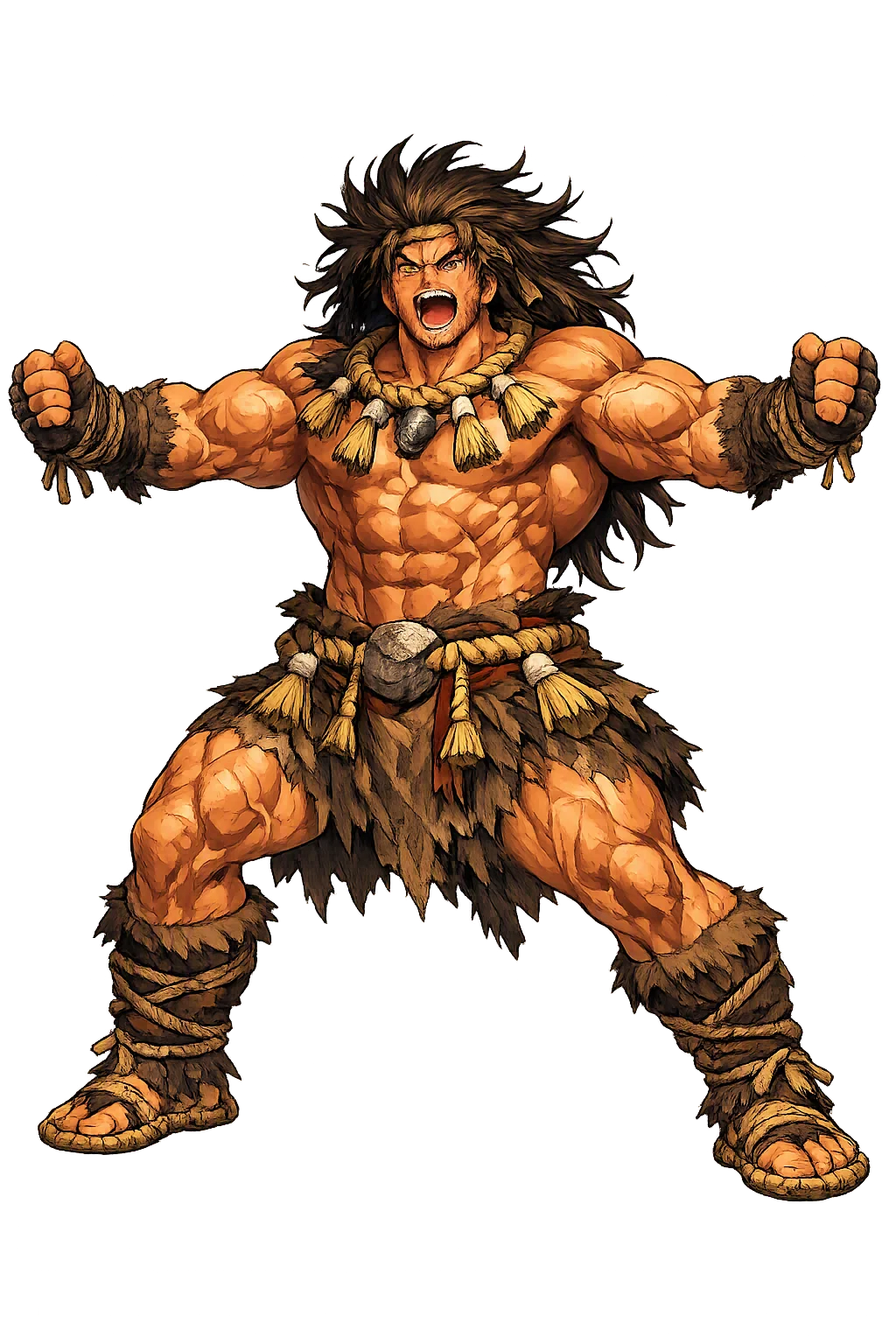
The many faces of Tajikarao
No important name has only one face. Tajikarao appears as a figure of myth, a scholarly reconstruction, a piece of material culture, a memory carried across languages, and — most recently — a Unicode domain. This post looks at each face in turn: the name and its roots, the Japanese characters original, the reconstructed pronunciation, the mythological record, the symbols and sanctuaries, the cross-cultural afterlife, and the engineering that lets the restored spelling resolve in a browser. Taken together, those faces explain why tajikarao was never going to be enough — and why the restored form is worth a domain of its own.
At a Glance
- Restored name: Tajikarao
- ASCII form: tajikarao
- Meaning: "Strong hand man"
- Domain of influence: Strength, Caves
- Pantheon: Japanese
- Classification: Tier 2
- Original script: 手力男神 (Japanese characters)
Overview
Tajikarao (tajikarao) — Strength, Caves — belongs to the Japanese tradition. The name means "Strong hand man".
Tajikarao is the strong-handed kami who pulls Amaterasu from the Heavenly Rock Cave.
PuniCodex restores the name as Tajikarao. The plain ASCII form tajikarao is the modern Hepburn romanization; the restoration capitalizes the conventional spelling. Because the Japanese source script uses logographic characters whose distinctive visual form cannot be conveyed in the basic Latin alphabet, and because no diacritic or special letter is added in this restoration, the name is placed in Tier 2. The Unicode form remains the philologically complete reference, while the ASCII spelling is a practical convenience for the domain-name system.
The Name
The name is attested in Japanese characters as 手力男神. Etymologically it means "Strong hand man".
Tajikarao means "strong hand man," from te (hand), chikara (strength/power), and o (male). He is the kami of physical strength who pulls Amaterasu from the Heavenly Rock Cave, restoring light to the world.
The ASCII form tajikarao survives only because the early domain-name system could not carry Japanese characters or diacritics; it is a technological compromise, not an ancient spelling. The Unicode restoration Tajikarao gives the conventional Hepburn romanization with initial capitalization, the standard scholarly way to cite a proper name in romanized Japanese. The name is Tier 2 because the restoration does not add a distinctive diacritic or special letter absent from the ASCII form.
The letter-by-letter transformation runs:
- t → T — Same, capitalized
- a → a — Same
- j → j — Same
- i → i — Same
- k → k — Same
- a → a — Same
- r → r — Same
- a → a — Same
- o → o — Same
The Original Script
The name is written in Japanese characters as 手力男神 — Japanese logographic and syllabic script (kanji plus kana where attested), attested in the classical Japanese sources. The script is written top-to-bottom in traditional contexts and left-to-right in modern reproductions.
The scholarly transliteration is Tajikarao (Hepburn romanization with initial capitalization), giving the normalized reading //ta.dʑi.ka.ɾa.o//.
The characters 手力男神 are semantic: 手 (hand), 力 (strength), 男 (male), 神 (kami). The name is a transparent description of his role in the Ama-no-Iwato myth.
Pronunciation
The conventional reading of the name is /ta.dʑi.ka.ɾa.o/ — Modern Japanese (Standard Japanese).
For the modern speaker, the closest approximation is: 'TAJIKARAO' — pronounce each vowel clearly and avoid English diphthongs. Japanese is mora-timed, so each syllable receives roughly equal weight.
Tajikarao is Tier 2 because the ASCII form tajikarao already represents the same phonemic sequence; no stress mark, length mark, or distinctive letter is required to recover the spoken name.
Japanese is a mora-timed language: each short syllable receives roughly equal temporal weight, and long vowels or double consonants count as separate morae. The name Tajikarao therefore falls into a regular rhythmic pattern that is lost if an English speaker stresses one syllable heavily. The Hepburn romanization used here records the modern standard pronunciation; it does not preserve the historical pitch accent of the word, which differs across dialects. When reading the name aloud, keep the vowels pure and avoid English diphthongs: the restoration Tajikarao is the conventional scholarly citation form, not a phonetic transcription with added diacritics. Because the ASCII string tajikarao already encodes the same phonemic sequence, the name remains Tier 2 in the PuniCodex system.
Mythology
When Amaterasu peeked out of the Heavenly Rock Cave, intrigued by Ame-no-Uzume's dance, Tajikarao took hold of her hand and pulled her firmly into the light. Without his strength the heavenly council could not have completed the restoration of the sun. After her emergence a sacred rope was strung across the cave mouth to prevent her return.
The narrative of Tajikarao participates in the larger mythic program of the Kojiki and Nihon Shoki: to explain the origins of the imperial house, the division of divine labour, and the relationship between the human and kami worlds. Because these chronicles were compiled in the eighth century under imperial patronage, the myths also serve a political theology, grounding earthly authority in divine descent and cosmic order. Read comparatively, the story of tajikarao illustrates how Japanese myth uses genealogy, descent from heaven, and the negotiation of rival domains to construct a coherent sacred history.
Pulling Amaterasu from the Cave (Kojiki)
When Amaterasu peeked out of the Ama-no-Iwato cave, drawn by Uzume's dance and her own reflection in a mirror, Tajikarao seized her hand and pulled her into the open. Some versions say he pulled the rock-door itself from its hinges. His strength overcame her withdrawal and returned light to the world.
Aftermath (Kojiki)
After Amaterasu emerged, a rope called the shimenawa was stretched across the cave entrance to prevent her from withdrawing again. Tajikarao's action had made the return of order possible, but the community's rites ensured that order would endure.
God of Strength and Caves (Folk cult)
Tajikarao was worshipped at caves and in places where physical strength was honored. His role as the one who breaks seals made him a patron of those who must overcome obstacles by force.
Symbols & Iconography
- Strong hands — the literal attribute by which he seized Amaterasu.
- Boulder — the stone door of the Heavenly Rock Cave that he pulled open.
- Cave entrance — the boundary between darkness and light.
- Rope (shimenawa) — stretched across the cave mouth after Amaterasu emerged.
- Athletic or muscular form — he is depicted as a powerful male deity.
- Cave door — The rock-door he pulled open to release Amaterasu
- Sunlight — The light that returned when he acted
- Mountains — The rocky places where his strength is most needed
Archaeology & Evidence
Ame-no-Iwato Shrine and the associated cave in Takachiho, Miyazaki, are the principal sites connected with Tajikarao. The shrine preserves the landscape setting of the Ama-no-Iwato myth.
The material record associated with Tajikarao must be read alongside the textual traditions; shrines, ritual objects, and landscape features preserve practices that the chronicles only summarize. Excavations and architectural history therefore offer independent evidence for how devotion to tajikarao developed across periods, even when written sources present a single mythic moment as eternal.
Realm & Domain
Tajikarao is the kami of strength, caves, and the decisive physical action that restores cosmic order. His domain is the muscular force that complements the persuasive dance of Ame-no-Uzume and the radiant presence of Amaterasu.
The domain of Tajikarao is understood within the broader Japanese religious landscape as both a specific functional sphere and a node in a network of kami, buddhas, and local spirits. Shrines, temples, and household rites all invoke the figure in ways that blur strict boundaries between Shinto and Buddhist practice. The restoration Tajikarao therefore names not only a mythic person but a living field of ritual activity: pilgrimage, festival, iconography, and prayer continue to define what the name means in contemporary Japan. This combinatory or "syncretic" context is essential for interpreting the domains listed above.
Cave Opener
He seized Amaterasu and pulled her from the Ama-no-Iwato cave.
God of Strength
His name and attribute make him a deity of physical power.
Cave Deity
He is associated with caves and the power that breaks seals.
Restorer of Order
His action brought light back to the world.
Across Cultures
Tajikarao is associated with the Ame-no-Iwato shrine complex and with other cave cults. His role as the strong arm of the gods links him to the Kumano and Ise traditions, where physical force and ritual persuasion combine to maintain cosmic order.
Cultural Legacy
Tajikarao is venerated at Ame-no-Iwato Shrine in Miyazaki and at other sites associated with the sun-cave myth. He remains a symbol of the strength needed to bring light out of darkness and is invoked in contexts requiring decisive action.
Today Tajikarao continues to appear in shrine pilgrimage, festival observance, anime, manga, video games, and scholarly discourse. The name functions as both a religious referent and a cultural symbol, a flexibility that has allowed it to survive the formal separation of Shinto and Buddhism and the secularisation of modern Japan. Restoring the conventional Hepburn romanization keeps the scholarly citation intact while acknowledging the living diversity of its meanings.
The Scholarly Record
The account of Tajikarao given in this edition rests on the witnesses and reference works listed below. The primary chronicles secure the form and meaning of the name; the secondary studies supply historical, archaeological, and ritual context.
- Kojiki (Records of Ancient Matters), 712. Full text
- Nihon Shoki (Chronicles of Japan), 720. Full text
A Meditation
Tajikarao embodies strength, caves in the Japanese imagination. The name's restoration is not merely cosmetic: it preserves the capitalized scholarly romanization by which the figure is cited in academic and ritual contexts. The ASCII form flattens the visual identity of the original characters into plain letters, but the spoken name and the mythic role remain intact.
The Unicode Restoration
Tajikarao is classified as Tier 2: the restoration needs no distinctive letters or diacritics its ASCII form would lose. The ASCII fallback tajikarao still resolves everywhere, but it is the restored form that carries the name's full information. That is the whole thesis of this temple: the marks are the message.
Character by Character
The journey from tajikarao to Tajikarao, one character at a time:
- t → T — Same, capitalized
- a → a — Same
- j → j — Same
- i → i — Same
- k → k — Same
- a → a — Same
- r → r — Same
- a → a — Same
- o → o — Same
The Japanese Pantheon
Tajikarao is one of 45 entries the PuniCodex lexicon catalogues under the Japanese pantheon. The Pantheon page gathers the tradition's major figures in one place, and the Lexicon lets you filter all 981 restorations by tradition, tier, or script — the fastest way to see where this name sits among its kin.
Frequently Asked Questions
What does Tajikarao mean? The traditional gloss is "Strong hand man."
Which tradition does Tajikarao belong to? Tajikarao is catalogued in the Japanese pantheon of the PuniCodex lexicon.
Why is Tajikarao classified as Tier 2? Because the restoration needs no distinctive letters or diacritics its ASCII form would lose — and the marks in the restored spelling preserve exactly that evidence.
Can I use Tajikarao in a normal browser? Yes. The DNS resolves the punycode form automatically, and the type tool on this site converts tajikarao to Tajikarao for copying and pasting.
Where does the scholarly information come from? The entry is built from lexica, inscriptional evidence, and reviewed scholarly sources listed in the Scholarly Edition. Every claim is traceable to a canonical source.
Typing Tajikarao
You do not need a special keyboard to use this restoration. The PuniCodex Type Tool converts the ASCII form tajikarao into Tajikarao as you type, and the browser extension offers the same conversion inside any text field. Copy the restored form, paste it into the address bar, and the DNS does the rest.
Sister Temples
Other temples in the Japanese pantheon include Tōkyō, Toyotama, and Tsukuyomi — each with its own restoration story, its own scholarly record, and its own place in the lexicon.
Why This Restoration Matters
Myth, script, sound, cult, legacy, domain: the faces of Tajikarao add up to a single argument — that a name is a record, and records deserve fidelity. The PuniCodex restoration keeps that record in working order: the temple presents it, the Scholarly Edition footnotes it, the lexicon catalogs it, and the domain makes it addressable. tajikarao will always exist as a fallback. But fallback is not identity. Tajikarao is the name; everything else is a convenience.
Explore Further
This post is one doorway into the temple. The home page carries the full character breakdown and the ambient canvas; the lore page tells the myths in long form; the Scholarly Edition preserves the sources, pronunciation data, and revision history; and the patron wall supports the restoration directly. For the wider map, browse the Lexicon, explore the Pantheon, or return to the PuniCodex blog.
A Closer Look at the Marks
A restored name is a small map. In the case of Tajikarao, the map does not lead through diacritics or special letters, because the source tradition wrote the name in Japanese characters rather than in the Latin alphabet. The ASCII form tajikarao and the restored form share the same letters; the restoration is a decision about which conventional spelling should serve as the public reference.
That decision is not cosmetic. The original script attestation carries semantic and phonetic information that no romanization can fully reproduce. By fixing one conventional spelling as the canonical domain form, the project prevents the drift that happens when a name is romanized differently in every article, map, and database. The breakdown still lists each character — t, a, j, i, k, a, r, a, o — so visitors can see exactly what is being carried forward and what is not. What looks like "no change" is, in fact, a deliberate choice to keep the name stable, searchable, and addressable.
Tajikarao in Its Tradition
Tajikarao does not stand alone. It belongs to the Japanese tradition, where it is counted among 45 names in the PuniCodex lexicon. Its sphere — Strength, Caves — places it beside other figures who govern similar aspects of experience. The restored spelling is therefore not only a philological decision; it is a way of keeping the name in the company of its kin. When the address bar shows Tajikarao, it marks the boundary between a generic search term and a named entry in a living catalog of myth. That catalog is the point of the project. Every restored name is a vote for specificity: the web should know the difference between a figure and a keyword, between a tradition and a trend. Tajikarao is one such vote.
What You Will Find in the Temple
The temple page for Tajikarao is more than a landing page. The home tab presents the character breakdown, the pronunciation guide, and the live domain status in a single view. The lore tab gathers the myths and narratives that give the name its depth. The Scholarly Edition tab publishes the sources, variant forms, and review history that justify the restoration. Industry patterns show where the name appears in modern commerce and culture, while the gallery and creatives tabs collect visual and sponsor material. The patron wall lets visitors support the restoration directly. Each tab is generated from the same canonical sources, so the domain, the blog, the scholars page, and the search index all agree. The result is a single source of truth about a name, delivered through several doors.
The Restoration on the Live Web
A domain name is a kind of publication. When Tajikarao resolves, it proves that the restored spelling is not a theoretical exercise; it is a working address on the public internet. Search engines can index it, language models can encounter it, and anyone who copies it from a manuscript can paste it into a browser. That practical reality changes the status of the restoration. Before Unicode domains, a scholar could write the name correctly in an article while the public web flattened it to tajikarao. Now the public web can carry the correct form end to end. The punycode translation happens silently, so the infrastructure remains compatible while the visible name keeps its marks. That compromise — human-readable restoration, machine-readable encoding — is the foundation of every PuniCodex temple.
Restoration Notes
Restoring a name is not a single decision; it is a sequence of smaller decisions, each backed by a different kind of evidence. For Tajikarao, the chain begins with the attested form in Japanese characters, continues through the standard scholarly romanizations, and ends with the DNS-compatible Unicode spelling used by this temple. The meaning "Strong hand man" anchors the name in its semantic field; without that anchor, the marks would float free of the figure they name. The restored form Tajikarao and the ASCII form tajikarao share the same Latin letters; the restoration here is a conventional capitalization rather than a recovery of lost diacritics or special characters. Those adjustments are not arbitrary styling. They follow the tier rule that places Tajikarao in Tier 2: the restoration needs no distinctive letters or diacritics its ASCII form would lose. The rule is mechanical, not editorial, which means the same standard applies to every entry in the lexicon. A visitor who disagrees with the classification can at least see exactly which evidence produced it, because every step is recorded in the Scholarly Edition. That transparency is the difference between a restoration project and a branding exercise. The name is being put back, not invented.
Related Names
Sources
The full scholarly apparatus — every citation, revision, and review — lives in the Scholarly Edition. Key references for this post:
- Kojiki (Records of Ancient Matters), 712.
- Nihon Shoki (Chronicles of Japan), 720.
- Fudoki (Records of Wind and Earth), 8th century.
- Hepburn, James Curtis, A Japanese-English and English-Japanese Dictionary, 1867.
- Breen, John, and Mark Teeuwen, A New History of Shinto (Wiley-Blackwell, 2010).
- Hardacre, Helen, Shinto: A History (Oxford University Press, 2017).
- Ono, Sokyo, Shinto: The Kami Way (Tuttle, 1962).
- Lexicon authorities for this entry: Kojiki, Nihon Shoki.