
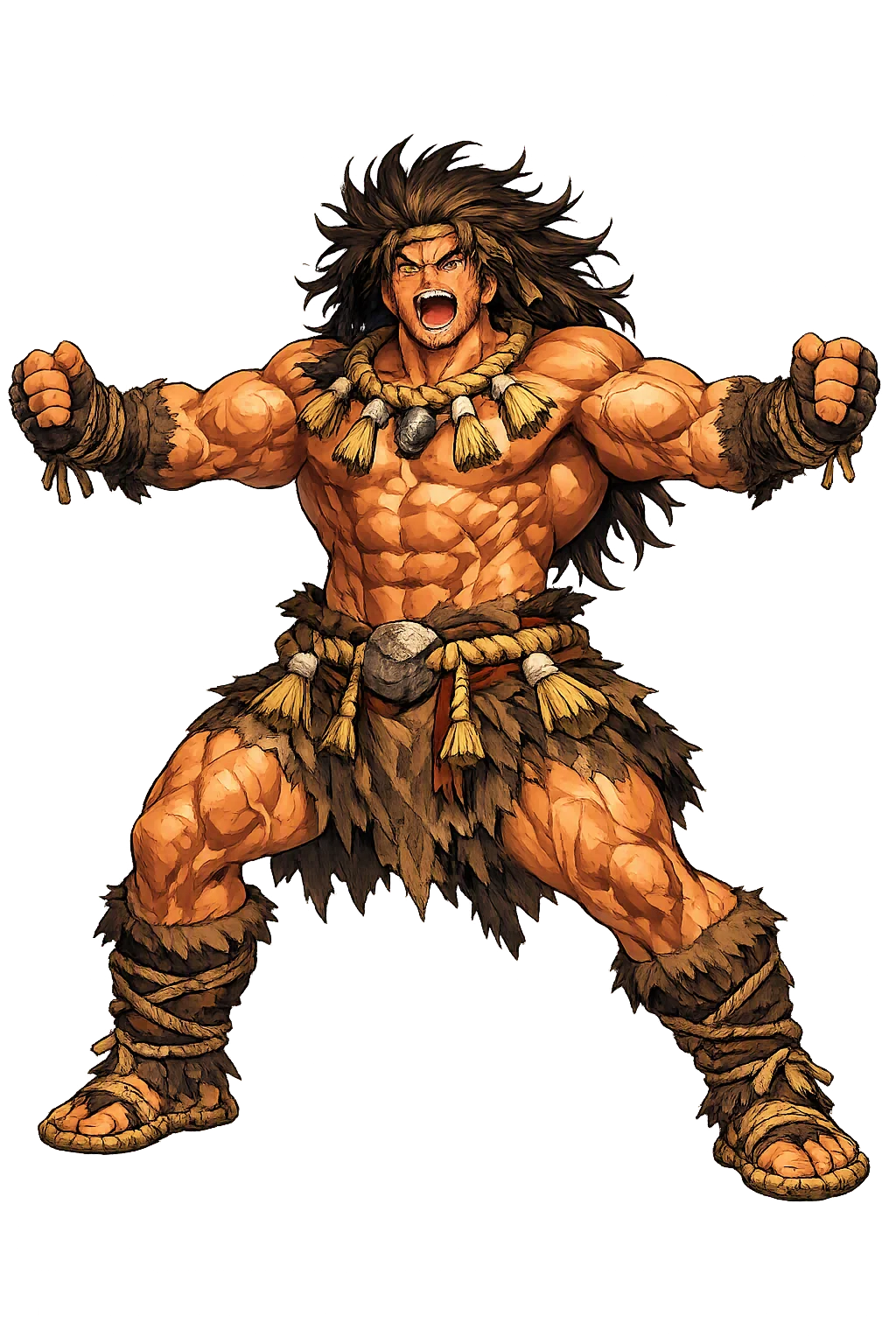
The many faces of Tajikarao
No important name has only one face. Tajikarao appears as a figure of myth, a scholarly reconstruction, a piece of material culture, a memory carried across languages, and a digital temple. This post looks at each face in turn: the name and its roots, the Japanese characters original, the reconstructed pronunciation, the symbols and sanctuaries, and the afterlife that brought the canonical spelling into the present.
At a Glance
- Canonical name: Tajikarao
- ASCII form: tajikarao
- Meaning: "Strong hand man"
- Domain of influence: Strength, Caves
- Pantheon: Japanese
- Restoration: ASCII-equivalent form
- Original script: 手力男神 (Japanese characters)
Overview
Tajikarao (tajikarao) — Strength, Caves · Strong hand man — belongs to the Japanese tradition, where it is catalogued under the domain "Strength, Caves". The name means "Strong hand man".
Tajikarao (Ame-no-Tajikarao-no-kami) is the kami of raw physical strength in the Japanese pantheon, remembered for a single decisive act: when the sun goddess Amaterasu withdrew into the Ama-no-Iwato rock-cave and plunged the world into darkness, it was Tajikarao who seized her hand and pulled the light back out. His name means 'Strong-Handed Man', and his cult gathers at Togakushi — 'the hidden door' — where tradition says the cave's rock-door landed.
PuniCodex records the canonical scholarly spelling Tajikarao and serves its temple at its temple. The displayed form is ASCII-equivalent — a description computed from the displayed form itself. The plain ASCII form tajikarao contains the same letters: no recovered diacritics or special encoding is claimed. The work here is consistent citation, capitalization, provenance, and cultural context.
The Name
The name is attested in Japanese characters as 手力男神. Etymologically it means "Strong hand man".
The canonical spelling Tajikarao matches the conventional scholarly romanization. The plain ASCII form tajikarao contains the same letters, so no lost diacritics or encoding transition is claimed. The editorial work is to fix one reviewed reference spelling, preserve capitalization and provenance, and keep the original evidence visible. The displayed form is ASCII-equivalent — a description computed from the displayed form itself.
The letter-by-letter transformation runs:
- t → T — Same, capitalized
- a → a — Same
- j → j — Same
- i → i — Same
- k → k — Same
- a → a — Same
- r → r — Same
- a → a — Same
- o → o — Same
The Original Script
The name is written in Japanese characters as 手力男神. That attested script remains the primary evidence for the conventional romanization Tajikarao. The canonical Latin spelling does not pretend to recover marks it never contained: it fixes one reviewed reference form while leaving the original script visible for comparison.
手力男神 — 手 'hand' + 力 'strength' + 男 'male' — is a fully transparent descriptive spelling: 'the hand-strength man'. The Kojiki gives him no other name; he exists in the written record for a single act — hurling open the rock-door of Ama-no-Iwato and pulling Amaterasu back into the light. Of all the age-of-gods names, his is among the few where the characters simply say what the god is.
Pronunciation
The reconstructed pronunciation of the name is /ta.dʑi.ka.ɾa.o/ — Modern Standard Japanese (Hepburn).
Phoneme by phoneme:
- Ta- — Voiceless alveolar stop [t] plus open central [a]
- -ji- — Voiced alveolo-palatal affricate [dʑ] plus close front [i]; from 力 'strength/power'
- -ka- — Voiceless velar stop [k] plus open central [a]
- -ra- — Alveolar tap [ɾ] plus open central [a]
- -o — Open-mid back [o]; from 男 'man'
For the modern speaker, the closest approximation is: 'TAH-jee-kah-rah-oh' — the 'j' is soft, and the 'r' is a light tap.
Kindred and historical forms of the name:
- Japanese — 手力男 — te 'hand' + chikara 'strength' + o 'man': 'strong-handed man'
- Kojiki — 天手力男神 Ame-no-Tajikarao-no-kami, 'the heavenly strong-handed kami'
- Nihon Shoki — Written 天手力男神; the Shoki's parallel version credits him with wrenching the rock-door itself from its hinges
Tajikarao keeps its restoration plain: Hepburn romanization preserves no diacritic or distinctive letter, so nothing distinctive is lost against the ASCII form. Within the myth he is pure function — the strong hand that acts once cunning has done its work — and his name says exactly what he does.
Mythology
Tajikarao's mythology is a single great scene — the Ama-no-Iwato, the Heavenly Rock-Cave — yet it is among the most retold scenes in Japanese religion. When Amaterasu hid herself and night swallowed the world, the eight hundred myriad kami tried persuasion, dance, and mirrors; only when the strong-handed kami acted did the sun return. His entire dossier is those few seconds at the cave mouth (Kojiki; Nihon Shoki).
The Sun Withdraws into the Rock (Kojiki)
The crisis begins with Susanoo's rampage. The storm god, granted leave from heaven, trampled down the ridges of Amaterasu's rice-paddies, filled in her irrigation ditches, and finally flayed the heavenly piebald colt and hurled its carcass through the roof of the sacred weaving-hall, so that a weaving-maiden, struck by the flying shuttle, died at her loom (Kojiki). Amaterasu, in grief and fear, 'went into the Rock-Cave of Heaven and fastened its Rock-Door'. At once the Plain of High Heaven went dark and the Central Land of Reed-Plains — Japan itself — fell into long night; the eight hundred myriad kami wailed, and calamitous deities swarmed like summer flies. The myth's architecture is precise: the sun's absence is not night but negation — nothing in the world works until the goddess is brought back out.
The Laughter at the Cave Door (Kojiki)
The assembled kami answered with misdirection. The goddess Ame-no-Uzume bound up her sleeves with a heavenly vine, took a bundle of sasaki grass for a headdress, overturned a tub before the cave, and stamped out a lewd, rattling dance upon it, baring herself to the roaring laughter of the whole assembly. Amaterasu, hearing the uproar, wondered how the gods could make merry while the world lay dark. When she cracked the Rock-Door to ask, Ame-no-Uzume answered that a goddess greater than she had come — and the kami had already hung the polished mirror Yata-no-Kagami and the curved jewel on the branches of a sakaki tree beside the door, while Ame-no-Koyane intoned the first ritual words. The mirror did the persuading; the dance bought it a crack of light. Cunning opens the door a finger's width — no more.
The Strong Hand (Kojiki · Nihon Shoki)
Leaning out to see the 'new goddess', Amaterasu saw her own blazing reflection — and as she stood amazed, Ame-no-Tajikarao seized her by the hand and pulled her bodily out of the cave (Kojiki). The Nihon Shoki's parallel gives him the rougher deed: he tears the Rock-Door itself from its hinges and casts it away. Either way, dawn broke instantly over heaven and earth; Ame-no-Futotama stretched the great sacred rope, the shimenawa, across the cave mouth so the goddess could not withdraw again, and Susanoo was banished in payment. Of all the kami in the scene, only Tajikarao performs no ruse and speaks no word — he acts. The myth's balance sheet is exact: Uzume's wit creates the opening, the mirror supplies the reason, and strength finishes the work. Each is necessary; only one of them is over in a single motion.
The Door That Flew to Shinano (Togakushi)
Medieval tradition follows the door. The Nihon Shoki's account of the cave already records that the Rock-Door, once torn free, was hurled far away; shrine legend at Togakushi — the name means nothing other than 'the hidden door' — in the mountains of Shinano (present-day Nagano) holds that it landed there, on the forested slope where the Upper Shrine stands to this day. The five shrines of Togakushi grew around the spot, and the Middle Shrine enshrines Tajikarao himself, worshipped as the kami of strength, decisive action, and the opening of what is shut; pilgrims still climb the avenue of giant cryptomerias to the Oku-sha through snow and mist. No text records where he went afterward; the mountain is his whole biography. A kami who exists for five seconds of myth acquired, through the object he threw, a mountain for a memorial.
Symbols & Iconography
The iconography associated with Tajikarao concentrates in a small set of recurring attributes, each a compressed statement about the name:
- Strong hands — The attribute his name encodes and the instrument of every deed attributed to him
- The rock-door — The stone slab he tore from the cave mouth; tradition places its landing at Togakushi, 'the hidden door'
- Sunlight — What returned to the world the instant his grip closed on the sun goddess's wrist
- Mountains — The cave-country of the kami, where strength and silence meet
Archaeology & Evidence
No excavated site attests Tajikarao himself from the Kofun period or earlier; his evidence is cultic and textual. The clearest material anchor is Amanoiwato-jinja above the Takachiho Gorge in Miyazaki Prefecture, where the cave of the myth is identified and a worship-hall faces the cliff across the gorge. His principal shrine, the Middle Shrine (Chū-sha) of Togakushi in Nagano, stands within a complex whose documented history runs from the mid-ninth century, when the Tendai temple Togakushi-san was founded on the mountain; the present shrine buildings are early modern, and the famous cryptomeria avenue to the Oku-sha was planted in the medieval period. Kagura masks and votive tablets depicting the cave scene, from the early modern period onward, are held in shrine collections across western Japan.
Realm & Domain
Tajikarao (Ame-no-Tajikarao-no-kami) is the kami of raw physical strength in the Japanese pantheon, remembered for a single decisive act: when the sun goddess Amaterasu withdrew into the Ama-no-Iwato rock-cave and plunged the world into darkness, it was Tajikarao who seized her hand and pulled the light back out. His name means 'Strong-Handed Man', and his cult gathers at Togakushi — 'the hidden door' — where tradition says the cave's rock-door landed.
Cave Opener
He seized Amaterasu's wrist and hauled her from the Ama-no-Iwato cave as she leaned out (Kojiki).
God of Strength
The personification of chikara, 'strength' — the second graph (力) of his own name.
Cave Deity
Patron of caves, thresholds, and the breaking of seals; honored in the mountains of Togakushi in Shinano.
Restorer of Order
His one act ended the cosmic darkness and returned the sun to the Plain of High Heaven.
Across Cultures
Tajikarao resists syncretism precisely because his role is so pure: he is the strong arm inside a theology of coordinated function. In the Ama-no-Iwato assembly every kami performs one office — Uzume the dance, Futotama the rope, Koyane the words, Tajikarao the hand — a picture of the kami as functionaries in a cosmic administration that Shinto reflection has read ever since as a model of communal harmony (wa). Buddhism, which absorbed so many kami as guardians and avatars, found little to work with in a god of one deed; he has no avatar and no second career. The cave scene, however, travelled without him: it is re-enacted in kagura across the country, painted on shrine votive panels, and taught to every Japanese schoolchild, so that his five seconds of action are among the most-watched moments in the national mythology. Comparativists set the disappearing-sun motif beside eclipse and solstice myths worldwide; the Japanese version is distinctive in that the sun hides from wounded pride, not from a cosmic enemy, and is recovered by theatre plus muscle.
Kindred figures in the PuniCodex cross-tradition index include Amaterasu (strong hand opens the cave of the sun), Takachiho (strength god and the sacred gorge), Andvari (guardian / protector), Kérberos (guardian / protector), Fáfnir (guardian / protector), and Garmr (guardian / protector).
Cultural Legacy
Tajikarao's living monument is Togakushi. The shrine complex above Nagano, approached by an avenue of centuries-old cedars, draws pilgrims and hikers to the Oku-sha and worshippers seeking strength and favorable outcomes to its Middle Shrine; the mountains acquired a second, separate fame in the medieval period as the legendary home of the Togakure-ryū ninja tradition — the 'hidden door' serving concealment as well as revelation. Beyond the shrine, he survives wherever the cave myth is told: in classical kagura repertoires, in school textbooks, and in a steady stream of anime, manga, and games that borrow the Ama-no-Iwato scene and, with it, the strong hand that ends it. Athletes and competitors occasionally invoke him as a kami of chikara, raw power. His name remains what it was in the Kojiki: a byword for the moment deliberation ends and someone finally pulls.
The Scholarly Record
The account of Tajikarao given in this edition rests on the witnesses and reference works listed below. Lexica and etymological dictionaries secure the form and meaning of the name; the literary and religious texts supply the narrative evidence.
- Kojiki, Ama-no-Iwato narrative (Kamitsumaki).
- Nihon Shoki, Age of the Gods, Scroll I.
- Philippi, Kojiki (Princeton, 1968).
- Aston, Nihongi (1896).
- Togakushi shrine tradition (Nagano).
A Meditation
Tajikarao is the theology of the decisive gesture. In the most famous deliberation in Japanese myth — eight hundred myriad kami conferring in the dark — he is the one who stops conferring. Nothing in the sources grants him eloquence, cunning, or lineage; the Kojiki gives him no genealogy, no prior deed, and not a single word. He appears at the cave mouth, closes his hand, and changes the state of the universe from night to day. Then he largely vanishes from the record.
There is a quiet profundity in a kami who does exactly one thing. Every tradition keeps such figures — the strongman, the opener, the one who pulls when everyone else has talked — and usually ranks them below subtler minds. But the Ama-no-Iwato myth refuses that hierarchy: the dance fails without the hand, and the mirror is useless unless someone opens the door. Tajikarao asks each of us to locate our own cave-mouth — the one situation in our lives where analysis has done all it can, and what remains is to take hold, and pull.
The Canonical Spelling
Tajikarao is the canonical spelling used by this temple. The plain ASCII form tajikarao contains the same letters, so there are no lost diacritics to recover and no special encoding transition to explain. What the temple preserves is the reviewed reference form: capitalization, conventional romanization, original evidence, and a stable place to inspect them. The value here is not added decoration; it is fidelity to the attested record.
Character by Character
The canonical form Tajikarao and the plain ASCII form tajikarao share the same letters. The character list therefore documents continuity rather than recovery: every character is carried forward deliberately, with capitalization serving as the proper-noun convention. No additional mark is inserted merely to make the restoration appear more elaborate.
The Japanese Pantheon
Tajikarao is one of 45 entries the PuniCodex lexicon catalogues under the Japanese pantheon. The Pantheon page gathers the tradition's major figures in one place, and the Lexicon lets you filter all 983 restorations by tradition or script — the fastest way to see where this name sits among its kin.
Frequently Asked Questions
What does Tajikarao mean? The traditional gloss is "Strong hand man."
Which tradition does Tajikarao belong to? Tajikarao is catalogued in the Japanese pantheon of the PuniCodex lexicon.
Does this name need recovered diacritics? No. Tajikarao is already an ASCII-form canonical spelling. The scholarly work is to preserve the attested convention and its evidence, not to add marks.
Can I use Tajikarao in a normal browser? Yes. The spelling works directly in an ordinary browser, and the type tool can confirm and copy the canonical form.
Where does the scholarly information come from? The entry is built from lexica, inscriptional evidence, and reviewed scholarly sources listed in the Scholarly Edition.
Typing Tajikarao
You do not need a special keyboard to use this name. Tajikarao already uses ordinary Latin letters. The PuniCodex Type Tool lets you confirm the canonical spelling and copy it cleanly, while the original-script notes in the temple show the evidence behind the romanization.
Why This Record Matters
Myth, script, sound, cult, legacy, and digital address add up to a single argument: a name is a record, and records deserve fidelity. The PuniCodex temple keeps that record in working order through the home page, the Scholarly Edition, the lexicon, and the living address. Tajikarao is already whole. The task is not to embellish it, but to keep its evidence attached.
Explore Further
This post is one doorway into the temple. The home page carries the full character breakdown and the ambient canvas; the lore page tells the myths in long form; the Scholarly Edition preserves the sources, pronunciation data, and revision history; and the patron wall supports the restoration directly. For the wider map, browse the Lexicon, explore the Pantheon, or return to the PuniCodex blog.
Related Names
Sources
The full scholarly apparatus — every citation, revision, and review — lives in the Scholarly Edition. Key references for this post:
- Kojiki, Ama-no-Iwato narrative (Kamitsumaki).
- Nihon Shoki, Age of the Gods, Scroll I.
- Philippi, Kojiki (Princeton, 1968).
- Aston, Nihongi (1896).
- Lexicon authorities for this entry: Kojiki, Nihon Shoki.