
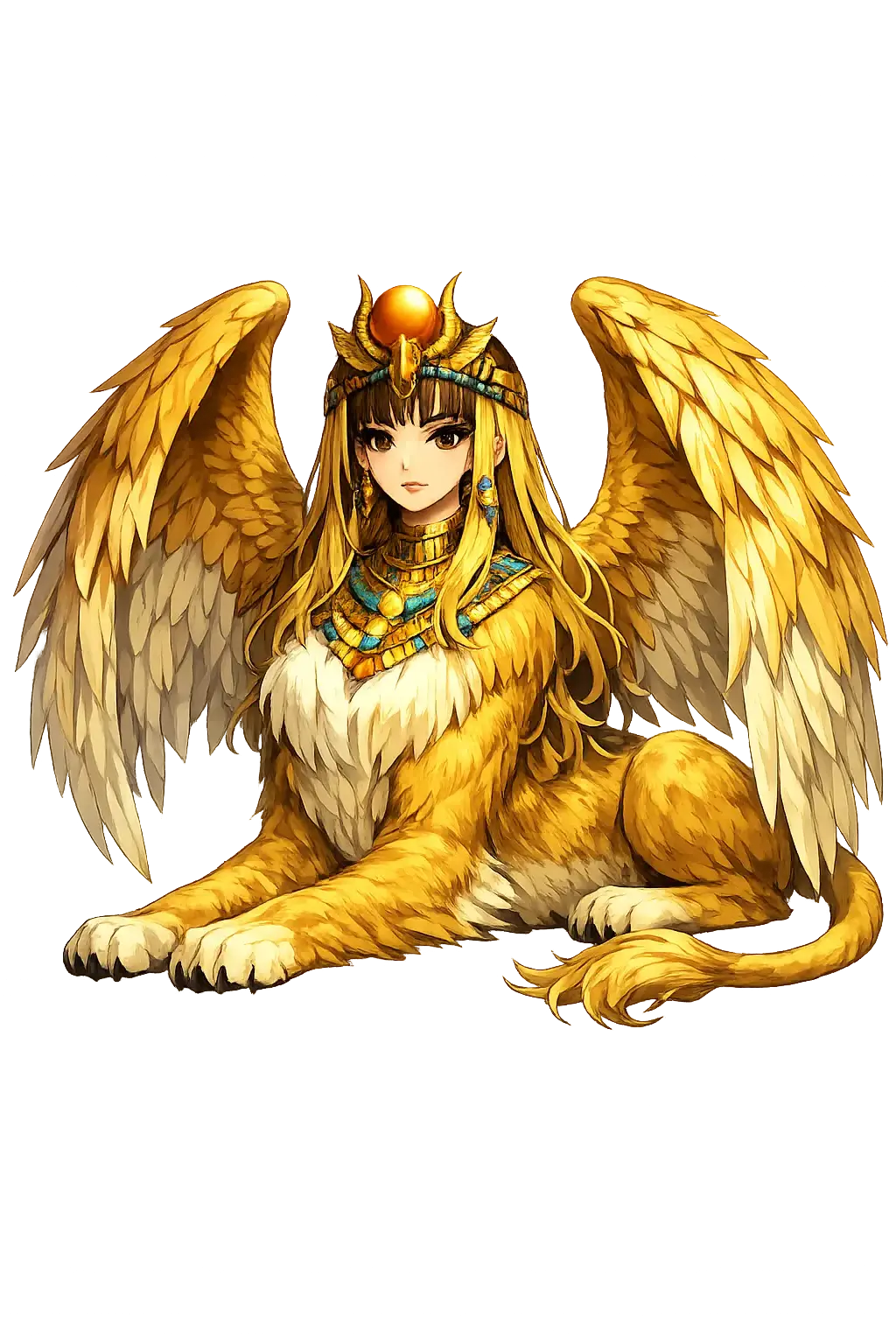
Stress-testing Sphínx: do the industry seats hold?
Audit notes, Sphínx: we took every seat the atlas claims for this temple and tried to break it against the myths. What survived is below.
At a Glance
- Temple: Sphínx
- Pantheon: Greek
- Domain of influence: Riddling Monster
- Pattern seats: 4
- Sectors touched: Technology & Innovation · Culture & Entertainment · Health & Wellbeing
- Strongest seat: Cybersecurity & Digital Protection
- Series: The Resonance Files, No. 456 of 546
The Test
Seat 1: Cybersecurity & Digital Protection
Claim: The original security question: answer the riddle or be denied. Exhibit: Child of Chimaira — or of Echidna? — Hesiod gives the Sphinx an unexpected pedigree: in the Theogony (325–327) she is born to the Chimaira by Orthrus, the two-headed hound — a pairing that also produces the Nemean Lion — which makes her Typhon's granddaughter, twice removed from the storm-giant's challenge to Zeus.
Verdict: survives scrutiny. The myth and the trade do the same work.
Seat 2: Gaming, Fantasy & Entertainment IP
Claim: The riddle gate; puzzle design’s ancestor. Exhibit: Sent Against the Cadmeans — While Laius was king of Thebes, Hera sent the Sphinx against the city as a plague, Apollodorus reports (Library 3.
Verdict: survives scrutiny. The myth and the trade do the same work.
Seat 3: Mental Health & Emotional Wellness
Claim: Her riddle opens the Theban drama Freud made psychology's founding case study. Exhibit: Oedipus Names the Creature — Oedipus, the Corinthian exile with the pierced ankles, came to the crossroads beneath Mount Phicium and heard the Sphinx's question: what creature walks on four feet at morning, two feet at noon, and three feet at evening?
Verdict: stands. Strip both to their function and the functions match.
Seat 4: Travel, Tourism & Place Branding
Claim: The Great Sphinx of Giza has drawn travelers for four and a half thousand years; the monument is the industry's icon. Exhibit: Child of Chimaira — or of Echidna? — Hesiod gives the Sphinx an unexpected pedigree: in the Theogony (325–327) she is born to the Chimaira by Orthrus, the two-headed hound — a pairing that also produces the Nemean Lion — which makes her Typhon's granddaughter, twice removed from the storm-giant's challenge to Zeus.
Verdict: survives scrutiny. The myth and the trade do the same work.
The Control Group
Against the seats that survived, one control: the temple's own summary of its figure — The Greek Sphinx is a daughter of monstrous parents, sent by Hera to punish Thebes. The seats do not drift far from it. That is the audit's cleanest result.
The Method, Stated Plainly
None of this is numerology. A seat exists only where the match can be argued from the deity’s documented domains and deeds — weighted, published, and falsifiable. The derivation, the weights, and the challenge process are public on the methodology page. If a seat in this file reads wrong, the atlas itself tells you how to prove it — and the correction becomes part of the record.
For the Ones Who Work There
For a sponsor in cybersecurity & digital protection, the fit here is not adjacency — it is inheritance. Your trade already tells this story every working day; the temple simply holds the original. The patron tier and the advertising terms carry the mechanics; the myths above carry the reason.
The File Continues
This is one of 546 Resonance Files — the third dispatch from every flagship temple, where the myths meet the markets. The temple's founding dispatch tells the name's story; its Restoration File tells the spelling's; the blog index holds the whole archive.
Continue the series — previous: Spártē (read it) · next: Stribog (read it).
The Resonance Files are argued from the same canonical record as the pattern atlas itself: the lexicon, the lore catalog, and the cited sources. Every seat can be challenged at the methodology page — and the challenge is the point.