
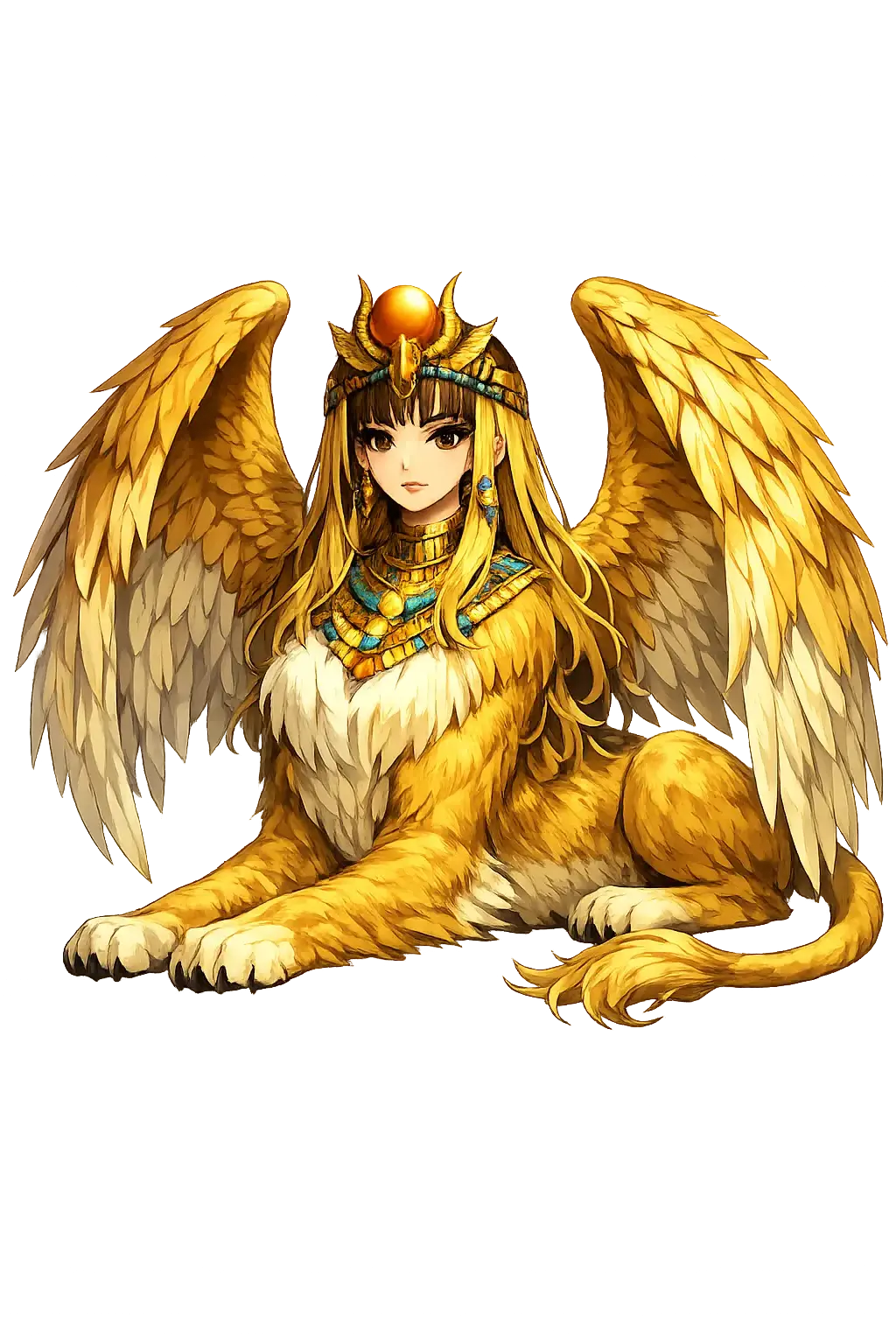
The provenance file on Sphínx
Provenance record 456 · Sphínx · one temple, fully accounted for.
Provenance
1. The attestation. Σφίγξ — "Strangler". On record: Hesiod, Theogony 325–327, Apollodorus, Library 3.5.8, Sophocles, Oedipus Tyrannus, Pausanias 9.26.2–4; 5.11.2.
2. The preserved evidence. i → í (Acute on i (Σφίγξ)) — absent from the ASCII form sphinx, present in the restoration, verifiable against the sources above.
3. The narrative record. Child of Chimaira — or of Echidna? — Hesiod gives the Sphinx an unexpected pedigree: in the Theogony (325–327) she is born to the Chimaira by Orthrus, the two-headed hound — a pairing that also produces the Nemean Lion — which makes her Typhon's granddaughter, twice removed from the storm-giant's challenge to Zeus. Apollodorus, Library 3. Sent Against the Cadmeans — While Laius was king of Thebes, Hera sent the Sphinx against the city as a plague, Apollodorus reports (Library 3. 5.
4. The current holding. The temple at /sphinx/, classified Tier 2. The restoration keeps one feature the ASCII form drops. One is enough to matter, and the label says so plainly: Tier-2.
5. The documented resonances. Cybersecurity & Digital Protection, Gaming, Fantasy & Entertainment IP, Mental Health & Emotional Wellness — seats argued and weighted in the pattern atlas, read through the myths in this temple's Resonance File.
6. The primary sources. Theogony, Homeric Hymns, Works and Days — the library this file answers to, open at the Sacred Texts collection.
7. The continuing record. The Sphinx is one of the most durable images in world art. The Great Sphinx of Giza anchors every account of ancient Egypt, while the Greek riddling sphinx dominates literature from Sophocles through Freud to the present.
At a Glance
- Restored name: Sphínx
- ASCII form: sphinx
- Meaning: "Strangler"
- Domain of influence: Riddling Monster
- Pantheon: Greek
- Classification: Tier 2
- Original script: Σφίγξ
- Series: The Restoration Files, No. 456 of 546
The Emblems
The name does not travel alone. Lion's body — Royal power and the dangerous strength of the threshold guardian — the Egyptian form the Greeks borrowed; Wings — The aerial, predatory nature of the creature; she strikes from above like a bird of prey; Woman's head — Intelligence and speech — the source of the deadly riddle; the human face is what makes her question articulate. Each emblem is filed in the temple's record with its own provenance, the same discipline the spelling gets.
For the Voice
'SFINGKS' — aspirate the 'p' as you release it, stress the first syllable, and end with a sharp 'ks'. The reconstructed line runs `/spʰíŋks/` — the temple's pronunciation atlas carries the phonemes one by one.
The Discipline It Answers To
This restoration belongs to Greek, a tradition that invented both the chorus and the critique. The rules that govern it are not house style; they are the tradition's own scholarship, applied with the same care here as in any edition — and published, with the sources, so the file can be checked the way an edition can be checked. The restoration keeps one feature the ASCII form drops. One is enough to matter, and the label says so plainly: Tier-2.
The File Continues
Read the founding dispatch for the name's full story, the Resonance File for the archetype at work — or the whole archive in one sitting.
Continue the series — previous file: Spártē (read it here) · next file: Stribog (read it here).
The Restoration Files are written from the same canonical record as the temples themselves: the lexicon, the lore catalog, the pattern atlas, and the cited scholarly sources. If a file ever disagrees with its temple, the temple is right — tell us, and the file will be corrected.