
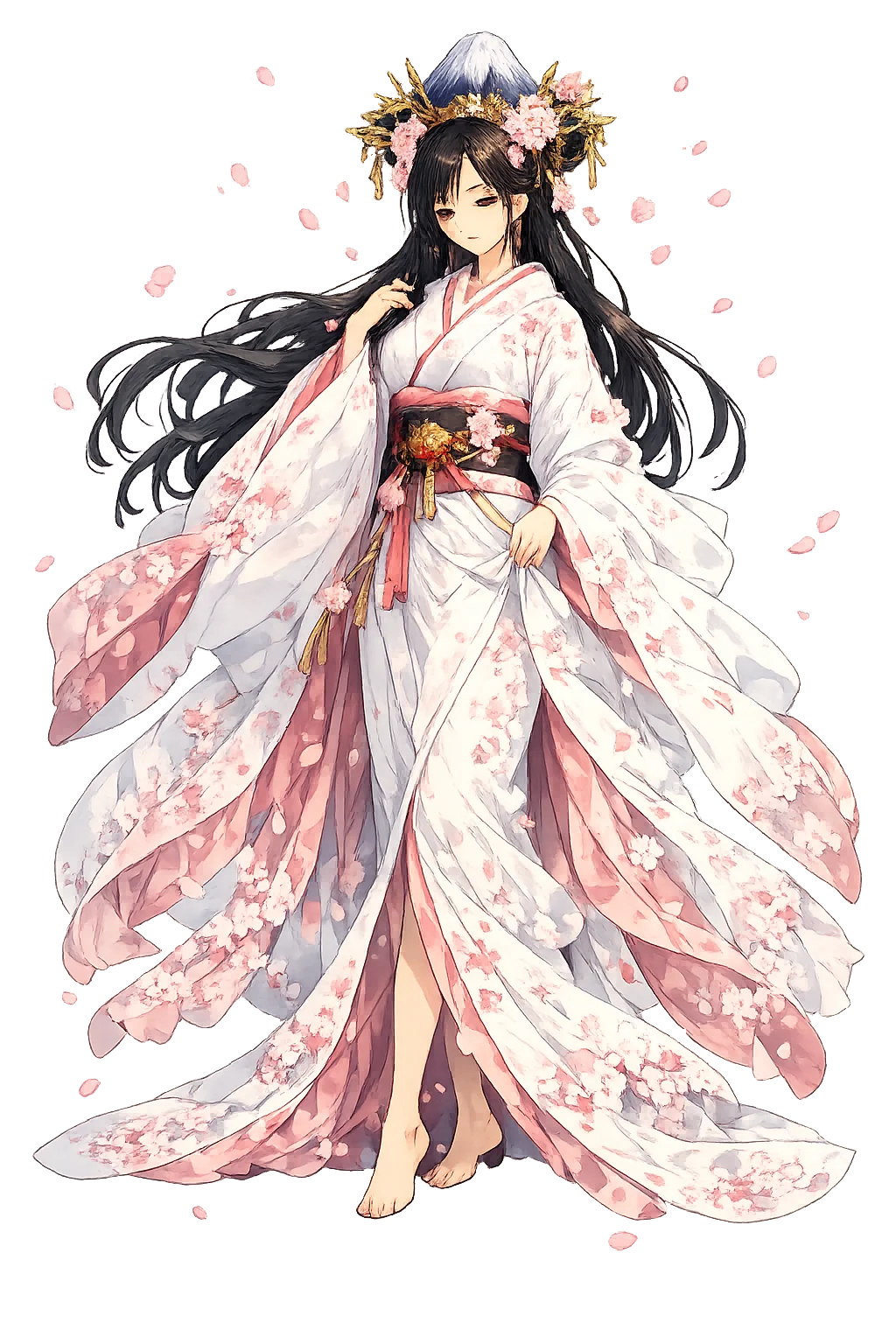
Why Honshū is spelled that way — and what it costs to get it right
There is a version of this name the early internet had to settle for: honshu. This is the file on how Honshū replaced it.
Honshū's mythology is the national charter itself: the Kojiki's island-birth, the sun goddess's gift of the land, and the descent of her grandson to rule it.
At a Glance
- Restored name: Honshū
- ASCII form: honshu
- Meaning: "'Main island' (本州)"
- Domain of influence: Center, Mainland, Heart
- Pantheon: Japanese
- Classification: Tier 1
- Original script: —
- Series: The Restoration Files, No. 108 of 271
The Name Before the Marks
Strip Honshū to honshu and one piece of evidence vanishes:
- u → ū — Macron marks the long vowel: the vowel length the ASCII form cannot show.
These are the small, provable things a restoration is made of: not taste, not branding — attestation.
Spoken, the name runs `/hon.ɕuː/` — hON-shoo, with a long final ū.
The Temple That Stands Now
The restored name is not a plaque; it is an address. The temple of Honshū lives at /sites/honshu/, with its mythology in the lore halls, its peer-reviewed record in the Scholarly Edition, and its place in the pattern atlas on the patterns floor.
The restoration preserves more than the ASCII form can express — stress, length, or a letter the Latin keyboard lost — which places it, mechanically, in Tier-1.
Where the Name Stood First
Sannai-Maruyama near Aomori preserves a Jōmon city of 5,500 years ago — great cedar pillars, longhouses, and chestnut stores that rewrote the era's reputation from "primitive" to prosperous. The Yayoi's moated villages and the keyhole-shaped kofun tombs (Daisenryō in Ōsaka is among the largest tombs on earth by area) trace the state's rise. Nara's Tōdai-ji holds the world's largest bronze Buddha in the world's largest wooden building; Ise's shikinen sengū — the twenty-year rebuilding — is living archaeology, a Bronze Age rite performed on schedule into the present. The temple on the web is the newest of these addresses — the first one that fits in a pocket.
The Archetype at Work
The pattern atlas seats this temple in 3 industries, each match argued and weighted: Travel, Tourism & Place Branding (the main island and heartland, home of every historic capital from Nara to Kyōto to Tōkyō — Japan’s itinerary in one name.); Agriculture, Food & Harvest (the rice-land heartland; the Land of Fair Rice-ears itself.); Leadership, Governance & Public Administration (the island of capitals; every seat of Japanese power stands here.). The Resonance File reads those seats through the myths themselves.
In the Sacred Texts
The Japanese tradition is not a vibe; it is a library. The Sacred Texts collection holds Kojiki and Nihon Shoki — the primary sources the temple's scholarship is built on. The temple is the argument; the texts are the evidence.
The File Continues
The temple's founding dispatch tells the name's story; its Resonance File reads the myths into the industries; the blog index holds the whole archive.
Continue the series — previous file: Hokkaidō (read it here) · next file: Ḥr (read it here).
The Restoration Files are written from the same canonical record as the temples themselves: the lexicon, the lore catalog, the pattern atlas, and the cited scholarly sources. If a file ever disagrees with its temple, the temple is right — tell us, and the file will be corrected.