
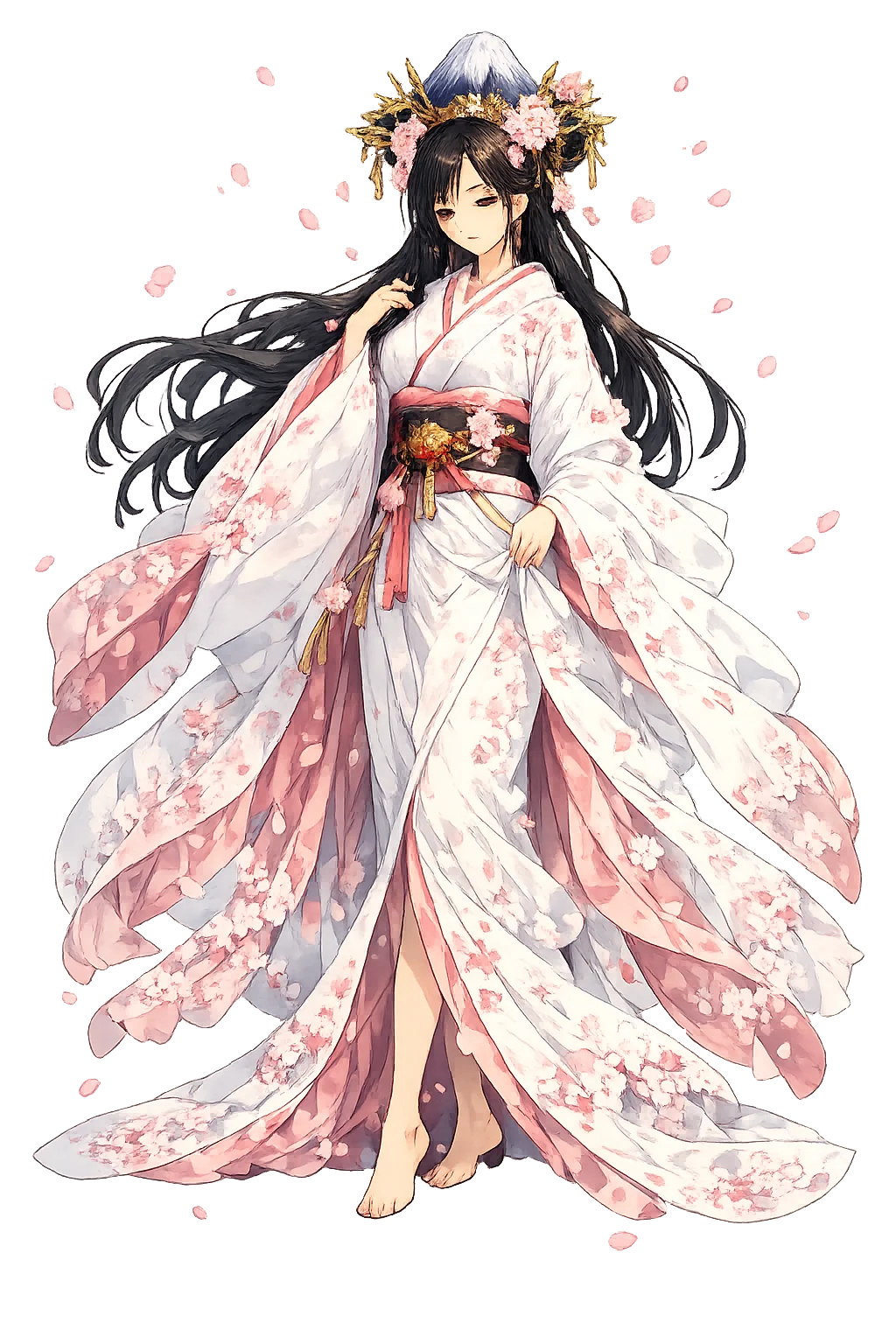
Honshū at work: travel, tourism & place branding, agriculture, food & harvest, and the myths that got there first
The myths did not retire. They moved offices. This is the file on where Honshū works now.
Honshū's mythology is the national charter itself: the Kojiki's island-birth, the sun goddess's gift of the land, and the descent of her grandson to rule it.
The pattern atlas — which maps every flagship temple to the industries its archetype demonstrably resonates with, each match argued and open to challenge — seats this temple in 3 industries. This file reads those seats the way they were earned: through the myths.
At a Glance
- Temple: Honshū
- Pantheon: Japanese
- Domain of influence: Center, Mainland, Heart
- Pattern seats: 3
- Sectors touched: Culture & Entertainment · Energy & Natural World · Commerce & Governance
- Strongest seat: Travel, Tourism & Place Branding
- Series: The Resonance Files, No. 108 of 271
The Myth at Work
The Islands from the Spear. The Kojiki opens on the heavenly bridge: Izanagi and Izanami stir the ocean with the jewelled spear, and from the brine dripping from its point the first island coagulates. Descending, they wed and give birth to the islands of Japan — the "great eight islands" culminating in Ōyashima — and then to the kami of wind, sea, mountain, and tree. — hold that image; the industries below are where it goes to work.
Amaterasu's Realm. When the sun goddess Amaterasu withdrew into the Heavenly Rock-Cave — outraged by her brother Susanoo's rampage — the world went dark until the gods' comic dance lured her out. Her mirror, hung outside the cave, caught her own light back to her; that mirror rests at Ise on Honshū's Kii coast, and her shrine there has been ritually rebuilt every twenty years for thirteen centuries: the island's heartwood, renewed. — remember the shape of that act. You will see it again, wearing a logo.
The Seats
Each of these is argued in the atlas with a weight and a why-line. What the atlas cannot fit in one line is the whole myth — so here is each seat with its story restored.
Travel, Tourism & Place Branding
Destinations, heritage tourism, and city branding. (Sector: Culture & Entertainment)
The main island and heartland, home of every historic capital from Nara to Kyōto to Tōkyō — Japan’s itinerary in one name. — the atlas stops there, out of discipline. The myth keeps going: the function Honshū performs in the stories is precisely the function this industry sells.
Agriculture, Food & Harvest
Farming, grain, food production, and agtech. (Sector: Energy & Natural World)
The rice-land heartland; the Land of Fair Rice-ears itself. Swap the costume and the sentence is indistinguishable from the myth. That is what a resonance seat means.
Leadership, Governance & Public Administration
Government, executive leadership, and statecraft. (Sector: Commerce & Governance)
The why-line says it in one breath: The island of capitals; every seat of Japanese power stands here. That is not a resemblance; it is the same act, performed in a newer building.
Read the myth again after the seats and it stops sounding ancient: Honshū's mythology is the national charter itself: the Kojiki's island-birth, the sun goddess's gift of the land, and the descent of her grandson to rule it. The age changed. The work did not.
The Method, Stated Plainly
None of this is numerology. A seat exists only where the match can be argued from the deity's documented domains and deeds — weighted, published, and falsifiable. The full derivation, the weights, and the challenge process are public on the methodology page. If a seat in this file reads wrong, the atlas itself tells you how to prove it — and the correction becomes part of the record.
For the Ones Who Work There
If you work in travel, tourism & place branding, agriculture, food & harvest, or any trade this temple holds a seat in, this is the honest version of what a placement means: your industry beside the story it has been re-telling all along — on the temple floor itself, before an audience that came specifically to read it. The patron tier and the advertising terms describe the mechanics; the resonance above describes the fit. The story is the pitch; the seats are just where it already works.
The File Continues
This is one of 271 Resonance Files — the third dispatch from every flagship temple, where the myths meet the markets. The temple's founding dispatch tells the name's story; its Restoration File tells the spelling's; the blog index holds the whole archive.
Continue the series — previous: Hokkaidō (read it) · next: Ḥr (read it).
The Resonance Files are argued from the same canonical record as the pattern atlas itself: the lexicon, the lore catalog, and the cited sources. Every seat can be challenged at the methodology page — and the challenge is the point.