
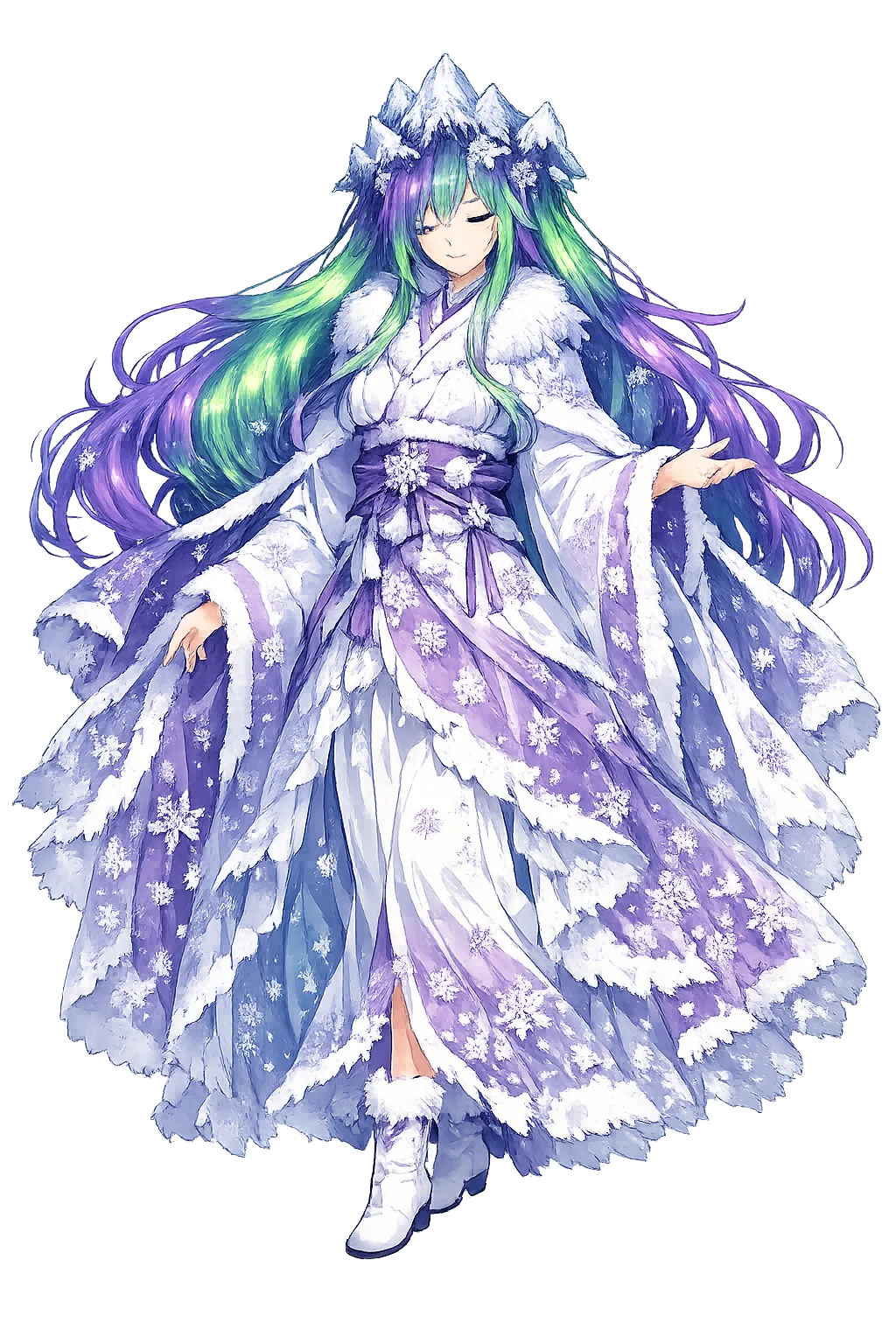
Hokkaidō: the stories first, then the spelling
You cannot weigh an accent without knowing what it carries. Here is what Hokkaidō has been carrying.
The Stories That Carry the Name
Ainu Mosir and Kamuy Mosir. Ainu oral tradition divides existence between Ainu Mosir, the land of humans, and Kamuy Mosir, the land of the spirits — and teaches that kamuy visit the human world wearing animal bodies as gifts. The bear is the mountain god's greatest visitation; the fire goddess, Ape-huci-kamuy, keeps every hearth and carries every prayer to the spirit world. The island itself is a borderland between the two realms.
Iomante. The iomante — "sending off" — returns the visiting bear-spirit to Kamuy Mosir with songs, prayers, and gifts, so that the god will tell the other kamuy of human courtesy and come again in generous flesh. Long misread by outsiders as cruelty, it is among the most studied hunting ceremonies on earth: a theology of gratitude in which killing and honouring are the same act.
From Ezochi to Hokkaidō. The island's modern foundation-myth is documentary: in 1869 the new Meiji state renamed Ezochi, established the Kaitakushi (Colonization Commission), and invited American advisers — Capron, Clark ("Boys, be ambitious! ") — to lay out farms, ports, and Sapporo itself on the American grid. A century of settlement followed; the Ainu were legally recognized as indigenous only in 2008, and the Ainu Promotion Act of 2019 opened a new chapter at last.
And Here Is What the Spelling Preserves
Against those stories, the attestation: 北海道, as Kojiki and Nihon Shoki preserve it. The name means "Northern sea circuit".
The restoration keeps one feature the ASCII form hokkaido cannot show:
- o → ō — Macron: long vowel: how long the vowel is held.
A storyteller pronouncing the name would restore every one of them by instinct. The file only writes down what the voice already knows.
At a Glance
- Restored name: Hokkaidō
- ASCII form: hokkaido
- Meaning: "Northern sea circuit"
- Domain of influence: Northern Island
- Pantheon: Japanese
- Classification: Tier 1
- Original script: 北海道
- Series: The Restoration Files, No. 107 of 271
The Name Travels
Ainu religion absorbed and resisted Japanese and Russian pressure in equal measure: Orthodox missions among the Kuril Ainu, Buddhist temples on the coasts, and the yukar epics — sung in an isolate language with no close relatives — keeping the older world intact in verse. The twentieth century added a third strand: the Ainu cultural revival, led by figures like the poet and legislator Kayano Shigeru, made the island's first culture a national conversation.
The Address It Earned
The temple of Hokkaidō stands at /sites/hokkaido/ — lore, scholars, patterns — because a name carrying this much story deserves more than a parking page. What survives here cannot be shown in ASCII: a feature of the original that the fallback alphabet flattens. That is the Tier-1 test, and this name passes it without argument.
The Sources Are Open
The myths above are retold from the temple's record; the primary voices are in the Sacred Texts: Kojiki and Nihon Shoki. Nothing in this file outranks them.
The File Continues
Read the founding dispatch for the name's full story, the Resonance File for the archetype at work — or the whole archive in one sitting.
Continue the series — previous file: Hestía (read it here) · next file: Honshū (read it here).
The Restoration Files are written from the same canonical record as the temples themselves: the lexicon, the lore catalog, the pattern atlas, and the cited scholarly sources. If a file ever disagrees with its temple, the temple is right — tell us, and the file will be corrected.