
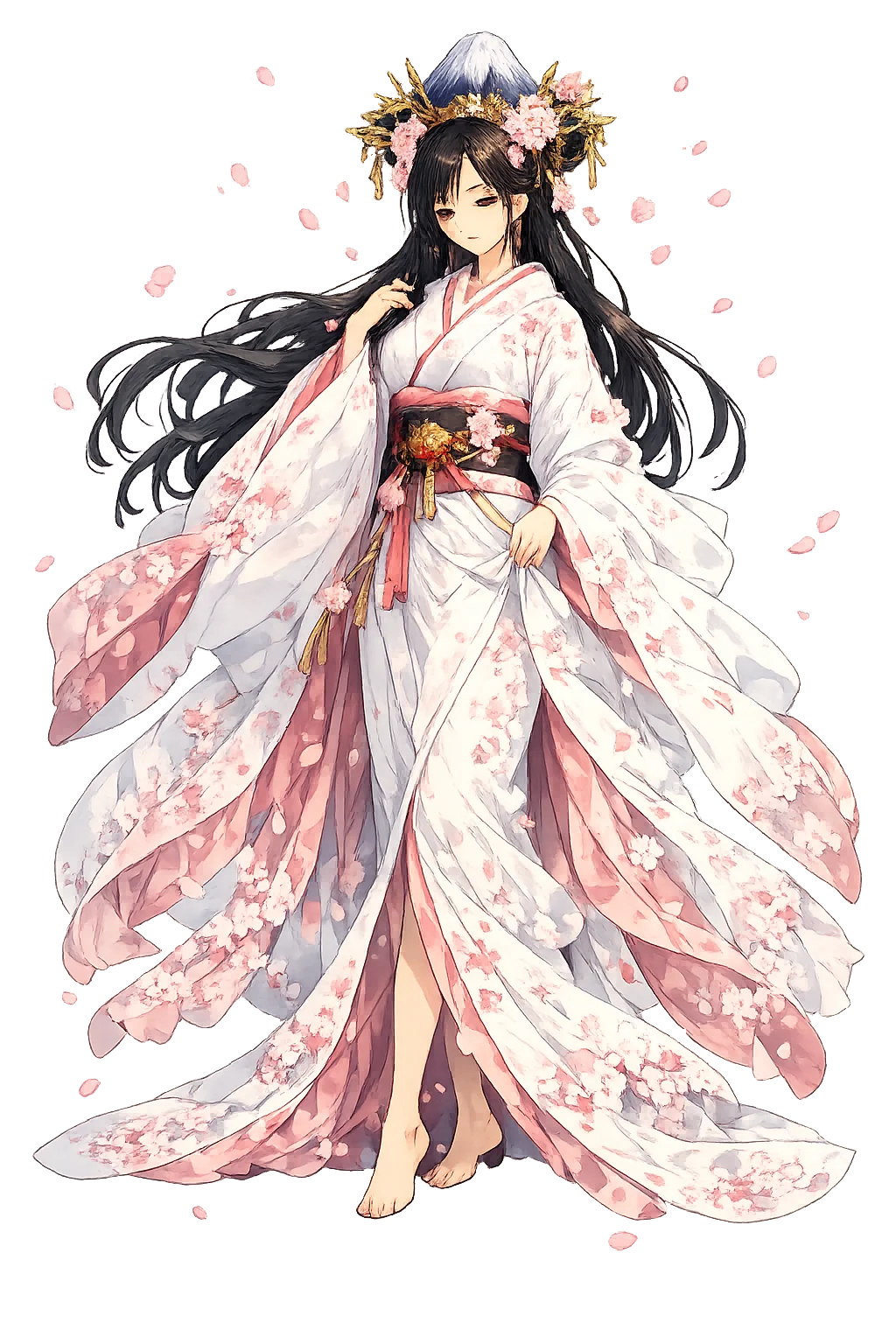
How Honshū got its accent back
The ASCII form honshu is missing something. Honshū restores the marks the source language used to distinguish this name from a thousand others — and those marks change how the name is read, pronounced, and understood. This post explains, with the full scholarly record behind it, what each restored mark preserves: the Japanese characters evidence, the reconstructed sound, the myths the name carries, and the classification logic that separates Tier 1 restorations from Tier 2. By the end, the marks in Honshū will look less like ornaments and more like what they are — recovered evidence, pinned back in its proper place.
At a Glance
- Restored name: Honshū
- ASCII form: honshu
- Meaning: "'Main island' (本州)"
- Domain of influence: Center, Mainland, Heart
- Pantheon: Japanese
- Classification: Tier 2
- Live domain: honshū.com
Overview
Honshū (honshu) — The Heart of the Islands — belongs to the Japanese tradition, where it is catalogued under the domain "Center, Mainland, Heart". The name means "'Main island' (本州)".
Honshū is the island that became a civilization: largest of the Japanese archipelago, home of every historic capital from Nara to Kyōto to Edo-Tōkyō, and the ground on which the Jōmon, the Yayoi, and the Yamato state built the longest continuous imperial tradition on earth.
PuniCodex restores the name as Honshū and serves its temple at honshū.com. The original preserves one prosodic feature — stress or vowel length — rather than both, which places the name in Tier 2. The plain ASCII form honshu survives as a modern convenience imposed by the early domain-name system; the restoration, not the fallback, is the form the project defends as philologically complete.
The Name
No indigenous written attestation survives for this name; Honshū is a scholarly transliteration of the reconstructed spoken form. Etymologically the name means "'Main island' (本州)".
The ASCII form honshu survives only because the early domain-name system could not carry diacritics; it is a technological compromise, not an ancient spelling. The Unicode restoration Honshū recovers the vowel length of the original directly in the address bar. The original preserves one prosodic feature — stress or vowel length — rather than both, which places the name in Tier 2.
The letter-by-letter transformation runs:
- h → H — Same letter
- o → o — Same letter
- n → n — Same letter
- s → s — Same letter
- h → h — Same letter
- u → ū — Macron marks the long vowel
The project holds the domain honshū.com (xn--honsh-pfb.com) as the canonical home of this name.
The Original Script
The original script for this japanese name has not yet been added to PUNICODEX. The form shown is a scholarly transliteration.
The form Honshū is therefore a scholarly transliteration rather than an attested ancient spelling; it encodes the reconstructed sound of the name for modern use, and no mark in it is decorative.
Written 本州: hon (root, main, origin) plus shū (province). The Kojiki's mythic name for the island is Ōyashima, "the great eight islands" — the archipelago's whole body, of which Honshū is the spine.
Pronunciation
The reconstructed pronunciation of the name is /hon.ɕuː/ — Japanese (Hepburn).
For the modern speaker, the closest approximation is: HON-shoo, with a long final ū.
Kindred and historical forms of the name:
- Japanese — 本州
- Mythic name — Ōyashima
- Owned form — Honshū
Honshū 本州 — "Main Province" — closes with the long ū of shū, preserved in the macron. The name is descriptive geography elevated to a proper name: the largest of Japan's islands, holding Tokyo, Kyōto, Ōsaka, and some three-quarters of the nation. Both syllables carry long vowels in kana (ほんしゅう); the macron on the final ū marks the doubled u.
Mythology
Honshū's mythology is the national charter itself: the Kojiki's island-birth, the sun goddess's gift of the land, and the descent of her grandson to rule it.
The Islands from the Spear (The Birth)
The Kojiki opens on the heavenly bridge: Izanagi and Izanami stir the ocean with the jewelled spear, and from the brine dripping from its point the first island coagulates. Descending, they wed and give birth to the islands of Japan — the "great eight islands" culminating in Ōyashima — and then to the kami of wind, sea, mountain, and tree. The archipelago is not created but born: the land is kin.
Amaterasu's Realm (The Sun)
When the sun goddess Amaterasu withdrew into the Heavenly Rock-Cave — outraged by her brother Susanoo's rampage — the world went dark until the gods' comic dance lured her out. Her mirror, hung outside the cave, caught her own light back to her; that mirror rests at Ise on Honshū's Kii coast, and her shrine there has been ritually rebuilt every twenty years for thirteen centuries: the island's heartwood, renewed.
Ninigi and the Rice Land (The Descent)
Amaterasu sent her grandson Ninigi down from heaven to rule the "Land of Fair Rice-ears of the Fertile Reed-plain" — the Kojiki's name for Honshū's heartland — bearing the three regalia. His great-grandson Jimmu conquered eastward to Yamato and became the first emperor: the mythic bridge from island-birth to imperial genealogy, anchored to real ground in Nara's basin.
Symbols & Iconography
The iconography associated with Honshū concentrates in a small set of recurring attributes, each a compressed statement about the name:
- The three regalia — Mirror, sword, and jewel — enshrined on Honshū at Ise, Atsuta, and the palace
- The rice paddy — The Yayoi inheritance: wet-rice civilization as the island's second foundation
- The cedar avenue — The planted forests of the pilgrim roads and shrine precincts
Archaeology & Evidence
Sannai-Maruyama near Aomori preserves a Jōmon city of 5,500 years ago — great cedar pillars, longhouses, and chestnut stores that rewrote the era's reputation from "primitive" to prosperous. The Yayoi's moated villages and the keyhole-shaped kofun tombs (Daisenryō in Ōsaka is among the largest tombs on earth by area) trace the state's rise. Nara's Tōdai-ji holds the world's largest bronze Buddha in the world's largest wooden building; Ise's shikinen sengū — the twenty-year rebuilding — is living archaeology, a Bronze Age rite performed on schedule into the present.
Realm & Domain
Honshū is the island that became a civilization: largest of the Japanese archipelago, home of every historic capital from Nara to Kyōto to Edo-Tōkyō, and the ground on which the Jōmon, the Yayoi, and the Yamato state built the longest continuous imperial tradition on earth.
Fuji
The sacred cone at the island's heart — climbed, painted, and worshipped for a thousand years.
The Capitals
Nara, Kyōto, Kamakura, Edo: every seat of Japanese power stands on this one island.
The Inland Sea
The Seto Naikai — the sheltered water-road that bound the heartland together.
The Kinai
The "home provinces" around the Nara basin: the kernel from which the state grew.
Across Cultures
The island is the great syncretist of Asia: Buddhism arriving from Korea in the 6th century was fused with kami-worship into shinbutsu-shūgō — the dual-identity system that ran Japanese religion for a millennium; Zen and the tea culture of Kyōto fused with warrior aesthetics; and the Meiji restoration engineered State Shinto on top of it all. Honshū's mountains hold the shugendō tradition — Yamabushi ascetics practicing the oldest fusion of all: kami, buddha, and mountain as one path.
Within the Japanese tradition, closely related names in the corpus include [[fujin|Fūjin]], [[hokkaido|Hokkaidō]], [[jizo|Jizō]], [[kobe|Kōbe]], [[kyoto|Kyōto]], and [[kyushu|Kyūshū]].
Cultural Legacy
Honshū carries roughly 104 million people — the largest island population on earth — and its corridor from Tōkyō to Ōsaka is the most studied urban megalopolis in geography. Its cultural exports need no list: the world's first novel (The Tale of Genji) was written here, Zen gardens and ukiyo-e and kabuki were born here, and the shinkansen that shrank the island in 1964 taught the world high-speed rail.
The Scholarly Record
The account of Honshū given in this edition rests on the witnesses and reference works listed below. Lexica and etymological dictionaries secure the form and meaning of the name; the literary and religious texts supply the narrative evidence.
- Kojiki (Records of Ancient Matters), Translated by Basil Hall Chamberlain, 712. Full text
- Nihon Shoki (Chronicles of Japan), Translated by W. G. Aston (excerpts), 720. Full text
- Shinto, Kojiki, Nihon Shoki, shrine rituals, and folk practice, various.
- Kokugo dictionaries (Nihon Kokugo Daijiten / Kōjien / Daijisen), Shōgakukan / Sanseidō, various.
- Japanese folklore, Kojiki, Nihon Shoki, and folk tale collections, various.
- Cambridge Ancient History, Multiple volumes, 1970. Full text
A Meditation
Honshū is the island that kept everything: the oldest pottery beside the fastest trains, the goddess's mirror beside the parliament. Its lesson is continuity as craft — the shrine rebuilt every twenty years so that it never ages and never changes. It asks the heartland's question: what in your tradition is worth rebuilding, exactly as it was, forever?
The twenty-year rebuilding of Ise is the island's deepest answer to modernity: continuity is not preservation but repetition — the shrine is never old and never new, the cypress always fresh, the craft always taught. Honshū holds its megacities and its mirror with the same hands, and its lesson to every anxious age is the carpenter's: what you rebuild on schedule, you never have to save.
And the island keeps answering in both registers at once: the shinkansen bows to the mountain as it passes; the morning news follows the shrine calendar; the world's largest city ends, an hour out, in cedar valleys where the kami-names predate the state. Honshū's genius was never to choose between the shrine and the station — it scheduled them. The heartland's final lesson is that depth and scale are not enemies: an island can hold a hundred million lives and still keep, at Ise, an empty plot waiting for the next rebuilding, exactly as it was.
Stand at Ise on a rebuilding year: two shrines, one old, one new, standing side by side for a season — the island's whole philosophy visible at a glance. The past is not kept by freezing it but by making it again, carefully, on schedule, forever.
The main island does not boast; it simply holds — the capitals, the shrines, the mountains, and the memory — the spine on which everything else hangs.
The Unicode Restoration
Honshū is classified as Tier 2: the original preserves at least one philological feature that ASCII cannot encode. The ASCII fallback honshu still resolves everywhere, but it is the restored form that carries the name's full information. Across the 6 characters of the name, the restoration adjusts 1: 1 mark of length (ū). That is the whole thesis of this temple: the marks are the message.
Character by Character
The journey from honshu to Honshū, one character at a time:
- h → H — Same letter
- o → o — Same letter
- n → n — Same letter
- s → s — Same letter
- h → h — Same letter
- u → ū — Macron marks the long vowel
The Domain Name
The restored name is live as a working domain: honshū.com, which the DNS carries in punycode form as xn--honsh-pfb.com — an ASCII-compatible encoding that lets a non-ASCII name travel the global network without breaking older infrastructure. The visitor sees Honshū; the machines see the encoding. That duality is the engineering compromise on which the entire restoration rests, and it is why a name written the way its own tradition wrote it in Japanese characters can now be typed into any browser on earth.
The Japanese Pantheon
Honshū is one of 45 entries the PuniCodex lexicon catalogues under the Japanese pantheon. The Pantheon page gathers the tradition's major figures in one place, and the Lexicon lets you filter all 915 restorations by tradition, tier, or script — the fastest way to see where this name sits among its kin.
Frequently Asked Questions
What does Honshū mean? The traditional gloss is "'Main island' (本州)."
Which tradition does Honshū belong to? Honshū is catalogued in the Japanese pantheon of the PuniCodex lexicon.
Why is Honshū classified as Tier 2? Because the original preserves at least one philological feature that ASCII cannot encode — and the marks in the restored spelling preserve exactly that evidence.
Is Honshū a working domain? Yes — honshū.com resolves today and routes to this temple.
What is the punycode for honshū.com? The DNS encoding is xn--honsh-pfb.com; browsers perform the translation automatically, so visitors only ever see the restored name.
Typing Honshū
You do not need a special keyboard to use this restoration. The PuniCodex Type Tool converts the ASCII form honshu into Honshū as you type, and the browser extension offers the same conversion inside any text field. Copy the restored form, paste it into the address bar, and the DNS does the rest.
Sister Temples
Other temples in the Japanese pantheon include Fūjin, Goshin, and Hachiman — each with its own restoration story, its own scholarly record, and its own place in the lexicon.
Why This Restoration Matters
The marks in Honshū were never lost; they were only waiting for a carrier that could hold them. Now that the carrier exists, the burden flips: every use of honshu is a choice to leave evidence on the table. The PuniCodex temple keeps the restored form in circulation — as a domain, a dataset entry, and a scholarly argument — so that the choice to use it stays easy. Accent by accent, macron by macron, that is how the original names come back: not with a single grand gesture, but with a spelling that finally works everywhere.
Explore Further
This post is one doorway into the temple. The home page carries the full character breakdown and the ambient canvas; the lore page tells the myths in long form; the Scholarly Edition preserves the sources, pronunciation data, and revision history; and the patron wall supports the restoration directly. For the wider map, browse the Lexicon, explore the Pantheon, or return to the PuniCodex blog.
Related Names
Sources
The full scholarly apparatus — every citation, revision, and review — lives in the Scholarly Edition. Key references for this post:
- Nihon Shoki (Chronicles of Japan), Translated by W. G. Aston (excerpts), 720.
- Kojiki (Records of Ancient Matters), Translated by Basil Hall Chamberlain, 712.
- Cambridge Ancient History, Multiple volumes, 1970.
- Kokugo dictionaries (Nihon Kokugo Daijiten / Kōjien / Daijisen), Shōgakukan / Sanseidō, various.
- Shinto, Kojiki, Nihon Shoki, shrine rituals, and folk practice, various.
- Japanese folklore, Kojiki, Nihon Shoki, and folk tale collections, various.
- Kojiki (island-birth); Nihon Shoki; the Man'yōshū toponyms.
- Lexicon authorities for this entry: Nihon Shoki, Kokugo dictionaries.