
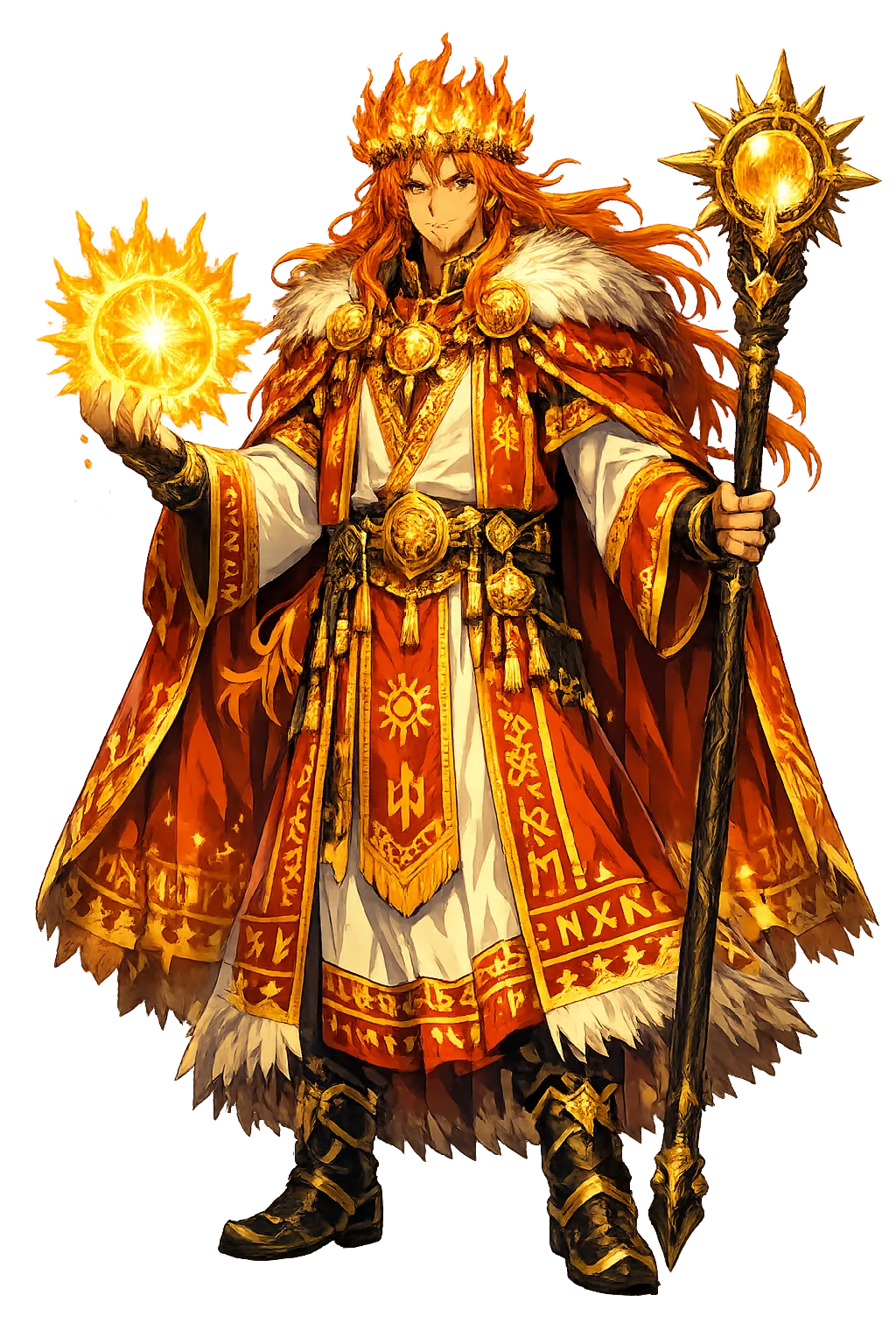
Why Dažbog is spelled that way — and what it costs to get it right
There is a version of this name the early internet had to settle for: dazhbog. This is the file on how Dažbog replaced it.
Dažbog is known almost entirely from external, often hostile, sources. The Slavs left no extensive native mythology, so his story must be reconstructed from the fragments preserved by Christian chroniclers, folk invocations, and comparative Indo-European study.
At a Glance
- Restored name: Dažbog
- ASCII form: dazhbog
- Meaning: "Giving god"
- Domain of influence: Sun, Wealth, Giving
- Pantheon: Slavic
- Classification: Tier 1
- Original script: Дажбог
- Series: The Restoration Files, No. 63 of 271
The Name Before the Marks
Spoken, the name runs `/ˈdaʒ.boɡ/` — 'DAHZH-bog' — crisp 'dah', then the 'zh' sound of 'measure', and end with 'bog' as in 'god' (which is what the word means).
The Temple That Stands Now
The restored name is not a plaque; it is an address. The temple of Dažbog lives at /sites/dazhbog/, with its mythology in the lore halls, its peer-reviewed record in the Scholarly Edition, and its place in the pattern atlas on the patterns floor.
What survives here cannot be shown in ASCII: a feature of the original that the fallback alphabet flattens. That is the Tier-1 test, and this name passes it without argument.
Where the Name Stood First
No archaeological find names Dažbog directly. His attestation depends on the written sources, especially the Primary Chronicle, and on the survival of his name in South Slavic folklore. Solar imagery in Slavic folk art, including wheel-shaped amulets and spring-sun rituals, may indirectly reflect the cult of a solar deity, but none can be securely linked to Dažbog. The destruction of pagan idols ordered by Vladimir in 988 and the Christianization of Slavic religion mean that material evidence for major gods is sparse and ambiguous. The temple on the web is the newest of these addresses — the first one that fits in a pocket.
The Archetype at Work
The pattern atlas seats this temple in 5 industries, each match argued and weighted: Solar & Renewable Energy (the Slavic sun, son of the smith-god Svarog; his name means “giving god” — the Kievan pantheon’s daylight itself.); Agriculture, Food & Harvest (the sheaf the sun ripens; the harvest is his generosity made grain.); Faith & Spiritual Organizations (dajbog still invoked across the South Slavic world; Rodnovery honors him as solar patron.). The Resonance File reads those seats through the myths themselves.
The File Continues
The temple's founding dispatch tells the name's story; its Resonance File reads the myths into the industries; the blog index holds the whole archive.
Continue the series — previous file: Dāwîḏ (read it here) · next file: Dêlos (read it here).
The Restoration Files are written from the same canonical record as the temples themselves: the lexicon, the lore catalog, the pattern atlas, and the cited scholarly sources. If a file ever disagrees with its temple, the temple is right — tell us, and the file will be corrected.