PuniCodex

Extended Lore

Дажбог Dažbog

Etymology · Phonology · Orthography · Cultural Legacy · Primary Sources

Tier 2 Dažbog.com
Dažbog — Sun, Wealth, Giving
01

Quick Facts

Essential information about Dažbog, Sun, Wealth, Giving

Original ScriptДажбог
Unicode RestorationDažbog
Reconstructed Pronunciation/ˈdaʒ.boɡ/
PantheonSlavic
DomainSun, Wealth, Giving
MeaningGiving god
ClassificationTier 2
Primary DomainDažbog.com
Sacred SymbolsSun wheel or disk, Wheat or sheaf, Gold and amber, Horse or chariot
02

Etymology & Word Family

From original script to Unicode restoration

Original Script Дажбог Dažbog — "Giving god"
Unicode Restoration Dažbog Restored stress, length, and script
Modern ASCII dazhbog Plain-ASCII fallback

Dažbog is Tier 2: the caron on ž preserves the distinctive Common Slavic fricative, but the name carries no stress accent or length mark. The h in the lexicon's ASCII form is silent, reflecting an older East Slavic spelling convention (Daždbog / Dadzbog) that was later simplified. We do not invent an etymology beyond the attested compound 'giving god'.

03

Unicode Character Breakdown

Character-by-character philological analysis

CharacterUnicodeNameBlockPhonetic Role
DU+0044Latin Capital Letter DBasic LatinSame
aU+0061Latin Small Letter ABasic LatinSame
žU+017ELatin Small Letter Z with CaronLatin Extended-AZ with caron
N/ADropped characterSlavic orthographyNot written
bU+0062Latin Small Letter BBasic LatinSame
oU+006FLatin Small Letter OBasic LatinSame
gU+0067Latin Small Letter GBasic LatinSame

The Tier 2 classification reflects which ancient features stress, length, or script are preserved in this restoration.

04

Cultural Significance

From ancient cult to modern Unicode

Ancient Domain

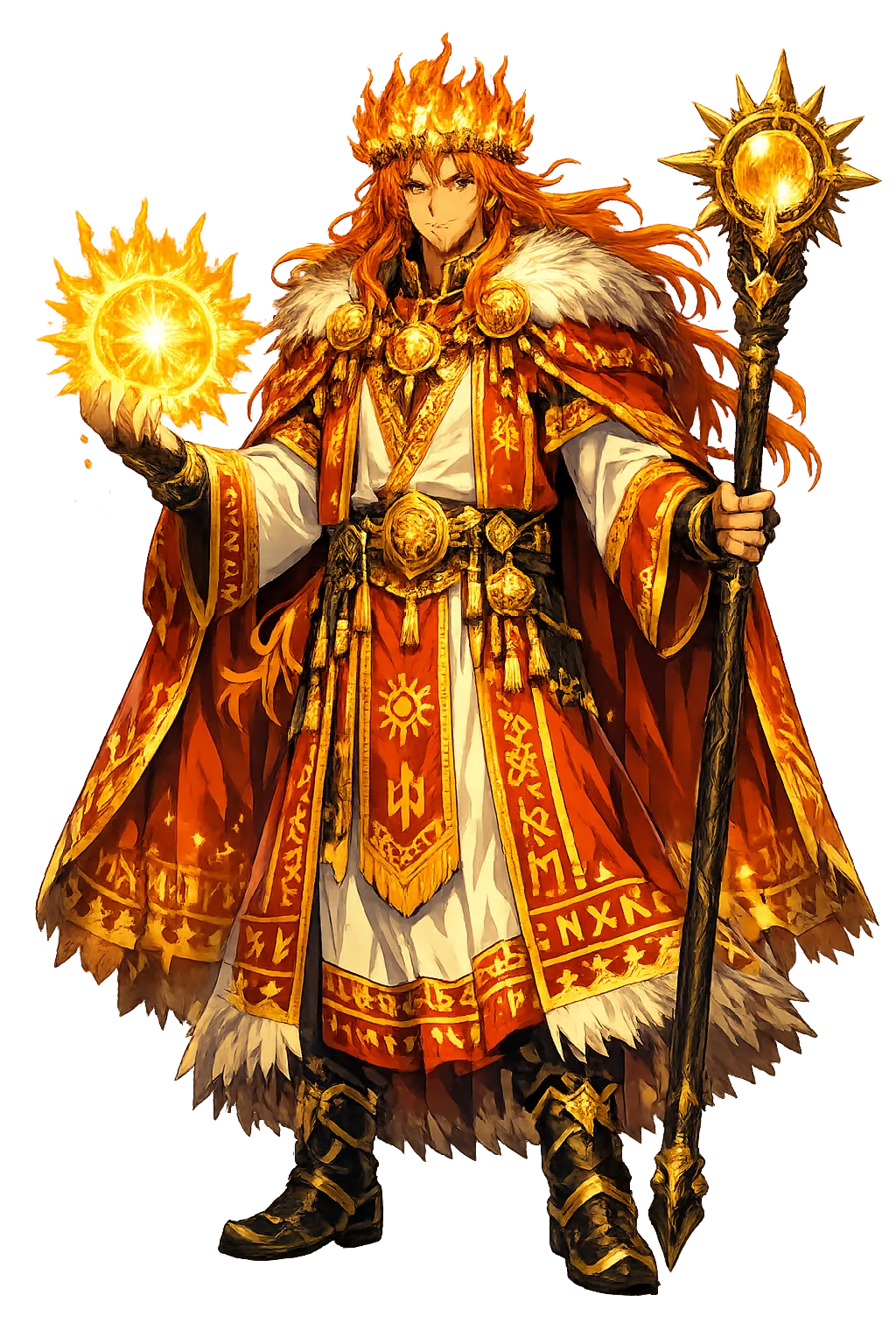
Dažbog is the Slavic sun god, son of the smith-god Svarog, and a giver of wealth and agricultural bounty. His name means 'giving god,' and in the medieval East Slavic sources he is honored alongside Perun, Svarog, and other members of the Kievan pantheon. Although the Christian chroniclers dismissed him as a demon, folk memory preserved him in blessings, oaths, and the figure of Dabog.

Dažbog in Later Traditions

Christian chroniclers explicitly equated Dažbog with the Greek sun god Helios, reflecting both his solar identification and the Byzantine interpretatio Graeca favored in Kievan Rus'. In South Slavic folk religion, Dabog/Dajbog blends with the Christian God while retaining the old 'giving' epithet. Comparisons have also been made to the Vedic Savitar and the Roman Sol Invictus, both solar deities associated with bestowal. The Iranian Mithra has been proposed as a distant cousin, though the evidence is speculative. Dažbog illustrates a common pattern: a major pagan god is first demonized, then absorbed into popular Christian speech.

Modern Legacy

Dažbog survives most clearly in South Slavic invocations of Dajbog and in place-names and personal names across Slavic-speaking regions. Modern Slavic Rodnovery (Native Faith) movements honor him as a solar and prosperity deity. In linguistics, his name is a textbook example of the Common Slavic compound *dažь bogъ. For scholars of medieval Slavic religion, Dažbog is a crucial but frustratingly elusive figure: important enough to be named by chroniclers, yet absent from the rich narrative cycles that preserve Norse or Greek mythology.

Unicode Restoration as Cultural Act

Restoring Dažbog in a domain name is more than orthographic accuracy. It is a statement that the internet should recognize the full range of human writing — not only the ASCII keyboard.

05

Frequently Asked Questions

Common questions about Dažbog, Sun, Wealth, Giving, and Unicode restoration

01How do you pronounce Dažbog?

In reconstructed pronunciation, Dažbog is /ˈdaʒ.boɡ/ — approximately 'DAHZH-bog' — crisp 'dah', then the 'zh' sound of 'measure', and end with 'bog' as in 'god' (which is what the word means)..

02What does Dažbog mean?

Dažbog means Giving god in the slavic tradition.

03What are the symbols of Dažbog?

Dažbog is associated with Sun wheel or disk (The solar body with which Dažbog was identified), Wheat or sheaf (The harvest produced by the sun's warmth and the god's generosity), Gold and amber (Treasures associated with sunlight and divine wealth), Horse or chariot (The solar vehicle common to Indo-European sun-god imagery).

04Why restore Dažbog in Unicode?

Plain ASCII dazhbog strips the stress, length, and script that make the name specific. Unicode restoration returns the name to its original written dignity.

05What is the most important myth about Dažbog?

The Povest' vremennykh let ('Tale of Bygone Years,' c. 1113) records that after Prince Vladimir's conversion, the idols of Perun, Khors, Dazhbog, Stribog, Simargl, and Mokosh were thrown into the Dnieper. Dažbog is listed as the son of Svarog. The chroniclers' contempt preserves the fact that he was once a major deity of the East Slavic pantheon.

06

Scholarly Sources

The philological foundations of this restoration

Every claim on this page is grounded in established scholarship. The orthographic restorations follow disciplinary convention. The etymological chain follows the best available reference works. This is not invention — it is resurrection through scholarship.

Lexicography & Philology

  • Miklosich

Primary Texts

  • The Primary Chronicle (Povest’ vremennykh let); the Hypatian Codex; East Slavic chronicle tradition and South Slavic folk invocations.

Archaeology & Art History

  • Material evidence — iconography, inscriptions, and temple archaeology — for Dažbog and related cults.
  • No archaeological find names Dažbog directly. His attestation depends on the written sources, especially the Primary Chronicle, and on the survival of his name in South Slavic folklore. Solar imagery in Slavic folk art, including wheel-shaped amulets and spring-sun rituals, may indirectly reflect the cult of a solar deity, but none can be securely linked to Dažbog. The destruction of pagan idols ordered by Vladimir in 988 and the Christianization of Slavic religion mean that material evidence for major gods is sparse and ambiguous.

Religious Studies

  • Primary Chronicle / Povest' vremennykh let (Tale of Bygone Years), Laurentian and Hypatian recensions
  • Miklosich, Franz, Etymologisches Wörterbuch der slavischen Sprachen
  • Vasmer, Max, Russisches etymologisches Wörterbuch
  • Helmold of Bosau, Chronica Slavorum (12th-century account of Slavic religion)
  • Katicic, Radoslav, Illyrian iconography and Slavic mythology
  • Zaroff, Roman, 'Organized Pagan Cult in Kievan Rus''
  • Ivanov, Vyacheslav, and Vladimir Toporov, Studies in Slavic mythology
Return

The Surface Awaits

You have traced the name from its earliest attestation to its Unicode restoration. Now return to the myth. The story is where the name lives.

Back to Lore
Dažbog mascot