Unicode restoration and ASCII comparison
Дажбог
The name in its original Slavic form. Dažbog (Дажбог) is attested in the source tradition — “Giving god”. Its original diacritics and script distinctions carry the full phonetic and orthographic weight of the source tradition.
dazhbog
Reduced to plain dazhbog, the name loses everything that made it specific: original diacritics and script distinctions. What remains is an ASCII string that machines can parse but that no longer speaks with its original voice.
Dažbog
The Unicode restoration recovers what ASCII flattened. Dažbog restores original diacritics and script distinctions, returning the name to its original written dignity. The domain encodes to Punycode, but the browser displays the truth.
Dažbog.com → xn--dabog-vib.com
The non-ASCII characters in Dažbog are encoded while the ASCII remains visible. To the DNS, it is Punycode. To humanity, it is Dažbog.
How Dažbog travels from ancient script to the modern URL
Old East Slavic daždĭ 'gift, rain' + bogŭ 'god'; 'the giving god'.
Sun, wealth, giving; a solar deity whose gifts include rain and prosperity.
The Unicode restoration Dažbog uses the caron ž; the Cyrillic form is not supported in .com.
How Dažbog was spoken
Sun, Wealth, and Fertility in Slavic Tradition
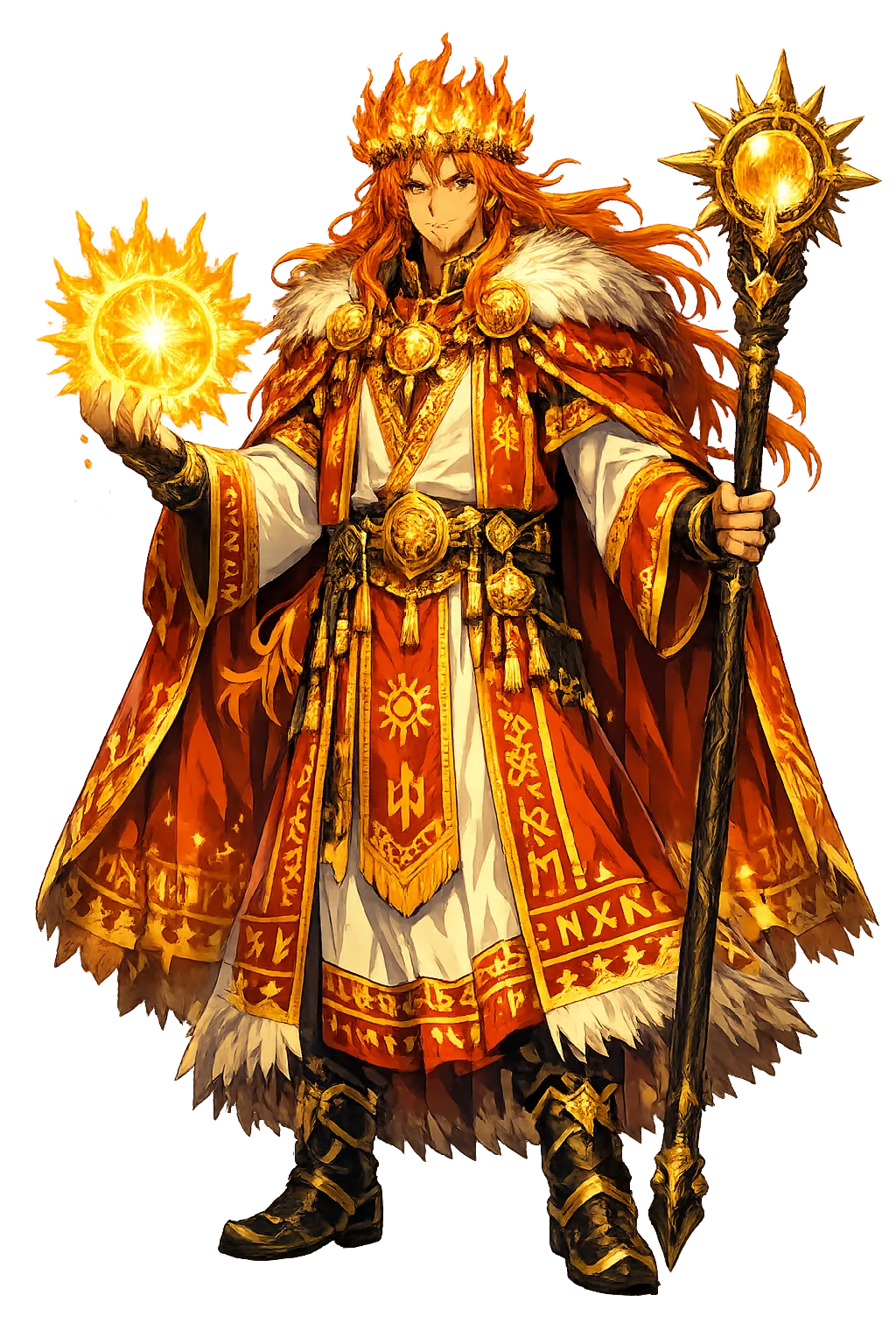
Dažbog is the Slavic sun god, son of the smith-god Svarog, and a giver of wealth and agricultural bounty. His name means 'giving god,' and in the medieval East Slavic sources he is honored alongside Perun, Svarog, and other members of the Kievan pantheon. Although the Christian chroniclers dismissed him as a demon, folk memory preserved him in blessings, oaths, and the figure of Dabog.
He is identified with the sun and its life-giving warmth; Christian chroniclers equated him with Helios.
The Primary Chronicle lists him as son of the heavenly smith Svarog.
His name and cult link him to generosity, harvest, and prosperity.
Survives in South Slavic oral tradition as Dabog or Dajbog, invoked in blessings.
Stories of Dažbog
Dažbog is known almost entirely from external, often hostile, sources. The Slavs left no extensive native mythology, so his story must be reconstructed from the fragments preserved by Christian chroniclers, folk invocations, and comparative Indo-European study.
The Povest' vremennykh let ('Tale of Bygone Years,' c. 1113) records that after Prince Vladimir's conversion, the idols of Perun, Khors, Dazhbog, Stribog, Simargl, and Mokosh were thrown into the Dnieper. Dažbog is listed as the son of Svarog. The chroniclers' contempt preserves the fact that he was once a major deity of the East Slavic pantheon.
In Serbian and broader South Slavic folklore, Dabog or Dajbog appears in blessings and oaths: 'Dajbog da...' ('May God give that...'). The name has been Christianized in form but preserves the old compound 'giving god.' This survival suggests that Dažbog was once invoked wherever people asked for prosperity, health, or good fortune.
Comparative Indo-European mythology places Dažbog in the company of solar deities who ride chariots across the sky and bestow wealth and fertility. The connection to Svarog (heaven/smith) and the sun-identification made by chroniclers align him with this pattern, though direct Slavic narratives have not survived.
Dažbog is the god of giving made visible in sunlight. Every harvest, every warm morning, every coin earned is a gift that his name once sanctified. The chroniclers called him a demon and threw his idol in the river, but the people kept saying his name whenever they hoped for something good.
Enter Extended Lore