
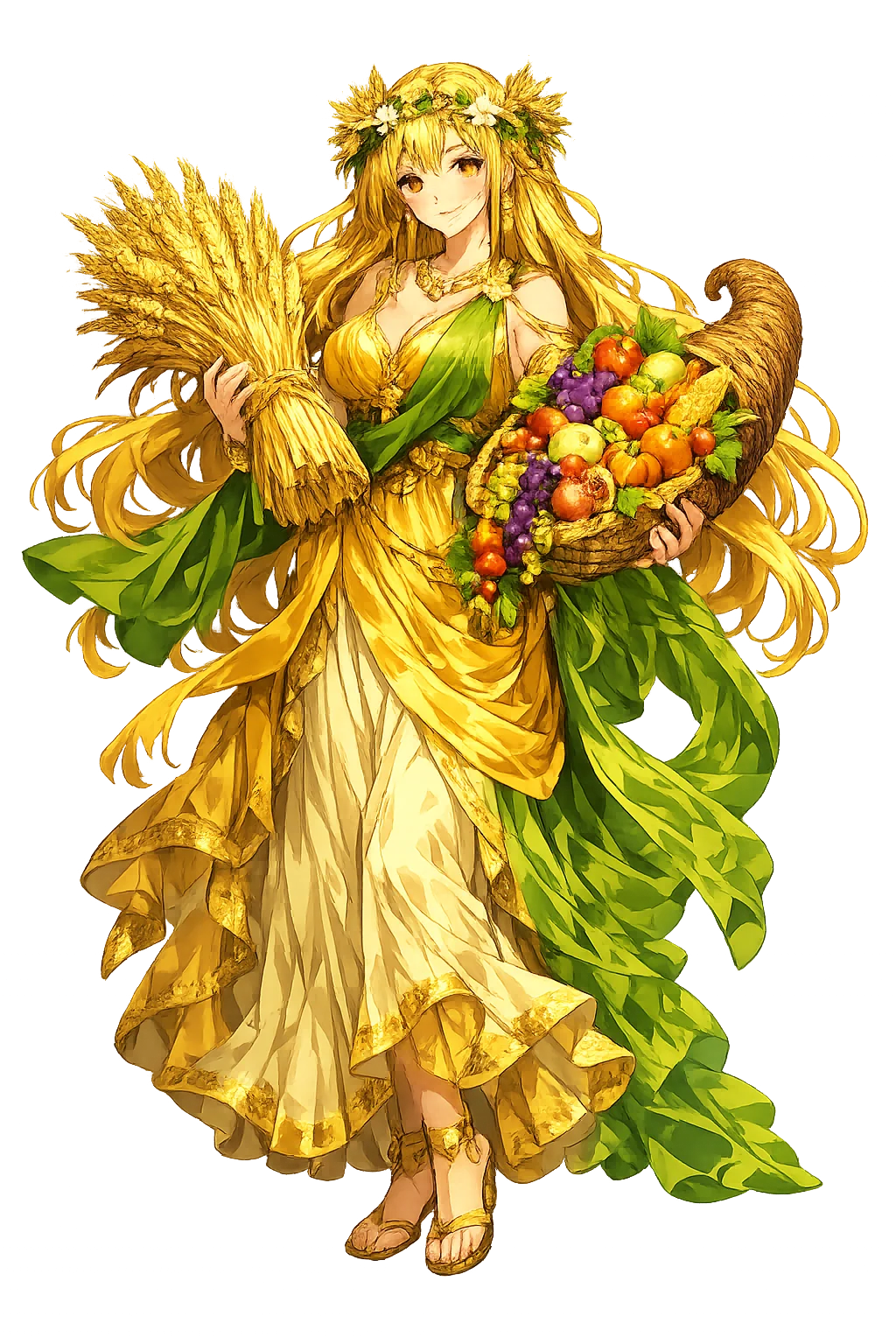
Where Cerēs works now: the myths behind the markets
If the stories are true in the way that matters, they should show up in the world without being invoked. Cerēs shows up constantly.
Cerēs' myths are Rome's double helix: the Greek mother-goddess woven into the Italian grain-god, until the field and the mystery were one.
The pattern atlas — which maps every flagship temple to the industries its archetype demonstrably resonates with, each match argued and open to challenge — seats this temple in 6 industries. This file reads those seats the way they were earned: through the myths.
At a Glance
- Temple: Cerēs
- Pantheon: Roman
- Domain of influence: Agriculture, Grain, Harvest
- Pattern seats: 6
- Sectors touched: Energy & Natural World · Commerce & Governance · Home & Lifestyle · Technology & Innovation
- Strongest seat: Agriculture, Food & Harvest
- Series: The Resonance Files, No. 55 of 271
The Myth at Work
The Teaching of the Furrow. Before Cerēs, the poets say, humanity ate acorns and called it food. She taught the cutting of the furrow, the keeping of seed, the harvest's measure — and with grain came surplus, and with surplus came law: Ovid and Cicero both note that Rome's oldest laws guarded the field and its boundaries, because the goddess who invented agriculture also, necessarily, invented property. — remember the shape of that act. You will see it again, wearing a logo.
The Torches of Cerēs. When Plūtō took Proserpina, Cerēs lit torches at Aetna's crater and searched the world for nine days, fasting and raging. Finding her daughter queen of the underworld, she refused the compromise until the earth starved with her; the settlement — Proserpina's year divided between the realms — is the myth that explains why the field sleeps and wakes. — remember the shape of that act. You will see it again, wearing a logo.
The Seats
Each of these is argued in the atlas with a weight and a why-line. What the atlas cannot fit in one line is the whole myth — so here is each seat with its story restored.
Agriculture, Food & Harvest
Farming, grain, food production, and agtech. (Sector: Energy & Natural World)
The why-line says it in one breath: The goddess of grain and growth whose name roots the word “cereal” — Rome’s oldest working deity of the field. That is not a resemblance; it is the same act, performed in a newer building.
Environmental & Climate Services
Climate science, ecology, and sustainability consulting. (Sector: Energy & Natural World)
The field and its seasons; agriculture as stewardship. — the atlas stops there, out of discipline. The myth keeps going: the function Cerēs performs in the stories is precisely the function this industry sells.
Finance, Wealth & Commerce
Banking, investment, and commercial enterprise. (Sector: Commerce & Governance)
Her statue crowns the Chicago Board of Trade; the grain market's own goddess. Swap the costume and the sentence is indistinguishable from the myth. That is what a resonance seat means.
Food & Hospitality
Restaurants, food service, and the table as an institution. (Sector: Home & Lifestyle)
The why-line says it in one breath: The Roman grain mother; the cereal on every menu. That is not a resemblance; it is the same act, performed in a newer building.
Legal, Justice & Compliance
Law, courts, and regulatory compliance. (Sector: Commerce & Governance)
Her Aventine temple held the plebeian archives; the sheaf that made law possible. Swap the costume and the sentence is indistinguishable from the myth. That is what a resonance seat means.
The temple holds 1 further seat beyond these — the full, argued list lives on its patterns floor.
Read the myth again after the seats and it stops sounding ancient: Cerēs' myths are Rome's double helix: the Greek mother-goddess woven into the Italian grain-god, until the field and the mystery were one. The age changed. The work did not.
The Method, Stated Plainly
None of this is numerology. A seat exists only where the match can be argued from the deity's documented domains and deeds — weighted, published, and falsifiable. The full derivation, the weights, and the challenge process are public on the methodology page. If a seat in this file reads wrong, the atlas itself tells you how to prove it — and the correction becomes part of the record.
For the Ones Who Work There
If you work in agriculture, food & harvest, environmental & climate services, or any trade this temple holds a seat in, this is the honest version of what a placement means: your industry beside the story it has been re-telling all along — on the temple floor itself, before an audience that came specifically to read it. The patron tier and the advertising terms describe the mechanics; the resonance above describes the fit. The story is the pitch; the seats are just where it already works.
The File Continues
This is one of 271 Resonance Files — the third dispatch from every flagship temple, where the myths meet the markets. The temple's founding dispatch tells the name's story; its Restoration File tells the spelling's; the blog index holds the whole archive.
Continue the series — previous: Kérberos (read it) · next: Cháos (read it).
The Resonance Files are argued from the same canonical record as the pattern atlas itself: the lexicon, the lore catalog, and the cited sources. Every seat can be challenged at the methodology page — and the challenge is the point.