
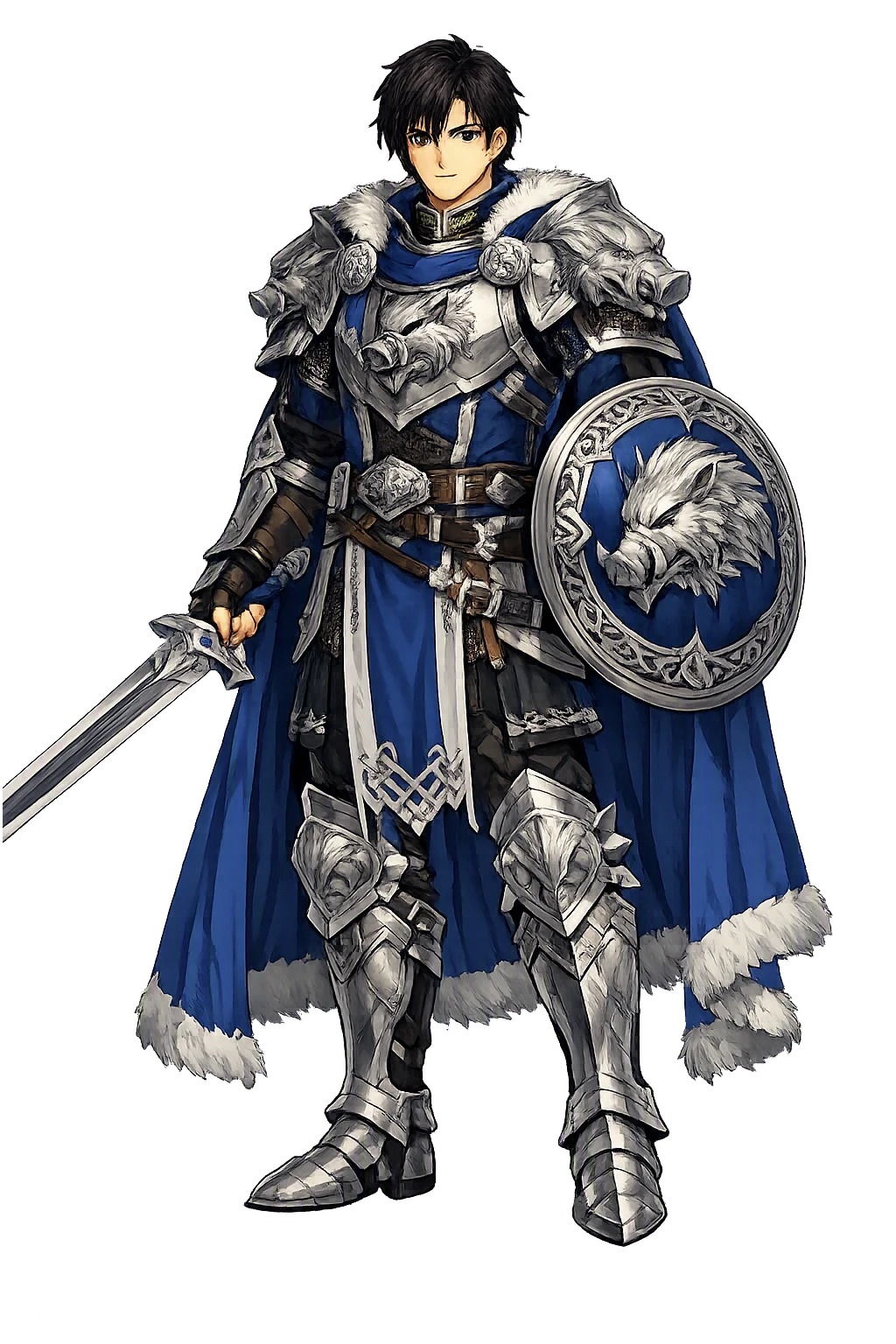
How Pryderi found its canonical form
The ASCII form pryderi is not missing anything that this name requires. Pryderi is the canonical spelling supported by the scholarly record and the tradition's scholarly conventions. This post explains what that form preserves, how it is pronounced, which narratives surround it, and why consistency matters. There are no recovered accents to celebrate; there is something more useful — a spelling whose history can actually be checked.
At a Glance
- Canonical name: Pryderi
- ASCII form: pryderi
- Meaning: "Care, anxiety"
- Domain of influence: Son of Pwyll, King
- Pantheon: Celtic
- Restoration: ASCII-equivalent form
Overview
Pryderi (pryderi) — Son of Pwyll, King · Care, anxiety — is the one figure who appears in all Four Branches of the Mabinogi: the son of Pwyll Pen Annwn and Rhiannon, stolen on the night of his birth, found outside Teyrnon Twrf Liant's stable wrapped in silk brocade, raised as Gwri Wallt Euryn, and named at his homecoming from the word of relief his mother spoke — her pryder, her care, lifted at last.
His life is the thread the cycle is strung on. In the First Branch, Pwyll Pendefig Dyfed, he is born, stolen, fostered, and restored; in the Second, Branwen ferch Llŷr, he is named first among the seven survivors of the Irish war who bear Brân's head home; in the Third, Manawydan fab Llŷr, he rules Dyfed, is emptied out of it by enchantment, and is caught fast to the golden bowl until Manawydan's patient bargaining frees him; in the Fourth, Math fab Mathonwy, Gwydion's illusory wealth cheats him of the swine of Annwn, and he dies in single combat at Y Felenrhyd, buried at Maen Tywynog above it.
PuniCodex restores the name as Pryderi — identical to the ASCII input, because Middle Welsh writes the name in plain Latin letters with no diacritic for the restoration to recover; the name is a plain restoration by the mechanical rule. The plain-ASCII pryderi.com is held by a third party outside the PuniCodex collection and is watched for release; no form of the name is currently owned, and this temple claims none.
The Name
The name is attested in Middle Welsh as Pryderi, Pryderi uab Pwyll, in the Four Branches of the Mabinogi. The First Branch supplies its own etymology, and it is one of the most explicit aetiological namings in medieval literature: when Teyrnon brings the lost boy home, Rhiannon says that if the news is true her pryder — her care, her anxiety — is lifted from her, and Pwyll declares that the child should take his name from the word his mother spoke when the news was brought to her. The Welsh common noun pryder, 'care, anxiety, worry', is a living word, and the lexicon's gloss 'Care, anxiety' follows the tale's own derivation.
Older scholarship also noted the name's resemblance to Prydain, 'Britain', and to the Pritan- names of the island's peoples, but no derivation beyond the tale's own commands consensus, and honest scholarship says so. His foster-name is part of the record: Teyrnon's household called the golden-haired foundling Gwri Wallt Euryn, 'Gwri of the Golden Hair', and the triads remember him as the swineherd of his foster-father Pendaran Dyfed.
The ASCII form is not a compromise here: Middle Welsh writes the name in plain Latin letters, and the normalized spelling is already Pryderi. There is no diacritic and no distinctive letter for the restoration to recover; only the capital distinguishes the restored form from the input; the restoration preserves nothing the ASCII spelling loses.
The letter-by-letter transformation runs:
- p → P — Same, capitalized
- r → r — Same
- y → y — Same
- d → d — Same
- e → e — Same
- r → r — Same
- i → i — Same
The project holds no domain for this name: pryderi.com is registered to a third party outside the PuniCodex collection and is watched for release. The temple is served at /pryderi/ and claims no domain it does not hold.
The Original Script
The name is preserved in Middle Welsh manuscripts in the Latin alphabet as Pryderi — Middle Welsh (Brythonic Celtic), attested in the White Book of Rhydderch (c. 1350) and the Red Book of Hergest (c. 1382–1410), recording material composed centuries earlier. The script is written left-to-right in the medieval Welsh bookhand.
The scholarly rendering proceeds step by step:
- Middle Welsh writes the name in plain Latin letters; no diacritic attaches to the name in any witness, and normalized Middle Welsh orthography and the ASCII spelling are identical.
- The letter y represents two Welsh values — the obscure [ə] of non-final syllables, as here in Pry-, and the close vowel of final syllables — but the orthography writes a single plain letter; nothing distinctive is lost in ASCII.
- The derivation from pryder, 'care, anxiety', is the First Branch's own aetiological naming, not a modern conjecture: Rhiannon's word of relief is the name's documented source.
- The canonical restoration Pryderi therefore changes nothing but the capital; the name stands in a plain restoration by the mechanical rule, and the plain-ASCII domain pryderi.com — held by a third party outside the PuniCodex collection and watched for release — is the philologically complete form.
Pronunciation
The pronunciation of the name in Modern Welsh is /prəˈdɛr.i/ — Modern Welsh; the Middle Welsh value is held to be substantially the same.
Phoneme by phoneme:
- Pr- — Voiceless bilabial stop [p] released directly into a trilled [r]: a clean initial cluster, as in English 'prince'
- -y- — The Welsh obscure vowel [ə], the 'clear y' of non-final syllables: a soft central 'uh', never the close [i] the letter has in final position
- -der- — Voiced [d], open-mid [ɛ], tapped [r], under stress: Welsh words are stressed on the penultimate syllable, so the weight of the name lands here
- -i — Short close [i], the unstressed final vowel
For the modern speaker, the closest approximation is: 'pruh-DEH-ree' — the y a soft 'uh', the stress on 'der', the Welsh penult.
Kindred and historical forms of the name:
- Middle Welsh — Pryderi uab Pwyll, son of Pwyll Pen Annwn and Rhiannon
- Foster-name — Gwri Wallt Euryn, 'Gwri of the Golden Hair'
- Welsh common noun — pryder, 'care, anxiety, worry', the word the First Branch names him from
- Comparative reflex — Mabon ap Modron and Gaulish Maponos, the divine-son figure-type he is read against; a parallel, not a cognate
Pryderi is a plain restoration by the mechanical rule: the Middle Welsh form is already plain ASCII, and the restoration preserves nothing the ASCII form loses. The name's information-richness is narrative, not orthographic: it carries the story of its own naming.
Mythology
Pryderi is the only character who appears in all Four Branches of the Mabinogi, and his life is the cycle's spine.
The May-Eve Vanishing (First Branch, Pwyll Pendefig Dyfed)
Born to Pwyll and Rhiannon after the nobles of Dyfed pressed for an heir, he is taken on the night of his birth while the six women set to watch all sleep; their false witness — hound's blood and bones — sends Rhiannon to her penance at the horse-block. The child falls into the strangest rescue in Welsh prose: Teyrnon Twrf Liant, a lord of Gwent Is Coed, loses a foal every May-eve; keeping watch, he strikes off the great clawed hand that reaches through the stable window for the newborn foal, and outside the door finds a baby wrapped in silk brocade. He and his wife rear the boy as Gwri Wallt Euryn, Gwri of the Golden Hair.
The Naming at Arberth (First Branch)
Gwri grows with uncanny speed and bears, year by year, the very likeness of Pwyll. When Teyrnon hears of Rhiannon's penance, he and his wife bring the boy to Arberth; Rhiannon says that if this is true her pryder is lifted from her, and Pwyll names the child from his mother's word. The penance ends; Teyrnon takes no reward; and Pryderi is fostered with Pendaran Dyfed until he comes of age and Pwyll gives him the realm.
One of the Seven (Second Branch, Branwen ferch Llŷr)
The Irish war fought for Branwen's sake destroys both hosts, and of the men of the Island of the Mighty only seven come home bearing Brân's head: the tale names Pryderi first, with Manawydan, Glifieu, Taliesin, Ynawg, Gruddieu, and Heilyn. With them he feasts seven years at Harlech, where the Birds of Rhiannon sing, and eighty years at Gwales in the Assembly of the Wondrous Head.
The Enchantment of Dyfed (Third Branch, Manawydan fab Llŷr)
Ruling Dyfed after Pwyll's death, Pryderi gives his mother to Manawydan and comes home to Arberth with Rhiannon, Manawydan, and his wife Cigfa. Thunder and mist fall, and Dyfed is emptied of every person, dwelling, and beast. After two years of hunting and three trades driven out of the towns of England, a shining white boar leads Pryderi and Manawydan to a fortress that was never there; against counsel Pryderi enters, grasps a golden bowl hanging by chains above a marble fountain, and is rooted and struck dumb; Rhiannon, going in after him, is caught the same way, and fort and prisoners vanish. Manawydan undoes it by patience — the wheat, the mice, the condemned mouse the bishop begs off — and names his price: the captives freed, the enchantment lifted, and no vengeance taken. The spell was Llwyd fab Cilcoed's vengeance for Gwawl fab Clud, the suitor Rhiannon refused; Pryderi comes home with a gate-hammer about his neck.
The Swine and the Fatal Combat (Fourth Branch, Math fab Mathonwy)
Among his treasures are the hobeu, the first swine in Wales — Arawn of Annwn's gift, which he had sworn neither to sell nor to give until the herd had doubled. Gwydion fab Dôn comes as a poet, is refused, and buys the herd with conjured stallions, greyhounds, and golden shields — apparitions gone by morning. Pryderi comes north with an army; at the peace-talks he demands single combat, for it was because of him the hosts had come; and at Y Felenrhyd Gwydion slays him 'by strength and valour, and by magic and enchantment'. They buried him at Maen Tywynog above Y Felenrhyd, and his grave, the Fourth Branch says, is there.
Symbols & Iconography
The iconography of Pryderi is narrative rather than cultic — medieval Welsh prose preserves no temple regalia — but the Four Branches fixed a small set of objects around him, each one a turn of his story:
- The silk brocade wrapping — What the foundling at Teyrnon's stable door was swaddled in: royal blood declaring itself where no witness could
- The clawed hand — The great claw reaching through the stable window for the newborn foal on May-eve: the unseen power that took the child as it took the foals
- The golden bowl on its chains — Hanging above the marble fountain in the fortress that was never there: grasp it, and hands stick, feet root, and speech dies — the bait at the heart of the enchantment
- The gate-hammer about his neck — What he wore when the spell released him, as Rhiannon wore the collars of asses: the humiliation of the Third Branch, borne home in silence
- The swine of Annwn — The hobeu, first pigs in Wales, Arawn's gift with a condition upon them: the treasure a poet's illusion could buy, and the war it purchased
- The grave at Maen Tywynog — Above Y Felenrhyd, where the single combat was fought: the one fixed point of a life lived under enchantment
Archaeology & Evidence
No cult site, votive deposit, or inscription of Pryderi is known; his attestation is entirely literary, and the early inscribed stones of Wales — Latin and ogham memorial stones of roughly the fifth to seventh centuries — record personal names in funerary formulae, not the heroes of story. His evidence is manuscript evidence. The Four Branches survive complete in the White Book of Rhydderch (Aberystwyth, National Library of Wales, Peniarth MSS 4–5, c. 1350) and the Red Book of Hergest (Oxford, Jesus College MS 111, c. 1382–1410), with earlier fragments in Peniarth 6; the tales' date of composition is argued rather than documented — Ifor Williams placed them in the later eleventh century, and current scholarship generally holds a range around 1060–1120.
The geography of his story is real: Arberth, the chief court of Dyfed, stands by modern Narberth in Pembrokeshire; Y Felenrhyd, where the fatal combat was fought, lies toward the border country of Gwynedd and Dyfed; and the Fourth Branch points to his grave at Maen Tywynog above it. The nearest epigraphic horizon is comparative, not his: the Gaulish Maponos of the Chamalières tablet and the northern British dedications to Apollo Maponus — the divine son whose figure-type the handbooks read him against.
Realm & Domain
Pryderi is catalogued under the domain 'Son of Pwyll, King' — a filial domain and a royal one, and the Four Branches test both halves of it.
The Son
His story begins as a theft: the heir of Dyfed taken on his birth-night, found at a stable door, and restored to his mother by a foster-father's honesty. The bond with Rhiannon is the axis of the First Branch — her penance lasts exactly as long as his absence, and his name is coined from its ending.
The King
He rules Dyfed after Pwyll, gives his mother to Manawydan in marriage, and holds a kingdom that enchantment can empty in a night. The Third Branch measures his kingship by what survives it: not force — his own grasping at the golden bowl is the blunder the tale records — but the patience and good faith of the company around him.
The Stricken Lord
Twice the Otherworld takes from him what force cannot recover: the emptied land and his own captivity in the Third Branch, and in the Fourth the swine of Annwn — a gift from Arawn he was bound not to sell — won from him by Gwydion's conjured gold. His demand for single combat, 'for it was because of me that the hosts came', is the Mabinogi's plainest statement of a lord answering for his quarrel.
Care Itself
The name is the domain: pryder, the care a kingdom and a mother both exact, lifted only by the truth walking home.
Across Cultures
Pryderi's great comparative frame is the Celtic divine son. The handbooks set him beside Mabon ap Modron — 'Son, son of Mother' — the youth of Culhwch ac Olwen taken from his mother when he was three nights old and sought until no living creature remembers his loss, and behind Mabon the Gaulish Maponos, the 'Divine Son' equated with Apollo in Romano-Celtic dedications. A child stolen at birth and restored, whose name carries his story: Mac Cana and Koch both register the figure-type, while insisting the names are not cognate and no identity is claimed.
The second frame is the stricken sovereignty Pryderi shares with the Otherworld-touched kings of the insular tradition: a ruler whose land a mist can empty, rescued not by his own strength — his grasp at the golden bowl is the Third Branch's recorded blunder — but by Manawydan's patience. Gruffydd built his reading of the First and Third Branches around this Pryderi complex, and later scholarship has kept the debate alive.
Within the corpus, closely related figures include Rhiannon (his mother, whose lifted care names him), Manawydan (his stepfather and rescuer), Arawn (the king of Annwn whose gift of swine shapes his end), and Gwydion (the enchanter who cheats him and finally slays him).
Cultural Legacy
Lady Charlotte Guest's translation of the Mabinogion (1838–49) carried Pryderi out of the Welsh manuscripts and into English, and the Victorian Celtic revival made the vanished child of the First Branch one of its set-pieces. Evangeline Walton's twentieth-century retellings of the Four Branches, completed in the Mabinogion tetralogy, kept his theft, naming, and death before modern readers.
Lloyd Alexander's Chronicles of Prydain (1964–68) built a five-novel world openly on the Mabinogi's matter — though Pryderi himself never appears under his own name — and carried the cycle's landscape to a vast young readership. In scholarship, his centrality is axiomatic: Ifor Williams's edition fixed the Welsh text, Gruffydd's Rhiannon (1953) built its argument around the Pryderi complex, and Mac Cana's study made the boy who spans all four branches the structural key to the cycle. In modern Druid and pagan practice he is honoured as the lost-and-found divine son; and the name stands in the handbooks as the standing example of the Mabinogi's own method — a person named, deliberately and explicitly, out of a single spoken word of grief relieved.
The Scholarly Record
The account of Pryderi given in this edition rests on the witnesses and reference works listed below. The Mabinogi in its modern editions and translations supplies the narrative; the Welsh dictionaries secure the name and its derivation from pryder; the triads and the comparative literature frame the divine-son debate.
- The Mabinogi, trans. Sioned Davies (Oxford: Oxford University Press, 2007) — all Four Branches.
- Williams, Ifor, ed., Pedeir Keinc y Mabinogi (Cardiff: University of Wales Press, 1930) — the standard Welsh text.
- The Mabinogion, trans. Lady Charlotte Guest, 3 vols. (London, 1838–49).
- Gruffydd, W. J., Rhiannon: An Inquiry into the Origins of the First and Third Branches of the Mabinogi (Cardiff: University of Wales Press, 1953).
- Mac Cana, Proinsias, The Mabinogi, 2nd ed. (Cardiff: University of Wales Press, 1992).
- Bromwich, Rachel, ed. and trans., Trioedd Ynys Prydein: The Triads of the Island of Britain, 4th ed. (Cardiff: University of Wales Press, 2014) — the Three Powerful Swineherds.
- Koch, John T., ed., Celtic Culture: A Historical Encyclopedia (Santa Barbara: ABC-CLIO, 2006), s.vv. Pryderi, Mabon, Maponos.
- MacKillop, James, Dictionary of Celtic Mythology (Oxford: Oxford University Press, 1998), s.vv. Pryderi, Teyrnon, Gwri Wallt Euryn.
- Geiriadur Prifysgol Cymru / A Dictionary of the Welsh Language (Cardiff: University of Wales Press), s.vv. Pryderi, pryder.
- Morris-Jones, John, A Welsh Grammar, Historical and Comparative (Oxford: Clarendon Press, 1913).
- Jackson, Kenneth H., Language and History in Early Britain (Edinburgh: Edinburgh University Press, 1953).
- Sims-Williams, Patrick, Irish Influence on Medieval Welsh Literature (Oxford: Oxford University Press, 2011).
A Meditation
Pryderi is named out of relief. His mother has carried a false charge for years — sitting by the horse-block, offering her back to strangers — and when the lost boy is set before her she does not say vengeance, or justice, or even joy: she says her care is lifted, and the court builds the child's name out of that word. Anxiety, made into a name and then, astonishingly, into a king.
The rest of his story keeps faith with the naming. His is the kingdom a mist can empty between one hour and the next; his is the hand that sticks to the golden bowl; his is the herd of otherworld pigs a poet's illusion can buy; his is the grave above Y Felenrhyd. Nothing in the Four Branches is safe, and Pryderi is the figure through whom the Mabinogi says so — the lord who loses everything except the thread of the tale, and who walks through all four branches carrying it. Care, the Welsh word means; and also what care is for: the watch kept, the debt counted, the mother who waited at the gate.
The Canonical Spelling
Pryderi is the canonical spelling used by this temple. The plain ASCII form pryderi contains the same letters, so there are no lost diacritics to recover and no special encoding transition to explain. What the temple preserves is the reviewed reference form: capitalization, conventional romanization, original evidence, and a stable place to inspect them. The value here is not added decoration; it is fidelity to the attested record.
Why This Record Matters
The letters in Pryderi were never lost, and no replacement marks are needed to make them whole. The burden is instead one of fidelity: every use should carry the same attested spelling and the history attached to it. The PuniCodex temple keeps that form in circulation — as a digital address, a dataset entry, and a scholarly argument — so consistency becomes the easy choice rather than an accident of citation.
Explore Further
This post is one doorway into the temple. The home page carries the full character breakdown and the ambient canvas; the lore page tells the myths in long form; the Scholarly Edition preserves the sources, pronunciation data, and revision history; and the patron wall supports the restoration directly. For the wider map, browse the Lexicon, explore the Pantheon, or return to the PuniCodex blog.
Related Names
Sources
The full scholarly apparatus — every citation, revision, and review — lives in the Scholarly Edition. Key references for this post:
- The Mabinogi, all Four Branches, trans. Sioned Davies (Oxford: Oxford University Press, 2007); Welsh text ed. Ifor Williams, Pedeir Keinc y Mabinogi (Cardiff: University of Wales Press, 1930).
- Mac Cana, Proinsias, The Mabinogi, 2nd ed. (Cardiff: University of Wales Press, 1992), on Pryderi as the sole figure common to all Four Branches.
- PuniCodex domain register for this entry: pryderi.com held outside the collection, watched for release; temple served at /pryderi/.
- The Mabinogi, First Branch (Pwyll Pendefig Dyfed), trans. Sioned Davies (Oxford University Press, 2007) — the naming scene at Arberth.
- Lexicon authorities for this entry: Mabinogion, MacKillop.