
Pronouncing Namtar: a guide for the curious
Saying Namtar aloud is harder than reading it on a screen, and more rewarding. The restored spelling is a compressed pronunciation guide: every accent and macron is an instruction. This post unpacks those instructions — the reconstructed sound, the phoneme-by-phoneme record, the kindred forms in neighboring languages — and then zooms out to the full record around the name: its Cuneiform writing, its mythology, its cult, and its modern life as a Unicode domain. Whether you arrive as a linguist, a reader of myth, or a domainer, you will leave able to say the name the way the evidence suggests it was said — and able to type it the way it was written.
At a Glance
- Restored name: Namtar
- ASCII form: namtar
- Meaning: "Fate, destiny"
- Domain of influence: Fate, Death Demon
- Pantheon: Mesopotamian
- Classification: Tier 2
- Original script: 𒀭𒉆𒋻 (Cuneiform)
Overview
Namtar (namtar) — Fate, Death Demon · Fate, destiny — belongs to the Mesopotamian tradition, where it is catalogued under the domain "Fate, Death Demon". The name means "Fate, destiny".
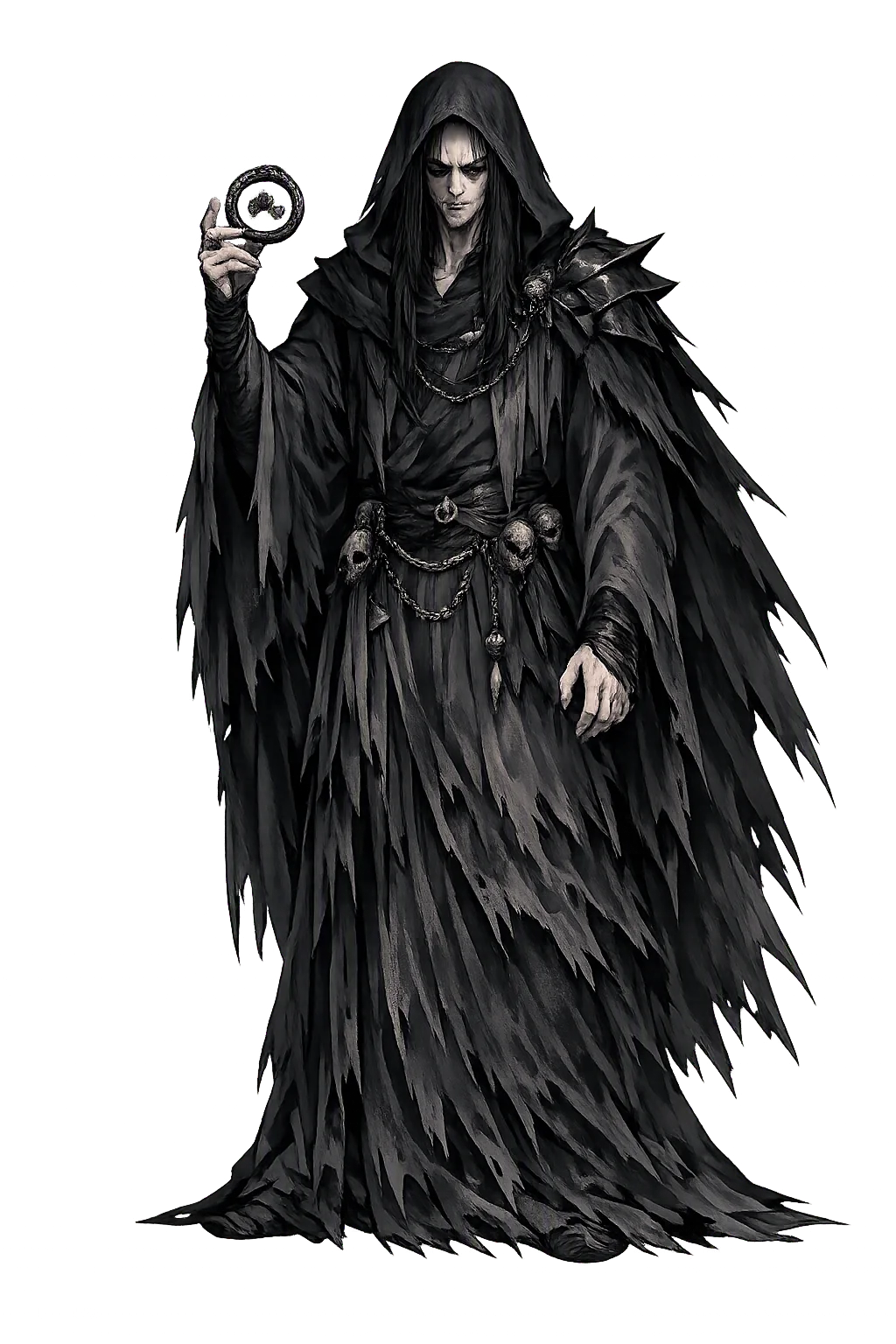
The name is written 𒀭𒈾𒀭𒋻. In Sumerian it is a compound: nam, 'destiny,' and tar, 'to cut, decide, separate.' Namtar is therefore the one who cuts the thread of what must be. In myth he is not a cosmic creator but a terrifying official: the sukkallu (vizier) of Ereškigal, queen of the underworld, the messenger who delivers disease, the clerk of death whose decree even the gods must acknowledge.
Where Enlil decrees destiny from the heights, Namtar executes it in the depths. He embodies the moment when possibility collapses into necessity — the stroke, the fever, the final sentence.
PuniCodex restores the name as Namtar and serves its temple at its temple. The restoration needs no distinctive letters or diacritics its ASCII form would lose, which places the name in Tier 2. The plain ASCII form namtar survives as a modern convenience imposed by the early domain-name system; the restoration, not the fallback, is the form the project defends as philologically complete.
The Name
The name is attested in Cuneiform as 𒀭𒉆𒋻. Etymologically it means "Fate, destiny".
The ASCII form namtar survives only because the early domain-name system could not carry diacritics; it is a technological compromise, not an ancient spelling. The Unicode restoration Namtar recovers the full diacritic detail of the scholarly transliteration directly in the address bar. The restoration needs no distinctive letters or diacritics its ASCII form would lose, which places the name in Tier 2.
The letter-by-letter transformation runs:
- n → N — Same, capitalized
- a → a — Same
- m → m — Same
- t → t — Same
- a → a — Same
- r → r — Same
The Original Script
The name is preserved in Cuneiform as 𒀭𒉆𒋻.
The scholarly transliteration is Namtar.
The rendering proceeds step by step:
- Divine determinative 𒀭 (dingir) marks this chthonic being
- 𒉆 (NAM) = 'fate, destiny'
- 𒋻 (TAR) = 'to cut, allot'
- dNAM.TAR is the fate-demon and vizier of Ereshkigal in the Mesopotamian underworld
Pronunciation
The reconstructed pronunciation of the name is /namˈtar/ — Sumerian/Akkadian Reconstruction.
Phoneme by phoneme:
- Nam- — Voiced alveolar nasal [n] plus open vowel [a]; the Sumerian root nam means 'destiny, that which is fixed.'
- -tar — Voiceless alveolar stop [t] plus open vowel [a] and rhotic [r]; from tar 'to cut, decide' — the act by which fate is severed from possibility.
For the modern speaker, the closest approximation is: 'nahm-TAHR' — stress the second syllable and let the final r breathe, as though the word itself were being cut short.
Kindred and historical forms of the name:
- Sumerian — 𒀭𒈾𒀭𒋻 (dnam-tar), 'fate, destiny; death-demon' — the divine personification of the decided thing
- Akkadian — Namtāru, the vizier of the underworld and minister of Ereškigal
- Etymology — nam 'destiny' + tar 'to cut, decide, separate' — what is cut out for a person
Namtar is Tier 2: the Unicode restoration Namtar carries no distinctive diacritic or non-ASCII letter that the ASCII form loses. The name is presented in its scholarly transliteration, preserving the Sumerian/Akkadian spelling but without reconstructive vowel-length marks that would push it to Tier 1.
Mythology
Namtar moves through Mesopotamian literature as an officer rather than a hero. His myths are stories of protocol, plague, and the irreversible moment when a decree from the underworld becomes binding.
The Name that Cuts Destiny (Etymology)
The Sumerian name is a transparent compound: nam means 'destiny, that which is ordained,' and tar means 'to cut, decide, separate.' Together they describe destiny not as something woven but as something severed — the point at which the possible is cut away and the actual remains. This etymology governs every later appearance of the deity: Namtar is the functionary who carries out the cut. The cuneiform sign 𒋻 (tar) itself evokes a knife or cutting implement, so the name is an icon of fatal decision.
The Vizier's Embassy (Nergal and Ereshkigal)
In the Akkadian myth Nergal and Ereškigal, the queen of the underworld sends her vizier Namtar to invite the gods of heaven to a feast. The gods receive him with due respect — all except Nergal, who refuses to rise. Insulted, Namtar reports the slight to Ereškigal, who demands that Neral be delivered to her. Ea protects Nergal with fourteen demons and disguises him so that when Namtar comes to seize him, the vizier cannot identify the offender. The story establishes Namtar's role precisely: he is the executive agent of the underworld throne, owed the same protocol as his mistress.
Sixty Diseases for the Goddess (Ishtar's Descent)
In the Akkadian Descent of Ištar, the goddess forces her way into the underworld and is stripped and killed at each of its seven gates. When the heavens wither without her, Ea sends his servant Aššušunamir to demand her release. Ereškigal finally consents, but she first commands Namtar to strike Ištar with sixty diseases, one for every part of her body. Later Namtar sprinkles the water of life upon her and leads her back through the gates, restoring her ornaments one by one. Here Namtar is both executioner and healer: the one who inflicts the underworld's punishments and the one who reverses them when the decree is changed.
The Hand of Namtar (Plague)
Across Sumerian and Akkadian incantations, medical omens, and city laments, 'the hand of Namtar' (qāt Namtari) is a standard diagnosis for illness without visible cause — fever, paralysis, wasting, sudden death. The Lament for Ur and other city laments describe Namtar walking through the streets, cutting down populations. He is not a moral judge like the later Angel of Death; he is a civil servant of mortality, delivering the sentence that has already been written. To appease him is to ask for a stay of execution, not a pardon.
Symbols & Iconography
The iconography associated with Namtar concentrates in a small set of recurring attributes, each a compressed statement about the name:
- Cuneiform wedge — The written sign (𒋻 tar) that marks the cutting or deciding of fate
- Stylus and tablet — The bureaucratic instruments of the underworld minister who records destinies
- Pestilence cloud — The invisible affliction carried by 'the hand of Namtar' in incantations
- Threshold of the underworld — The boundary Namtar guards and crosses as Ereškigal's messenger
- Knife or sickle — The cutting tool implied by tar — the moment fate is severed from possibility
Archaeology & Evidence
Cuneiform tablets from Nineveh, Assur, and Sippar preserve the Standard Babylonian versions of Nergal and Ereškigal and the Descent of Ištar, both of which cast Namtar as the queen's executive minister. Medical and apotropaic tablets in the Diagnostic Handbook (SA.GIG) and the udug-hul incantation series name 'the hand of Namtar' as a cause of disease. Sumerian literary tablets from Nippur and Ur include references to Namtar in city laments and underworld compositions.
Realm & Domain
The name is written 𒀭𒈾𒀭𒋻. In Sumerian it is a compound: nam, 'destiny,' and tar, 'to cut, decide, separate.' Namtar is therefore the one who cuts the thread of what must be. In myth he is not a cosmic creator but a terrifying official: the sukkallu (vizier) of Ereškigal, queen of the underworld, the messenger who delivers disease, the clerk of death whose decree even the gods must acknowledge.
Where Enlil decrees destiny from the heights, Namtar executes it in the depths. He embodies the moment when possibility collapses into necessity — the stroke, the fever, the final sentence.
Tablet of Destinies
The cuneiform record on which Namtar writes what is cut out for a life — a decree, not a negotiation.
The Hand of Namtar
In incantations and medical omens, 'the hand of Namtar' is the touch that brings fever, paralysis, and plague.
Ereškigal's Vizier
The sukkallu who carries the queen of the dead's commands to heaven and enforces her judgment in the underworld.
The Cut Thread
The etymological heart of the name: tar is the knife-edge where destiny separates the living from the dead.
Across Cultures
Namtar did not travel as widely as Ištar or Marduk, but his type — the personal minister of death — became one of the most durable figures in religious imagination.
The Sumerian concept of nam-tar as 'decided destiny' underlies later Mesopotamian fatalism: the gods themselves are bound by the decrees written at the beginning. In apotropaic magic, Namtar appears alongside other death demons such as Lamashtu and Pazuzu, though he is less a predator than an executor. The biblical and later figure of the destroying angel who passes through Egypt (Exodus 12) and the Qur'ānic Malak al-Mawt share Namtar's function as the agent who delivers a divine death-sentence, even if no direct historical continuity can be proved. In modern Assyriology, Namtar remains the clearest personification of the ancient Near Eastern belief that death is not chaotic but procedural: a decree carried out by an official who knows the contents of the tablet.
Within the Mesopotamian tradition, closely related names in the corpus include Adad, Anû, Apsû, Aššur, Dumuzid, and Ēa.
Cultural Legacy
The idea that death arrives by appointment, administered by an official who cannot be bribed, has never left human culture.
Namtar's legacy lives in the figure of the psychopomp, the recording angel, and the bureaucratic demon who keeps the ledger of lives. The Sumerian word namtar survived in Akkadian as both a demon and the abstract concept of fate, influencing Persian and later Gnostic ideas of an appointed end. In fantasy and horror, his descendants are the reapers, auditors, and plague-bearers who arrive with paperwork and patience. PuniCodex presents Namtar in plain ASCII transliteration not because the name lacks depth, but because its scholarly form needs no reconstructed diacritic to be philologically defensible. The name still means: the cut that cannot be undone.
The Scholarly Record
The account of Namtar given in this edition rests on the witnesses and reference works listed below. Lexica and etymological dictionaries secure the form and meaning of the name; the literary and religious texts supply the narrative evidence.
- Electronic Text Corpus of Sumerian Literature, Oxford Oriental Institute, 1998. Full text
- CAD (Chicago Assyrian Dictionary).
- Akkadisches Handwörterbuch, 3 vols., Harrassowitz, Wiesbaden (completed 1981), 1965.
- Black & Green, Gods, Demons and Symbols of Ancient Mesopotamia.
- Jacobsen, The Treasures of Darkness.
- Foster, Before the Muses.
- Dalley, Myths from Mesopotamia.
- Nergal and Ereškigal (Standard Babylonian version).
- Descent of Ištar to the Underworld (Akkadian).
- Sumerian-Akkadian incantation series against evil demons (udug-hul).
- Lament for Ur (city lament invoking Namtar as destroyer).
- Diagnostic Handbook (SA.GIG) references to 'the hand of Namtar'.
A Meditation
Every civilization invents a functionary for the moment when life stops being negotiable. The Sumerians called theirs Namtar. He is not the lord of the underworld — that is Ereškigal — nor its wild gatekeeper, but its vizier: the one who reads the tablet, delivers the message, and inflicts the stroke. To name him is to acknowledge that death, in the ancient imagination, was less a monster than a memo.
The etymology is ruthless. Nam is what is fixed; tar is the blade that fixes it. There is no appeal from a cut. Yet Namtar's mythology also contains reversal: in Ištar's descent he inflicts sixty diseases and then sprinkles the water of life. The underworld does not forgive; it processes. When the proper forms are observed, even death can be made to release its prisoner — temporarily. The temple of Namtar is therefore a temple of documents, of symptoms, of the instant when possibility becomes record. Its silence is not empty; it is the silence of a clerk who has already turned the page.
The Unicode Restoration
Namtar is classified as Tier 2: the restoration needs no distinctive letters or diacritics its ASCII form would lose. The ASCII fallback namtar still resolves everywhere, but it is the restored form that carries the name's full information. That is the whole thesis of this temple: the marks are the message.
Character by Character
The journey from namtar to Namtar, one character at a time:
- n → N — Same, capitalized
- a → a — Same
- m → m — Same
- t → t — Same
- a → a — Same
- r → r — Same
The Mesopotamian Pantheon
Namtar is one of 30 entries the PuniCodex lexicon catalogues under the Mesopotamian pantheon. The Pantheon page gathers the tradition's major figures in one place, and the Lexicon lets you filter all 980 restorations by tradition, tier, or script — the fastest way to see where this name sits among its kin.
Frequently Asked Questions
What does Namtar mean? The traditional gloss is "Fate, destiny."
Which tradition does Namtar belong to? Namtar is catalogued in the Mesopotamian pantheon of the PuniCodex lexicon.
Why is Namtar classified as Tier 2? Because the restoration needs no distinctive letters or diacritics its ASCII form would lose — and the marks in the restored spelling preserve exactly that evidence.
Can I use Namtar in a normal browser? Yes. The DNS resolves the punycode form automatically, and the type tool on this site converts namtar to Namtar for copying and pasting.
Where does the scholarly information come from? The entry is built from lexica, inscriptional evidence, and reviewed scholarly sources listed in the Scholarly Edition. Every claim is traceable to a canonical source.
Typing Namtar
You do not need a special keyboard to use this restoration. The PuniCodex Type Tool converts the ASCII form namtar into Namtar as you type, and the browser extension offers the same conversion inside any text field. Copy the restored form, paste it into the address bar, and the DNS does the rest.
Sister Temples
Other temples in the Mesopotamian pantheon include Šamaš, Apsû, and Ereškigal — each with its own restoration story, its own scholarly record, and its own place in the lexicon.
Why This Restoration Matters
Pronunciation turns out to be the heart of the matter. The marks in Namtar are instructions for the voice, and a web that strips them is a web that mispronounces the past at scale. The restoration hands the instructions back: say it as the evidence suggests, type it as the tradition wrote it, and let the punycode machinery do the quiet translation in between. That is all the PuniCodex project asks of the infrastructure — and everything it asks of you, the reader, is to use the whole name.
Explore Further
This post is one doorway into the temple. The home page carries the full character breakdown and the ambient canvas; the lore page tells the myths in long form; the Scholarly Edition preserves the sources, pronunciation data, and revision history; and the patron wall supports the restoration directly. For the wider map, browse the Lexicon, explore the Pantheon, or return to the PuniCodex blog.
A Closer Look at the Marks
A restored name is a small map. In the case of Namtar, the map does not lead through diacritics or special letters, because the source tradition wrote the name in Cuneiform rather than in the Latin alphabet. The ASCII form namtar and the restored form share the same letters; the restoration is a decision about which conventional spelling should serve as the public reference.
That decision is not cosmetic. The original script attestation carries semantic and phonetic information that no romanization can fully reproduce. By fixing one conventional spelling as the canonical domain form, the project prevents the drift that happens when a name is romanized differently in every article, map, and database. The breakdown still lists each character — n, a, m, t, a, r — so visitors can see exactly what is being carried forward and what is not. What looks like "no change" is, in fact, a deliberate choice to keep the name stable, searchable, and addressable.
Related Names
Sources
The full scholarly apparatus — every citation, revision, and review — lives in the Scholarly Edition. Key references for this post:
- Electronic Text Corpus of Sumerian Literature, Oxford Oriental Institute, 1998.
- Gods, Demons and Symbols of Ancient Mesopotamia, British Museum Press, 1992.
- CAD (Chicago Assyrian Dictionary).
- Akkadisches Handwörterbuch, 3 vols., Harrassowitz, Wiesbaden (completed 1981), 1965.
- Black & Green, Gods, Demons and Symbols of Ancient Mesopotamia.
- Jacobsen, The Treasures of Darkness.
- Lexicon authorities for this entry: ETCSL, Black-Green.