
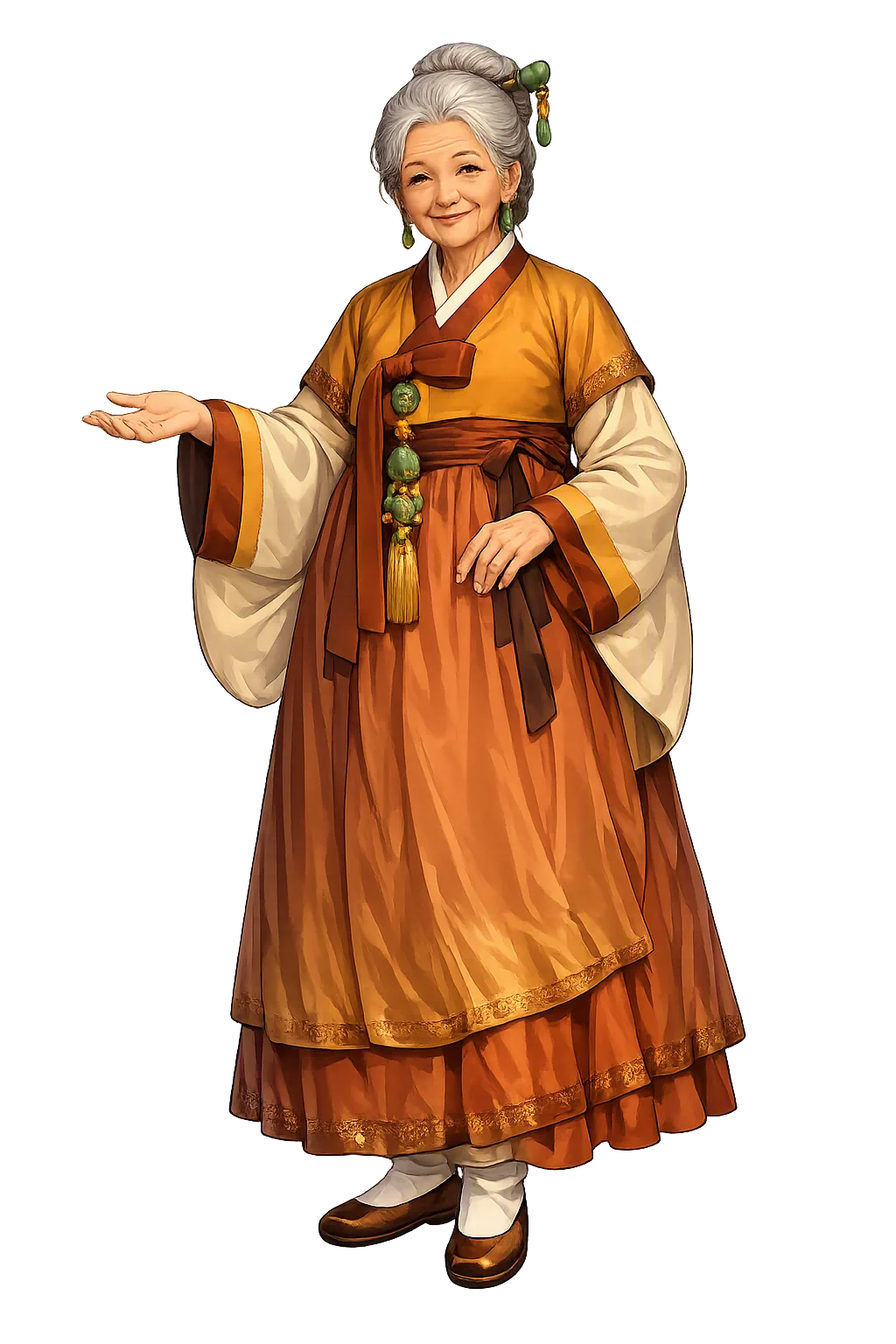
Stress-testing Halmoni: do the industry seats hold?
Audit notes, Halmoni: we took every seat the atlas claims for this temple and tried to break it against the myths. What survived is below.
At a Glance
- Temple: Halmoni
- Pantheon: Korean
- Domain of influence: Grandmother Spirit, Earth
- Pattern seats: 5
- Sectors touched: Energy & Natural World · Culture & Entertainment · Home & Lifestyle
- Strongest seat: Agriculture, Food & Harvest
- Series: The Resonance Files, No. 187 of 548
The Test
Seat 1: Agriculture, Food & Harvest
Claim: Primary seat: Halmoni embodies grandmother spirit, earth — the core of agriculture food. Exhibit: Seolmundae Halmang Makes the Island — Jeju tradition remembers Seolmundae Halmang, the Grandmother Seolmundae, as a giantess who made the island with her hands.
Verdict: survives scrutiny. The myth and the trade do the same work.
Seat 2: Environmental & Climate Services
Claim: Resonant seat: Halmoni shares symbolic territory with environment climate. Exhibit: The Cauldron and the Five Hundred Sons — The same tradition gives the grandmother a terrible second ending.
Verdict: holds under load. The correspondence is functional, not decorative.
Seat 3: Forestry, Conservation & Outdoor Industries
Claim: Resonant seat: Halmoni shares symbolic territory with forestry conservation. Exhibit: Samshin Halmoni, the Birth Grandmother — In mainland tradition the title Halmoni attaches to Samshin, the Birth Grandmother — one goddess with three faces, or three sister spirits — who arrives at every childbirth to inscribe the child's fate: its span of life, its fortune, its character.
Verdict: survives scrutiny. The myth and the trade do the same work.
Seat 4: Music, Arts & Performance
Claim: Resonant seat: Halmoni shares symbolic territory with music arts. Exhibit: Seolmundae Halmang Makes the Island — Jeju tradition remembers Seolmundae Halmang, the Grandmother Seolmundae, as a giantess who made the island with her hands.
Verdict: stands. Strip both to their function and the functions match.
Seat 5: Home, Hearth & Real Estate
Claim: Resonant seat: Halmoni shares symbolic territory with real estate home. Exhibit: The Cauldron and the Five Hundred Sons — The same tradition gives the grandmother a terrible second ending.
Verdict: survives scrutiny. The myth and the trade do the same work.
The Control Group
Against the seats that survived, one control: the temple's own summary of its figure — Halmoni — 'Grandmother' — is less a single goddess than the Korean imagination's highest honorific for female sacred power: the earth that feeds, the ancestor who guards the lineage, the birth-spirit who inscribes a child's fate, the wind that fills a fisherman's sails. The seats do not drift far from it. That is the audit's cleanest result.
The Method, Stated Plainly
None of this is numerology. A seat exists only where the match can be argued from the deity’s documented domains and deeds — weighted, published, and falsifiable. The derivation, the weights, and the challenge process are public on the methodology page. If a seat in this file reads wrong, the atlas itself tells you how to prove it — and the correction becomes part of the record.
For the Ones Who Work There
For a sponsor in agriculture, food & harvest, the fit here is not adjacency — it is inheritance. Your trade already tells this story every working day; the temple simply holds the original. The patron tier and the advertising terms carry the mechanics; the myths above carry the reason.
The File Continues
This is one of 548 Resonance Files — the third dispatch from every flagship temple, where the myths meet the markets. The temple's founding dispatch tells the name's story; its Restoration File tells the spelling's; the blog index holds the whole archive.
Continue the series — previous: Hádēs (read it) · next: Hwanin (read it).
The Resonance Files are argued from the same canonical record as the pattern atlas itself: the lexicon, the lore catalog, and the cited sources. Every seat can be challenged at the methodology page — and the challenge is the point.